Imaginary interview with Buffon
by Charactorium · Buffon (1707 — 1788) · Sciences · 5 min read
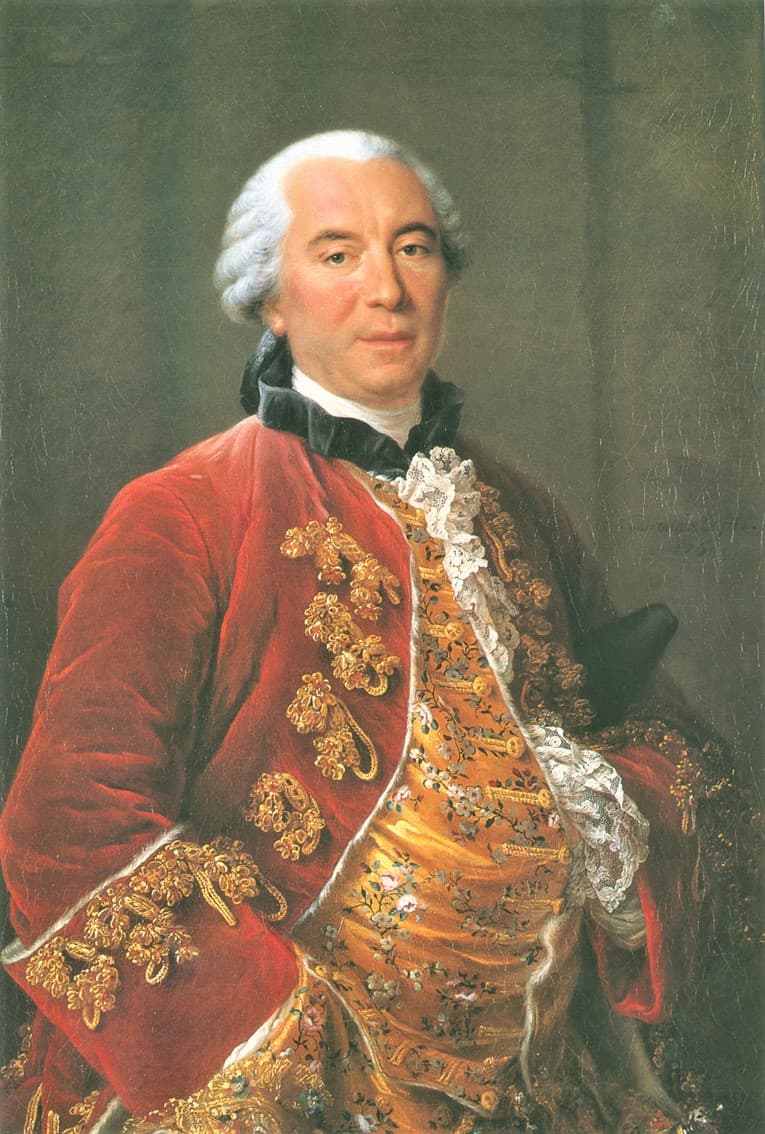
October 1782. The tower of Montbard rises above the terraced gardens the master himself designed; inside, in the silence of a study without books, an old man in a dressing gown lays down his quill. At seventy-five, the Comte de Buffon agrees to speak of the Earth, of animals, and of iron.
—How did you come to heat iron cannonballs to question the age of the world?
Any scholar who wishes to weigh time must first find a clock, and mine I found in my own forges of Montbard. I had cannonballs of various sizes brought to the fire, then I placed my hand on them, day after day, to grasp the moment when the metal stopped burning the flesh, and then when it returned to the coolness of the air. From these coolings, I derived a proportion: if a mass of iron takes so long to cool, the entire globe, immense, took much longer. I concluded that the Earth was at least 75,000 years old, and I recorded this in The Epochs of Nature. That is how an ironmaster becomes a measurer of centuries: not by revelation, but by the patience of the crucible.
Any scholar who wishes to weigh time must first find a clock, and mine I found in my forges.
—Did this estimate encounter resistance during your lifetime?
One does not defy the chronology of the Scriptures with impunity. In 1751, the gentlemen of the theology faculty of the Sorbonne expressed their displeasure, for my globe of seventy-five millennia overturned the convenient calculation that reduced the world to six thousand years. I made amends, as befits a man who wishes to continue publishing his Natural History — but rest assured, I retracted nothing from my cannonballs or my proportions. A naturalist must know how to bend the phrase without bending the reasoning. Nature does not consult the doctors; it cools at its own pace, and no anathema has ever heated a mass of iron by a single degree.
A naturalist must know how to bend the phrase without bending the reasoning.
—Do you remember the state of the King's Garden when you took charge?
When I was appointed intendant of the King's Garden in 1739, it was merely a garden of simples, where medicinal herbs were grown for the apothecaries of the neighborhood. I saw something else there: the place for a true center of science, capable of attracting all of Europe. So I had the surrounding lands purchased, nearly doubled the area, opened avenues, expanded the greenhouses. And above all, I filled the cabinet with everything that ships and travelers brought me: minerals, shells, animals from the Indies and the Americas. Nearly fifty years of my life were spent there. I did not plant flowers, sir: I built an institution.
I did not plant flowers, sir: I built an institution.
—What did that cabinet, where so many specimens from around the world were accumulated, represent to you?
My cabinet of curiosities was the richest in Europe, and I say this without false modesty, for this wealth was not mine but that of knowledge. Imagine galleries where a fossil torn from stone, the skeleton of a large quadruped, crystals, and birds from islands that no Parisian had ever seen coexist. Each piece was a letter that Nature addressed to me, and my duty was to arrange them into intelligible discourse. It is from this accumulated material that the Natural History, General and Particular, my thirty-six volumes, emerged. A single man cannot see everything; but by gathering what a thousand hands brought me, I tried to embrace in a single glance the animal, vegetable, and mineral kingdoms.
Each piece was a letter that Nature addressed to me.
—You are remembered for a formula that became proverbial about style. What did you mean that day at the Academy?
It was in 1753, the day of my reception at the Académie française, in the first seat. I wanted to express a truth that scholars too often forget: that thought is worthless without the form that carries it. “Style is the man himself” — that is what I set forth in my Discourse on Style. Facts are discovered, knowledge accumulates, but they pass; what remains is the order that the mind imposes on them. I added this, which I still believe: “Well-written works will be the only ones that pass to posterity.” A naturalist who writes poorly betrays Nature as much as one who observes poorly, for he makes her obscure where she is luminous.
A naturalist who writes poorly betrays Nature as much as one who observes poorly.
—Did you work on your prose with as much care as your observations?
More, perhaps. My goose quill and inkwell have cost me more trouble than my iron cannonballs. I have been known to rework the same passage up to eleven times, crossing out, starting over, searching for the word that would admit no replacement. People think that writing the history of Nature means lining up descriptions; on the contrary, it is composing, pruning, weighing each phrase like weighing ore. I rose at five o'clock for this work of patience, in the silence of my tower, before the day and visitors came to distract me. Style is not an ornament added afterward; it is the very trace of the order one has managed to put into one's ideas.
Composing, pruning, weighing each phrase like weighing ore.
—How did you reconcile your life as a scholar and as an ironmaster in Burgundy?
People are always surprised that a man of the study owns blast furnaces; I see no contradiction. My forges of Montbard gave me a fortune, it is true, but also a laboratory. Where others saw only commerce, I saw a perpetual experiment on heat, fusion, and cooling of metals. The iron I sold taught me the laws of the globe. I pursued both roles side by side: afternoons inspecting my workers and crucibles, mornings writing in my isolated tower that I had arranged to be undisturbed. The scholar and the industrialist, in my case, blew on the same fire.
The iron I sold taught me the laws of the globe.
—They say your morning discipline bordered on severity toward yourself. Is that true?
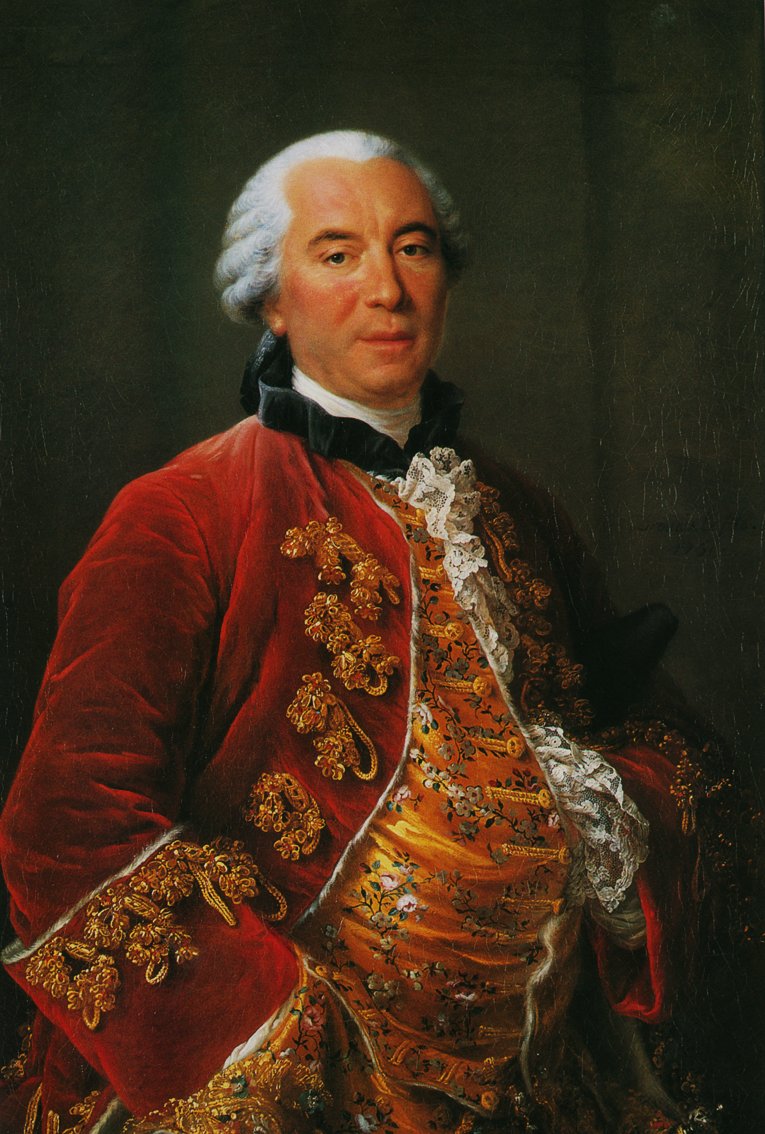
Regularity is the mother of all lasting work, and I subjected myself to it without mercy. My servant Joseph had orders to drag me out of bed at five o'clock, willingly or by force, and I promised him a reward for each awakening wrested from my laziness — for the flesh is weak when the mind still sleeps. I then worked until evening, sometimes until nine o'clock, in my tower at Montbard, allowing neither visits nor business to encroach on my sacred hours. It is not genius to produce thirty-six volumes; it is constancy. Talent without daily labor is nothing but rich soil left fallow.
Talent without daily labor is nothing but rich soil left fallow.
—You rejected the method of the Swede Linnaeus. Why this opposition?
Linnaeus published his Systema Naturae in 1735, and everyone marveled at his little Latin labels, two words attached to name each creature. I see it as a dry net cast over the living. His nomenclature classifies, but it does not know; it encloses an animal in a box without saying anything about its habits, its climate, its true appearance. I preferred to describe in French, at length, the horse, the lion, the bird, in all their sensory reality. Classifying is not understanding. Nature does not proceed by neat boxes: it flows in imperceptible nuances, and the pretense of naming everything in Latin betrays it more than it serves it.
His nomenclature classifies, but it does not know.
—You use that strange word 'degeneration' for species. What do you mean by it?
I call degeneration the transformation that animals undergo under the influence of climate, food, and time. Consider: transport a species from a warm country to a cold land, and over generations its size, fur, and temperament change. This tells me that forms are not fixed from the first day, as is believed, but that they modify slowly, just as my globe itself transformed over its seven epochs. I define species not by appearance, but by fertility: beings that together produce fertile offspring are of the same species. The living is not a collection of statues; it is a river that carries its own metamorphoses.
The living is not a collection of statues; it is a river that carries its own metamorphoses.
Read further
This imaginary interview was generated by artificial intelligence from sources documented in Buffon's profile. It dramatises what the figure might have said based on what we know about them, but does not constitute attested historical testimony. For primary sources and factual documentation, refer to the full profile.