Imaginary dialogue between Wild Bill Hickok and Calamity Jane
by Charactorium · Calamity Jane (1852 — 1903) · Exploration · Performing Arts · Society · 5 min read
It's in the back room of a saloon in Deadwood, one evening when the dust of the Black Hills still clings to boots, that Wild Bill Hickok meets Martha Jane Cannary. A kerosene lamp smokes, whiskey burns in two thick glasses, and outside the wagons of gold prospectors creak toward the claims. The two know each other from the trails and the columns of soldiers, accomplices in both noise and silence. Bill didn't come out of curiosity: he wants to hear, from Jane's own mouth, what lies behind the woman in buckskin that the whole camp points at.
—Jane, do you remember the column we followed toward Fort Laramie? Tell me how a woman ends up a scout among the muleteers.
I remember it like it was yesterday, Bill. We marched in the soldiers' dust, and no one asked who I was as long as I held my own. I learned to guide a convoy, to spot a trail, to lead the mules when the men swore too much to think. Dressed as a man, they took me for a young muleteer, and that suited me fine. I earned a few coins driving, carrying messages, breaking trail. It wasn't a lady's job, no — but I never had a lady's stomach. The frontier didn't ask where you came from, it asked if you could still stand after three days of rain. And I could stand.
The frontier didn't ask where you came from, it asked if you could still stand after three days of rain.
—Everyone calls you ‘Calamity’ in this camp. You who tell me so many stories, where does that name actually come from?
Ah, they've surely served you my version, Bill — the one about the officer I supposedly pulled from an ambush, who said that defying that woman brought calamity. It's a good story, I admit, and I don't hesitate to tell it by the campfire. But between the two of us, you know me well enough to guess the truth: I make a racket, I drink, I fight, and wherever I go, something always happens. A nickname gets picked up like a reputation — a bit by merit, a lot by noise. I don't mind if people believe the ambush. A well-told legend feeds better than a naked truth.
A nickname gets picked up like a reputation — a bit by merit, a lot by noise.
—I heard that during the smallpox, when the camp fled the sick, you stayed by their bedside. Why risk that?
Because no one else would do it, Bill, that's why. Smallpox emptied the cabins; people bolted their doors and let their own die for fear of catching it. I carried water, washed burning foreheads, watched over men who raved calling for their mothers. I'm no doctor, God knows, and I swear like a mule driver — but I know how to stay when it counts. Funny thing: this camp that calls me a drunk and a tramp suddenly looked at me differently. The same ones who laughed at me in the saloon shook my hand in the street. A sick man doesn't judge the hand that heals him.
I swear like a mule driver, but I know how to stay when it counts.
—Those buckskin clothes, those trousers, that wide-brimmed hat — they shock more than one honest soul. Do you dress that way for convenience or defiance?
Both, old-timer. Go drive a team in petticoats through the mud of the Black Hills, you'll tell me all about it. Fringed buckskin keeps you warm, doesn't snag on briars, and won't betray you when you need to mount up fast. That's the convenience. The rest, yes, is defiance. I've seen the good women of Deadwood purse their lips when I pass, guns at my belt. Let them purse. I wear these clothes because they are mine, because they say who I am before I even open my mouth. No one will ever mistake me for a well-bred boarding-school girl, and that's just fine.
I wear these clothes because they say who I am before I even open my mouth.
—They say you want to put your life down on paper and sell it yourself. What makes you want to write your adventures, Jane?
Because if I don't tell my story, Bill, others will tell it for me — and they won't do me any favors. I'm thinking of a little booklet, a few pages, Life and Adventures of Calamity Jane, By Herself, which I'd sell myself for a few cents to those who want to hear me. Oh, I won't hide it: I'll exaggerate a bit — a more intrepid scout, greater dangers. The public pays for thrills, not grocery accounts. But the heart will be true. Born in Princeton County, Missouri — that I have from my own memory. The rest I embroider so it sells.
If I don't tell my story, others will tell it for me.
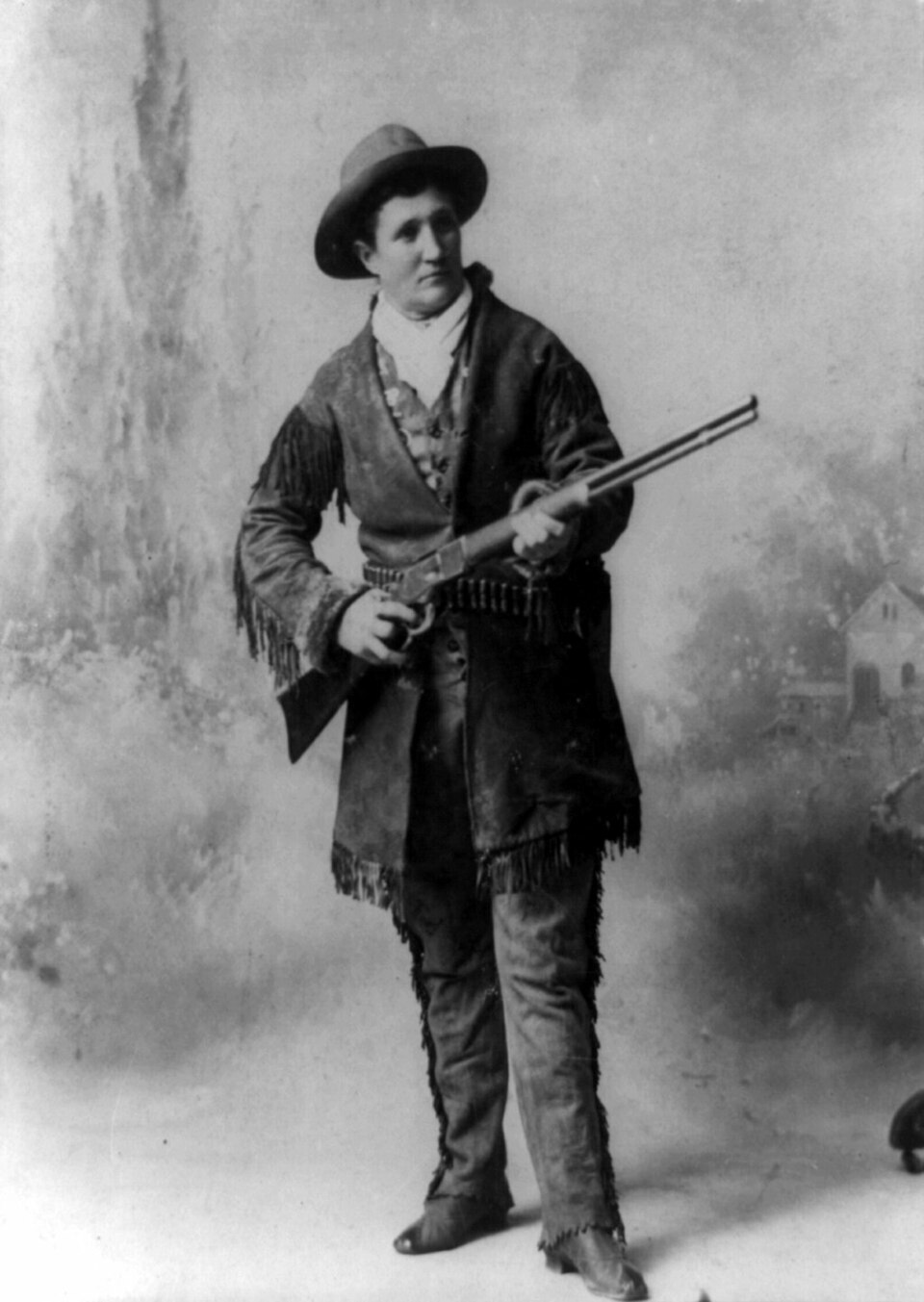
—And now they pay to see you pose, rifle in hand, like a carnival freak. Doesn't that self-staging chafe you?
Chafe me? A girl's got to eat, Bill. Those dime museums, those shows that depict frontier life, they want the ‘real Calamity Jane’ in buckskin with her guns — so I give it to them. I step onto the platform, strike a pose, let the barker inflate my exploits, and pocket the coins. It's no more shameful than driving a stagecoach, and it's less tiring. What troubles me, if you want the truth, is that the woman on the poster ends up living her own life, bigger than mine. The public prefers the poster. I make do with both — the real and the painted — as long as they both feed me.
The woman on the poster ends up living her own life, bigger than mine.
—Those cheap novels that litter every saloon, those dime novels full of Western heroes — do you recognize yourself in those pages?
I recognize myself as much as you do in yours, Bill — that is, halfway, and the less true half. Those serials take a scrap of truth and dress it up as a tale for city kids back East. They show a Calamity who guns down ten bandits before breakfast and saves stagecoaches single-handedly. I'd like to be that woman, I tell you. But I don't spit on it: every dime novel that speaks my name makes me someone talked about from New York to San Francisco. A reputation is worth gold when you've got nothing else in your pocket. So let them write, exaggerate, invent — as long as they spell my name right.
A reputation is worth gold when you've got nothing else in your pocket.
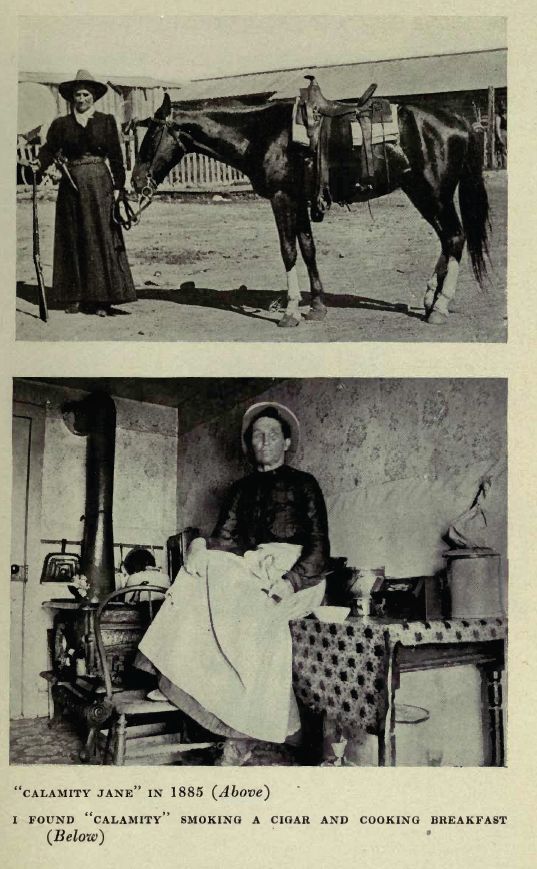
—You say you exaggerate in your story. So where does the Martha Jane I knew end, and where does the legend begin?
Now that's a question from an old sidekick. The Martha Jane you know is the one who gets cold at night, owes three dollars to the barkeep, and sometimes cries alone after the third drink. The legend never cries and owes nobody nothing. Between the two lies the story I sell — and I swear I no longer always know where the border lies. When I tell about the ambush, the officer, the exploits, I almost believe it myself for the time it takes to tell. Maybe by telling yourself over and over, you become your own story. You, better than anyone, know what it is to be bigger on posters than in your own bed.
Maybe by telling yourself over and over, you become your own story.
—The camp loves and despises you in the same week. How do you carry that reputation that sticks to you, Jane?
I carry it like my buckskin, Bill: it keeps me warm and it itches. One day they shake my hand for nursing smallpox victims, the next they point fingers because I drank one bottle too many and broke a chair in the saloon. People want to choose: saint or good-for-nothing. I'm both, like everyone here, except I don't hide it. What the camp thinks of me in the morning isn't worth what it'll think by evening. So I've learned not to listen too closely. I do what I think is right when the moment comes, and I drink when the night is too long. The rest is the business of gossips.
One day they shake my hand, the next they point fingers: I am both at once.
—One last thing, old girl: when all this is over — the trails, the camp, the shows — what do you want to be remembered for?
Don't ask me the priest's questions, Bill, they don't suit you. What do I want to be remembered for? Not the drunk, not the tramp the gossips describe. Let them remember that I led mules when men backed down, that I nursed the dying that everyone fled, and that I wore trousers when it wasn't done. The rest — the stories, the ambush, the posters — is pretty smoke I blew myself. If people must keep one image, let it be of a woman who never asked permission. And also, bury me where I'll have companions of my kind, not in some tidy plot. The rest I couldn't care less about.
Let them remember a woman who never asked permission.
This imaginary interview was generated by artificial intelligence from sources documented in Calamity Jane's profile. It dramatises what the figure might have said based on what we know about them, but does not constitute attested historical testimony. For primary sources and factual documentation, refer to the full profile.