Imaginary interview with Calamity Jane
by Charactorium · Calamity Jane (1852 — 1903) · Exploration · Performing Arts · Society · 6 min read
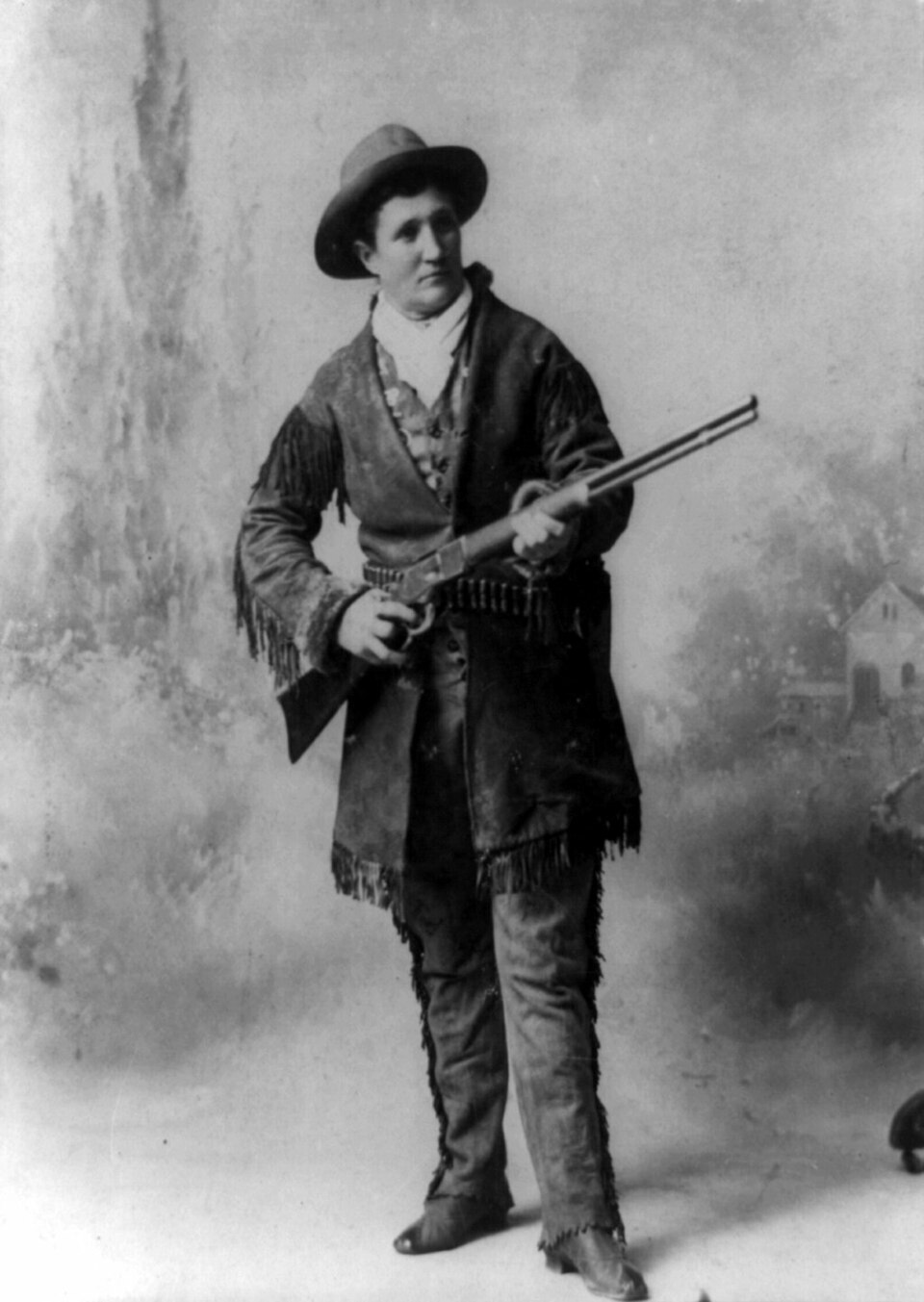
Deadwood, an evening in the late 1890s. In the smoky back room of a saloon in the Black Hills, a woman in a fringed leather jacket sets her glass of whiskey on the counter and agrees to talk. The oil lamp lights a face weathered by the trails; she pulls from her pocket a small, dog-eared booklet that she sells for two or three cents.
—How did a woman of your time come to guide columns of soldiers and muleteers?
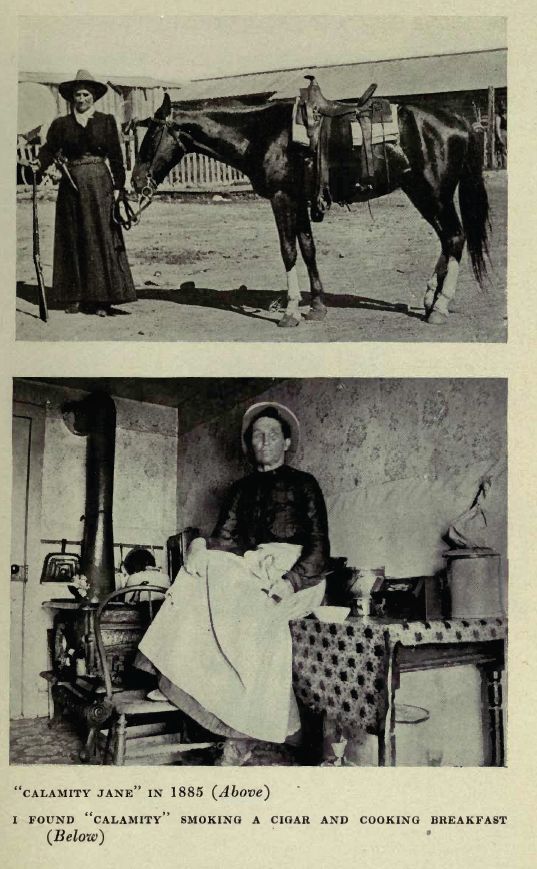
Nothing was given to me; I took it. Orphaned early, I had to earn my keep, and a girl without a husband isn't worth much on these trails. So I traded my skirt for trousers, the buckskin outfit of the trappers, the wide-brimmed hat, and hired myself out where they needed arms and eyes that knew the country. Around Fort Laramie, I followed the convoys, drove mules, cleared the road ahead of the columns. A scout finds the trails and warns of danger — and believe me, there was plenty, between swollen rivers and lands we were taking from the Sioux. Dressed as a man, they let me work; in a dress, they'd have sent me back to the kitchen.
Nothing was given to me; I took it.
—Was this men's clothing just practical, or was there something else?
Practical first. Try driving a team on a Black Hills trail in petticoats, the whip in one hand, the reins in the other, and you'll see. Leather protects you from briars and rain, boots stay in the stirrups, the gun stays within reach at your belt. But I won't lie: I also liked being noticed. For a woman to dress like that, in my time, was almost a scandal — the proper ladies would look down on me in the street. So much the better. I always preferred being talked about badly than not talked about at all. That buckskin, in the end, became my skin as much as my trade; you couldn't tell where the clothing ended and Calamity Jane began.
You couldn't tell where the clothing ended and Calamity Jane began.
—Let's talk about that name, then. Where does the nickname 'Calamity' come from?
Ah, everyone wants that story! I liked to tell that an officer I'd rescued from an ambush christened me that, saying that defying this woman would bring calamity upon your head. Makes a good tale, doesn't it? The truth is less flattering, and serious folks will tell you they find no trace of it anywhere. I think I earned it through wear and tear, in the streets and saloons of Deadwood, through fights, whiskey, and a tongue too loose. When a woman drinks hard, swears like a muleteer, and hits just as hard, they end up naming her after the trouble she drags along. So be it, Calamity. A name like that gives you a reputation before you even walk into the room.
A name like that gives you a reputation before you even walk into the room.
—What did the saloon represent in your daily life?
At night, in a mining camp, it's the only thing alive. By day, you hitch up, you labor, you carry mail or goods for a few coins, you sleep where you can, under a tent or in a makeshift cabin. But when night falls, everyone gathers at the bar: gold prospectors, muleteers, card players. I was at home there. They'd gladly buy me a drink to tell my stories — and I didn't hold back from embellishing, believe me. The local press, the Black Hills Daily Times, talked enough about my antics in those streets that I don't need to boast. Whiskey, tales, loud voices: that was my social life, and I valued it more than a tidy home.
—They say you cared for the sick during the smallpox epidemic. Do you remember that?
Around 1878, smallpox hit the camp of Deadwood. It's a terrible disease: fever, pustules, and above all, fear. Many fled the sick cabins like the devil flees holy water; they left them to die alone. Me, I don't quite know why, but I stayed. I carried water, changed bandages, watched over men no one wanted to approach. I'm no doctor, I cured nothing but what my presence could cure — but to die without a hand nearby is to die twice. The locals never forgot it. Strange: the brawler, the drinker they pointed fingers at suddenly looked different. As if, under the leather and whiskey, there was something tender that even I had ended up hiding.
To die without a hand nearby is to die twice.
—Your name remains linked to Wild Bill Hickok. What was he to you?
Wild Bill… He was gunned down in a Deadwood saloon in 1876, a bullet in the back of the neck while holding his cards. Everyone knows the scene; it became legend before the powder even settled. What he really was to me is my own business, and I always let the doubt linger — a doubt that suited me, I admit. What I do know is where I want to end up: at Mount Moriah Cemetery, right next to his grave. They say it'll be my last wish, and it will be. Let them lay us side by side on that hill overlooking the camp, and let people come see us, telling our stories. In life I wasn't always his equal; in the ground, at least, we'll be even.
In life I wasn't always his equal; in the ground, at least, we'll be even.
—You wrote your own life story. What drove you to take up the pen?
Around 1896, I had a little eight-page booklet printed, Life and Adventures of Calamity Jane, By Herself. Eight pages, no more — enough to fit in a pocket and sell for a few cents to anyone who wanted to hear me. I tell of my birth in Missouri, my rides across the West, my exploits as a scout. Is it all true? Let's say I arranged things to my best advantage. When you're poor and have nothing left to sell but your name, you don't skimp on making it shine. The big papers already told nonsense about me; I just decided that, as long as lies were being told, I might as well hold the pen and pocket the coins.
As long as lies were being told, I might as well hold the pen and pocket the coins.
—Doesn't it bother you to admit that your legend mixes truth and falsehood?
Bother me? At my age, with my life? Bare truth, my boy, doesn't feed a man. I've lived hard enough not to be ashamed of sprucing up a few things. There's a solid core: the trails, the convoys, the Deadwood smallpox, the stagecoaches I drove. Around it, I embroidered, like you embroider by the fire to stretch the story and make the coin drop. The dime novels, those penny novels sold all over the East, had already turned me into a character much bigger than poor Martha Cannary. I just decided to play my part rather than leave it to others. A woman who tells her own story, at least, chooses her own lies.
A woman who tells her own story, at least, chooses her own lies.
—You performed in shows where the public paid to see you. How did you experience that?
Later on, when the trails no longer wanted my old bones, I hired myself out to traveling Wild West shows and curiosity museums, like those of Kohl & Middleton. They'd set me up in leather costume, Winchester rifle in hand, and people paid their ticket to see 'the real Calamity Jane'. The real one! As if the woman posing under the lights was the same one who froze on the trails thirty years earlier. I had become a curiosity, a living museum piece of the conquest of the West, next to mock stagecoach attacks. It was money, and I needed it. But I could feel they were no longer paying for what I had done — they were paying for what I was supposed to represent.
They were no longer paying for what I had done — they were paying for what I was supposed to represent.
—If you could imagine that people would still talk about you in a hundred years, what would you think of this legend that will outlive you?
A hundred years? You're dreaming out loud, my boy. But fine, let's play along. If they still read me, it won't be the frozen muleteer they'll remember, nor the woman who watched over smallpox victims — it'll be the costume, the Winchester, the whiskey, and the name that snaps. Buffalo Bill launched his big show in 1883, and the West has already become more a story we tell than a country we live in. Me, I'll be just another character in that theater, between two stagecoach attacks to amuse the crowds. It gives me a strange feeling. Might as well tell you the truth: I'd rather they remembered that, under the legend, there was a woman who was cold, hungry, and thirsty, and who still stood tall.
Under the legend, there was a woman who was cold, hungry, and thirsty, and who still stood tall.
This imaginary interview was generated by artificial intelligence from sources documented in Calamity Jane's profile. It dramatises what the figure might have said based on what we know about them, but does not constitute attested historical testimony. For primary sources and factual documentation, refer to the full profile.