Imaginary dialogue between John Herschel and Caroline Herschel
by Charactorium · Caroline Herschel (1750 — 1848) · Sciences · 6 min read
It is in the small apartment in Hanover, one evening in the autumn of 1832, that John Herschel finds his aunt Caroline, then eighty-two years old. A dark lantern lights the table covered with registers and letters, and in the distance the city bells can be heard. The nephew, himself now an astronomer and come from England to embrace her, knows he is speaking to the woman who watched over his father William and over his own first nights of observation. He has come to listen to her tell her story, no longer for the Society, but for the family.
—My dear aunt, before Bath, before the comets — what would the little girl from Hanover have become if illness had not struck her at age ten?
You take me far back, my dear John. Typhus took me around my tenth year and never gave me back my height — I stayed small, barely taller than a child. My mother destined me for household service: sewing, scrubbing, obeying. No one thought of educating a musician's daughter without beauty or fortune. If your father had not come for me in 1772 to make me a singer, I would have died a servant in some kitchen in Lower Saxony, never having looked up. It was he who tore me from that fate. I say it without bitterness: my small stature perhaps spared me marriage, and thus left me free for the sky. One never knows what misfortune hides a chance.
My small stature perhaps spared me marriage, and thus left me free for the sky.
—You came to Bath to sing. How does one go from concert to telescope, Aunt?
One goes because your father could not stay still! He had trained my voice for oratorios, and we gave concerts; I sang as a soloist, you know. But already his mind was racing toward the stars. By day, I copied his scores; by night, he polished mirrors until exhaustion, and I had to feed him by hand because his hands were occupied. He gave me a celestial globe and taught me to recognize the constellations. Little by little, music fell silent and astronomy devoured everything. I did not choose it: I followed my brother like the needle follows the magnet. But the sky kept me far longer than the theatre ever would have.
I followed my brother like the needle follows the magnet.
—My father often told me about those nights when you ran in the garden at Slough. Were you not afraid of the darkness, the cold?
Afraid? I had no time for that, my boy. Your father observed with the great instrument and shouted positions to me; down below, I ran to my register to record everything before he moved on. Clear nights are rare and cruel: you don't waste a minute. I held my dark lantern in one hand so as not to dazzle the eye, my pen in the other, and I crossed the frozen garden blind. One night in December, I threw myself onto an iron hook hidden in the snow; it tore my leg to the bone. They carried me inside. A few days later, I was back in my place under the stars. A wound was not worth missing a clear sky.
A wound was not worth missing a clear sky.
—You speak of those recordings as a race. What, in that nightly work, kept you awake until dawn?
The thought that at that very minute, across the whole Earth, perhaps no one else was watching what we were watching. Each night was a harvest: you had to note the time at meridian transit, the position, the fuzzy shape of each new nebula. Your father swept the sky in strips, methodically, and I tied his shouts to my columns of numbers. In the morning, while he slept, I took my rough notes and recopied them, calculating positions with my logarithmic tables. Day was for understanding what the night had thrown together pell-mell. I never found it tedious — it was like sorting treasures you had just gathered. You who have kept watch under the same stars know that a good harvest night is worth all the feasts in the world.
Each night was a harvest, and the day was for sorting the treasures.
—And the night of August 1, 1786? Tell me how you knew, Aunt, that it was indeed a comet.
Your father was away, and for the first time I was sweeping the sky alone, with my little instrument, in the garden at Slough. I saw a fuzzy object where my memory placed nothing. My heart stopped: nebula, or comet? I compared with my registers, with what I had learned of similar cases, and the doubt vanished — the object was moving. It was a comet, and it was mine. I wrote at once to the astronomers at Greenwich for confirmation, my hands trembling. No woman before me had discovered one. I found eight in less than eleven years; but that one, the first, remains engraved like a firstborn. One never forgets the moment when you cease to be merely another's assistant.
It was a comet, and it was mine.
—Eight comets in eleven years! Was there a secret, Aunt, in your way of sweeping the sky to catch them?
No secret, my dear John: patience and stubborn sweeping. I combed the sky, region after region, on nights when your father did not need me at the great telescope. A comet betrays itself by its fuzziness and, above all, by its motion from one night to the next — so you must know your sky by heart to spot the intruder. My registers were my memory. Ever since Halley's comet return was predicted, everyone dreamed of catching one; I did not dream, I searched, methodically, until my eyes burned. One of them, that of 1788, has since returned on its orbit — a true periodic comet. Chance gives its comets only to those who watch every night without expecting them.
Chance gives its comets only to those who watch every night.
—King George III granted you fifty pounds a year. How did you feel, Aunt, on becoming thus a salaried employee of the Crown?
A pride I could barely hide, I admit. Fifty pounds! It was the first time a woman received a salary from the English state for scientific work. For the first time, the money I earned was not a brother's charity, but the wages of my own hands. I immediately kept an account book — I, who had been raised to serve, had become hired by a king. That said, do not misunderstand: I was paid as your father's assistant, not as a full astronomer. The Crown recognized the help, not the scholar. But it was a crack in the wall, and I had the pride to step through it. For a woman of my time, earning a living through the sky was almost scandalous.
For the first time, the money I earned was not a brother's charity.

—In the letter you wrote me last year, you called yourself the assistant, and sometimes the partner, of my father. Where does the help end, where does the work begin?
You touch the most delicate point, John, and only you could ask me that. I was his hands, his spare eyes, his written memory — for nearly ten years I assisted him, and when our means allowed, yes, I was his partner. But where does the help end? My comets, I found alone. My catalogue correcting Flamsteed, I built alone, with my own calculations. The world saw a devoted sister; it saw less the woman who did her own science in the shadow of his. I do not complain: without your father, I would never have looked up. But do not let them say I was merely a scribe. A scribe does not discover eight comets.
A scribe does not discover eight comets.
—Let us talk about your work on Flamsteed, Aunt. How does an assistant come to correct the great catalogue of the Astronomer Royal?
Out of necessity, my boy, and stubbornness. To point your father's nebulae, I needed to find the stars in Flamsteed's catalogue — and I kept stumbling upon errors, misplaced stars, others missing. Rather than grumble, I undertook to check everything, line by line. From this I produced in 1798 a catalogue of five hundred and sixty forgotten stars, and an index to find each Flamsteed observation without getting lost. It was not a brilliant work like a comet — it was an ant's work, the kind that is never celebrated. But without those accurate tables, no astronomer knows where to look. I offered that to the profession as a useful tool. The sky is conquered as much by the pen as by the telescope.
The sky is conquered as much by the pen as by the telescope.
—When you returned to Hanover after my father's death, you could have rested. Why take up that nebula catalogue again at seventy-two?
Rest? What for, John, when your father's work lay scattered in thousands of sheets? He had observed over two thousand five hundred nebulae, but no one could find their way. I owed it to my brother, and to you who continued his work, to put that immense jumble in order. So I reorganized everything, classified by sky zones, so that you could pick up each object without fumbling. When the Astronomical Society of London sent me its gold medal in 1828, I was seventy-seven and I smiled: they were rewarding an old woman for sorting stars. But that medal, you see, I received for myself, not as an assistant. It was the first time — and I wept when I learned of it.
They were rewarding an old woman for sorting stars.
Read further
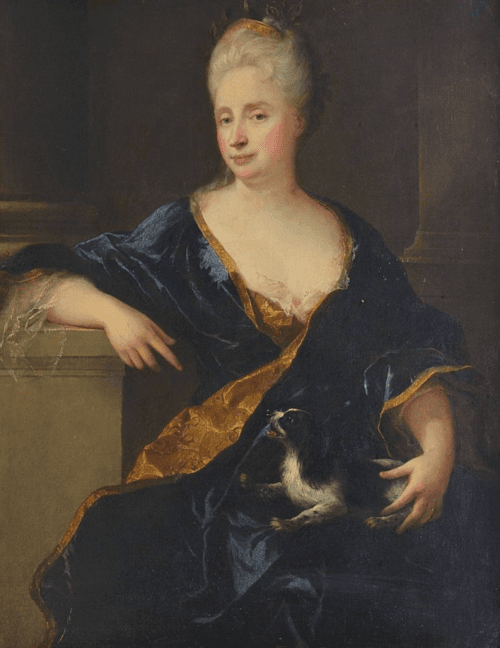
This imaginary interview was generated by artificial intelligence from sources documented in Caroline Herschel's profile. It dramatises what the figure might have said based on what we know about them, but does not constitute attested historical testimony. For primary sources and factual documentation, refer to the full profile.