Imaginary interview with Caroline Herschel
by Charactorium · Caroline Herschel (1750 — 1848) · Sciences · 6 min read
Hanover, a winter evening in the 1840s. In a modest apartment cluttered with registers, letters, and ephemerides, a tiny old woman, nearly a centenarian, receives a visitor by candlelight. Caroline Herschel, the first woman to have flushed out a comet and to wear the astronomers' gold medal, agrees to trace back the thread of her nights.
—Before the stars, there was a German childhood. What do you remember most vividly?
I was born in Hanover in 1750, into a family of musicians where girls were not destined for the stars. At ten, typhus seized me; it stopped my growth dead, and I never exceeded the height of a child. My mother already saw me as a live-in servant, good for sewing and scrubbing. It was my brother William who, in 1772, took me to Bath, supposedly to make me a concert singer. But in the evening, he would place a celestial globe before me and teach me the names of the constellations. I found I was to be trained for an assistant-astronomer, and by way of encouragement a telescope was given me. I had left a kitchen to enter the sky; I understood that only much later.
—One imagines the astronomer motionless, nose to the sky. What were your observation nights really like?
People imagine the astronomer dreaming, motionless, lost in thought. The truth is, I ran. As soon as night fell, William climbed to his great telescope, and I kept the log, the dark lantern in hand to read my notes without burning the eye accustomed to the dark. He would call out a position, a time, a description, and I had to record everything with the quill before he moved on. Was I his assistant or his colleague? Much later, I wrote to my nephew that I had been the assistant — and where our means would allow it, the partner — of your father in all his labours. Both words are true. I swept the floor, copied tables, polished mirrors; but I also understood the sky we were recording.
—Did the work ever cost you physically?
One night in 1783, at Slough, the sky was of rare purity and William was moving his telescope on its rails in total darkness. I was running from one point to another to relay measurements when I impaled myself on an iron hook fixed to the ground. The point tore my leg; I had to be carried inside, and the surgeon judged that a soldier would have been discharged for it. But a clear night cannot be made up — the sky does not wait for you. A few days later, I was limping back to the telescope, my observation log under my arm. You do not treat a comet by candlelight: you must be there when it passes, or lose it for years.
—On August 1, 1786, you discovered your first comet. How did that moment unfold?
August 1, 1786. William was away, and for the first time I was sweeping the sky alone, with the small telescope he had set up for me. I saw a fuzzy patch where my memory placed no nebula. On the 1st of August, 1786, I found a comet. I did not know what to make of it at first, but on calling to mind what I had seen in similar instances, I had no longer any doubt. I wrote that night to two astronomers so they could confirm before it escaped. A woman, from her garden in Slough, with the eye and focus of a hand-polished mirror, first to catch a comet. I did not sleep from joy; I recalculated its position until morning.
I did not sleep from joy; I recalculated its position until morning.
—You found eight in all. What does it take to flush out a comet?
Eight, in less than eleven years. The most faithful is that of 1788, which today bears both our names; it returns, it is periodic, and that is why it will outlive me. To search for a comet is to know the sky by heart to the point of noticing the intruder — the star that has no business there. I spent my nights comparing what I saw to the ephemerides and catalogues, until one extra light appeared in the field. Men thought it required genius; it required above all patience and a stubborn memory of the firmament. My sweeping of the sky was not inspiration, it was the work of a surveyor — star after star, night after night.
—You also corrected the great existing catalogues. How did you become a scholar in your own name?
When we compared our records to the great catalogues, I kept stumbling upon errors in that of Flamsteed, the first Astronomer Royal of Greenwich. Stars misplaced, others omitted. I undertook, by hand, to verify everything and fill the gaps: this became my Catalogue of 560 Stars, published in 1798, followed by an index so that anyone could find a star in his observations. In my preface, I dared to write that the errors I found in Flamsteed's catalogue gave me occasion to make this supplement, which I offer to astronomers as an useful addition. The word offer cost me courage: it was the first time I presented a work in my own name, not as the sister who copies, but as an astronomer who corrects.
—Many imagine that astronomy is done at night. Where did your most demanding work lie?
My most useful work was done by day, at my table, not at night under the stars. In the morning, I would take up the positions noted the previous evening and reduce them using logarithmic tables, accounting for the meridian transit — the precise moment when the star crosses the line that divides the sky. One correct coordinate is worth a thousand vague admirations. A star catalogue is not a poem: it is an accounting of the firmament, where a second of error misleads the astronomer who will read you in fifty years. I devoted years to this patient arithmetic, correcting columns of figures that no one would notice if they were right, and that everyone would curse if they were wrong.
—You were paid by the Crown. What did that salary mean to you?
In 1787, King George III granted me fifty pounds a year for my work as assistant. Fifty pounds! The sum was modest, but the gesture was not: I was, I was told, the first woman in England paid by the state for scientific work. For the little Hanoverian girl destined for domestic service, to receive a salary — my own money, earned from the stars — was a greater thrill than the medal that came later. William had his title of Court Astronomer; I had my purse. I entered it in my accounts with a housewife's care, because an income of one's own, for a woman of my time, was a form of free sky.
An income of one's own, for a woman of my time, was a form of free sky.

—How did you receive the gold medal, and then your election to the Royal Astronomical Society?
In 1828, the young Royal Astronomical Society of London awarded me its gold medal, for the catalogue of nebulae by William that I had reorganized in Hanover. They found it piquant that a woman of seventy-seven still held the pen. Then, in 1835, I was elected an honorary member, on the same day as Mary Somerville — two women admitted at once into a company of men who, until then, had regarded us as curiosities. I could not attend, of course: the honor was real, but the seat remained forbidden. I received these distinctions from afar, from my apartment in Hanover, with the quiet satisfaction of one who knows what each rewarded line has cost.
—William's death in 1822 brought you back to Hanover. Why did you not stop there?
When William died, in 1822, I was seventy-two and the ground gave way. We had shared half a century of nights; without him, Observatory House in Slough was just a house full of silent instruments. I returned to Hanover, thinking I would end my days in memory. But idleness frightened me more than grief. So I took up his thousands of observations of nebulae and arranged them zone by zone of the sky, so that his son John could take them up without getting lost. Past seventy-five, bent over columns of stars in the city where I was born to serve, I was still working — it was my way of keeping my brother alive.
—Your century is called the Age of Enlightenment. What would you like to pass on to those who come after you?
My century has been called the Enlightenment, and rightly so: never had reason shone so brightly, never had people believed so much in knowledge and progress. But those Lights did not shine equally on everyone. They praised the mind, they published the Encyclopédie, and at the same time they closed the doors of academies to women. I lived this contradiction in my flesh: learned enough for a king to pay me and a society to medal me, never enough to be offered a seat. If I were to bequeath one thing to those who come after, it would be this: do not wait for the sky to be given to you. Rise in the cold, keep the log, count the stars. The firmament, for its part, does not ask the sex of the eye that beholds it.
The firmament does not ask the sex of the eye that beholds it.
Read further
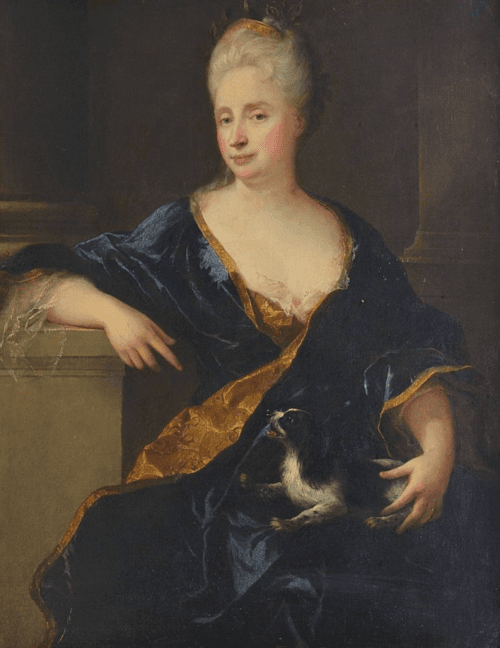
This imaginary interview was generated by artificial intelligence from sources documented in Caroline Herschel's profile. It dramatises what the figure might have said based on what we know about them, but does not constitute attested historical testimony. For primary sources and factual documentation, refer to the full profile.