Kids interview Caroline Herschel
by Charactorium · Caroline Herschel (1750 — 1848) · Sciences · 4 min read
Two twelve-year-old students push open the door of an old house in Hanover. A tiny woman, lively as a flame, awaits them near a telescope. Her name is Caroline Herschel, and she has nearly a century of memories to share with them.
—Were you sick when you were little? They say you were very small.
Yes, my child. At ten years old, I caught typhus, a high fever that burned me for weeks. When I got up again, I had stopped growing. As an adult, I was barely one meter thirty — imagine a tall child next to other women. My family thought I would only be good for scrubbing floors and cooking. They destined me to be a servant, you see. No one imagined that such a tiny thing could one day scan the stars. And yet, it was that same little girl who later discovered comets. Never judge a life by its size.
Never judge a life by its size.
—How did you become an astronomer when they wanted to make you a servant?
It was my brother William who saved me. In 1772, he took me far from Hanover, to Bath, England. At first, he wanted to make me a concert singer. But at night, he looked at the sky, and I helped him. He gave me a celestial globe — a big ball painted with stars and figures — to teach me to recognize the sky. Little by little, I became his assistant. Imagine two siblings, bent over the same night, counting stars. I thought I had come to sing. I ended up speaking the language of the stars.
I thought I had come to sing. I ended up speaking the language of the stars.
—Was it dangerous to work outside at night? Did you ever get hurt?
Oh yes! You know, observing the sky is not sitting still. When William shouted a number from his big telescope, I ran in the dark to write it quickly in the logbook. One night in 1783, while running, I impaled myself on an iron hook stuck in the snow. The wound was deep; I had to be rushed away. But a few days later, I was back outside, pen in hand. A clear night does not stop for an open leg. That is loving your work: you even forget your own blood.
A clear night does not stop for an open leg.
—What was it like on the night you found your first comet?
Ah, I remember it like yesterday! It was August 1, 1786, in the garden of our house in Slough. I was sweeping the sky with my small telescope when I saw a fuzzy patch where there had been nothing the night before. In my Memoirs, I wrote these words: “On the 1st of August, 1786, I found a comet.” At first I doubted, then I thought back to what I had already seen, and the doubt vanished. I was the first woman in the world to discover a comet. A distant ball of ice, and suddenly, my name in the sky.
A fuzzy patch where there had been nothing the night before.
—Did the king really give you money just for looking at the stars?
Yes, and it was an extraordinary thing for the time! King George III granted me fifty pounds a year for my astronomical work. That may seem little to you, but listen: I was the first woman in the entire kingdom to receive a state salary for scientific work. Before me, none. Women could paint, sing, embroider — but be paid to explore the sky, never. I clutched that first coin like a treasure. Not for its value. Because it said, at last: a woman's work is worth something.
A woman's work is worth something.
—Did you do more than just search for comets? Did you correct other scholars?
Exactly, my child. An English astronomer named Flamsteed had drawn up a great star catalogue — a giant list, with their positions in the sky. But while using it, I found errors, forgotten stars. So I spent years checking everything, star by star. In 1798, I published a supplement of 560 stars and an index to navigate it. Imagine correcting a huge book by hand, by candlelight, line after line. It was no longer the work of an assistant. It was my own work. A patient ant can repair the work of a giant.
A patient ant can repair the work of a giant.
—When your brother died, did you stop astronomy?
On the contrary! When William died, in 1822, I was seventy-two. I returned alone to Hanover, where I was born. Many thought I would rest by the fire. But my brother had observed thousands of nebulae — those fuzzy patches in the sky that are actually clusters of stars. His catalogue was in disarray. So I completely reorganized it, alone, by hand. You see, aging never frightened me. As long as you have a task to finish, you have a reason to get up each morning.
As long as you have a task to finish, you have a reason to get up.

—Did you receive a gold medal? At what age?
At seventy-seven! In 1828, the Royal Astronomical Society of London awarded me its gold medal, the highest honor for an astronomer. For my work on William's nebulae. Imagine an old lady from Hanover, very small, receiving the finest distinction of a great foreign country. I could not believe it myself. All my life, I had been told that a woman could not be a scholar. And then the greatest men of science declared me one of their own. That day, I understood that patience is always eventually seen.
Patience is always eventually seen.
—After you, did other women quickly receive that medal?
Alas, no, my child. And that grieves me. After my medal in 1828, it took one hundred and sixty-eight years for another woman to receive it. Can you imagine? Entire generations. In 1835, I was elected an honorary member, along with a brilliant scholar, Mary Somerville. We were two, like two solitary lights in a great night. I did not open the door wide enough for those who came after. But an ajar door is already better than a closed wall.
An ajar door is already better than a closed wall.
—You lived almost a hundred years! What was it like to be so old?
My body was tired, but my mind was still dancing. At ninety-seven, the crown prince of Prussia came to visit me. Imagine this great personage, sitting beside me, listening to a little old woman recite her brother's work from memory! We talked about stars together. A few years earlier, the King of Prussia had even awarded me another medal. I saw the Encyclopédie of the Enlightenment born and so many friends die. If you remember one thing from me: you can be small, sick, poor, and end up with the stars that bear your name.
You can be small and end up with the stars that bear your name.
Read further
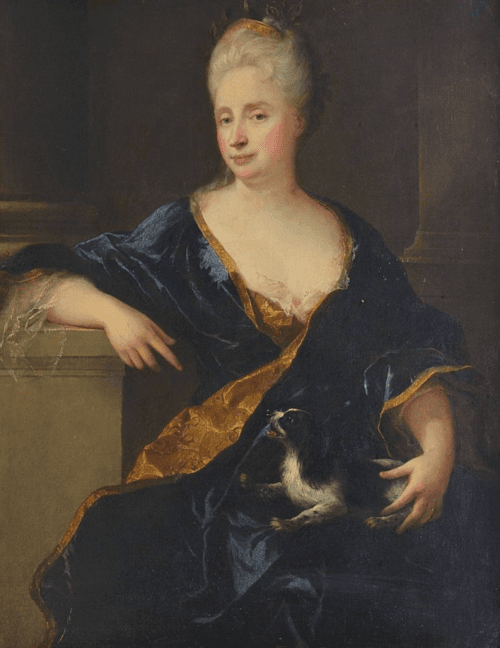
This imaginary interview was generated by artificial intelligence from sources documented in Caroline Herschel's profile. It dramatises what the figure might have said based on what we know about them, but does not constitute attested historical testimony. For primary sources and factual documentation, refer to the full profile.