Kids interview Catharine MacKinnon
by Charactorium · Catharine MacKinnon (1946 — ?) · Society · Philosophy · Politics · 5 min read
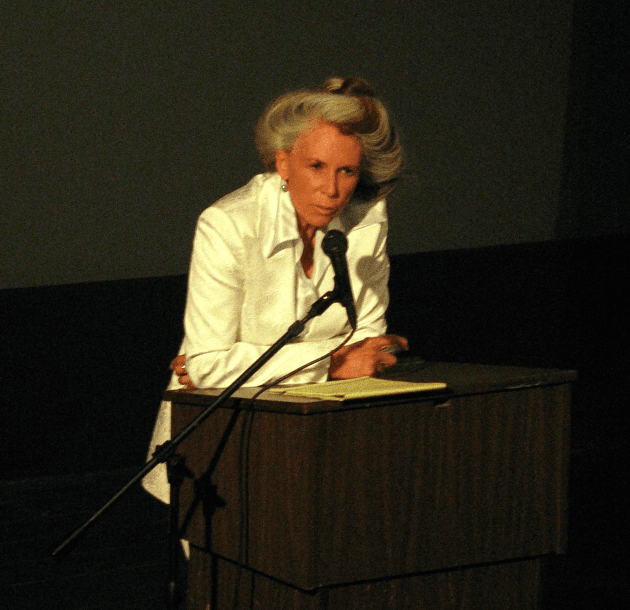
That morning, two students from a discovery class push open the door of a prestigious law school. A gray-haired woman awaits them, surrounded by books and files. Catharine MacKinnon motions them to sit down: the questions can begin.
—How old were you when you entered university, and what was it like?
You know, I first studied at Smith College, a women's college. Imagine an entire campus of young women reading, debating, and dreaming of changing the world. Then I went to Yale, a great law school. There, I spent years buried in laws and court decisions. I even earned two doctorates: one in law, one in political science. It was long, demanding, sometimes exhausting. But one question never let me go: why do rules, written to be fair, always leave women out? I had been looking for the answer since I was little, without knowing it.
—Is it true you were both a professor and a lawyer? How do you do both?
Yes, and it was rare, you know. In the morning, I taught law to my students at the University of Michigan, in a large lecture hall. In the afternoon, I prepared real pleadings, for real women, before real judges. Imagine someone who explains the rules of the game in class, then goes down to play the match. Many professors stay in their books. I wanted my ideas to be put to use for real. I wore the professor's robe and the lawyer's gown. Both say the same thing: the law must not only be beautiful on paper, it must protect flesh-and-blood people.
—What exactly did you invent for workplace harassment?
Before me, you won't believe it: sexual harassment did not exist in the law. A woman bothered by her boss had no word to defend herself before a judge. In 1979, I wrote a book, Sexual Harassment of Working Women. I explain a very simple idea: bothering a woman because she is a woman is discrimination. That means: treating her unfairly because of her sex. Now, there was already a law against that at work, the Civil Rights Act. I turned it inside out to say: this too is forbidden.
Putting a word to a suffering is already beginning to repair it.
—And did the judges listen to you right away?
Not right away, my child. We had to wait seven years. In 1986, the highest court in the country, the Supreme Court, decided a case called Meritor Savings Bank. And then, the judges said: yes, sexual harassment is indeed prohibited discrimination. They even cited my book in their decision. Imagine that: you write an idea, alone in your office, and years later nine judges turn it into a rule for an entire country. I did not feel pride, no. Rather the feeling that a door had just opened, and that thousands of women could finally walk through it.
—What does it mean to treat everyone alike? Isn't that what being fair is?
Ah, good question! People think justice is treating everyone exactly alike. But listen to me. Imagine a race where some runners carry a sack of stones on their backs. If you say 'same rules for everyone,' those carrying stones will always lose. That, I call formal equality: the same rules, but closing your eyes to differences at the start. I defend substantive equality: look at who carries the stones, and correct it. Otherwise the law seems neutral, but in truth it reproduces injustice. I developed all this in my 1989 book on the state and law.
An equal rule among unequals is not just.
—I heard you wrote a law with a friend. What was it about?
Yes, with my friend Andrea Dworkin, another feminist. In 1983, in the city of Minneapolis, we wrote a law together. It allowed women harmed by certain images — what is called pornography — to file a complaint in court. Our idea: these images are not mere drawings; they use real women, sometimes mistreated to make them. The city council passed our text. Twice, even! It was a bit crazy to see our ideas almost become law. Writing together, you see, is like holding hands when everyone is shouting at you.
—So did the law actually pass in the end?
No, and it hurt me. Twice the council voted yes, and twice the mayor said no. His argument: freedom of speech. In the United States, a very important text, the First Amendment, protects the right to say and show almost anything. The mayor feared we would touch that. I replied: and women's freedom, then? I wrote a little book about it in 1993, Only Words. Because my question was this: is it really 'only words' when real people are hurt? You may disagree with me. But I wanted people to ask the question honestly.
—Is it true you defended women during a war?
Yes, and it is perhaps what I am most proud of. In the 1990s, a terrible war broke out in the former Yugoslavia, in Europe. Women, Bosnian and Croatian, suffered atrocious violence, committed in an organized way. I went to defend them before a great international tribunal, in The Hague, the Netherlands. We achieved something new: that these crimes be recognized as war crimes, punishable anywhere in the world. Imagine women whom no one wanted to believe, and whose word suddenly becomes evidence before judges from around the world. That changes everything, for them and for those who come after.
—Why did you title one of your books 'Are Women Human?'
Because it is a real question, however shocking. In 2006, I gathered my writings on women's rights worldwide under that title: Are Women Human?. I wanted to shake people up. We say 'human rights'... but when a woman is sold, beaten, or enslaved, where are her rights? I wondered: if she were truly treated as a human being, would that happen? Asking the question out loud forced everyone to face what they prefer not to see. Sometimes a disturbing title makes people think more than a long, well-behaved speech.
—Today, have things changed for women?
A lot, and it moves me. In 2017, millions of women began to speak at the same time about the harassment they had suffered. The movement was called #MeToo. Nearly forty years earlier, alone in my office, I had put a word to what these women were living without being able to name it. Seeing so many voices rise at once was overwhelming. But I don't want to lie to you: the work is not finished. There are still sacks of stones on many shoulders. It is up to you, the young, to continue the path.
A just idea takes time. But it always ends up growing.
This imaginary interview was generated by artificial intelligence from sources documented in Catharine MacKinnon's profile. It dramatises what the figure might have said based on what we know about them, but does not constitute attested historical testimony. For primary sources and factual documentation, refer to the full profile.