Imaginary interview with Catharine MacKinnon
by Charactorium · Catharine MacKinnon (1946 — ?) · Society · Philosophy · Politics · 6 min read
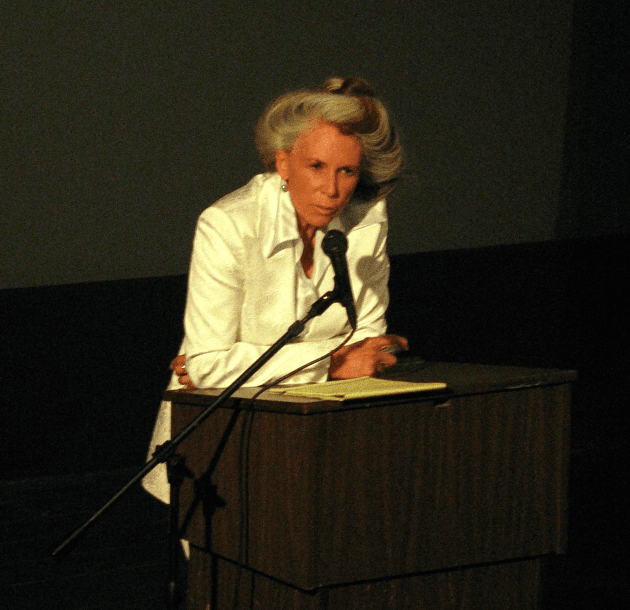
Ann Arbor, a fall afternoon. In her office at the University of Michigan Law School, cluttered with annotated casebooks and legal briefs, Catharine MacKinnon receives without ceremony. Her gaze sharp, her speech honed like a courtroom brief, she speaks of law as a battlefield — her own.
—Before you, they say, sexual harassment had no legal name. How did you come to name it?
It existed, of course — in every office, every workshop, every relationship where a man held the power to fire a woman. What was missing was the word of law. In 1979, in Sexual Harassment of Working Women, I wrote a simple thing: these behaviors are not private clumsiness; they are the unwanted imposition of sexual demands in an unequal power relationship. I took Title VII of the Civil Rights Act of 1964, that text prohibiting sex discrimination, and I showed that harassment was a form of it. Seven years later, the Supreme Court, in Meritor Savings Bank v. Vinson, adopted the argument. For a legal scholar, naming is not describing: it is making actionable.
For a legal scholar, naming is not describing: it is making actionable.
—You speak of 'unequal power.' What exactly does this notion cover in your theory?
Take the definition I gave in 1979: harassment is the use of power drawn from one social sphere to extract benefits or inflict deprivations in another. The boss does not desire you first; he holds you. His authority over your salary becomes authority over your body. That is why I always refused to treat these cases as stories of seduction gone wrong. Seduction presupposes two equal wills; harassment presupposes precisely that they are not. It is this imbalance — patriarchy lodged even in the employment contract — that the law refused to see, because it was written by those who benefited from it.
The boss does not desire you first; he holds you.
—You distinguish 'formal' equality from 'substantive' equality. Why do you find this distinction decisive?
Because treating everyone the same, when not everyone starts from the same point, is not equalizing: it is etching inequality in stone while giving it the appearance of neutrality. Formal equality demands that the same rule be applied to men and women. But if women bear children, suffer rape, endure harassment, then the same rule produces opposite effects. Substantive equality, on the other hand, starts from real power relations. That is the heart of Toward a Feminist Theory of the State, from 1989: law does not fall from the sky; it has a point of view, and that point of view has long been that of man taking himself as the measure of the human.
Applying the same rule to unequal situations is not equalizing; it is etching inequality in stone.
—In that same 1989 work, you write that the state itself has a sex. What do you mean?
I put it bluntly: 'The state, expressed through law, institutionalizes the power of men over women through its definition of gender.' The state is not an umpire hovering above the fray. Through its laws, it manufactures gender and consolidates male domination. Look at rape: criminal law prohibits it, but it defines it in such a way that it becomes nearly impossible to prove. The woman must show she resisted, that she did not lie, that she did not provoke. That is my radical reading — in the literal sense, taking the problem at the root: what liberalism calls state neutrality is in reality the point of view of one sex elevated to the universal.
—Your thought is often called 'radical feminism.' Do you embrace this term, and why?
I embrace it, provided it is understood correctly. Radical feminism does not mean extreme: it means it grasps male domination as the primary structure, the one that organizes others. And the site of this domination, for me, is sexuality. I said it in Feminism Unmodified: if sexuality is central to women's situation, and if that situation is not biological, then sexuality is largely a social construction — which does not mean it has no basis in material reality. I have been much criticized for that sentence. But anyone who has read Kate Millett or been part of the second wave knows that power is first played out in the most intimate relations.
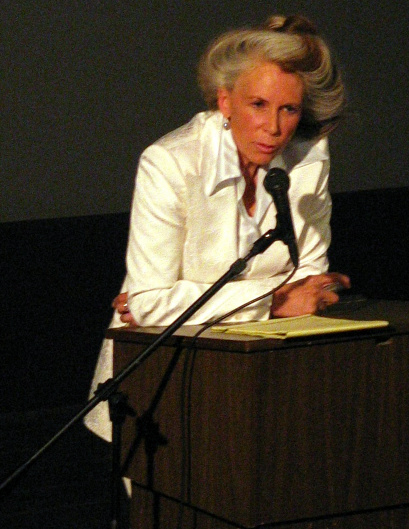
—In 1983, in Minneapolis, you drafted an anti-pornography ordinance with Andrea Dworkin. What were you trying to do, precisely?
We wanted to shift the ground. The debate on pornography was stuck in morality — is it obscene, is it shocking. Andrea Dworkin and I said: it is not a question of taste; it is a question of harm. In Minneapolis, in 1983, we wrote a text that allowed women used, hurt, subordinated by pornography to sue its producers civilly for sex discrimination. The city council passed it. Twice. Twice the mayor vetoed it, in the name of the First Amendment. They preferred to protect the image rather than the real women burned to produce it. That episode, adopted then blocked, remains for me the exact symbol of what law sacrifices when it chooses.
They preferred to protect the image rather than the real women burned to produce it.
—Your opponents invoke freedom of expression. What do you answer them?
That words, sometimes, do not merely say — they do. That is the meaning of the title of my 1993 essay, Only Words. Pornography does not just depict gender hierarchy: it creates it. I wrote there that real women are used to produce it, that real women are hurt in producing it, and hurt by its use. So when they wave the First Amendment at me, I ask: whose freedom? That of the industry that films, or that of the woman filmed? Legal liberalism treats speech as a pure exchange of ideas among equals. But between the one holding the camera and the one enduring it, there is no equality — there is a power relation that the law refuses to name.
—In the 1990s, you pleaded at The Hague for women from the Yugoslav wars. How did that battle begin?
It began with stories that could not be undone once heard. Bosnian and Croat women raped not by accident of war, but methodically, as an instrument — to terrorize, to defile, to erase a people. Before the International Criminal Tribunal for the former Yugoslavia, at The Hague, I carried their testimonies. We had to get systematic rape recognized for what it was: a crime against humanity, and in places an instrument of genocide. International humanitarian law had long treated these violations as collateral damage, almost as booty. Making precedent there was not theory: it was restoring to women the status of recognized victims of a state crime.
—The title of your 2006 collection poses a brutal question: 'Are Women Human?' Is that provocation?
It is a serious question, posed from the standpoint of law. In Are Women Human?, in 2006, I put it this way: if women were human, would we be a commodity shipped from one country to another, sold to the highest bidder, reduced to sexual and reproductive slavery? The great declarations of rights speak of man, and we are assured that the masculine includes the feminine. Experience says otherwise. What I learned at The Hague as in the courts of Michigan is that women's humanity is not a given: it is a legal conquest, wrested case by case. As long as war rape, trafficking, subordination remain without effective international sanction, the question retains its full urgency.
Women's humanity is not a given: it is a legal conquest, wrested case by case.
—Decades after your 1979 book, millions of women speak out at once. What do you feel facing that?
A kind of vertigo, and recognition. What #MeToo made visible in 2017, on a global scale, is exactly the dynamics I described since the 1970s: power buying silence, shame displaced from aggressor to victim, the isolation of one who thought she was alone. I have spent my life translating that into legal categories — Title VII, discrimination, substantive equality — so that a single woman could rely on a text rather than on her word alone. Seeing so many voices converge is seeing the law caught up by what it pretended to ignore. But I remain a jurist: collective emotion is only valuable if it sediments into enforceable law. Otherwise the wave recedes, and everything starts over.
This imaginary interview was generated by artificial intelligence from sources documented in Catharine MacKinnon's profile. It dramatises what the figure might have said based on what we know about them, but does not constitute attested historical testimony. For primary sources and factual documentation, refer to the full profile.