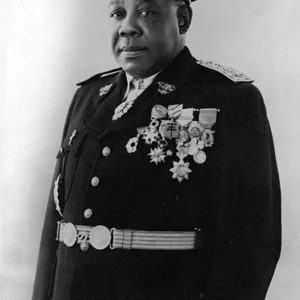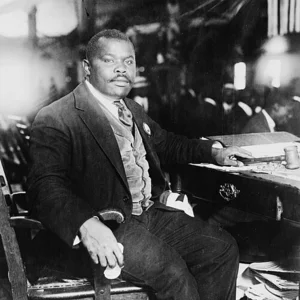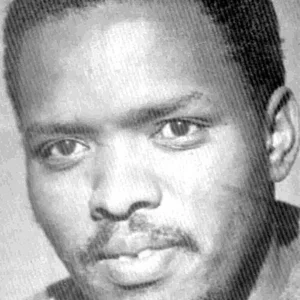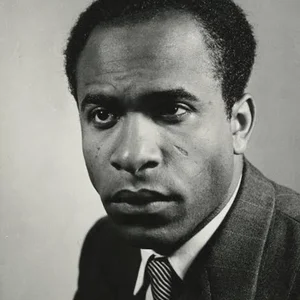

Frantz Fanon (1925-1961) was a psychiatrist and essayist born in Martinique. A major thinker of anti-colonialism, he analyzed the psychological mechanisms of colonial oppression and supported the Algerian liberation struggle.
Frantz Fanon(1925 — 1961)
Frantz Fanon
Martinique
6 min read
Frequently asked questions
Famous Quotes
« I am a man, and what I have to recapture is the whole past of the world.»
« What bursts forth is that colonialism has never been a homogeneous system of thought.»
Key Facts
- Born on July 20, 1925, in Fort-de-France (Martinique)
- Published Black Skin, White Masks in 1952, an analysis of colonial alienation
- Chief physician at the Blida-Joinville psychiatric hospital in Algeria from 1953
- Joined the FLN and campaigned for Algerian independence
- Published The Wretched of the Earth in 1961, with a preface by Jean-Paul Sartre; died on December 6, 1961
Works & Achievements
An inaugural essay analyzing the psychological alienation of the colonized and the internalization of racism. A foundational text of postcolonial studies.
An innovative care practice (sociotherapy) respecting the culture of Algerian patients. A pioneering approach in social psychiatry.
A text of rupture in which Fanon refuses to endorse a pathogenic colonial system. An act of total commitment to the Algerian cause.
A sociological analysis of the transformations of Algerian society in struggle. It examines in particular the role of women, the veil, and the radio.
A major work on decolonizing violence and the construction of a national consciousness, with a preface by Jean-Paul Sartre. A touchstone for liberation movements worldwide.
A gathering of political articles, including those written for El Moudjahid. It sheds light on his pan-African and anticolonial vision.
Anecdotes
Born in Fort-de-France, Martinique, in 1925, Frantz Fanon was only 17 when he joined the Free French Forces to fight Nazism. Wounded during the European campaign, he was awarded the *Croix de guerre*, but bitterly discovered racism within the very army that was meant to liberate France.
After becoming a psychiatrist, Fanon was appointed head physician at the Blida-Joinville hospital in Algeria in 1953. There he overturned established practices by humanizing care and connecting patients to their own culture, rather than locking them away: he set up a Moorish café and a workshop for his Muslim patients.
In 1956, at the height of the Algerian War, Fanon resigned dramatically from his post as a physician through a famous letter, judging it impossible to heal minds within a colonial system that was making them ill. He then joined the FLN.
Stricken with leukemia, Fanon finished his book *The Wretched of the Earth* in just a few months, knowing he was going to die. He met Jean-Paul Sartre in Rome, who agreed to write its preface; the work appeared only a few days before his death, in December 1961.
Fanon died at the age of 36 in a hospital near Washington, in the United States, where he had been transferred for treatment. In accordance with his wishes, his body was repatriated and buried in Algeria, on the land of the struggle he had made his own.
Primary Sources
The black man is not a man. [...] There is a zone of non-being, an extraordinarily sterile and arid region.
Decolonization is always a violent phenomenon. [...] The colonized discovers reality and transforms it through the movement of his praxis.
If psychiatry is the medical technique that aims to enable man to no longer be a stranger to his environment, I owe it to myself to affirm that the Arab, permanently alienated in his own country, lives in a state of absolute depersonalization.
The veil worn, the veil cast aside, the veil manipulated, the veil turned into a technique of camouflage, into a means of struggle.
Key Places
Fanon's birthplace, where he grew up in a middle-class family and was a pupil of Aimé Césaire.
The city where Fanon pursued his studies in medicine and psychiatry after the war, and where he wrote “Black Skin, White Masks”.
The institution where Fanon served as chief physician from 1953 and revolutionized the care of patients. The hospital bears his name today.
The place of his exile after his expulsion from Algeria, where he worked as a psychiatrist and wrote for the FLN newspaper.
The place where Fanon, suffering from leukemia, was treated in a hospital and where he died on 6 December 1961.
A border region of eastern Algeria where Fanon's body was repatriated and buried, on the soil of the struggle he supported.
Typical Objects

Tools of the chief-physician profession that Fanon practiced at Blida. They symbolize his conviction that mental health was inseparable from the social and political context.

A text dictated and written in haste during the final months of his life. This manuscript became one of the founding works of anticolonial thought.

The tool of the essayist and journalist who wrote committed articles and books. Fanon notably wrote for El Moudjahid, the organ of the FLN.

A military decoration received for his combat wound in the Free French Forces. It illustrates the paradox of a man honored by a France that treated him as a second-class citizen.

A traditional women's garment that Fanon analyzes as a symbolic issue and a weapon of the liberation struggle in “A Dying Colonialism”.

The document of the ambassador of the Provisional Government of the Algerian Republic to Ghana. It bears witness to Fanon's involvement in pan-African diplomacy.
School Curriculum
Vocabulary & Tags
Key Vocabulary
Daily Life
Morning
In Blida, Fanon begins his day early by visiting the wards of the psychiatric hospital, speaking directly with the patients. He places great importance on listening to them in their own language and cultural context.
Afternoon
The afternoon is devoted to consultations, team meetings, and experimenting with new methods of sociotherapy. He combines clinical observation with reflection on the psychological effects of colonial domination.
Evening
In the evening, Fanon writes intensely, often dictating to his wife Josie, who types out his texts. These late-night hours give rise to his essays and political articles.
Food
During his years in Algeria and Tunisia, Fanon shared a Mediterranean and North African diet: bread, vegetables, slow-cooked dishes, and Moorish coffee. While living underground and travelling, his meals were often frugal and irregular.
Clothing
A physician and intellectual of the mid-20th century, Fanon wore Western dress, a shirt and tie, suited to his role at the hospital. On missions for the FLN, he adopted a more discreet attire, suited to clandestine life.
Housing
In Blida, Fanon lived in staff accommodation within the psychiatric hospital. After his expulsion, he lived in exile in Tunis, then travelled across Africa as his diplomatic missions required.
Historical Timeline
Period Vocabulary
Liens externes & ressources
Références
Œuvres
Peau noire, masques blancs
1952
Réforme psychiatrique à Blida
1953-1956
Lettre de démission à Robert Lacoste
1956
L'An V de la révolution algérienne
1959
Les Damnés de la terre
1961
Pour la révolution africaine (recueil posthume)
1964