Imaginary dialogue between Jacques-Joseph Champollion (Champollion-Figeac) and Champollion
by Charactorium · Champollion (1790 — 1832) · Sciences · 5 min read
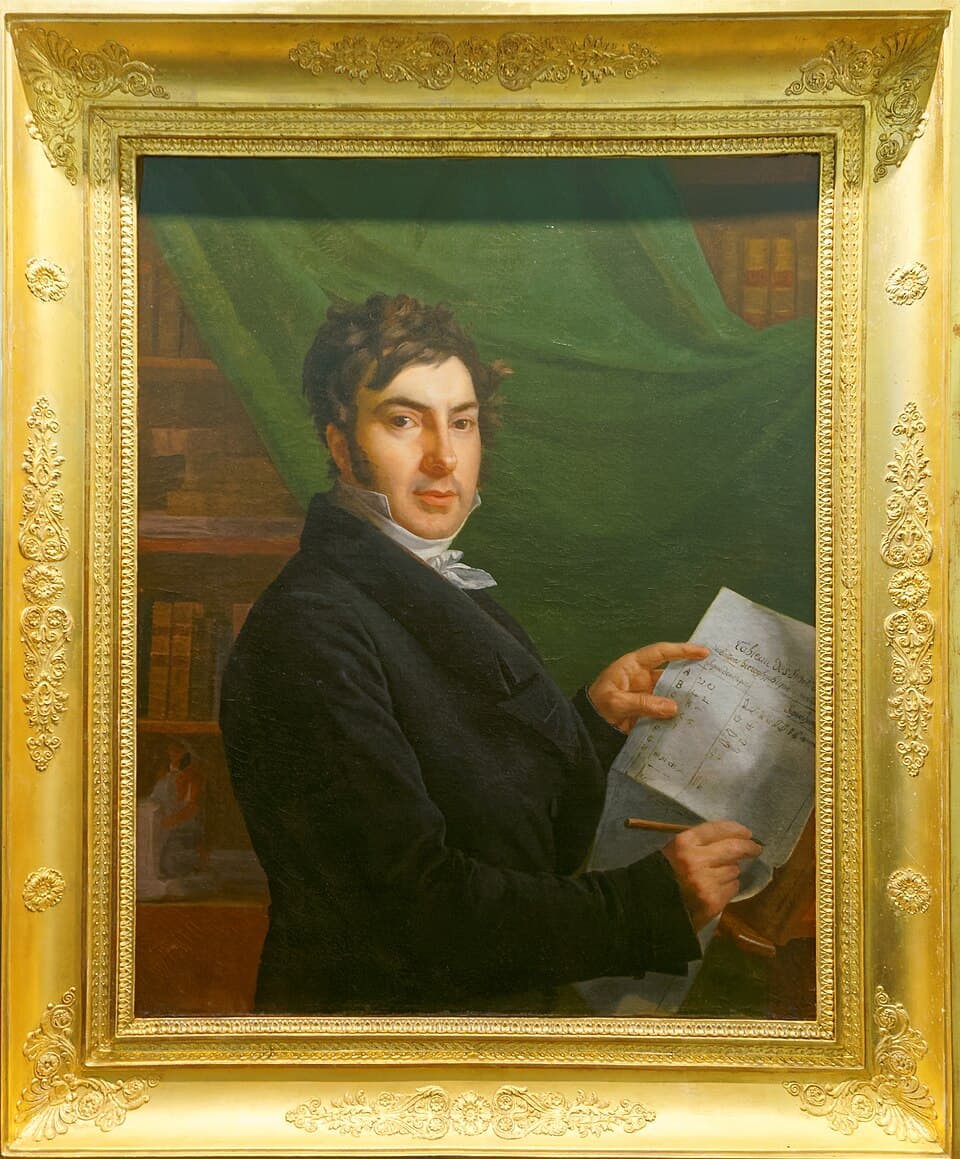
It is in the study cluttered with papyri and copies of inscriptions, in Paris, in this winter of 1831, that I find my younger brother, shortly after he was granted the first chair of Egyptology at the Collège de France. The oil lamp lights up his features, drawn by fever and late nights. We have known each other forever — I raised him, taught him, housed him in Grenoble, and he came running to get me that September morning when everything changed. Tonight, I want him to tell me, to me who was there at every step, the man behind the discovery.
—Jean-François, do you remember that morning in September 1822 when you burst into my office at the Institute? Tell me what you understood that day.
How could I forget it, you who received me falling at your feet? I had before me the cartouches of the Rosetta Stone and those of the obelisk of Philae. By comparing them, sign by sign, I finally saw that the hieroglyphs represented sounds, that they wrote the names of rulers like an alphabet. The whole system opened up at once, like a door long forced. I came up to you, barely had the strength to tell you I had it, and the world gave way. I was told I remained unconscious for five days. My body had given way where my mind had just triumphed.
The whole system opened up at once, like a door long forced.
—When you were only sixteen, in Grenoble, you argued before the Academy that Coptic was the last language of the pharaohs. Where did that certainty come from?
From an intuition that nothing ever disproved, my brother. Very young, I understood that Coptic was not a dead church language, but the very voice of ancient Egypt, simply written in Greek letters. I compiled its grammar before others even knew how to spell it. It was this language that gave me the pronunciation of the signs: without it, the hieroglyphs would have remained mute images. Where Young saw drawings, I already heard words. People thought me a dreamer for learning Arabic, Syriac, Chaldean while my schoolmates played. But it was this patient dream that, twenty years later, spoke.
Where others saw drawings, I already heard words.
—There is much talk in the salons of your rivalry with the Englishman Thomas Young. He too had read signs in the cartouches. What do you owe him, and what do you not owe him?
I will be fair, for science does not like ingratitude. Young had the merit of foreseeing, as early as 1821, that certain signs in the royal cartouches represented sounds. But he stopped at the threshold. He believed it was an exceptional process, reserved for foreign names, Greek and Roman. I demonstrated that Egyptian writing is entirely a system — figurative, symbolic, and phonetic at once, sometimes in the same word. It is not a key for a few locks; it is the lock itself that I understood. The difference is not one of national pride; it is one of method: he glimpsed, I read.
It is not a key for a few locks; it is the lock itself that I understood.
—You know how our father worried about you staying up over your dictionaries. How did you work, in those years when no one believed in your method?
With stubbornness, and thanks to you who fed me when my lessons were not enough. My days began before dawn, at my desk covered with copies and squeezes. I tirelessly compared the three scripts of the Rosetta Stone: the Greek I knew, the cursive Demotic, and the hieroglyphs. Demotic was my bridge — the script of everyday affairs, daughter of the sacred signs. I went from signs to sounds, from sounds to Coptic words, checking every step. Many evenings, by candlelight, my fragile health protested. But I could not stop: each deciphered cartouche called for the next, like a gentle fever.
Each deciphered cartouche called for the next, like a gentle fever.
—You wrote me moving letters from there. During your expedition of 1828, what did you feel when you read Egypt on its own stones for the first time?
An emotion that my words, I fear, only touched upon in my letters. After so many years spent on copies, I finally stood before the monuments themselves, in Thebes, in the Valley of the Kings, before Abu Simbel. I read the inscriptions directly, without intermediary, as one reads an open book. I wrote to you that, having sailed up the Nile to the Second Cataract, I had the right to affirm that the ancients had not exaggerated about Thebes: it was even greater. My notebooks filled with sketches. Before those colossi, I wept: my method held, the stone answered me.
I read Egypt on its stones like one reads a book finally opened.
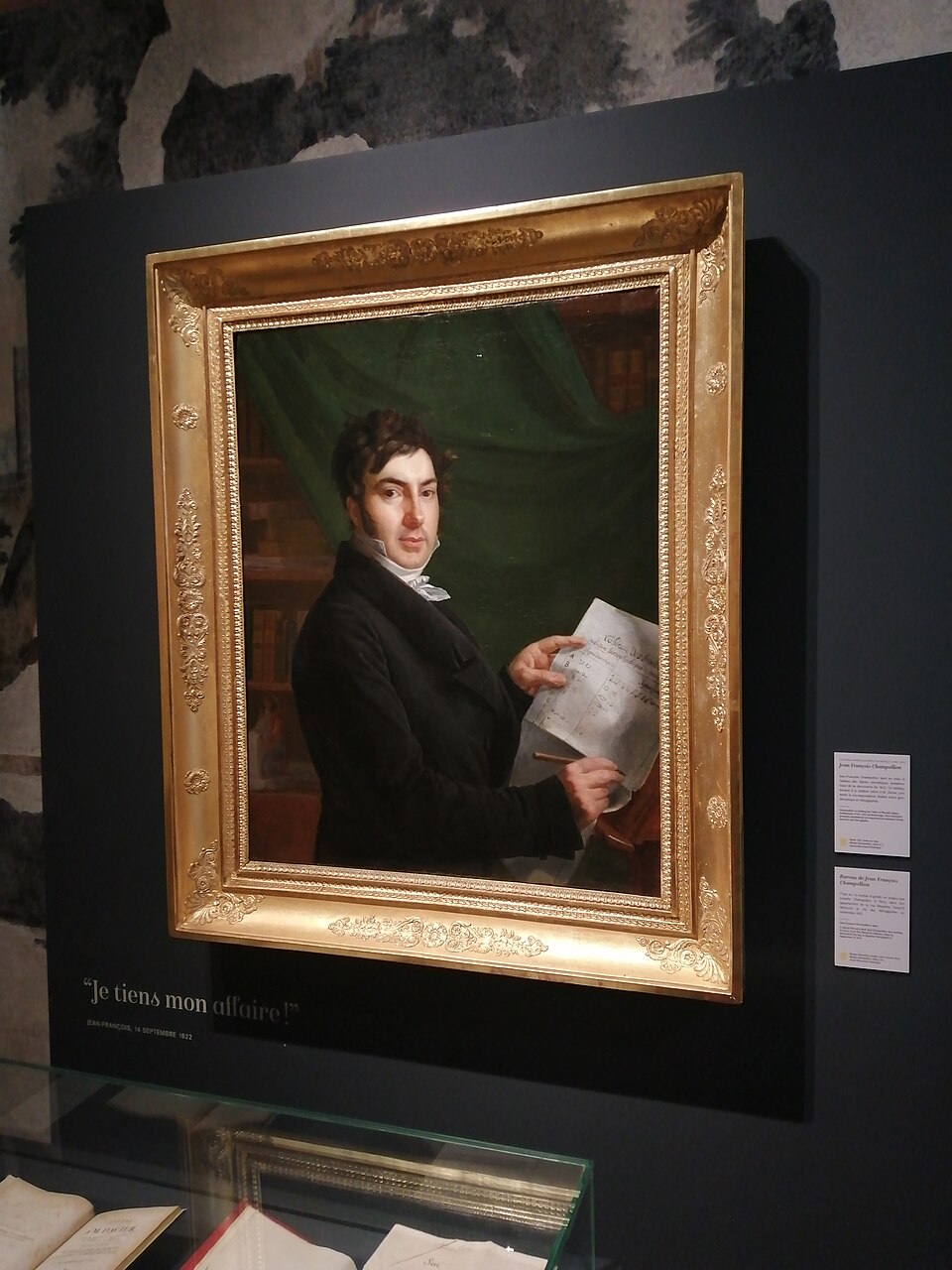
—Your health had already exhausted you there. Yet you stayed nearly two years. What did you go to seek on the banks of the Nile that books could not give you?
Living proof, my brother, the kind no copy could replace. On squeezes, a sign can be altered, a line lost. Before the monument, I saw the artist's hand, the arrangement of texts, the context that illuminates meaning. I verified on site what I had guessed in Paris, and almost always, the stone confirmed. I also brought back enough to nourish years of study: sketches, drawings, unpublished readings. Yes, the climate was harsh on me, and I returned wearier than I left. But an Egyptologist who has never touched Egypt is but a half-scholar. I had to go once.
An Egyptologist who has never touched Egypt is but a half-scholar.
—Since 1826 you have been organizing the Egyptian section at the Louvre. You who wanted to decipher, now you are a curator. How do you experience this new role?
As the natural extension of my discovery, you see. Deciphering is not enough: one must display, classify, transmit. At the Louvre, I received collections in disarray: papyri, steles, statues from Egypt without method. I wanted to arrange them so that the public could read a civilization, not a heap of curiosities. My afternoons are spent there, among the antiquities, labeling, correcting provenances. It is no longer the solitary scholar by candlelight; it is the man building a house for a new science. For a discovery that remains in a study dies with its maker. I want it to outlive me.
A discovery that remains in a study dies with its maker.
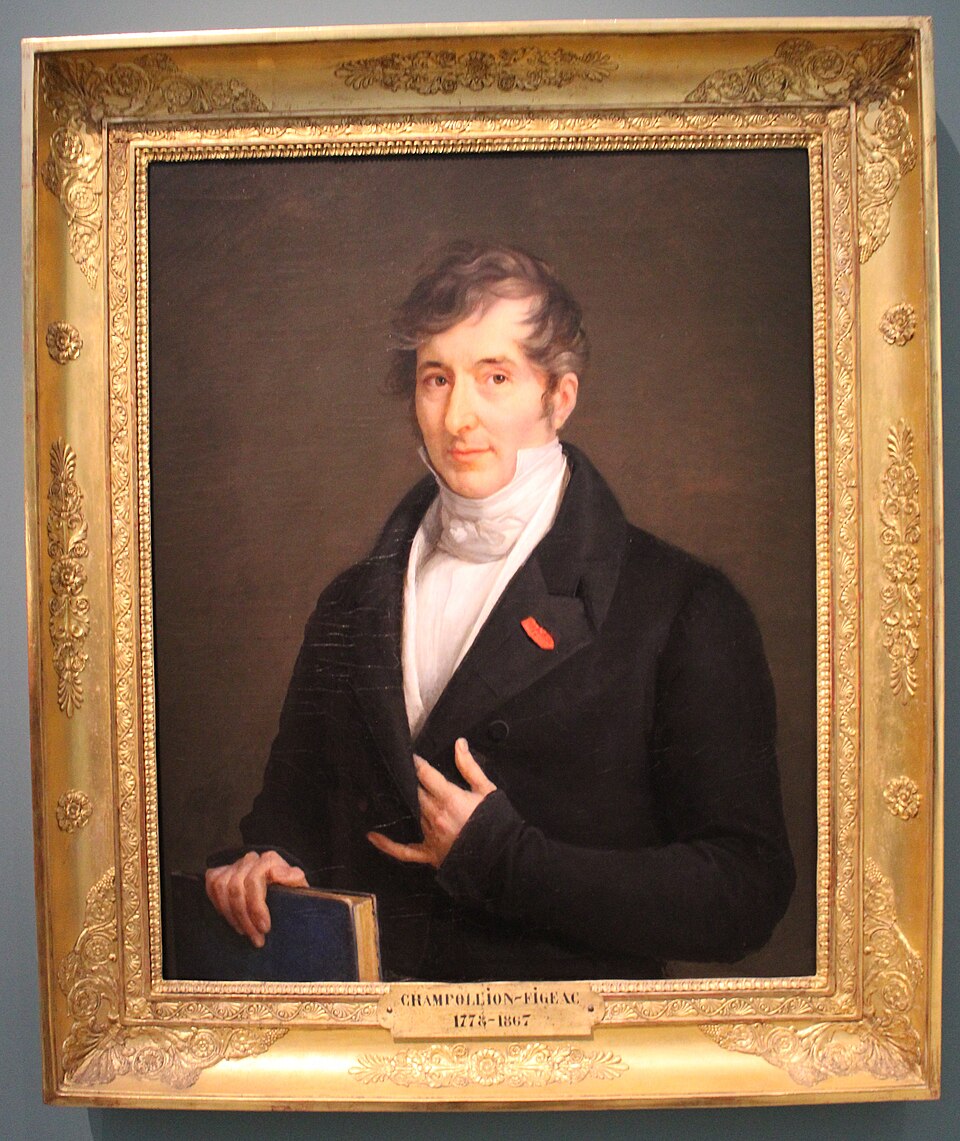
—A chair has just been created for you at the Collège de France. Do you truly believe, my dear, that you are founding a science that will outlive you?
I believe it, and it is my greatest pride, even more than the morning of 1822. An isolated discovery is forgotten; a discipline is transmitted. By teaching here, I am training those who will continue what I will not have time to finish. I have laid down the rules in my Précis, and I am working on a grammar and a dictionary that will serve as a foundation. You know, my health is shaky, and I have few illusions about the number of my lessons. But if I fall, the edifice will stand. You, my elder, will watch over my papers. Promise me that nothing will be lost.
An isolated discovery is forgotten; a discipline is transmitted.
—When you fell unconscious for five days after your 'I've got it,' I feared losing you. Did you then measure the price your body was paying for your mind?
At the moment, no — joy had carried me away entirely. Only upon waking, seeing you leaning over me, your face haggard, did I understand how much I had frightened you. My mind had sustained such an effort for so many years that it, so to speak, broke in victory. Since then, my body often reminds me of the cost. But shall I tell you something I would confide to no other? I would do it again without hesitation. That moment when the veil was torn was worth all the fevers. You were the first to know, and it had to be you.
That moment when the veil was torn was worth all the fevers.
—To finish, brother: if one thing had to be remembered from your method — Coptic, patience, audacity — which would you name?
Not any single one, for it is their harmony that carried me. But if you force me, I would say: the ear. The audacity to believe that these images spoke, the patience to learn ten languages to hear them, and Coptic which gave me their voice. Others looked at hieroglyphs as symbols to interpret; I wanted to listen to them as a language to understand. A true philology, not an antiquarian's guessing game. That is my whole secret, and you witnessed it from Grenoble: I treated a sacred script as a living language. Therein, I believe, lies the entire decipherment.
Others looked at hieroglyphs; I wanted to listen to them.
This imaginary interview was generated by artificial intelligence from sources documented in Champollion's profile. It dramatises what the figure might have said based on what we know about them, but does not constitute attested historical testimony. For primary sources and factual documentation, refer to the full profile.