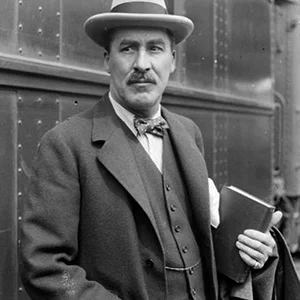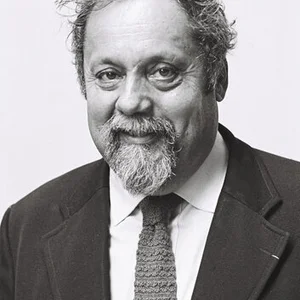

American Egyptologist and archaeologist, curator and later director of the Metropolitan Museum of Art in New York. He led major excavations at Deir el-Bahari, in Egypt, and advanced knowledge of the Egyptian Middle Kingdom.
Herbert Winlock
Herbert Eustis Winlock
6 min read
Frequently asked questions
Key Facts
- Born in 1884 in Washington, died in 1950; graduated from Harvard in 1906.
- Joined the Metropolitan Museum of Art and, from 1906, took part in its archaeological expeditions in Egypt.
- Led the excavations at Deir el-Bahari and, in 1920, uncovered the famous wooden models from the tomb of Meketre (Middle Kingdom).
- Studied the funerary complex of the pharaoh Mentuhotep II and the Coptic monastery of Epiphanius.
- Became director of the Metropolitan Museum of Art from 1932 to 1939.
Works & Achievements
Discovery of an exceptional set of painted wooden models, which became a major source for understanding daily life in the Middle Kingdom.
Unearthing of the bodies of sixty fighters, a rare testimony to the wars that reunified Egypt.
Patient reassembly of the shattered sculptures of the queen-pharaoh from thousands of fragments, now on display at the Metropolitan Museum.
Gathering and study of the funerary furnishings of three wives of Thutmose III, which had been scattered across the antiquities market.
A landmark synthesis of twenty years of Metropolitan excavations in the Theban necropolis.
A major work reconstructing the political history of the Middle Kingdom from the archaeological data of Thebes.
Leadership of one of the world's greatest museums, which he marked with the scientific rigor he had honed in the field.
Anecdotes
In March 1920, while excavating a cliff at Deir el-Bahari, Winlock's team stumbled by chance upon a small chamber that had been sealed for nearly four thousand years: the serdab of the tomb of Meketre. Inside slept some twenty models in painted wood — boats, workshops, gardens, herds — depicting daily life in Middle Kingdom Egypt with undiminished freshness.
In 1923, near the temple of Mentuhotep II, Winlock uncovered a pit containing the bodies of sixty Egyptian soldiers killed in battle, their wounds still visible. These “slain soldiers” offered a rare and moving testimony to the wars that led to the reunification of Egypt around 2000 BC.
For years, Winlock had hundreds of stone fragments, once thrown into a quarry near Deir el-Bahari, gathered up. Patiently, his teams reassembled — like an immense jigsaw puzzle — the shattered statues of the pharaoh-queen Hatshepsut, whose image had been hammered away after her death. Many of these statues stand today in the Metropolitan Museum.
Winlock had the eye of a detective: he was able to recognize that jewels and precious objects scattered across the antiquities market came from the tombs of three foreign wives of Thutmose III. In this way he reconstructed the “treasure of the three Egyptian princesses.”
After becoming director of the Metropolitan Museum in 1932, Winlock continued to think like a man of the field. He liked to repeat that a well-conducted excavation was worth more than a spectacular object torn from its context, for it is the precise location of a find that tells its story.
Primary Sources
Drawing on the excavations at Deir el-Bahari, the book traces the rebirth of Thebes under Mentuhotep and the rise of Egypt's Middle Kingdom.
A synthesis of twenty years of campaigns carried out by the Metropolitan Museum's Egyptian Expedition at the site of Deir el-Bahari.
A detailed study of the painted wooden models found in the serdab of Meketre's tomb, illustrating daily life in the Middle Kingdom.
Winlock reconstructs the funerary furnishings of three wives of Thutmose III from objects scattered across the antiquities market.
Key Places
Winlock's birthplace, where he grew up in a cultured environment close to the museums of the Smithsonian Institution.
A major site on the west bank of Thebes where Winlock carried out his most famous excavations, around the temples of Mentuhotep II and Hatshepsut.
The museum where Winlock served as curator of the Egyptian department and then director from 1932 to 1939.
Site of the royal necropolis of the early Middle Kingdom where Winlock worked during his first Egyptian campaigns.
An oasis in the Egyptian Western Desert where Winlock led expeditions and archaeological surveys.
The town where Winlock spent his final years and died in 1950.
Typical Objects

Small-scale painted wooden models depicting boats, workshops and herds, placed in a tomb to ensure the deceased an abundance in the afterlife. Winlock discovered them intact in 1920.

Basic excavation tools, used to clear away earth with precision and to gently clean objects and reliefs.

A logbook in which the archaeologist records the exact location, depth and context of each object, along with sketches and plans.

A tripod-mounted plate camera used to document excavations before objects and structures were moved.

Sculptures of the queen-pharaoh, broken and thrown into a quarry after her death, which Winlock patiently had reassembled piece by piece.

Diadems, bracelets and gold cups belonging to three wives of Thutmose III, which Winlock identified and reassembled from scattered objects.
School Curriculum
Vocabulary & Tags
Key Vocabulary
Daily Life
Morning
At the Deir el-Bahari excavation site, Winlock would rise before the great heat to join the Egyptian workers on the job at first light. He assigned the teams, oversaw the clearing of the layers, and inspected the trenches opened the day before.
Afternoon
In the afternoon, sheltered from the heat, he recorded the finds in his notebooks, drew plans, and photographed objects in place before they were moved. Each piece was logged with its exact location, for to him the context mattered as much as the object itself.
Evening
In the evening, in the dig house, he discussed the discoveries with his colleagues by lamplight, sorted the fragments, and prepared the crates bound for the museum. It was also the hour for correspondence with New York.
Food
In the field, the food was simple: flatbread, rice, vegetables, dates, eggs, and tea shared with the team, supplemented by canned goods brought back from Europe or the United States. In New York, his life as a museum director afforded him a far more refined table.
Clothing
In Egypt, he wore light, hard-wearing linen clothing, a wide-brimmed hat, and ankle boots to protect himself from the sun and dust. At the museum, he donned the dark suit and tie of the curators and directors of his day.
Housing
During the excavation campaigns, he lodged in the expedition's dig house, a mudbrick building set at the foot of the Theban cliff. The rest of the year, he lived in the United States, near the Metropolitan Museum in New York.
Historical Timeline
Period Vocabulary
Liens externes & ressources
Références
Œuvres
Fouille du tombeau de Meketrê et de ses maquettes
1920
Dégagement de la fosse des « soldats tués » de Montouhotep II
1923
Reconstitution des statues d'Hatchepsout
vers 1922-1928
Identification du trésor des trois princesses
années 1920-1930
Excavations at Deir el Bahri, 1911–1931
1942
The Rise and Fall of the Middle Kingdom in Thebes
1947
Direction du Metropolitan Museum of Art
1932-1939