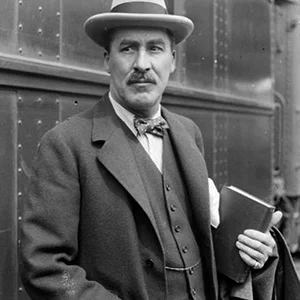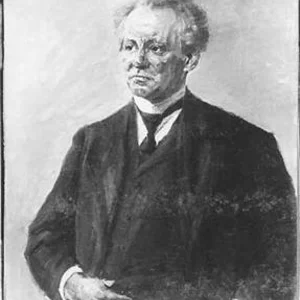

Ludwig Borchardt (1863-1938) was a German Egyptologist and architect. He led the excavations at Tell el-Amarna, where his team unearthed the famous bust of Nefertiti in 1912. He founded the German Archaeological Institute in Cairo.
Ludwig Borchardt(1863 — 1938)
Ludwig Borchardt
Reich allemand
6 min read
Frequently asked questions
Key Facts
- Born in 1863 in Berlin, trained as an architect before turning to Egyptology
- Founded the German Imperial Institute for Egyptian Archaeology in Cairo in 1907
- Led the excavations at Tell el-Amarna, the ancient capital of Akhenaten
- On 6 December 1912, his team discovered the bust of Nefertiti in the workshop of the sculptor Thutmose
- Died in 1938 in Cairo; the bust of Nefertiti, displayed in Berlin, remains the subject of a restitution dispute with Egypt
Works & Achievements
Archaeological campaigns on the Fifth Dynasty mortuary temples, providing major documentation of Old Kingdom architecture.
Unearthed at Tell el-Amarna, one of the most famous masterpieces of Egyptian art, now held in Berlin.
Creation of a permanent research center that made Germany a major player in Egyptology.
Landmark scholarly publication on the mortuary temple of Sahure, with detailed architectural surveys.
Groundbreaking study of timekeeping and calendars in ancient Egypt.
A work analyzing the sculpted portraits of Nefertiti discovered at Amarna.
Anecdotes
On December 6, 1912, Ludwig Borchardt's team was excavating the workshop of the sculptor Thutmose at Tell el-Amarna. In his journal, Borchardt recorded the discovery of a painted bust and wrote the now-famous line: “Describing it is useless — you have to see it.” He had just unearthed the bust of Nefertiti, one of the most celebrated masterpieces of Egyptian art.
The finds were divided with the Egyptian Antiquities Service through a regulated drawing of lots. The bust of Nefertiti went to the German expedition, and many later accused Borchardt of having played down its value — describing it as a mere head of painted plaster — to make sure he could take it back to Berlin. The controversy over this division still continues today.
Borchardt was not only an archaeologist but also an architect by training. This dual expertise allowed him to analyze the construction of temples and pyramids with great precision, and to propose rigorous reconstructions of the monuments he studied.
In 1907, Borchardt founded a German research institute in Cairo that would become the German Archaeological Institute. Thanks to him, Germany had a permanent base from which to conduct its excavations in Egypt, at a time when the English and the French dominated Egyptology.
Borchardt took a keen interest in the astronomy and calendars of ancient Egypt. He sought to understand how the Egyptians measured time and organized their year, publishing studies on ancient water clocks and sundials.
Primary Sources
A life-size head of the queen, painted in colours… The work is quite exceptional. Describing it is pointless, you have to see it.
Study published by Borchardt presenting and analysing the sculptures of Nefertiti discovered in the workshop of Thutmose at Amarna.
Scientific publication by Borchardt on the excavations of the funerary temple of Pharaoh Sahure at Abusir, with detailed architectural surveys.
Study by Borchardt on the instruments and methods used by the Egyptians to measure time, water clocks and sundials.
Key Places
Borchardt's birthplace and home to the museum where the bust of Nefertiti is displayed. The capital from which German Egyptology set out.
Site of Akhenaten's ancient capital where Borchardt led the excavations and discovered the bust of Nefertiti in 1912.
A Fifth Dynasty necropolis where Borchardt excavated the funerary temples of the pharaohs, including that of Sahure.
The city where Borchardt lived, worked, and founded the German archaeological institute that became a major research center.
The city where Ludwig Borchardt died in 1938.
Typical Objects

Painted limestone sculpture of Queen Nefertiti, discovered by **Borchardt**'s team in **1912** and now an icon of Egyptian art. A masterpiece attributed to the workshop of the sculptor **Thutmose**.

Handwritten journal in which the archaeologist records day after day the discoveries, their location and their measurements. **Borchardt**'s notebook preserved the record of Nefertiti's discovery.

Angle-measuring instrument used to record with precision the position and dimensions of monuments. An indispensable tool for **Borchardt**, who was trained as an architect.

Scale drawing of the temples and pyramids excavated, reconstructing their original structure. **Borchardt** produced plans of great rigour thanks to his training as an architect.

The archaeologist's basic tools for delicately uncovering buried objects without damaging them. The brush sweeps away the dust, the trowel clears the soil.

Ancient Egyptian instrument that measured time by the steady flow of water, which **Borchardt** studied in his work on the calendar. A symbol of his interest in the science of time.
School Curriculum
Vocabulary & Tags
Key Vocabulary
Daily Life
Morning
On the dig site, Borchardt rises early to make the most of the cool morning air before the desert's crushing heat sets in. He organizes the teams of Egyptian workers, assigns excavation zones, and notes in his journal the progress made the day before.
Afternoon
When the sun grows scorching, he devotes himself to his work as an architect: surveys, scale drawings, and renderings of the structures that have been uncovered. Every object found is measured, drawn, and recorded with meticulous precision.
Evening
In the evening, he writes his reports, catalogs the finds, and corresponds with the institutions in Berlin. In Cairo, he hosts colleagues and scholars to discuss the latest discoveries.
Food
Out in the field, meals are simple: bread, vegetables, dates, tea, and dishes from local Egyptian cuisine. In the city of Cairo, the food is more varied, blending European and Eastern cooking.
Clothing
For the excavations, he wears light, practical clothing suited to the heat: a shirt, canvas trousers, and a hat or pith helmet to protect himself from the sun. In society, he dons the European bourgeois suit of his era.
Housing
In Cairo, Borchardt lives in a comfortable house that also holds his institute and study collections. On the dig sites, he stays in basic excavation houses near the sites, shared with his team.
Historical Timeline
Period Vocabulary
Liens externes & ressources
Références
Œuvres
Fouilles d'Abousir (temples funéraires)
1902-1908
Découverte du buste de Néfertiti
1912
Fondation de l'Institut allemand d'archéologie du Caire
1907
Das Grabdenkmal des Königs Sʼaḥu-reʿ
1910-1913
Die altägyptische Zeitmessung
1920
Porträts der Königin Nofret-ete
1923