Imaginary dialogue between Michel Debré and Charles de Gaulle
by Charactorium · Charles de Gaulle (1890 — 1970) · Politics · 5 min read

It is in the great living room of La Boisserie, at Colombey-les-Deux-Églises, on an autumn afternoon in 1969 that Michel Debré meets the General, now retired from power. The fire crackles, and through the office's bay window the Champagne countryside fades into the mist. They have known each other for more than twenty years — since 1958, when together they drafted the Constitution. The disciple has come with a notebook, less to question than to gather, one last time, the thoughts of the leader he served.
—My General, that June 18, 1940, in front of that BBC microphone in London, did you know that almost no one would hear you that evening?
I knew it, Debré, and that changed nothing. I was alone in that studio, a temporary brigadier general whom official France had just condemned. A few English technicians, a microphone, and that feeling that everything rested on a few words. I did not speak to the crowds that day — they were not listening. I spoke to the future, to that idea that France was not wholly in Pétain's armistice. The France libre was at first just a voice in the night, nearly inaudible. But a voice that refuses is worth more than a people that keeps silent. The Croix de Lorraine I chose then was that: to oppose a symbol to abdication. The rest, the press picked up, and the text outlived the moment.
I did not speak to the crowds that day — I spoke to the future.
—Before that appeal, there was the other war. You have sometimes told me about your escapes in Germany — five times, they say?
Five times, yes, and five times recaptured. At Verdun, in 1916, I was wounded, left for dead, then captured. For an officer, captivity is a harsher humiliation than a wound: you are put out of action while others die for France. So I escaped. I dug, I disguised myself, I went over the roofs — and each failure earned me a more guarded fortress, until Ingolstadt. There I met a young Russian named Toukhatchevski, who would become a Soviet marshal. My height always betrayed me: you don't easily spot a man of one meter ninety-six who is hiding. Those thirty-two months taught me patience, and that a man held by force must keep his spirit free. All my life, I have hated confinement.
A man held by force must at least keep his spirit free.
—My General, in 1946 you left power, disgusted by the parties. Did the Bayeux speech already foreshadow what we built twelve years later?
Bayeux was a seed, Debré, cast on ground that was not ready. I had seen, from the Liberation, that the Republic would fall back into its old ways: a parliamentary regime, governments lasting six months, the state delivered to the turmoil of parties. At Bayeux, I said that there must be a head of state above cliques, guarantor of national continuity. I was not followed: the Fourth Republic was born against me, and I withdrew here rather than condone powerlessness. I waited twelve years. When the Algerian crisis made everything crack in 1958, it was your text and mine that gave France the strong executive it had refused itself. You who held the pen with me, you know that nothing in this Constitution was improvised.
The Fourth Republic was born against me; I withdrew rather than condone powerlessness.
—You entrusted me with the drafting in 1958. Why did you want such a powerful president, to the point of being accused of monarchy?
Because a nation like France is not governed by a powerless arbiter. When we worked together that summer, I asked you for a president who would not be the prisoner of parties, but their recourse in the storm. Monarchy, they said? No: legitimacy. The head of state derives his authority from the nation, and as early as 1962 I wanted him to hold it directly, by direct universal suffrage. They cried coup; I consulted the people by referendum, and the people decided. That is the difference from a king: I put my power back in the hands of the French every time they doubt. Our institutions are not made for my person, Debré — they are made to last after me, for the one who will have neither my war nor my legend.
Our institutions are not made for my person — they are made to last after me.
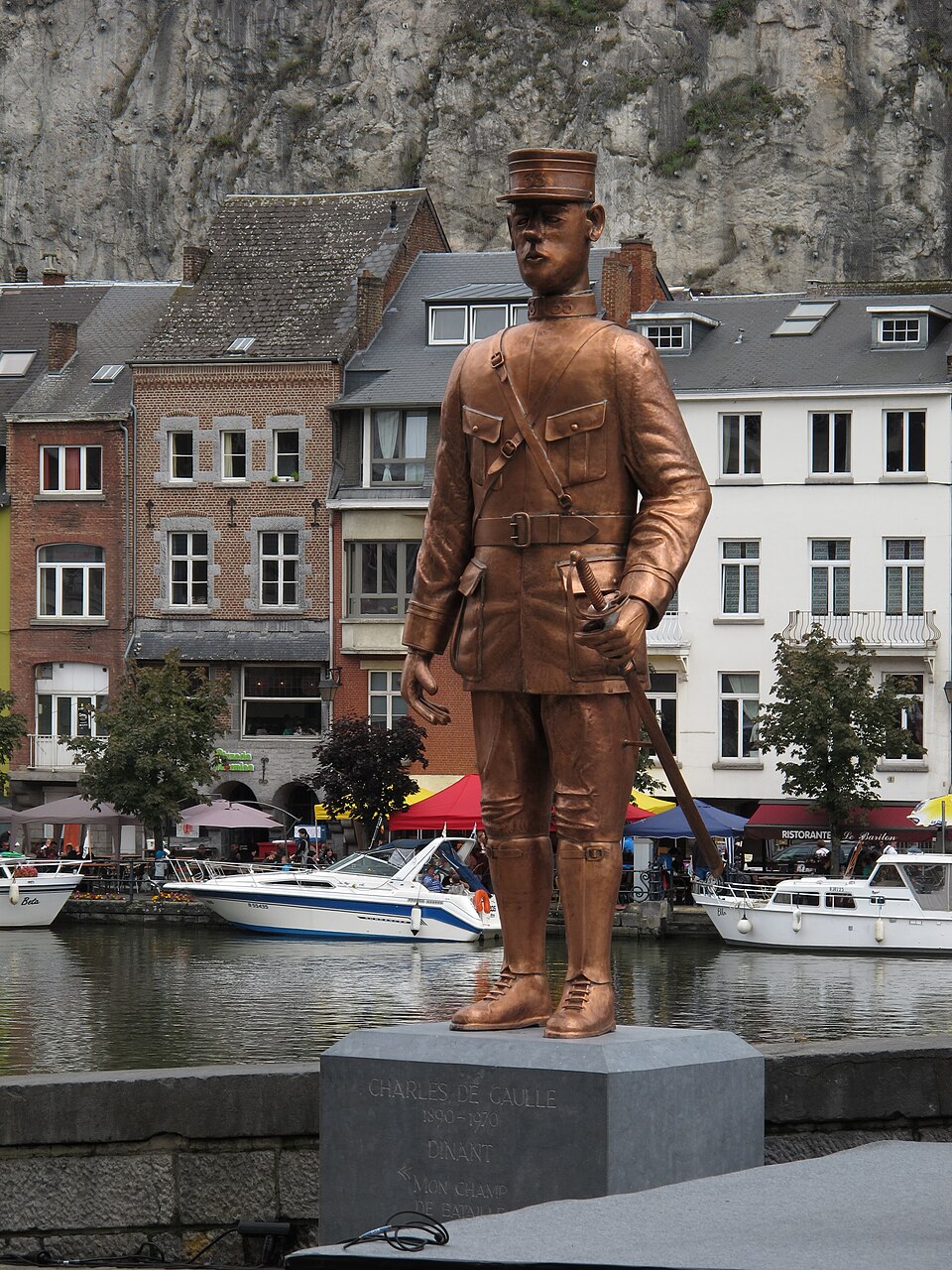
—On Algeria, my General, that "I have understood you" in Algiers in 1958 — did you weigh the ambiguity of that phrase when you uttered it?
You who were at my side in those years, you know how heavy the Algerian tragedy was for me. That day, in Algiers, before that feverish crowd, I said I had understood them. Understood, yes — but that did not commit the future I already foresaw. They wanted to imprison me in the blood shed; I saw that History cannot be commanded, that those peoples would move toward self-determination. I was not going to lie to France for a few cheers. That earned me the hatred of the OAS, their bullets at Petit-Clamart in 1962, my Citroën riddled. They shot at my wife as much as at me. But a leader who retreats before assassination is no longer a leader. The Évian Accords were inevitable; I assumed them.
They wanted to imprison me in the blood shed; I saw that History cannot be commanded.
—That assassination attempt at Petit-Clamart, you commented on it with a phlegm that stunned us all. Where did that composure come from?
From the fact that fear has never solved anything, Debré. I was wounded three times in the trenches, walked down the Champs-Élysées under fire in 1944 without breaking stride — you don't learn courage at my age, you keep it or you lose it. When the DS was riddled, I thought first of Yvonne, sitting next to me. For those killers, I felt more contempt than anger: they shot poorly, at a man who belongs to everyone and to no one. A president of the Republic does not hide in a bunker. If I am eliminated, France will continue, because what I built does not depend on my life alone. That is precisely why I insisted so much on solid institutions.
A president of the Republic does not hide in a bunker.
—My General, the Reggane test in 1960, then the withdrawal from NATO in 1966 — why did you hold so strongly to this independence, at the risk of irritating our allies?
Because a country that entrusts itself to another's protection is no longer a nation, Debré, it is a protectorate. As early as 1960, at Reggane, France exploded its first bomb: we became the world's fourth nuclear power. That force de dissuasion was not a caprice of grandeur, it was the condition of our freedom. How can one decide alone on war and peace if one depends on the American umbrella? In 1966, I withdrew our forces from the Alliance's integrated command, without leaving the Alliance itself. They called me ungrateful toward Washington; I replied that France keeps its friendships but not its servitude. Between the two blocs, I wanted a third way — not alignment, but the balance of a France master of itself.
A country that entrusts itself to another's protection is no longer a nation, it is a protectorate.
—You are reproached for this national pride. Is Gaullism, as it is called, anything other than a certain idea you have of France?
You know that phrase, Debré, I wrote it at the head of my War Memoirs: all my life, I have formed a certain idea of France. Gaullism, if that word means anything, is not one more doctrine to be filed between right and left. It is the refusal that France be mediocre. A strong state, full sovereignty, a people united above the parties that tear it apart — that is all. France is truly itself only in the first rank; lowered, it denies itself. They call me proud: I am not so for myself, I am for her. The day the French no longer believe in their greatness, they will cease to be a great people. My role has been to prevent them from consenting to it.
Gaullism is the refusal that France be mediocre.
—At twilight, here at La Boisserie, after May '68 and your departure, what do you bequeath to those who will carry on, perhaps to me?
I bequeath to you institutions, Debré, and that is the essential. May '68 shook many things, but the Fifth Republic held: it is the proof that it is better than the regimes before. When the people said no to me at the referendum, I left that very evening, without bargaining, because a leader who no longer has the nation's confidence must go. It is here, at Colombey, that I always return, near Yvonne, in this stone house where I write. Power passes; the work remains if it rests on the interest and sentiment of the nation. See to it that the state remains strong, that it is never returned to the games of parties. The rest — my silhouette, my képi, my rages — posterity will make of it what it will. The state, for its part, must not die with me.
Power passes; the work remains if it rests on the interest and sentiment of the nation.
This imaginary interview was generated by artificial intelligence from sources documented in Charles de Gaulle's profile. It dramatises what the figure might have said based on what we know about them, but does not constitute attested historical testimony. For primary sources and factual documentation, refer to the full profile.