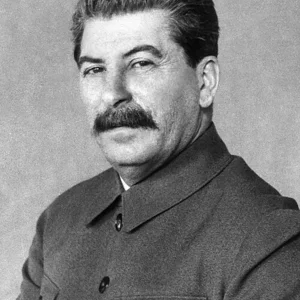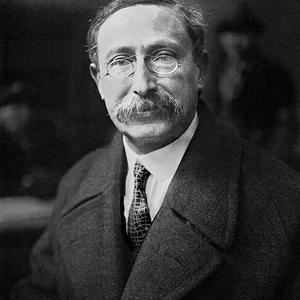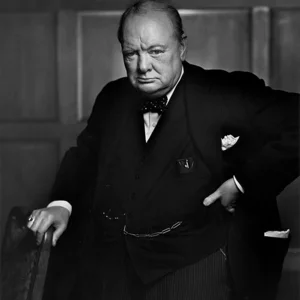

British statesman and writer (1874–1965), Winston Churchill is best known for his role as Prime Minister of the United Kingdom during the Second World War. As the leader of British resistance against Nazism, he embodied Allied resolve until victory in 1945.
Winston Churchill(1874 — 1965)
Winston Churchill
Royaume-Uni
8 min read
Frequently asked questions
Famous Quotes
« We shall never surrender»
« Never in the field of human conflict was so much owed by so many to so few»
« Success is not final, failure is not fatal: it is the courage to continue that counts»
Key Facts
- Became Prime Minister of the United Kingdom in May 1940, at the critical moment when France was falling
- Organised British resistance and sustained the nation's morale throughout the Blitz (1940–1941)
- Built a strategic alliance with the United States and the Soviet Union to defeat Nazi Germany
- Took part in the major Allied conferences (Yalta and Potsdam) that shaped the post-war world order
- Left office in 1945, then returned as Prime Minister from 1951 to 1955
Works & Achievements
A six-volume memoir in which Churchill recounts his perspective on the Second World War. This landmark work stands as a fundamental historical testimony and earned him the Nobel Prize in Literature in 1953.
Famous address delivered after Dunkirk, in which Churchill declared that Britain would never surrender. The speech became a defining symbol of British resistance against Nazism.
Churchill's inaugural address as Prime Minister, in which he promised 'blood, toil, tears and sweat.' It set out his unwavering resolve to fight Nazi Germany to the end.
The meeting between Churchill, Roosevelt, and Stalin in Crimea to shape the post-war world order. Churchill fought to defend British interests in the architecture of the peace settlement.
A prophetic speech delivered in the United States in which Churchill condemned Soviet expansion in Europe and popularised the phrase 'Iron Curtain.' It marked the beginning of the Cold War.
An autobiography covering Churchill's youth and military career up to his entry into Parliament. An essential work for understanding the making of this great statesman.
Although his Conservative government lost the 1945 election, Churchill contributed to the post-war debates that shaped the British welfare state.
A four-volume historical series tracing the story of Anglo-Saxon civilisation. A masterful synthesis blending scholarly rigour with Churchill's distinctive literary style.
Anecdotes
In 1940, during his speech to the House of Commons following the fall of France, Churchill declared: "I have nothing to offer but blood, toil, tears and sweat." These words became the symbol of British resistance against Nazism and galvanized the English people during the darkest hours of the Second World War.
Churchill was an inveterate cigar smoker, and photographs of him with a cigar between his lips became iconic. During the Second World War, a variety of cigar even bore his name. This habit was a defining part of his public image and personal legend.
In 1941, Churchill secretly met U.S. President Franklin D. Roosevelt aboard a warship off the coast of Newfoundland. This clandestine meeting resulted in the Atlantic Charter, a landmark document establishing the principles of cooperation between the United Kingdom and the United States against Nazi Germany.
Churchill won the Nobel Prize in Literature in 1953, not only for his political speeches but also for his many historical works and memoirs. He is one of the rare politicians to receive this prestigious award, proving that his talent as a writer matched his genius as a statesman.
During the Second World War, Churchill categorically refused to use the British secret weapon — the atomic bomb — against Japan, despite having access to the technology. This decision reflected his moral convictions and made him a complex figure beyond his reputation as an unyielding war leader.
Primary Sources
Let us therefore brace ourselves to our duties, and so bear ourselves that, if the British Empire and its Commonwealth last for a thousand years, men will still say, 'This was their finest hour.'
I felt as if I were walking with destiny, and that all my past life had been but a preparation for this hour and this trial.
If the British Empire is ever destroyed, the archeologists of future ages will find no reason for its decay in the will or conscience of its people, for they were true to themselves.
From Stettin in the Baltic to Trieste in the Adriatic, an iron curtain has descended across the Continent.
It is fun to be in the same decade as you.
Key Places
Birthplace of Winston Churchill on 30 November 1874. This aristocratic palace in Oxfordshire has been the seat of the Churchill family for generations and remains a symbol of his family heritage.
Official residence of the British Prime Minister, where Churchill lived during his two terms in office (1940–1945 and 1951–1955). It was from here that he led Great Britain through the Second World War.
Churchill's country home, acquired in 1922, where he spent most of his private life. Now a museum, it preserves his personal belongings, collections, and writings, reflecting his intellectual and artistic passions.
The seat of the British Parliament, where Churchill served as a Member of Parliament for over 60 years. It was one of his main arenas for political action and parliamentary debate.
A site of celebration for military victories during the Second World War and an iconic symbol of British resilience. Churchill took part in many official ceremonies there, and the cathedral is closely associated with Allied determination.
The village of Bladon, near Woodstock, where Churchill was buried in 1965. This peaceful resting place symbolises the statesman's return to his family roots after an extraordinary public life.
Typical Objects

An iconic accessory of Winston Churchill, the cigar was one of his inseparable companions. He smoked it during diplomatic and military meetings, and it became a symbol of his forceful personality and authority.

During the Second World War, Churchill wore a light blue Royal Air Force uniform in his role as Minister of Defence. This uniform symbolised his personal commitment to the war effort and his role as a military leader.

The bowler hat was a typical accessory of British dress in the 20th century, famously worn by Churchill during the interwar years and the Second World War.

Churchill's famous radio addresses, delivered notably through the BBC, galvanised the British people during the Second World War. These broadcasts were powerful tools of propaganda and national unity.

The underground government headquarters in London from which Churchill directed the war effort from 1940. These fortified rooms symbolise British military strategy and the nation's determination to resist Nazi Germany.

Churchill was a passionate amateur painter who practised the art throughout his life. Painting reflected his creative side and offered him relaxation, in sharp contrast to his political responsibilities.

Widely used during the Second World War, this inflatable life jacket was worn by pilots and sailors. It stands as a symbol of the aerial and naval warfare that dominated the conflict.

International correspondence and treaties — most notably the Atlantic Charter signed with Roosevelt in 1941 — represent Churchill's crucial diplomatic role in forging the Allied Powers alliance.
School Curriculum
Vocabulary & Tags
Key Vocabulary
Tags
Concept
Daily Life
Morning
Winston Churchill generally woke up late, around 8 a.m., and had breakfast in bed with tea and toast. He would review the British and international press, then dictate memos and letters to his secretaries before getting ready for the day.
Afternoon
Afternoons were devoted to government meetings, parliamentary sessions in the House of Commons, and diplomatic consultations. Churchill worked intensely on political and military matters, particularly during World War II, when he chaired crucial strategic meetings.
Evening
In the evenings, Churchill dined formally, often with political colleagues or dignitaries, accompanied by a cigar and a glass of whisky or champagne. After dinner, he would continue working on government documents or drafting his speeches and articles, going to bed late into the night.
Food
Churchill enjoyed rich, traditional British cuisine: red meats, seafood, and hearty dishes. He regularly drank French champagne, whisky, and port, and never turned down a good Cuban cigar after meals.
Clothing
As a senior statesman, Churchill wore very formal dark three-piece suits, starched white shirts, ties, and waistcoats. He frequently wore a military uniform during World War II, and donned a homburg hat or a naval cap depending on the occasion.
Housing
Churchill lived in London, most notably at 10 Downing Street during his terms as Prime Minister. He also owned Chartwell, his country home in Kent, where he would retreat to write and reflect, surrounded by his art collections and books.
Historical Timeline
Period Vocabulary
Visual Style
Un style de portrait classique années 1940, conjuguant la peinture à l'huile britannique traditionnelle avec un dramatisme expressionniste. L'éclairage chiaroscuré accentue la détermination et la gravité du personnage, tandis que les couleurs saturées et les symboles historiques britanniques renforcent l'atmosphère d'époque et de leadership en temps de crise.
Sound Ambience
Ambiance sonore immersive du bureau de guerre de Churchill pendant la Seconde Guerre mondiale, mêlant les bruits de l'administration gouvernementale avec les sons lointains du conflit et la voix grave et autoritaire du Premier ministre britannique, créant une atmosphère de détermination face à l'adversité.
Liens externes & ressources
Références
Œuvres
The Second World War
1948-1953
Discours du 4 juin 1940
1940
Discours du 5 mai 1940 à la Chambre des communes
1940
Conférence de Yalta
1945
Discours de Fulton sur le Rideau de fer
1946
My Early Life
1930
Réformes sociales et politiques du gouvernement d'après-guerre
1945-1951