Kids interview Charles de Gaulle
by Charactorium · Charles de Gaulle (1890 — 1970) · Politics · 5 min read

That morning, a school field trip visits a great memorial site. Two twelve-year-old students, notebooks in hand, step forward, intimidated but curious. They finally dare to ask their questions to Charles de Gaulle.
—Is it true you had guessed what the war would be like before everyone else?
You know, my child, I was a young officer, and I spent my evenings writing. In 1932, in Le Fil de l'épée, I reflected on what a true leader is. Then, in 1934, I wrote Vers l'armée de métier. I said a simple thing: the next war would be one of tanks, those big steel machines that roll and shoot. Imagine a wave of iron sweeping across the roads. At the general staff, no one wanted to listen. They thought I was too sure of myself. And do you know who read me carefully? The Germans. Six years later, they swept over us, exactly as I had feared.
The next war would be one of tanks. No one wanted to listen.
—Were you afraid when you spoke on the radio on June 18, 1940?
I was fifty years old, and I was alone in London, far from my country. On June 18, 1940, I entered a studio of the English radio station, the BBC. In front of the microphone, I declared: « France is not alone! » My heart was beating hard, I admit. Afraid? No. But an immense gravity. I knew I was disobeying my own country's government. The strangest part is that almost no French person heard me that evening. People were not all listening. But my words were reprinted in newspapers. And little by little, they became the first cry of the Resistance.
France is not alone.
—What was the BBC studio in London like?
Imagine a small room, with thick walls to muffle the noise outside. A single cold microphone in front of me, on its stand. No audience, no one to applaud — just an English technician behind a glass window. In that city, sirens sometimes howled at night because bombs were falling. I had chosen an emblem for those who would follow me: the Cross of Lorraine, a cross with two bars. I had raised it against the twisted cross of the Nazis. That microphone and that cross were all I had. No army, no treasure. Only a voice, and an idea: Free France.
—Is it true they shot at your car?
Ah, that! It was August 22, 1962, in the evening, at a place called Petit-Clamart, near Paris. My car, a large black Citroën DS, was driving fast. Suddenly, hidden men fired dozens of bullets. The bodywork was riddled, the windows shattered. Those men belonged to the OAS, a group that refused Algeria's independence. They wanted me dead. And me, do you know what I did? I got out of the car without a scratch. I simply shrugged: « These people shoot like pigs. » You must keep your calm, even when death passes so close.
These people shoot like pigs.
—Weren't you afraid after that?
You know, my child, when you are my age and have already seen war, you learn to live with danger. In the First World War, I had been wounded three times, then taken prisoner. At Verdun, they even thought I was dead. So I had known fear for a long time. After Petit-Clamart, I didn't change my habits. I continued to go out, shake hands, talk to people. If a leader hides, he abandons those who follow him. Of course, I thought about my wife Yvonne, who was in the car that evening. For her, I was afraid. For myself, no.
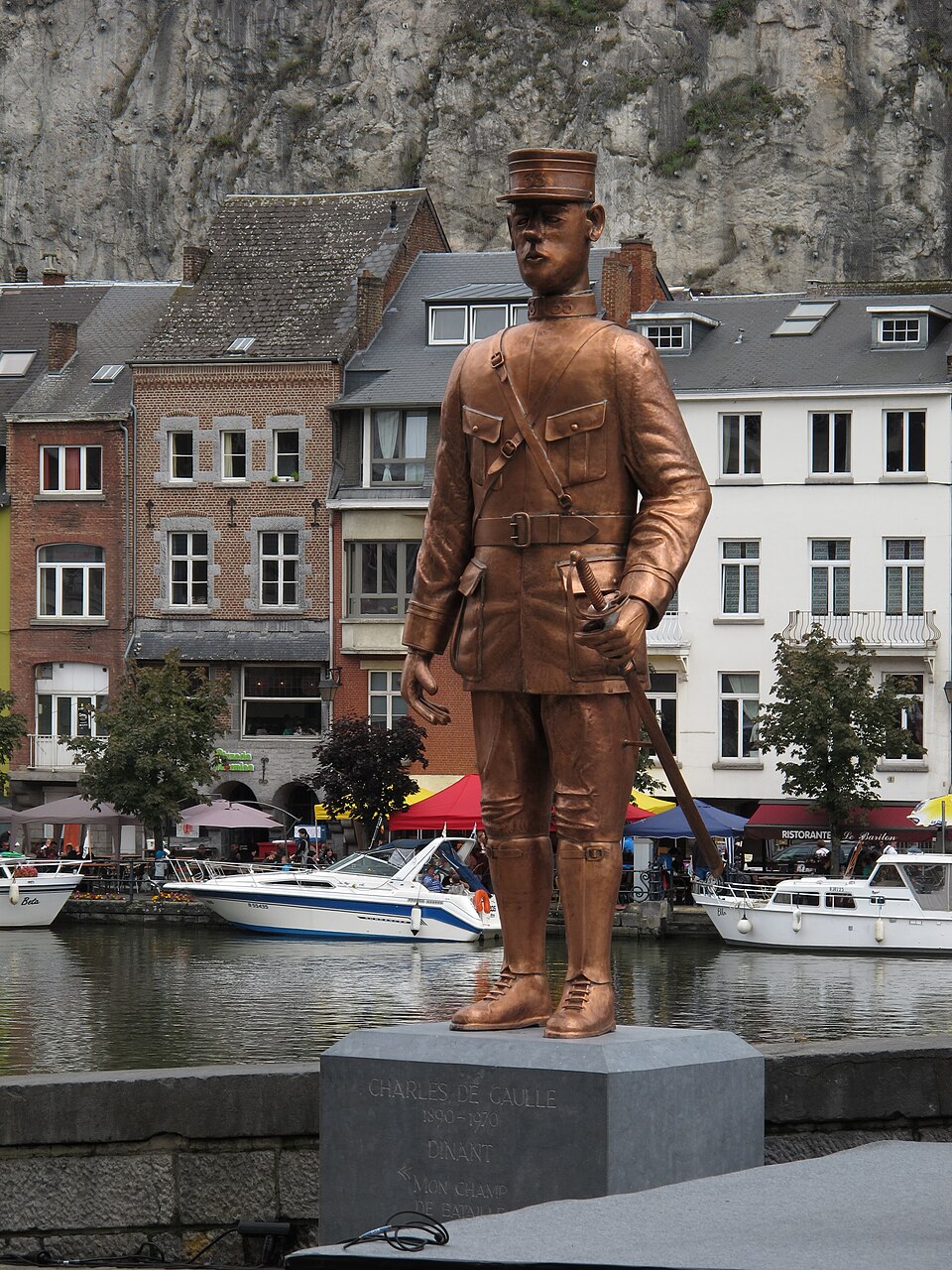
—Why did you want to change the way France was governed?
You see, before me, France changed governments almost every month. It was endless turmoil: people argued, overthrew everything, nothing held up. As early as 1946, in a speech at Bayeux, the first liberated town, I said that « the State must reappear ». A State is like the frame of a house: without it, the roof collapses. In 1958, with my friend Michel Debré, we wrote a new Constitution. It gave a president the power to keep the country upright, above quarrels. That frame still stands today. It is perhaps what I am most proud of.
—What does it mean to vote by universal suffrage?
It is a beautiful idea, and very simple. Before, the president of France was not chosen by the people, but by a small group of elected officials. I wanted you, your family, your neighbor — all citizens — to decide. In 1962, I put the question directly to the French people through a referendum: do you want to elect your own president? That is direct universal suffrage: everyone drops their ballot into the box. The French answered yes. Imagine millions of hands each depositing a small folded paper. Together, they choose the one who will lead the country. It is the people who speak, and no one else.
—What did you eat at home in the countryside?
At home, nothing complicated, I assure you! We lived at La Boisserie, a large stone house in Colombey-les-Deux-Églises, deep in the countryside. My wife Yvonne ran the table, and we ate very simple food: pot-au-feu, blanquette de veau, good cheese. I drank a little wine, never much. In the evening, after dinner, I read — history, novels — by the fireplace. Imagine the silence of the countryside, just the wind in the trees and the crackling of the fire. After each departure from power, that is where I returned. That house was my refuge, far from the noise of Paris.
—What was France to you?
Ah, that is the most beautiful question. In my Mémoires de guerre, I wrote this sentence: « All my life, I have formed a certain idea of France. » For me, she was not just a country on a map. I imagined her like a princess from fairy tales, or like a Madonna painted on a church wall. Something grand, noble, that had to be protected. You know, when everything seemed lost in 1940, it was this idea that kept me standing. You can lose a battle, lands, soldiers. But an idea, if you believe in it strongly enough, never dies.
All my life, I have formed a certain idea of France.
—What would you like to be remembered for?
What would I like you to remember? Not my medals, nor my general's képi. Rather a lesson. When I was fifty, my country was crushed, occupied, and almost everyone gave up. I refused. Alone, on the radio from London, in 1940, I said no. And in the end, France rose again. So remember this: even when you are alone in thinking something right, do not keep silent. Sometimes a single voice is enough to awaken an entire people. You do not need to be great or powerful. You need to believe, and to hold firm.
This imaginary interview was generated by artificial intelligence from sources documented in Charles de Gaulle's profile. It dramatises what the figure might have said based on what we know about them, but does not constitute attested historical testimony. For primary sources and factual documentation, refer to the full profile.