Imaginary dialogue between Jean Chartier and Charles VII
by Charactorium · Charles VII (1403 — 1461) · Politics · 6 min read
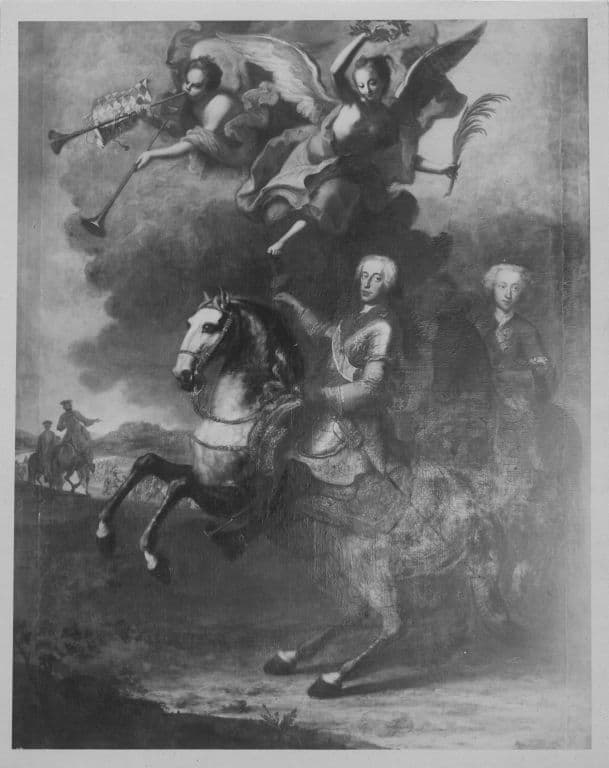
It is in a vaulted hall of the castle of Mehun-sur-Yèvre, in this autumn of 1458, that I meet my king, a fleur-de-lis tapestry trembling behind him in the glow of the embers. I have been chronicling his reign for more than twenty years, since his entry into Paris reconquered in 1437. He receives me tonight as an intimate, his face lined, his voice low, far from the pomp of audiences. I come to seek the man that the official chronicle is not allowed to show.
—Sire, when I took up my pen for your chronicle in 1437, your enemies still called you the "king of Bourges." How heavy was that nickname?
Heavier than armor, Jean. After my father's death in 1422, I held only the center and south of the kingdom; Paris and the north obeyed the English and the Duke of Burgundy. Calling me "king of Bourges" was saying I was king of nothing but a town. The Treaty of Troyes signed by my own father had disinherited me in favor of Henry of England, and worse things were whispered about my blood. You who have read the Journal of that Parisian clerk know he called me the "so-called dauphin." I lived for years with that doubt lodged in me like a splinter. Bourges sheltered me, fed me, gave me my court and counselors; I do not deny that town. But that name was thrown at me like an insult.
Calling me "king of Bourges" was saying I was king of nothing but a town.
—It was said even in your own household that you might not be the king's son. How does one reign when one doubts one's own right?
Badly, Jean. One reigns badly and sleeps worse. My mother, Queen Isabeau, had let that doubt linger, and a prince who does not know if the blood of kings flows in him dares neither command, nor strike, nor hope. That is why the coronation mattered so much: as long as the oil of the Holy Ampulla had not touched my brow at Reims, I was but one pretender among many. The Treaty of Troyes had taken the crown from me by the writing of men; God had to give it back through anointing. The day I was anointed in 1429, something in me straightened. I ceased to be the contested dauphin and became the most Christian king. What English parchments had undone, the rite had remade.
As long as the oil of the Holy Ampulla had not touched my brow, I was but one pretender among many.
—You once told me: at Chinon, in February 1429, you hid among your courtiers to test the Maid. What were you looking for?
I was looking to see if she was mad, a liar, or sent by God. A shepherdess from Lorraine claimed to come from God to have me crowned: how could I not be wary? So I melted into the crowd of my people, dressed without insignia, to see if she could pick me out. And she came straight to me, without hesitation, through all those richly adorned lords. I will not tell you that reason was satisfied — but the heart, yes. At besieged Orléans, the last of my great cities on the Loire, I could no longer afford to be too cautious. I ended up entrusting her with an army. You wrote the rest: the city delivered, the road to Reims opened. Sometimes a king's prudence must bow before a child's audacity.
I was looking to see if she was mad, a liar, or sent by God.
—Sire, I must ask it, that question all Christendom murmurs: when the Burgundians captured her in 1430, why did you do nothing to ransom her?
You touch where the wound does not close, Jean. She was captured before Compiègne, sold to the English, and I, her king, neither paid her ransom nor sent an embassy. I could tell you of the Burgundians to be appeased, the Treaty of Arras to be prepared, the money that was lacking, the counselors who told me to leave her to her fate. All that is true and all that is petty. The truth is that once crowned, I no longer had the same need of her, and kings quickly forget those who made them. In 1456, I ordered the trial that annulled her conviction for heresy; her honor was restored, and thereby it was confirmed that my coronation did come from God. But twenty-five years, Jean. Twenty-five years to make amends. No chronicle will wash away that silence.
Kings quickly forget those who made them.
—Let us turn to arms, sire. You who have chronicled so many campaigns: why did you want this new army, these compagnies d'ordonnance of 1445?
Because the kingdom was dying as much from its defenders as from its enemies, Jean. Between battles, the routiers — those bands of demobilized soldiers — plundered my countryside, burned barns, extorted peasants. The old feudal ost was worthless: each lord brought his men when he wanted, left when he wanted. In 1439 I banned private armies, then in 1445 I instituted the compagnies d'ordonnance: men-at-arms paid by me, disciplined, permanent. It was the first standing army of France. To pay for it, I had to levy the taille without always begging the consent of the Estates. I was reproached for this grip on taxation — but without a full purse, no loyal soldiers, and without loyal soldiers, no kingdom. The king had to hold the sword alone, or never hold it.
The kingdom was dying as much from its defenders as from its enemies.
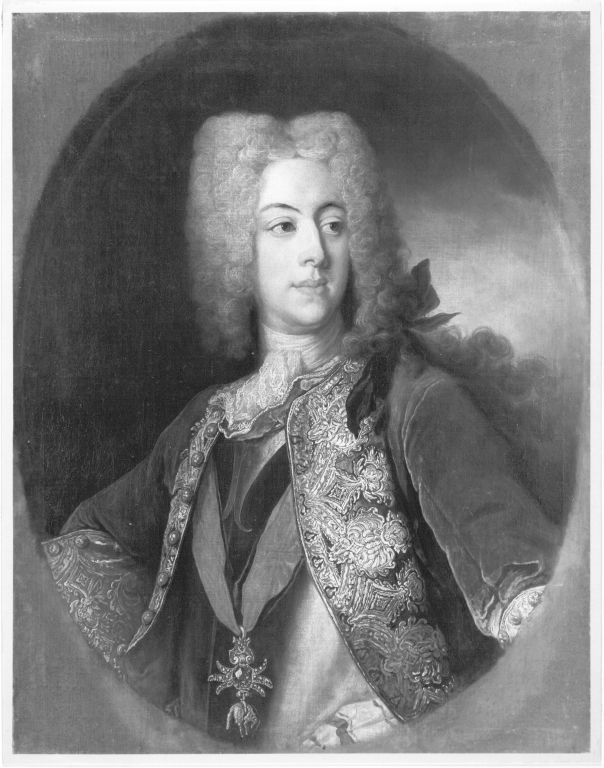
—And this new artillery? At Castillon, in 1453, your cannons are said to have decided the fate of the entire war.
My Bureau brothers, Jean — they are my true war masters. Gaspard and Jean Bureau made my bombards the most fearsome weapon in Europe. At Castillon, old Talbot and his English came to break themselves on our entrenched pieces; gunpowder did what a hundred years of chivalry could not. It was the last battle of that endless war. Earlier, in 1450, we had retaken Normandy after Formigny, then Guyenne followed. I had also created the francs-archers, one per parish, exempt from the taille in exchange for their service — infantry of my own, drawn from the people. When I think of it, it was not great feats of arms that drove out the English, but order, pay, and cannon. The war of my time is no longer that of my father.
Gunpowder did what a hundred years of chivalry could not.
—You did not only wage war, sire. In 1438, by the Pragmatic Sanction of Bourges, you stood up to the pope himself. Why?
Because a most Christian king is not the servant of Rome, Jean, but its eldest son — and a son does not obey in all things. By the Pragmatic Sanction, I affirmed that the Church of France would keep its liberties: that bishops would be elected by their clergy rather than appointed from Rome, and that the pope would cease to draw from our benefices. This is what is called Gallicanism: a French Church faithful to the faith, but mistress in her own house. I did not break with the Holy Father; I set a boundary. The kingdom was emerging from a century of war and schism; authority, in temporal matters as in appointments, had to flow back toward the crown. Building a state, you see, is not only retaking cities — it is deciding who commands, and how far.
A most Christian king is not the servant of Rome, but its eldest son.
—I have recorded in my chronicle your ordinance of Montils-lès-Tours, in 1454, on the customs. Why were you so attached to putting those old usages in writing?
Because a kingdom where no one knows what law governs it is but a mosaic of petty tyrannies, Jean. Each region had its customs, passed down by word of mouth, distorted at the whim of judges and lords. By the ordinance of Montils-lès-Tours, I prescribed that the customs, usages, and styles of each region of my kingdom be drafted and put in writing. You yourself transcribed it. Thus the humblest subject could know the rule, and the judge could no longer invent it at will. No smoke rises from such a reform, no Te Deum is sung for an ordinance — but it is by such means that a state stands upright when arms fall silent. Retaking Normandy was the matter of a season; unifying law will be the matter of centuries.
No Te Deum is sung for an ordinance, but it is by such means that a state stands upright.
—Sire, forgive my frankness as a chronicler: you seem worried. The dauphin Louis, your son, has withdrawn far from you. Does this conflict eat at you?
It eats at me more than the English ever did, Jean. I reconquered a kingdom, but I could not keep my own son. Louis has the fever to reign; he does not wait, he plots, he has distanced himself from my court and lends an ear toward Burgundy. A father would want to pass on, a king fears being supplanted — and I am both, torn between the two. In the evening, when my counselors have retired and the musicians fall silent, worry comes back to sit at my bedside. They say I am becoming suspicious; I say I have learned to fear my own as much as my enemies. He who made me king by arms will not protect me from my own blood. That is a bitterness my chronicle will not tell.
I reconquered a kingdom, but I could not keep my own son.
—At the end of such a reign, my king, is there any consolation for you, within these walls of Mehun, as evening falls?
Consolation, Jean, lies in what your successors will read. When I ascended the throne, the English held Paris and it was doubted that I was king; today the kingdom is restored, the English reduced to Calais, the army stands, the tax comes in, the law is written. The "king of Bourges" has closed the wound of a hundred years of war. In the evening, I withdraw to my apartments, consult my book of hours, pray — my piety is sincere, whatever is said. But outward peace has not won inward peace: I am left with the memory of the Maid I did not save, and fear of my son. A king can retake provinces and lose the rest of his soul. Write that too, if you dare: that I conquered everywhere except within myself.
I conquered everywhere except within myself.



This imaginary interview was generated by artificial intelligence from sources documented in Charles VII's profile. It dramatises what the figure might have said based on what we know about them, but does not constitute attested historical testimony. For primary sources and factual documentation, refer to the full profile.