Kids interview Charles VII
by Charactorium · Charles VII (1403 — 1461) · Politics · 6 min read
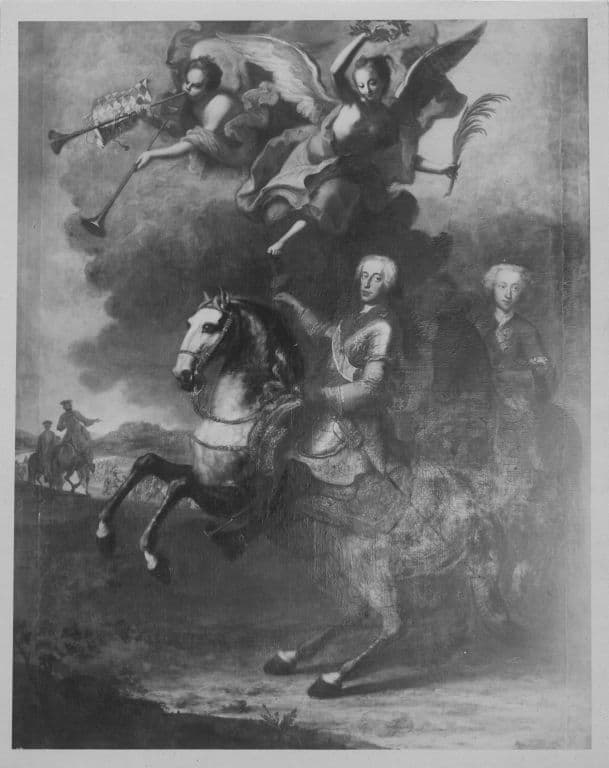
Two sixth-grade students visit a fortress in the Loire Valley with their class. In a large vaulted room, a tired old king agrees to answer their questions. His name is Charles VII.
—Is it true they called you “The King of Bourges”? Did that annoy you?
Yes, my child, and that nickname hurt me. When my father Charles VI died in 1422, I proclaimed myself king. But I only held a central and southern part of the kingdom. The English and Burgundians held Paris and all the north. So my enemies laughed: “Look, he’s not even king of France, just king of Bourges!” Imagine being given a great title but having almost nothing in your hands. That was my situation. Bourges housed my court and administration. It was my capital by default. And every day, I had to prove I was the true king.
They gave me a great title, but I had almost nothing in my hands.
—Why didn’t your own family want you to be king?
Ah, that is the hardest thing from my childhood. In 1420, my father signed the Treaty of Troyes. By this text, he disinherited me and gave the crown to the king of England. Can you imagine? My own father. And my mother, Isabeau of Bavaria, spread a terrible rumor: that I might not be the king’s son. When you are young and you hear that, you doubt everything, even yourself. Sometimes I even wondered if I truly had the right to rule. That doubt followed me for a long time. That is why later, the coronation meant so much to me.
When your own father disinherits you, you end up doubting who you are.
—They say you hid to test Joan of Arc. Is that true?
Yes! It was at Chinon, in 1429, in the great hall of my fortress. This young peasant girl said she was sent by God to have me crowned king. I was wary. So I slipped among my courtiers, dressed simply, to see if she would recognize me. And you know what? She came straight to me. Without hesitation. As if she already knew me. It moved me deeply. Remember, I had doubted my legitimacy since childhood. And here was a shepherdess looking at me as the only true king of France. That day, I agreed to entrust her with an army.
A shepherdess looked at me as the true king, when I myself doubted it.
—What was it like, the day of your coronation at Reims?
The most beautiful day, and yet I was trembling. On July 17, 1429, I entered the cathedral of Reims, Joan at my side with her banner. My forehead was anointed with the oil from the Holy Ampulla, that sacred vial used for centuries to anoint the kings of France. Do you understand what that means? The coronation is the ceremony where the king becomes king for real, chosen by God. At that precise moment, the Treaty of Troyes meant nothing. My enemies could say what they wanted. I was henceforth the anointed king. No one could ever take that from me.
Once anointed at Reims, no paper could ever take my crown away.
—Why didn’t you do anything to save Joan when she was captured?
You touch on my greatest regret. In 1430, Joan was captured before Compiègne by the Burgundians, then sold to the English. And I… did nothing. Neither ransom, nor negotiate, nor send an army. Why? The war was complicated, I was afraid of losing everything, and some advisors distrusted her. But these are excuses, my child. She was burned at Rouen in 1431. Twenty-five years later, in 1456, I finally ordered a trial to annul her condemnation and clear her name. It was just, but far too late. One never truly repairs such a silence.
One never truly repairs a silence kept too long.
—What was the problem with soldiers in your time?
A real scourge, my child. Between battles, soldiers were no longer paid. So these bands, called the routiers, plundered villages, robbed peasants, burned crops. Imagine armed men arriving at your home and taking everything, with no one to stop them. That was the France of my youth. Each lord brought his own men, and the king commanded nothing truly. It had to stop. A kingdom where soldiers frighten their own people is not a kingdom, it is chaos. I understood that a true king must control his armies himself.
Soldiers who plunder their own people are not an army, they are chaos.
—And how did you manage to stop that?
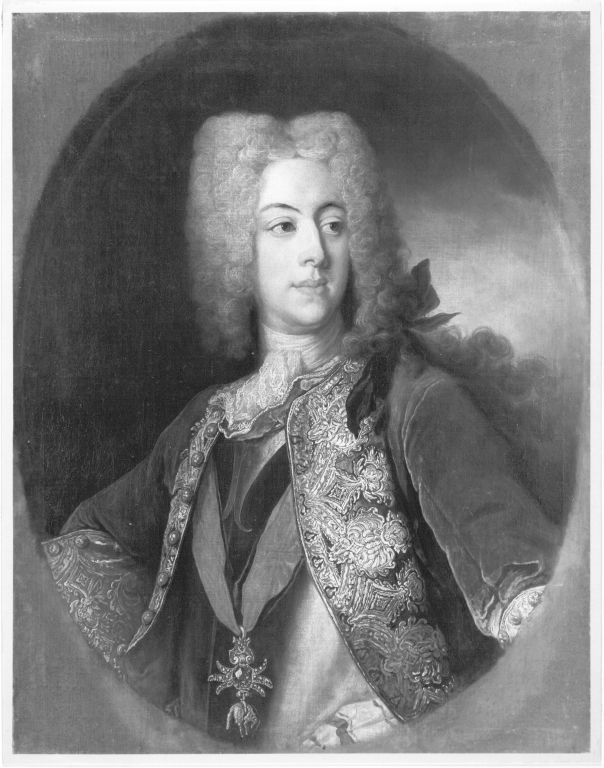
In 1445, I created the compagnies d’ordonnance (ordinance companies). It was the first standing army in France. Professional, disciplined cavalrymen, paid regularly by me, the king. Do you see the difference? Before, soldiers plundered to live. Now they received a salary, so they obeyed. I even created the francs-archers (free archers) in 1448: each village had to provide an archer, exempt from taxes in exchange. Little by little, military force became that of the king alone, no longer the lords. And thanks to this modern army, with the terrible cannons of the Bureau brothers, I was finally able to drive out the English.
A soldier who is paid obeys; a soldier who is abandoned plunders.
—What was your most impressive weapon against the English?
The bombard! A huge bronze cannon that spewed stone cannonballs with a terrible roar. My master gunners, the Bureau brothers, were its kings. Imagine the ground shaking, the smoke, the noise that made horses flee. At Castillon, in 1453, their cannons crushed the English army of the famous Talbot. That was the last battle of the Hundred Years’ War, after more than a century of fighting! The English finally left the continent, except Calais. My army had become the most modern in Europe. And all that, thanks to gunpowder and metal, not just the courage of knights.
It was no longer the knight’s lance that won the war, but the cannon.
—To do all that, you needed money. Where did you get it?
Good question, young man! A standing army costs a lot. Before me, the king had to ask for money from the Estates General, a great assembly. Long and complicated. So in 1439, I obtained the right to levy a direct tax, the taille (tallage), without having to ask their permission each time. It was a small revolution. From then on, I had regular income, year after year, to pay my soldiers. Understand this: whoever controls the money and the army controls the kingdom. No king of France had ever held that power so firmly. That is how you build a lasting state.
Whoever controls the money and the army controls the kingdom.
—Did you also change laws? Why was that important?
Yes, and I am proud of it. In my time, each region had its own customs, its own rules, often passed down by word of mouth. A real headache! In 1454, by the ordinance of Montils-lès-Tours, I ordered all these customs to be written down officially. The text said they should be “reduced to writing.” Why? So that justice would be the same for everyone and endless disputes would stop. I also asserted, through the Pragmatic Sanction of 1438, that the Church of France keep its autonomy from the pope. Little by little, I was building a better-organized, fairer kingdom.
A written rule is worth more than a hundred memories that contradict each other.
—Were you afraid of anything at the end of your life?
Yes, my child, and it is sad to say. At the end, I lived at the château of Mehun-sur-Yèvre, in Berry. In the evening, melancholy often overtook me. But above all, I had a terrible fear: of being poisoned. By whom? By my own son, the future Louis XI, with whom I was in conflict. Imagine the loneliness of a king who distrusts every dish served to him, until he no longer dares to eat. That is how I passed away in 1461. I had reconquered an entire kingdom, ended the Hundred Years’ War… and I died fearing my own blood.
I had reconquered an entire kingdom, but I trembled before my own son.
—If you are remembered today, what would you like people to remember?
You know, for a long time I was seen as a weak, indolent king, the one who hid at Chinon. But look at what I left behind. I found a torn, occupied, disinherited kingdom. I left it united, freed from the English, with a real army, a solid tax system, and written laws. Joan of Arc gave me the courage to begin; my obstinacy did the rest. If you remember one thing, young visitor, let it be this: one can start from almost nothing, doubt oneself, and yet lift an entire country. You just have to never stop moving forward, even when you are afraid.
One can start from almost nothing, doubt oneself, and yet lift an entire country.

This imaginary interview was generated by artificial intelligence from sources documented in Charles VII's profile. It dramatises what the figure might have said based on what we know about them, but does not constitute attested historical testimony. For primary sources and factual documentation, refer to the full profile.