Imaginary interview with Charles VII
by Charactorium · Charles VII (1403 — 1461) · Politics · 6 min read
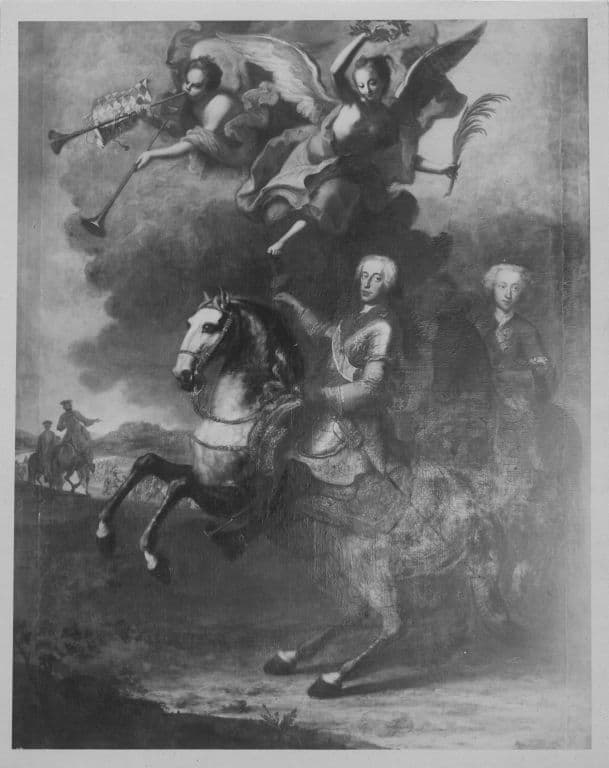
Mehun-sur-Yèvre, winter 1460. In a room hung with tapestries where a huge fireplace crackles, King Charles VII receives visitors, his face marked by anxiety. Outside flows the Yèvre; inside, a man who was the 'King of Bourges' and who will die king of all France, except Calais, agrees to look back on his long journey.
—You were long called the 'King of Bourges'. How did you bear this nickname in the early years of your reign?
My enemies threw that name at me like a stone. At the death of my father Charles VI in 1422, I held only the center and south of the kingdom; Paris, Reims, the north obeyed the English and the Duke of Burgundy. I held court at Bourges, and I was mockingly called 'the so-called Dauphin'. The worst was not the loss of cities, but the Treaty of Troyes of 1420, signed by my own father, which chased me from the throne in favor of Henry of England. When you are already doubted within your own house, the sarcasm from outside cuts to the bone. I lived those years as a waiting: for God, who knows the true kings, to finally speak.
When you are already doubted within your own house, the sarcasm from outside cuts to the bone.
—Was the coronation at Reims in July 1429 a political ceremony or a response to a more intimate wound?
Both are one. It was whispered, since my mother Isabeau had let doubt linger, that I might not be a king's son. How can you rule a people when even your blood is contested? On July 17, 1429, in Reims Cathedral, the archbishop anointed me with the oil of the Holy Ampulla, the very one that has consecrated the kings of France since Clovis. Under the Crown of Coronation, I was no longer the 'King of Bourges': I was the Lord's anointed, and no human treaty could undo what heaven sealed. That day, the holy oil answered what neither my father nor my mother had wanted to affirm. I walked out of that church a different man from the one who entered.
Under the Crown of Coronation, no human treaty could undo what heaven sealed.
—Tell us about that first meeting with Joan of Arc at Chinon in early 1429.
I was told that a girl from Lorraine claimed to be sent by God to lead me to my coronation. Suspicious — for the times were full of madness and false prophets — I hid among my courtiers in the great hall of Chinon, letting another take my place. According to what is reported, she crossed the crowd without hesitation and came straight to me, as if a light marked me out. I do not know what she saw; I know what I felt: that a power above my own had chosen this child to speak to me. That recognition did more for my resolve than all the advice of my captains. I entrusted her with an army, and she lifted the siege of Orléans.
I do not know what she saw; I know that a power above my own had chosen this child.
—When she was captured by the Burgundians in 1430, you did nothing to save her. How do you live with that silence?
You touch where a king's conscience troubles him. Captured before Compiègne in 1430, sold to the English, tried and burned at Rouen in 1431, and I — I neither ransomed nor negotiated. Some say my coffers were empty, others that my advisers found her troublesome. A king does not always act according to his heart, but according to what his men press him to do; yet that washes away nothing. Twenty-five years later, in 1456, I ordered the rehabilitation trial that annulled her condemnation for heresy. Her honor was restored — and, I admit, the legitimacy of my own coronation, which a condemned witch would have tainted. But no judgment brings a soul back from the stake. That I carry.
No judgment brings a soul back from the stake. That I carry.
—Your most lasting work was perhaps military. Why did you want a permanent army where your predecessors relied on their vassals?
Because the feudal host betrayed me a hundred times. The lords came with their men when it pleased them, left at harvest time, and between campaigns their demobilized soldiers — the routiers — plundered my own villages like wolves. A king who depends on the goodwill of his barons is not a king, but a supplicant. In 1445, I established the Ordinance Companies: salaried cavalry, disciplined, paid by my hand and obeying only me. In 1448, I added the francs-archers, one man-at-arms per parish, exempt from the taille in exchange for service. For the first time, the kingdom's force ceased to be borrowed from others: it was mine. It was with this army, not with the promises of the great, that I drove the English out of France.
A king who depends on the goodwill of his barons is not a king, but a supplicant.
—An army costs a lot. How did you find the gold to support it?
That is the question my predecessors feared to ask. A permanent army requires a permanent purse; but before me, taxes were begged from the Estates General, who haggled over every écu. In 1439 and 1440, I secured the right to levy the taille without convening the Estates — a direct, regular tax on the commoners of the realm. From then on, I no longer had to hold out my hand: my companies were paid, my masters of artillery, the Bureau brothers, cast their bombards. Money and cannon go together. Some have reproached me for freeing the crown from the consent of subjects; I answer that a kingdom without a paid army is a kingdom delivered to the English and to looters. The taille secured peace far more surely than prayers.
A permanent army requires a permanent purse: money and cannon go together.
—The reconquest ended with a series of victories. Do you remember the turning point that made the end of the war inevitable?
Everything turned on Normandy. In 1449, my armies entered methodically, city after city, and at Formigny in 1450, the English army was broken in open field. It was no longer the time of desperate cavalry raids: we advanced like a tide that does not recede. Then came Guyenne, English for three centuries, which had to be retaken. What changed everything was the cannon: the bombards of the Bureau brothers reduced walls that once took years to besiege. England, which had called me 'the so-called Dauphin', now saw its fortresses fall to the roar of gunpowder. The confidence Joan had restored to the French at Orléans had turned into a patient and implacable war machine.
We advanced like a tide that does not recede.
—Castillon in 1453 ended more than a century of war. What does this last battle mean to you?
At Castillon, on July 17, 1453 — twenty-four years to the day after my coronation, as if God had wanted to close the circle — the artillery of my Bureau brothers crushed the army of old Talbot, that captain the English thought invincible. He fell in the mud of Guyenne with his men, mowed down by the bombards entrenched in their fort. That day, the Hundred Years' War ended; the English kept only Calais, a thorn on my coast. Think: I had begun as king of a mocked half-kingdom, and I ended master of almost all the land of France. I did not cry victory in the streets — melancholy rarely leaves me — but that evening, I gave thanks, for a century of misfortune ended under my reign.
I had begun as king of a mocked half-kingdom; I ended master of almost all France.
—Beyond arms, you sought to reform the Church of France. What drove you to that?
A king anointed with holy oil has charge of the Church of his kingdom as much as of his armies. In 1438, at Bourges, I promulgated the Pragmatic Sanction: the bishops of France would be elected by their clergy and no longer appointed from Rome, and the pope would cease to draw on the benefices of my kingdom as if from his own purse. This path was later called Gallicanism: a Church of France faithful to the Holy See in faith, but free in its governance. I was not fighting the pope — God forbid, I am an obedient son of the Church — I was defending the order of my kingdom against distant interference. The Most Christian king must watch over his clergy as a father over his household.
A Church of France faithful to the Holy See in faith, but free in its governance.
—You also wanted to put law in writing. What were you seeking by ordering the codification of customs?
A land where each region has its custom, passed down by word of mouth, is a land where justice floats at the whim of memories and interests. In April 1454, by the Ordinance of Montils-lès-Tours, I ordered that 'the customs, usages and styles of each region of our kingdom be compiled and put in writing'. What is written is no longer disputed like what is told: the subject knows his right, the judge knows his rule, and the king knows that his justice is the same everywhere. I wanted for the law what I had wanted for the army and the tax: not the randomness of men, but durable order. One builds a kingdom with walls and cannons, but one holds it with laws set down on parchment.
What is written is no longer disputed like what is told.


This imaginary interview was generated by artificial intelligence from sources documented in Charles VII's profile. It dramatises what the figure might have said based on what we know about them, but does not constitute attested historical testimony. For primary sources and factual documentation, refer to the full profile.