Kids interview Charlie Chaplin
by Charactorium · Charlie Chaplin (1889 — 1977) · Visual Arts · 5 min read
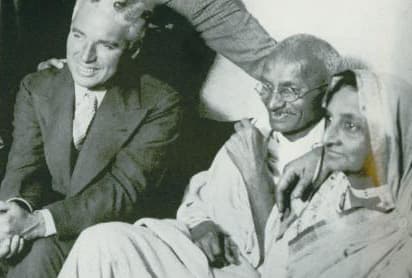
That morning, two middle-school students on a discovery trip push open the door of a small sitting room. Before them, an old man with twinkling eyes awaits them: Charlie Chaplin in person. He motions for them to sit close, and begins to tell his story.
—How old were you when you were sent to the workhouse?
You know, my child, I was barely seven years old. In London, my father died and my mother fell ill. So my brother Sydney and I were placed in what they called a workhouse — a poorhouse where the poor worked hard in exchange for a roof and a bit of soup. Imagine a big cold building, gray corridors, and a little boy separated from his mother. It was hard, very hard. But you see, this misery never left me. Later, in my films, I always took the side of the little ones, the forgotten. The tramp you know was born in those poor streets where I grew up.
—What did you eat at home when you were poor?
Oh, not much, believe me. Bread, sometimes thin soup, and on a lucky day a bit of fish. At home, the smell was of tea we brewed three times to waste nothing. I kept that all my life: even when I became rich in Hollywood, I ate simply — fish, boiled vegetables, the puddings of my English childhood. Hunger, you see, teaches you the true value of things. Later, in The Gold Rush, my character is so hungry he cooks his own shoe and eats it like a king's feast. Well, that day, I knew exactly what I was talking about.
—How did you invent the character of the Tramp?
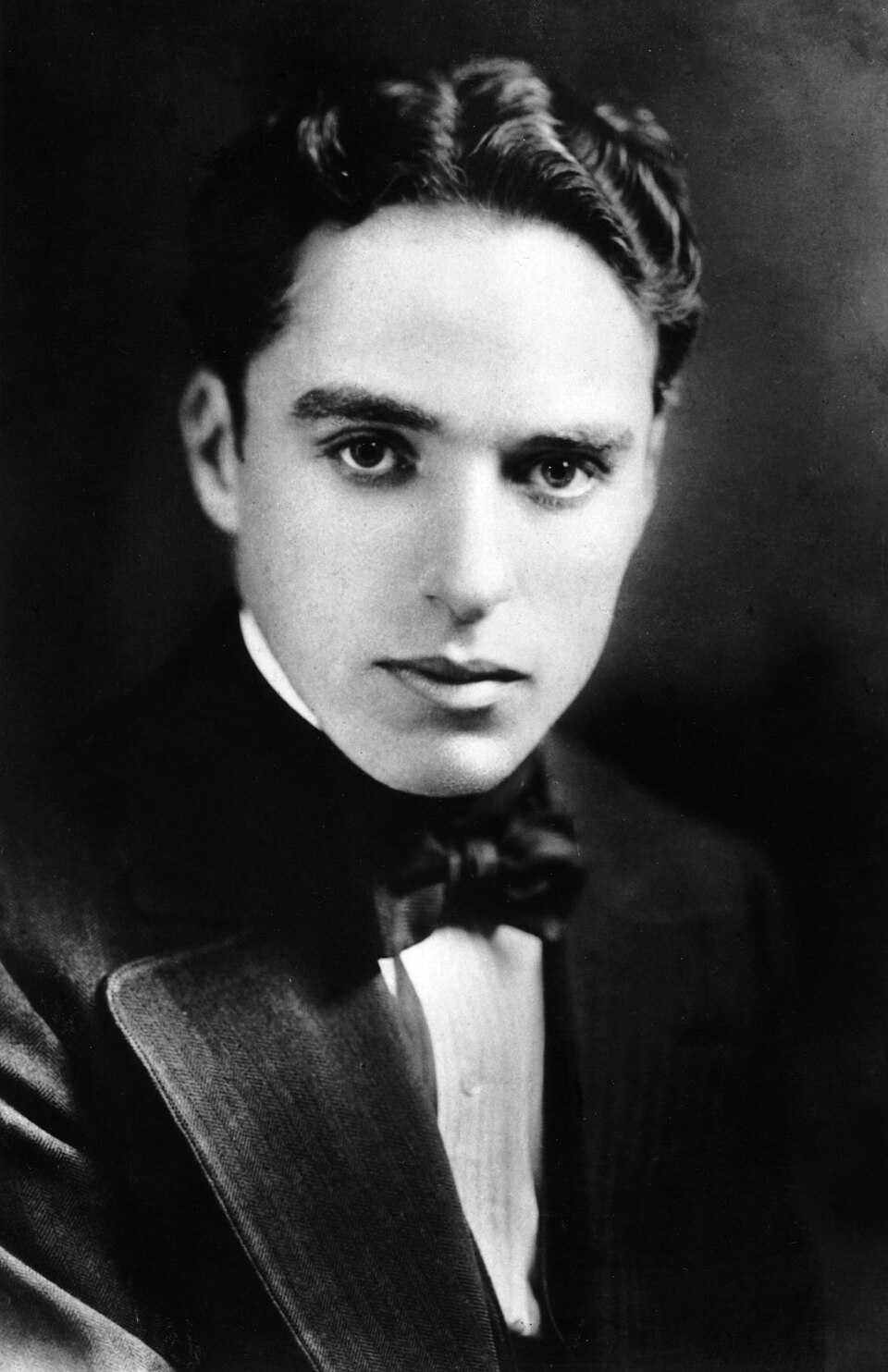
Ah, that was almost by chance! It was in 1914, at the Keystone studios in America. They asked me for a comic costume, and quickly! So I rummaged through the other actors' wardrobe. I grabbed pants too wide, a jacket too tight, a bowler hat too small, a bamboo cane. I added a little mustache. And then, my child, something strange happened: as soon as I put it all on, the character was born on its own. His walk, his soul. For the walk, I wore huge shoes on the wrong feet — left foot on the right! And that's how a poor tramp came out of a pile of old clothes.
As soon as I put on those clothes, the character was born on its own.
—Who was this little tramp really, for you?
You ask a beautiful question. One day, I wrote to my brother Sydney to describe him. I told him that this tramp is a gentleman, a poet, a dreamer — a lonely man who always hopes for love and adventure. He would like to make you believe he is a scholar, a musician, or even a duke! But deep down, he is not too proud to pick up a cigarette butt. That is my Tramp: elegant and poor, dignified and battered. He wears a too-small bowler hat and twirls his cane, but he has a huge heart. He is a bit all of us, you know — small against a world too big.
—Is it true you ate a real shoe in a film?
Ha! Don't worry, it wasn't a real one! For The Gold Rush, in 1925, I had a whole shoe made of licorice. But you see, I was a terrible perfectionist. I reshot that scene over and over — so many times that several actors and I got sick from eating too much licorice! Some scenes in my films I reshot more than two hundred times. Why such persistence? Because a gag is like a clock: if one tiny piece is off, it's no longer funny at all. So I sought perfection, frame by frame.
A gag is like a clock: one piece off, and it's no longer funny.
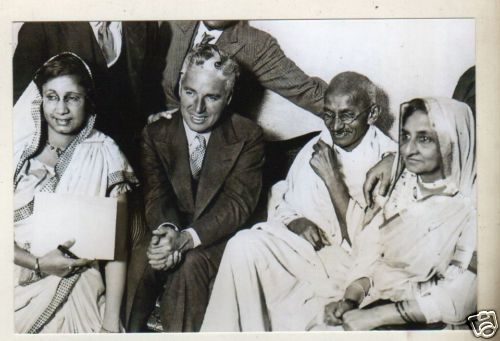
—What was a workday like for you?
I often woke up late — I had worked until the middle of the night before! In the morning, after tea and toast, I rehearsed my gags in front of a mirror. Yes, in front of a mirror! I made faces, searched for the right expression. In the afternoon, I filmed at my studios on La Brea Avenue, which I had built in 1917. There, I directed, acted, and reworked everything tirelessly. And in the evening, I locked myself in to edit the film, sometimes frame by frame. I also composed music, on piano or violin — instruments I taught myself! My craft, you see, was my whole life, from morning to night.
—Why did you dare to mock Hitler?
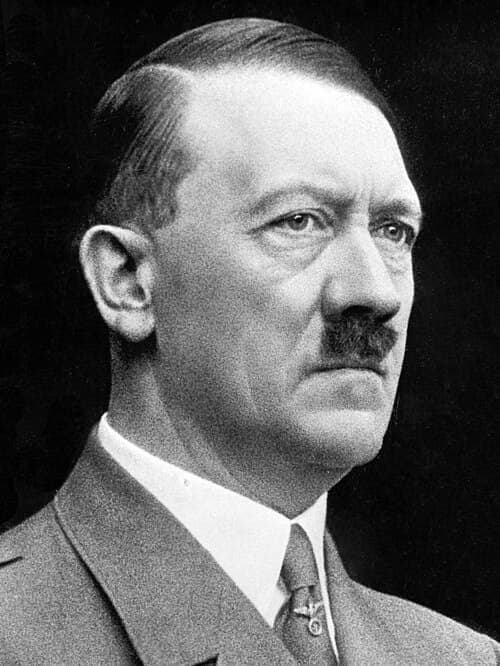
You know, it took courage, in 1940. Very few people dared. But consider a troubling thing: Hitler and I were born four days apart, in April 1889. And we wore the same little mustache! He was the tyrant; I, the clown. So I thought: what if I turned this resemblance against him? In The Great Dictator, I ridiculed him, made him small and grotesque. Laughing at a tyrant, you see, takes away his fear. A man laughed at no longer makes you tremble. That was my weapon: not a gun, but a burst of laughter.
A man who is laughed at no longer makes you tremble.
—What did you say at the end of The Great Dictator?
Ah, that speech is the most important moment of my entire career. At the end of the film, my character speaks and addresses the people directly. He says he doesn't want to be an emperor, that that's not his business; he wants neither to command nor conquer anyone, but to help everyone — whether Jew, Christian, black man, or white man. You understand, I had spent my whole life silent, never speaking in my films. And there, for the first time, I truly spoke — to call for peace and kindness among men. It was 1940, as war was already ravaging Europe.
—Is it true you were banned from returning to America?
Alas, yes, my child. In 1952, I left the United States by boat to present my film Limelight in Europe. And then, in the middle of the ocean crossing, I learned I was banned from returning! It was the era of McCarthyism — a great witch hunt against anyone suspected of leftist ideas. They blamed me for my films about the poor and workers. So I settled in Switzerland, at the Manoir de Ban, overlooking Lake Geneva, with a view of the mountains. I lived there my last twenty-five years. I was driven out of the country where I had become famous. That, you see, hurts.
—And afterward, were you ever forgiven?
Yes, and it was a moving moment. In 1972, after twenty years of exile, America invited me back to receive an Honorary Oscar. Imagine the scene: me, this old man who had been driven out, stepping back onto the stage. And there, the entire audience rose and applauded me for twelve minutes! Twelve full minutes, can you believe it? The longest ovation in the history of that ceremony. I had tears in my eyes. You see, the powerful had rejected me, but the public had never forgotten me. Perhaps that is the most beautiful lesson of my whole life.
The powerful pass, but the affection of the people remains.
This imaginary interview was generated by artificial intelligence from sources documented in Charlie Chaplin's profile. It dramatises what the figure might have said based on what we know about them, but does not constitute attested historical testimony. For primary sources and factual documentation, refer to the full profile.