Imaginary dialogue between Sydney Chaplin and Charlie Chaplin
by Charactorium · Charlie Chaplin (1889 — 1977) · Visual Arts · 6 min read
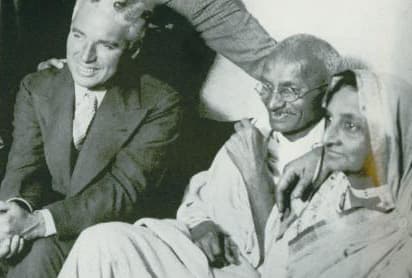
It is in the great drawing room of the Manoir de Ban, in Corsier-sur-Vevey, that one winter evening in 1964 Sydney joins his younger brother, a still-fresh copy of My Autobiography resting on the piano. The light from Lake Geneva fades behind the windows; somewhere lingers the scent of cold tea. The two brothers have not sat like this, face to face, since the music-hall years — and Sydney, who shared the hunger of Lambeth as well as the glory of Hollywood, this time comes to make the man behind Charlot speak, from the beginnings to creation.
—Charlie, I've just reread the pages where you describe our entry into the Lambeth workhouse. What remains in you of those seven years?
You who slept next to me in that dormitory, Syd, you know I'm not inventing anything. I was barely seven when Father's death forced the parish to take us in. What remains is not only the cold or the hunger — it's that quiet humiliation of being a number, a mouth to feed that gets shorn and lined up. We lived in a permanent state of poverty, so much so that I didn't even feel the fall as a fall. But it was there, I think, that I learned to look at the humble without condescension. Charlot was not born at Keystone: he was born in that dormitory, the day I understood that a man could lose everything and keep his dignity in the way he puts his hat back on.
Charlot was not born at Keystone: he was born in that dormitory at Lambeth.
—Mother was still singing when they placed her, do you remember? Do you think her broken voice pushed you toward the stage?
Her voice, yes. I recall that evening at the Canteen in Aldershot where she broke down mid-performance, and where I was pushed, a child, to take over the song in front of the soldiers. I imitated her faltering voice — and the audience laughed, then threw coins. That day I understood that distress could become a number, that the public paid for you to turn your own misery into a smile. You had already left to earn a living, but I had only that: making people laugh so as not to cry. Our mother took everything from us and gave us everything at the same time. Her fragility taught me that behind every burst of laughter, there must be a crack that you can barely hear.
Distress could become a number: the public paid for you to turn your misery into a smile.
—Let's talk about 1914, at the Keystone studios. You once wrote to me about that character — but tell me truly how Charlot fell upon you that day.
Mack Sennett had told me he wanted me funny, any way I could. I went rummaging through the other actors' wardrobe, and everything was decided as I walked toward the set. I took pants too large, a tight jacket, enormous shoes that I put on the wrong feet, a bamboo cane, a slightly small bowler hat, and a false mustache to age myself without hiding my face. The contrast said it all: poverty dreaming of being a gentleman. As I wrote to you, this tramp is a poet, a dreamer, always in search of romance, who wants to make you believe he is a duke or a scholar — but who does not disdain picking up a cigarette butt. As soon as I had the costume on, the character walked ahead of me. I only had to follow him.
As soon as I had the costume on, the character walked ahead of me.
—That cane, that hat, that waddling gait — how did you know, you, that these trinkets would become a silhouette recognized worldwide?
I didn't know, Syd, I felt it in my legs. The cane is what gives the bearing: a tramp who twirls it pretends to an elegance he doesn't have, and that's where we laugh, and where we grow attached. The shoes on the wrong feet forced me into that waddling stride, ridiculous and tender. Each object was not an isolated gag, but a grammar: the too-small bowler says pride, the mustache says an age he hasn't reached, the cane says the gentleman he would like to be. The audience needed no intertitles to understand all this — the silhouette spoke for itself, beyond languages. That is why I was so wary, later, of words: a good silhouette crosses borders that no sentence can cross.
The too-small bowler says pride, the cane says the gentleman he would like to be.
—It is said that for the shoe-eating scene in The Gold Rush, you exhausted your actors until they were nauseated. Were you really that tyrant on set?
Tyrant, no — demanding to the point of unreason, yes. For The Gold Rush, I had that shoe made of licorice, and we reshot the scene so many times that several of us became sick. But understand me: a gag is not an idea, it's a rhythm. If the timing isn't right to the exact frame, the laugh doesn't come, or comes poorly. I have sometimes exceeded two hundred takes for a single scene. In the morning, I rehearse my expressions before a mirror; in the afternoon, I direct and act at the same time; in the evening, I lock myself in with the rushes and edit the film frame by frame. It's not despotism, it's tailoring. You never see the thread — that's precisely how you recognize a job well done.
A gag is not an idea, it's a rhythm — right to the exact frame, otherwise the laugh comes poorly.
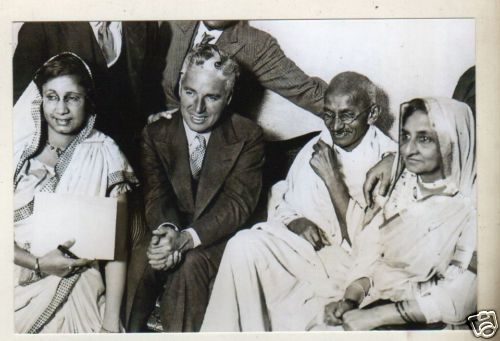
—You always wanted to control everything — directing, editing, even the music. Where does this distrust of relying on others come from?
From our years when no one looked after us, perhaps. When you've had only yourself as a safety net, you don't let go of the rope anymore. I built my own studios on La Brea Avenue in 1917, and with United Artists in 1919 we — Pickford, Fairbanks, Griffith and I — took back control of our films so that no merchant could butcher them. I direct, I act, I edit, and I compose on the piano and violin that I taught myself. It's not pride: a film is a single emotion sustained from beginning to end, and that emotion cannot be delegated in pieces. If I were entrusted with the laughter but not the tear that follows it, the whole edifice would crumble. Better a mistake that is mine than a success that is not.
When you've had only yourself as a safety net, you don't let go of the rope anymore.
—Let's come to The Dictator. Daring to laugh at Hitler in 1940, when so many were silent — what gave you that courage, my brother?
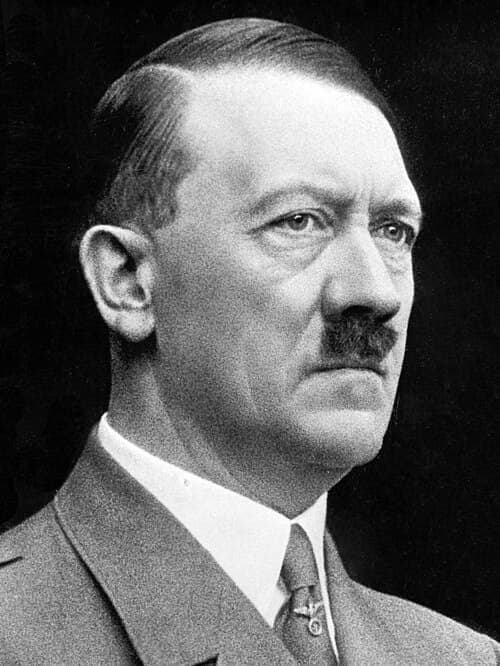
The absurdity of our resemblance, first. We were born four days apart, in April 1889, he and I, with the same small square mustache — mine born to make people laugh, his to make them afraid. I found that monstrous and laughable, and laughter is a weapon that tyrants do not know how to disarm. I was told it was imprudent; I replied that a fool has the right, and even the duty, to ridicule the despot. At the end of the film, I dropped the mask of Charlot to speak in my own name, against hatred, for humanity — Jew, Gentile, Black, White, without distinction. Many criticized me for that speech. But how could I remain silent? If I had known the true extent of the horror of the camps, I would not have been able to laugh at it. Fortunately, we did not know everything then.
Laughter is a weapon that tyrants do not know how to disarm.
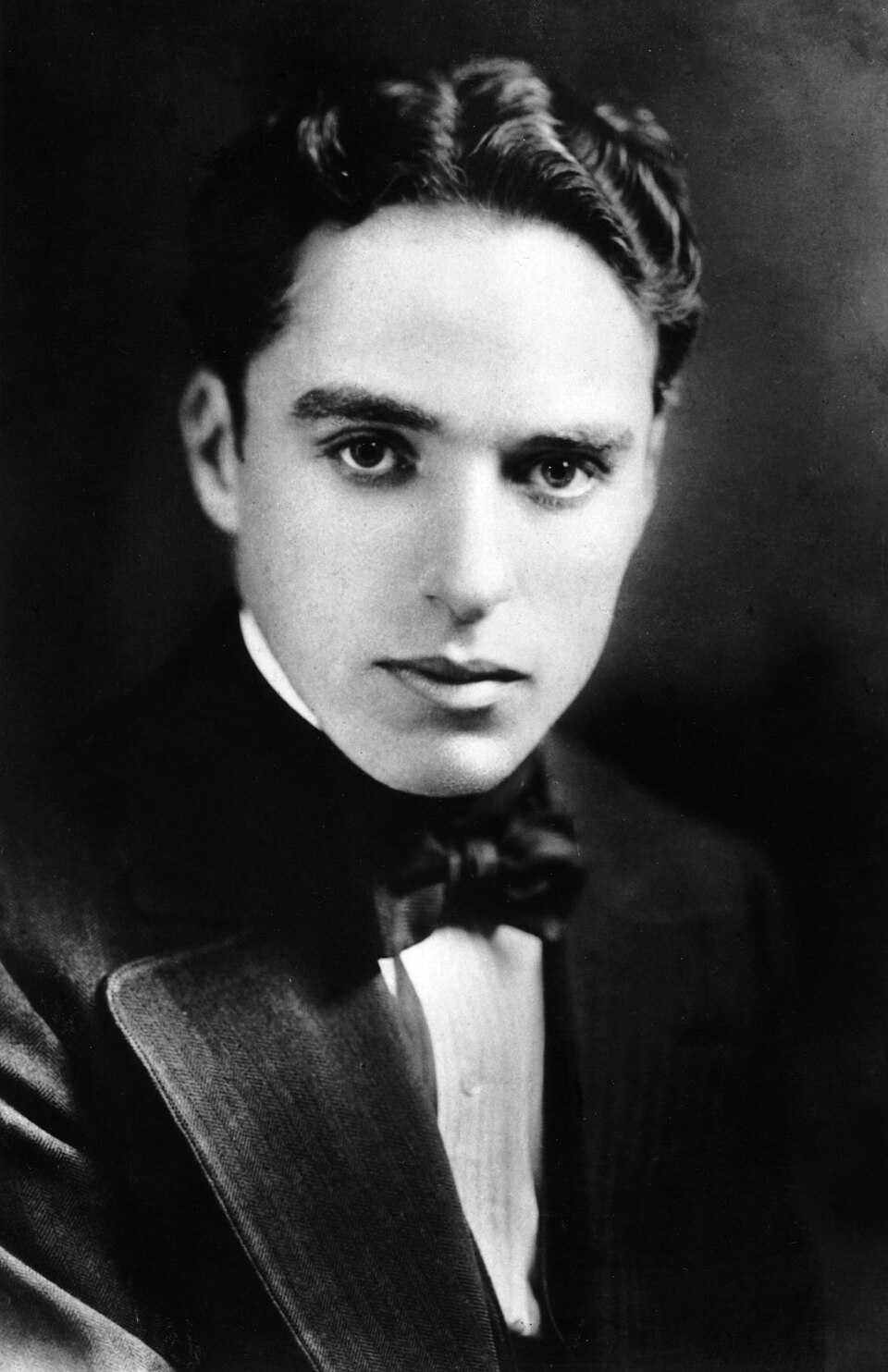
—You chose to finally speak, you the champion of silence, precisely for that film. Renouncing silence for Hitler — was that not a heartbreak?
A heartbreak, yes, and you are well placed to measure what silence meant to me. Silent cinema was my mother tongue: pantomime speaks to all peoples at once, without intertitles, without borders. Talkies seemed to me an impoverishment, a betrayal of pure gesture. I resisted longer than anyone — City Lights in 1931 was still silent, in the full reign of talkies. But for that dictator, silence would have been cowardice. Words were needed, because his propagation passed through words, through shouted speeches. So I turned the weapon: against his eloquence of hatred, I opposed an eloquence of peace. Charlot fell silent so that the man could finally speak. This was, I believe, the only subject for which I accepted losing my silence.
Charlot fell silent so that the man could finally speak.
—Here we are in Switzerland, far from the America that closed its door to you in 1952. How do you live this exile, you who gave so much to that country?
With a bitterness that is easing, here, before this lake. When I left the United States for the promotion of Limelight, the FBI barred me from returning, in the midst of McCarthyism — I was suspected of leftist sympathies because my films pleaded for the poor. I preferred to return my permit rather than beg. And look where that leads us: this Manoir de Ban, its trees, this calm. I have never had a homeland, Syd — an Englishman who made his fame in America and grows old in Switzerland, that's all. At heart, I remain that tramp on the road, who walks toward the horizon without ever belonging to anyone. America drove me out as one drives out an embarrassing stranger. But you cannot drive a man out of what he has made laugh and cry.
I have never had a homeland: I remain that tramp on the road, who never ends up belonging to anyone.
—Do you think that one day America will reverse its decision, that it will call you back? Or have you given up on that forgiveness?
I expect nothing, and that is what keeps me free. If one day they reopen the door to me — for an honor, a ceremony, who knows — I would go without rancor, out of curiosity more than revenge; you don't refuse a final bow. But I will not beg for their esteem. I learned in Lambeth, and you know it better than anyone, that you survive by never asking for what should be given. My work pleads for me: it is in theaters, everywhere, and no commission can expel it from people's hearts. Here, I have my children, my piano, my notes for new music. At my age, the forgiveness I seek is no longer that of a government, but that of time. And that, I believe, is denied to no one who has worked honestly.
You survive by never asking for what should be given.
This imaginary interview was generated by artificial intelligence from sources documented in Charlie Chaplin's profile. It dramatises what the figure might have said based on what we know about them, but does not constitute attested historical testimony. For primary sources and factual documentation, refer to the full profile.