Imaginary interview with Charlie Chaplin
by Charactorium · Charlie Chaplin (1889 — 1977) · Visual Arts · 6 min read
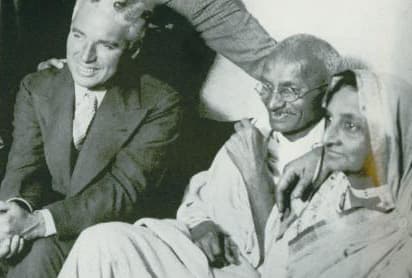
June 1972. The sun is setting over Lake Geneva, and from the terrace of the Manoir de Ban, in Corsier-sur-Vevey, an old man with white hair gazes silently at the Alps. He has just returned from America, twenty years after being driven out. Charlie Chaplin agrees to trace the thread back — from the London pavement to the studios on La Brea Avenue.
—When you look back on your London childhood, what image comes first?
The cold, above all. I was seven when my brother Sydney and I were taken behind the walls of the Lambeth workhouse. Do you know what that place was? An institution where you traded a bit of soup for a lot of humiliation, where brothers were separated like laundry. My mother was sinking, my father had disappeared into drink. I didn't feel like I was entering a crisis — we had been living in crisis forever; poverty was our only climate. But it was there, between those gray dormitories of Kennington, that I understood something I never forgot on a film set: a hungry man who keeps his dignity is a thousand times funnier, and more heartbreaking, than a well-fed man.
Poverty was our only climate; I didn't feel like I was entering a crisis.
—Do you think that misery shaped the Tramp's view of the world?
Entirely. It's often been said that my vagabond was a poet of the sidewalks — he is because, as a child, I slept near the sidewalks. Charlot never despises the poor, because I couldn't despise what I had been. Later, when I filmed a worker crushed by the gears in Modern Times, I wasn't inventing anything: I remembered the kid from Lambeth that the social machine wanted to swallow. Tenderness for the destitute is not an opinion I adopted; it's a scar. The powerful reproached me all my life for taking the side of the little people. But how could I betray the only people I ever belonged to?
—How was the character of Charlot really born, in 1914?
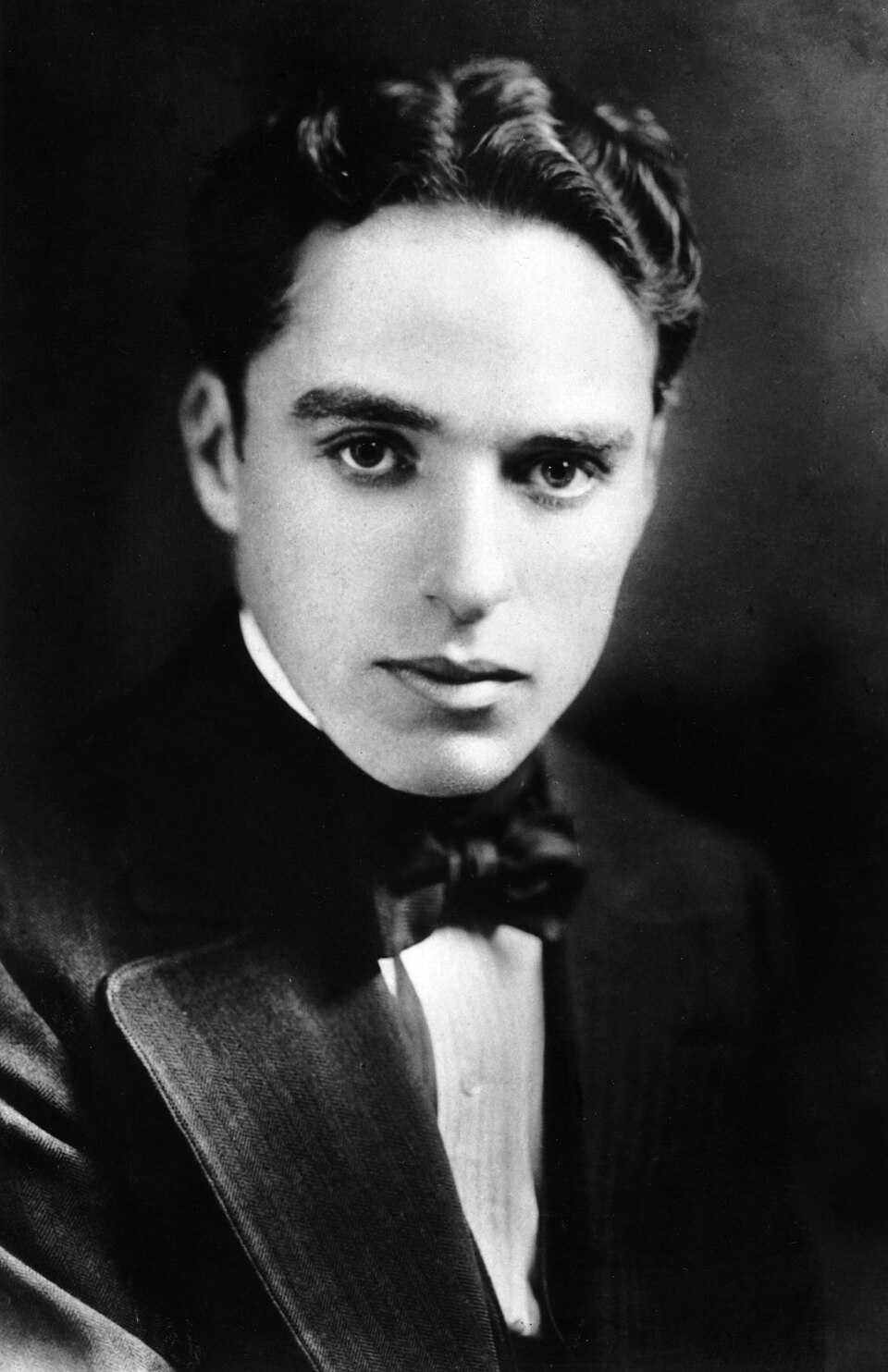
By accident, almost out of laziness! I was asked to improvise a comic character at the Keystone studios, and I had no idea. So I dove into the other actors' wardrobe and took everything that clashed: baggy pants, a tight jacket, a bowler hat a bit too small, a bamboo cane to give myself gentlemanly airs, and those oversized shoes that I put on the wrong feet so I could waddle like a duck. I stuck on a fake moustache, just enough to age my face without hiding the eye. And here's the strange thing: the moment I put on those rags, the man came to me whole. I walked differently, I thought differently. The costume had invented the soul before I understood who he was.
The moment I put on those rags, the man came to me whole.
—How would you describe the intimate character of this vagabond you loved so much?
I wrote it once to Sydney, my brother, trying to pin him down. He's a gentleman, you see, a poet, a dreamer, a lonely man who always hopes for a romance and an adventure around the corner. He'd like to make you believe he's a scholar, a musician, a duke, a polo player — he plays every role in his head. And yet he doesn't disdain picking up a cigarette butt from the ground. That's his whole nobility: grandeur of manners in the utmost destitution. He tips his hat to ladies when he hasn't enough money for dinner. It's that contradiction that makes him human — we all carry within us an imaginary duke and a butt-picker.
—It's said you were fiercely demanding on set. How far did you go?
To the absurd, my actors will tell you! For The Gold Rush, there's that scene where, starving in a Klondike cabin, I boil my shoe and savor it like a king's dish. I had the shoe made of licorice — and we shot, and reshot, and shot again, so much that several of us ended up sick from eating it. Some scenes took me over two hundred takes. They thought I was a tyrant. But a gag, you see, is like clockwork: a quarter-second too long and the laughter dies. I wasn't seeking perfection out of vanity; I sought it because the audience never forgives a creaky mechanism.
—What was your daily work like, away from the spotlight?
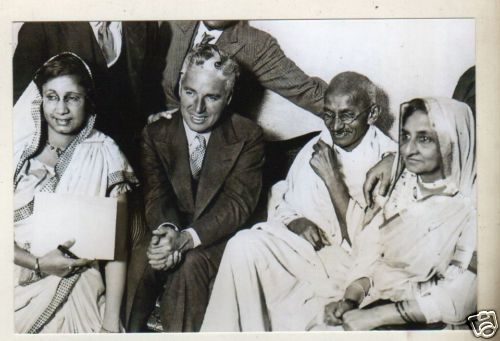
My days started late and ended late. In the morning, in front of a mirror, I would rehearse a grimace, a shrug, until the gesture became true. In the afternoon, at my studios on La Brea Avenue, I directed, acted, tirelessly reworked, improvising ideas with my actors like searching for the right note. But it was in the evening that I truly locked myself away, in the editing room, splicing the film frame by frame. A film is made there, in silence, with a file and scissors — not in front of the camera. And when exhaustion came, I would sit at the piano or play the violin, which I taught myself, to compose my own music. A gag is edited like a melody: it's all about tempo.
—What drove you to take on Hitler in The Dictator?
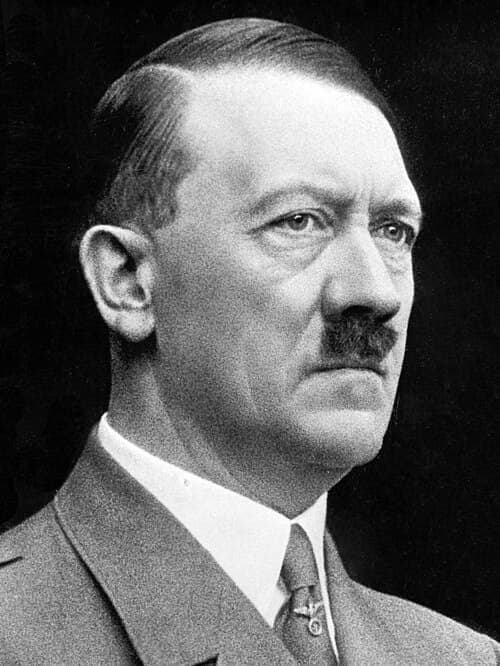
An almost cruel coincidence, to begin with. That man and I were born four days apart, in April 1889, and we wore the same little toothbrush moustache — mine was born to make people laugh, his to frighten. How could I not see it as a challenge from fate? In 1940, when so many kept prudently silent, I thought a clown might have the right, even the duty, to hold a distorting mirror up to a tyrant. Had I known earlier the true extent of the horror, I probably couldn't have laughed at it. But laughter was my weapon, the only one I knew how to wield. Ridiculing a despot is to strip him of his only real power: the sacred terror he inspires.
His moustache was born to frighten, mine to make people laugh.
—At the end of the film, your character breaks the silence and addresses the world directly. Why that speech?
Because at a certain point, the mask was no longer enough. All my life I had defended silent cinema, convinced that pantomime spoke all languages. But faced with the barbarism rising in Europe, I felt I had to, once, speak in my own name. At the end of The Dictator, my little Jewish barber, mistaken for the tyrant, steps up to the podium and, instead of barking, begs men not to hate each other. I wanted to say that I desired neither to rule nor to conquer anyone, that I only dreamed of helping everyone — Jew or Gentile, black or white. I was criticized for abandoning comedy for sermonizing. So be it. There are times when the clown must take off his hat and look the audience in the eye.
—In 1952, America closed its doors to you. How did you experience that exile?
Like a slap, I admit. I was peacefully boarding a ship for Europe to accompany Limelight, and it was at sea that I learned I was forbidden to return. McCarthyism was in full swing; I was suspected of left-wing sympathies, my friendships and opinions were scrutinized. I had built my studios there, given forty years of my life to that country, and suddenly I was treated as undesirable. I didn't plead, I didn't beg. I set down my bags at the Manoir de Ban, above Corsier-sur-Vevey, facing the lake and the mountains. Switzerland offered me the calm that was denied elsewhere. You can banish a man from a territory, but you cannot banish his work — it continues to travel without a passport.
—You have just returned to the United States, twenty years later. What did you feel?
An emotion I couldn't measure. In 1972, the Academy invited me to receive an Honorary Oscar, and I stepped back onto that stage from which I had been driven. When I appeared, the audience rose — and the ovation lasted nearly twelve minutes. Twelve minutes! I held my old bowler hat in my hands, that Charlot bowler brought out for the occasion, and I trembled like a beginner. An entire country seemed to apologize without saying so. I have known the workhouses of London and the palms of Hollywood, exile and triumph — and that night, I understood that a vagabond, if he walks long enough, always ends up coming home. Even through the front door.
A vagabond, if he walks long enough, always ends up coming home.
This imaginary interview was generated by artificial intelligence from sources documented in Charlie Chaplin's profile. It dramatises what the figure might have said based on what we know about them, but does not constitute attested historical testimony. For primary sources and factual documentation, refer to the full profile.