Kids interview Chrétien de Troyes
by Charactorium · Chrétien de Troyes (1135 — 1181) · Literature · 5 min read

Two young visitors of twelve push open the heavy door of the comital palace in Troyes. An old man in a long woolen robe waits for them near a fireplace, a manuscript on his lap. He smiles: it had been a long time since anyone had questioned him with such curiosity.
—Before writing your novels, what did you do when you were young?
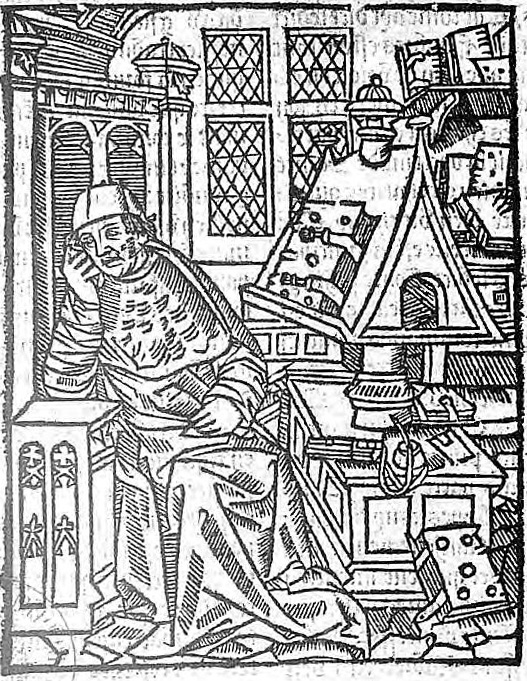
You know, my child, I was a clerk. That means a man who learned to read, write, and especially Latin, at the Church school. Imagine whole mornings bent over parchment manuscripts, that scraped and smoothed animal skin on which letters were traced. I read a Roman poet named Ovid. I even adapted some of his works into French, like The Art of Love — they are lost today, alas. All that knowledge of the ancients, that's what taught me how to tell stories. One invents nothing without having first read much.
One invents nothing without having first read much.
—What were evenings like when you told your stories?
Ah, the evenings! That was my favorite time, my child. Imagine a great hall, in winter, with no light from outside. Just candles placed on wrought-iron candlesticks, flickering and making shadows dance on the walls. The nobles sat in a circle. A jongleur — that was an artist who traveled from castle to castle to recite and sing — read my verses aloud. Sometimes he accompanied himself on a vielle à archet, a string instrument played with a bow. In those days, you didn't listen to a story silently in your corner: you listened to it together, at the evening gathering.
You didn't listen to a story alone: you listened to it together, at the evening gathering.
—And the city of Troyes, what was it like in your time?
Troyes was a city full of life, my child! Imagine streets where you hear no engines, only the hooves of horses, the cries of merchants, and bells. Twice a year, great fairs were held: merchants came from far away, exchanging fabrics, spices like pepper and cinnamon, and also stories. That's where the tales circulated that I later put into verse. And the great cathedral was being built little by little, stone by stone. A city of commerce and letters at the same time: the dream place for a storyteller like me.
—Why do they say you invented the novel?
That's a very grand word, but there is truth in it. You know, in my time, the word roman meant 'written in the Romance language' — that is, in French, and no longer in Latin. Before me, people mainly sang of battles. I, in Érec and Énide, around 1170, wanted something else: take a tale that passed from mouth to mouth and give it a beautiful conjointure. That means a harmonious arrangement, like a mason who assembles his stones well. I felt that he who knows how to tell a story should not keep his knowledge to himself. So I assembled, I gave it form. And a new genre was born.
He who knows how to tell a story should not keep his knowledge to himself.
—Were you proud to write in French rather than Latin?
Very proud, my child. In the prologue of Cligès, around 1176, I wrote something that was close to my heart. I said that knowledge and chivalry had first shone in Greece, then among the Romans, and had finally come to us, in France. Imagine a torch passed from hand to hand through the centuries. Well, I wanted that torch to burn also in our language, the one we truly speak, not just in the Latin of scholars. Writing in French was not a small choice: it was saying that our language too deserved beautiful stories.
Knowledge is a torch passed from hand to hand.
—Is it true that a great lady commissioned a story from you?
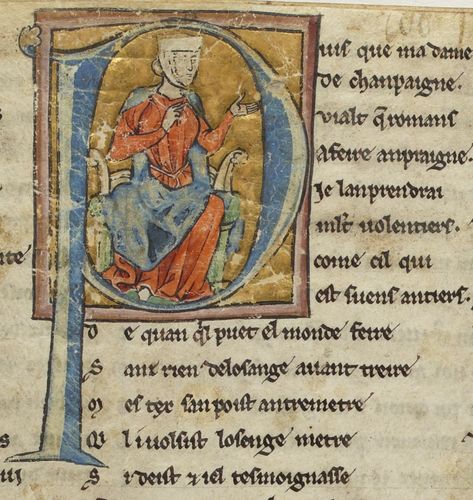
Absolutely. That lady was Marie de Champagne, the daughter of the famous Eleanor of Aquitaine. She held her court right here, in Troyes. Imagine a cultured princess, who loved beautiful stories and knew what she wanted. One day, she entrusted me with a subject for my novel Lancelot or the Knight of the Cart. I said myself, in the prologue, that she gave me the matter and the meaning — that is, the subject and the significance — and that I only contributed my work and application. Working for such a patron was an honor. But also, sometimes, a headache.
—A headache? Did you disagree with what she wanted?
You have sharp ears, my child! The subject she imposed on me was the love of Lancelot for Queen Guinevere — the wife of King Arthur. A forbidden love, therefore. It made me uncomfortable, I admit. So, do you know what I did? I let another poet, Godefroi de Leigni, finish the novel in my place. That's rare! Imagine a painter who entrusts the end of his painting to a friend. Some say it's because the subject displeased me. I'll let you guess. Let's say one never writes entirely freely when someone else holds the purse strings.
One never writes entirely freely when another holds the purse.
—Did you invent the story of the Grail?
In a way, yes, and it moves me that you know that. In my last novel, Perceval or the Story of the Grail, around 1181, I spoke for the first time of that mysterious object, the Grail. Imagine a young boy, Perceval, raised in the forest by his mother, who knows nothing of the world of knights. Little by little, he learns, he grows, he discovers what honor is. And at the heart of his adventure, he encounters this Grail, without fully understanding what he sees. I could not have guessed that after me, so many writers would seize this mystery to tell it in their turn.
—Why did you never finish that story of the Grail?
Ah... that is my great sadness, my child. Perceval remained unfinished. Death, or illness, did not leave me time to set down the last verse. I had dedicated this novel to Count Philip of Flanders, a northern lord I greatly admired for his generosity. Imagine starting to build a cathedral and having to stop before the spire. That's how I felt. But do you know? That incompleteness may have been its strength. Since the story stopped in the middle of the mystery, other poets wanted to write the sequel. My story continued to live, long after me, through other hands than mine.
An unfinished story, sometimes, never dies.
—If someone read your novels today, what would you want them to remember?
What a beautiful question to end with. You know, in my stories, a knight is never great only because he knows how to fight. That bravery was called prowess. But it is not enough. There must also be courtesy, respect, wisdom. My hero Yvain, for example, must repair his faults and keep his word before deserving his lady's love again. If you remember only one thing from me, keep this: what makes a hero is not the strength of his arm, but the quality of his heart. And that, my child, never grows old.
What makes a hero is not the strength of the arm, but the quality of the heart.

This imaginary interview was generated by artificial intelligence from sources documented in Chrétien de Troyes's profile. It dramatises what the figure might have said based on what we know about them, but does not constitute attested historical testimony. For primary sources and factual documentation, refer to the full profile.