Imaginary dialogue between Cardinal Decio Azzolino and Christina of Sweden
by Charactorium · Christina of Sweden (1626 — 1689) · Politics · 5 min read
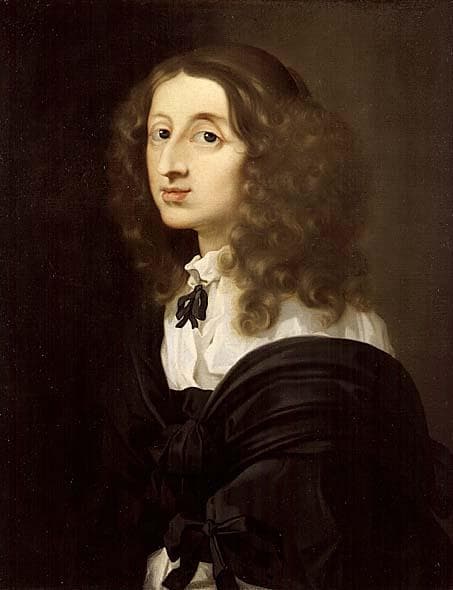
It is in the warm twilight of the Palazzo Riario, on a spring evening in 1685, that Cardinal Decio Azzolino finds Christina, seated among her paintings and books, an armillary sphere gleaming in the candlelight. A score by Corelli still lies on the harpsichord, and the scent of warm wax mingles with that of old parchments from Prague. They have known each other for thirty years, since the day she entered Rome; he is the friend to whom she confides what she hides from all Christendom. Tonight, he comes to listen to her speak of herself, without witness and without mask.
—Christina, we have known each other since your arrival in Rome, but tell me: that morning in June 1654, at Uppsala, what did you truly lay down with your crown?
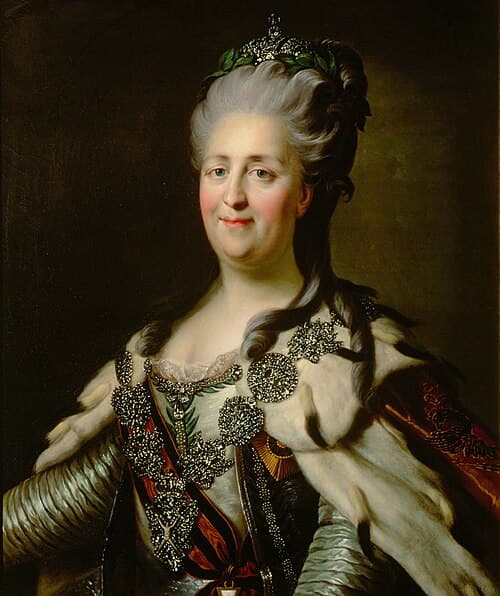
You ask me what I laid down, Decio, but it is what I took up that you should ask. Before the Estates of the Realm, at Uppsala, I spoke the words that had burned within me for years: I freely and voluntarily renounce the crown of Sweden, and all the rights and prerogatives attached to it. They thought me mad. A healthy monarch abdicating—this had almost never been seen. But I wore that diadem as one wears golden chains. By removing it with my own hand, I ceased to belong to a kingdom and began to belong to myself. The nobility wept, Oxenstierna clenched his jaw—and I, for the first time, breathed. A crown is heavy only for those who feel its weight.
I wore that diadem as one wears golden chains.
—Your ministers begged you to marry to secure the succession. Why did you prefer to renounce rather than yield on this point?
Because a husband would have been a second crown, and I no longer wanted even one. The Estates pressed me to bear an heir as one presses a cow to give milk. I always said that marriage was incompatible with the freedom I had promised myself. To give my body, my name, my Council to a man who would have governed in my name? Better to cede the throne to my cousin Charles Gustav, who at least knew how to hold it. You who know me, Decio, know that I never knew how to obey, and even less a husband. They gossiped endlessly about this obstinacy, seeking shameful reasons where there was only will. I preferred to belong to no one rather than to be half a queen.
—Before Rome, before me, there was that French philosopher you summoned to the cold of Stockholm. Do you still blame yourself for his death?
Descartes… I have been blamed enough for it that I no longer need to blame myself. I had him come in 1649 to teach me his natural philosophy, his physics, his way of doubting everything to better establish truth. But I rose at five o'clock, and I insisted on our lessons at that hour, in a study that the frost of Sweden pierced through. He, accustomed to meditating warmly under his covers, did not last three months. Pneumonia carried him off in February 1650. Did I kill the greatest mind of my century by the whim of a morning queen? I tell myself that a man dies of his time, not of the hour of a lesson. But I never again found an interlocutor of that stature—not even in Rome.
Did I kill the greatest mind of my century by the whim of a morning queen?
—You speak of your dawn lessons—those hours when the palace still slept. What were you truly seeking in those icy mornings?
I was seeking what I have never stopped seeking, Decio: understanding. You have seen me here, in Rome, reading Greek before the first Mass, and it is the same woman who, in Stockholm, devoured Tacitus and the geometers before the court awoke. Dawn is the hour when one is alone with one's thoughts, without courtiers, without flatterers, without affairs of state. With Descartes, we discussed the motion of the stars, matter, what the human mind can know. I could not bear the idea of ruling over men without surpassing them in knowledge. An ignorant queen is nothing but a painted figure on a coin. I wanted to be more—even at the cost of my sleep and, alas, his.
An ignorant queen is nothing but a painted figure on a coin.
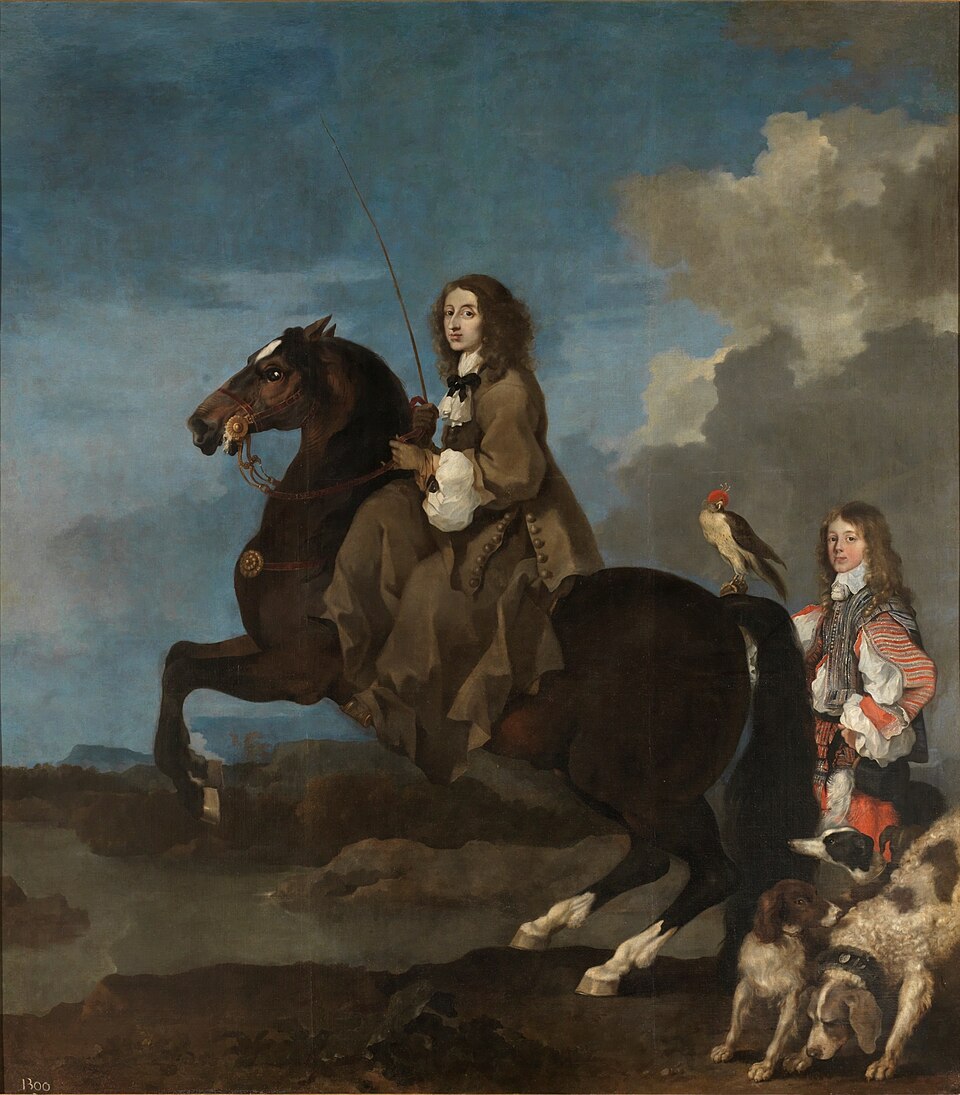
—You once reminded me of what you wrote to Ambassador Chanut. You who disguised yourself as a man to flee the North, what did you mean by that?
Those words I still maintain today: I am not a woman as they think; you have known me too long to believe me capable of the weaknesses of my sex. My father, Gustavus Adolphus, destined me to rule over men; so I had to form the mind and courage of a man. I was raised like a prince—on horseback, at arms, in Latin—and I never knew how to become the docile thing expected of a woman. When I left Sweden in 1654, I put on breeches and boots, and it was not only to travel incognito: it was my true costume. I have always felt on the edge, neither quite one nor quite the other. Let the court gossip; I wanted to be free of that boundary as well.
Neither quite one nor quite the other—and free of that boundary as well.
—At Innsbruck, in 1655, you did publicly what you had long hidden. Was this conversion calculation or calling?
Both, perhaps, but above all a deliverance. To abjure the Lutheranism of my fathers and embrace Rome was an act that no Swedish crown would have tolerated—that is why I first had to abdicate, then flee. At Innsbruck, before the altar, I could finally say aloud what I had carried in secret for years. Some saw it as the betrayal of a daughter of a Protestant hero; others, a comedy to win the protection of the popes. You, Decio, know better. I wrote to you one day: Rome is my true homeland; it is here that my soul breathes, surrounded by the greatest minds of Christendom. I did not come to seek a religion as one changes clothes. I came to find the only place in the world where a woman such as I could live.
Rome is my true homeland; it is here that my soul breathes.
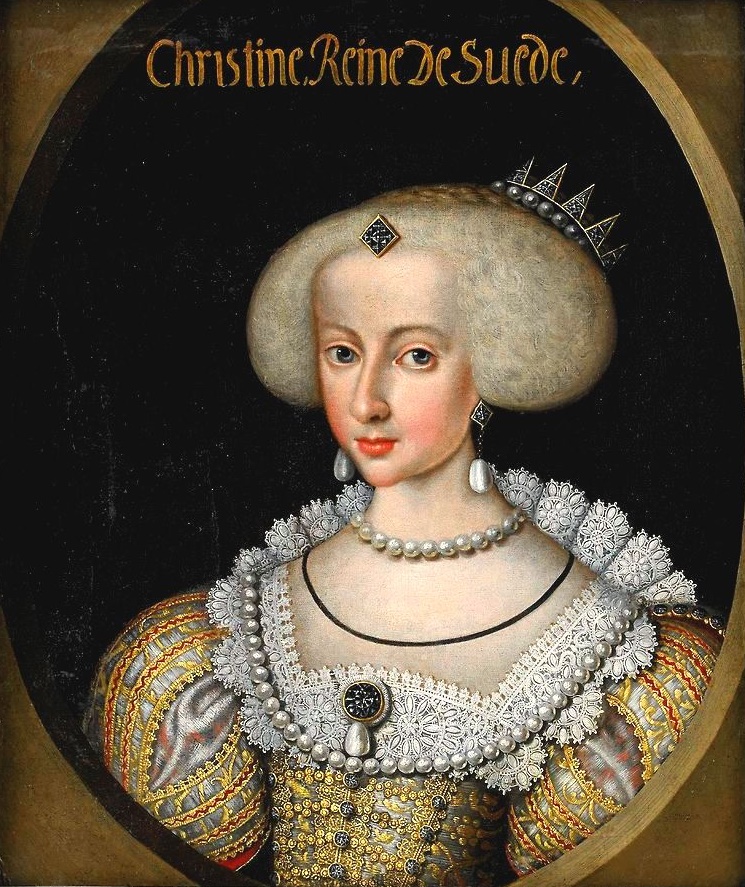
—Thirty years already that you have lived under the sky of Rome. Do you still miss Sweden, or have you truly left it?
I miss Sweden as I miss the child I was—that is, not at all, and all the time. I left there a throne, dark forests, a rough people I loved without understanding them. Twice I tried to regain a foothold: at the death of Charles Gustav in 1660, I thought of reclaiming the crown, and I was made to feel that I was no longer at home. It is a strange thing, Decio, to have renounced a kingdom and to suffer that it renounces you in turn. But here, among my books, my paintings, my musicians, in this palace where you come to sit in the evening, I have built another homeland. The first made me a queen; this one has made me finally myself.
—Those manuscripts from Prague that sleep in your library—that Codex Argenteus of gold and silver—how did they come to you?
Through war, Decio, like almost everything that makes the glory of princes. In 1648, my armies took Prague and plundered it; thousands of works, paintings, manuscripts torn from the imperial collections were sent to me. The Codex Argenteus, that Gothic Bible written in letters of gold and silver on purple, was the jewel. They call it war booty, and I do not blush for it: the Habsburgs would have done the same in my place. But where others would have amassed a treasure, I wanted a living library, one of the largest in Europe. These books are not spoils: they are spirits that I keep alive. When I die, they will still speak when my name falls silent.
These books are not spoils: they are spirits that I keep alive.
—Your palace resounds with music, Corelli composes there, Baciccio paints there. Why does a fallen queen devote herself to protecting artists?
Fallen? I have never felt more a queen than since I have no more subjects. Patronage, you see, is the only power that is not taken by arms and is not lost by abdication. Here, in this palace, I have gathered the best: Arcangelo Corelli for music, Baciccio for the brush, poets, scholars, academicians. We hold assemblies where the mind reigns alone, and from these gatherings, I hope, a lasting academy will be born that will carry the ideal of letters long after us. A crown is passed to an heir; a protected work, a founded academy—that is passed to entire centuries. I reigned over a northern kingdom for twenty-two years; I want to reign over minds forever.
I have never felt more a queen than since I have no more subjects.
Read further
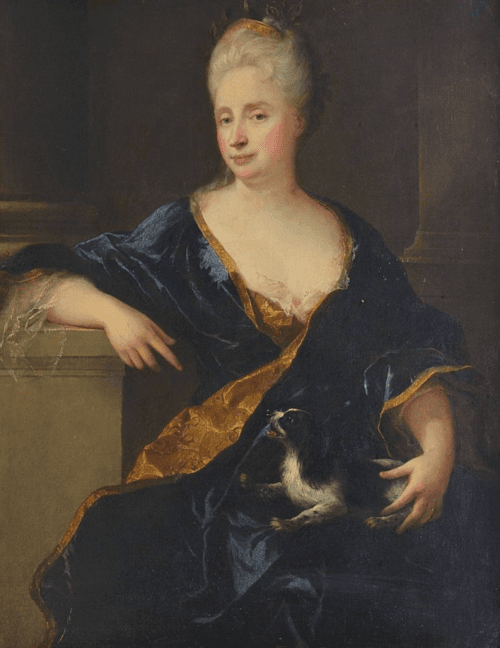
This imaginary interview was generated by artificial intelligence from sources documented in Christina of Sweden's profile. It dramatises what the figure might have said based on what we know about them, but does not constitute attested historical testimony. For primary sources and factual documentation, refer to the full profile.