Imaginary interview with Christina of Sweden
by Charactorium · Christina of Sweden (1626 — 1689) · Politics · 6 min read
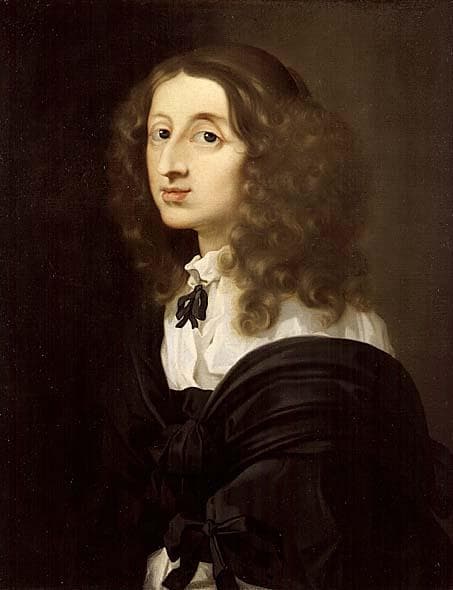
Rome, 1685. In a gallery of the Palazzo Riario where paintings by Baciccio stand alongside celestial globes and shelves laden with manuscripts, a woman of fifty-nine receives us, dressed in a curious mix of male attire and velvet. She was Queen of the North; today she calls herself a citizen of the Republic of Letters. An interview with one who abdicated a crown to conquer her freedom.
—How do you explain that a monarch in full health voluntarily renounces his throne?
I've been asked a thousand times, and a thousand times they've looked behind my act for an intrigue, a weakness, a flight. The truth is simpler and more scandalous: I wanted to belong to myself. In June 1654, before the Estates of the Realm assembled at Uppsala, I spoke these words, which cost me more courage than any battle: “I freely and voluntarily renounce the crown of Sweden, and all the rights and prerogatives attached to it.” I laid down the crown with my own hands, as one lays down a burden too heavy. My cousin Charles X Gustav picked it up; I, at last, could breathe. To reign, you see, is to serve a thousand masters disguised as subjects. I preferred to serve only one: myself.
They've looked behind my act for an intrigue; the truth is simpler and more scandalous: I wanted to belong to myself.
—Why did you leave Sweden disguised as a man rather than in full sovereign regalia?
Because one does not cross Protestant Europe to embrace Rome under the banner of a Lutheran queen without rousing all the preachers of the North. I put on the jacket, breeches and boots, I cut short the ceremony, and I crossed the borders like an anonymous rider. At Innsbruck, in 1655, I abjured my father's Lutheranism in secret, before entering Rome in broad daylight. This disguise was not a comedy: it was the truth of my being. I have always been more comfortable in men's clothes than encased in ermine robes. The conversion changed my soul; the costume merely made it visible at last in the open air.
—Do you remember the circumstances under which you summoned Descartes to Stockholm?
I wanted him near me as one wants a living treasure. In 1649, I wrote to the greatest mind of our time to come teach me his natural philosophy, his physics of vortices, his geometry of the soul. René Descartes arrived at my castle of Tre Kronor, but he discovered what my North had that was cruel. I required my lessons at five in the morning, in rooms where the ink almost froze in the inkwells. He, who was accustomed to philosophizing in bed until noon, had to face my icy dawns. The Swedish winter proved fatal to his chest: a flux, a fever, and in February 1650 he passed away. I gained a learned crown and lost my master; I have never quite been consoled.
The ink almost froze in the inkwells; the Swedish winter proved fatal to the chest of the greatest mind of our time.
—What were you really seeking in those philosophical conversations at dawn?
I was seeking what no minister, no ambassador could give me: a mind that would not flatter me. At dawn, in my castle, Descartes did not speak to the queen but to the pupil, and that is what I wanted. We discussed cosmology, the movement of the stars, that natural philosophy which claims to read the world like a clockwork mechanism. Raised from childhood in Latin, Greek, and scholarly disputation, I had a hungry mind that affairs of state never satisfied. The crown feeds pride; only study feeds the soul. That is why I dragged my scholars out of bed before sunrise: because truth, unlike courtiers, does not sleep.
—How did your Roman palaces become those centers of scholars and artists that all Europe praises?
By filling them with what I lacked in Stockholm: free minds and music. At the Palazzo Farnese, then at the Palazzo Riario where we are now, I opened my galleries to poets, philosophers, scholars from all Christendom. I protected the composer Arcangelo Corelli, whose sonatas filled my evenings, and Baciccio's brush covered my ceilings with moving glories. All around, my library: several thousand volumes, philosophy, sciences, rare manuscripts, which I considered my true subjects. I also laid the foundations of that academy, the Arcadia, which was to unite the best writers of Italy. A queen without a kingdom, they said. So be it. I had traded an icy throne for a republic of the mind.
A queen without a kingdom, they said; I had traded an icy throne for a republic of the mind.
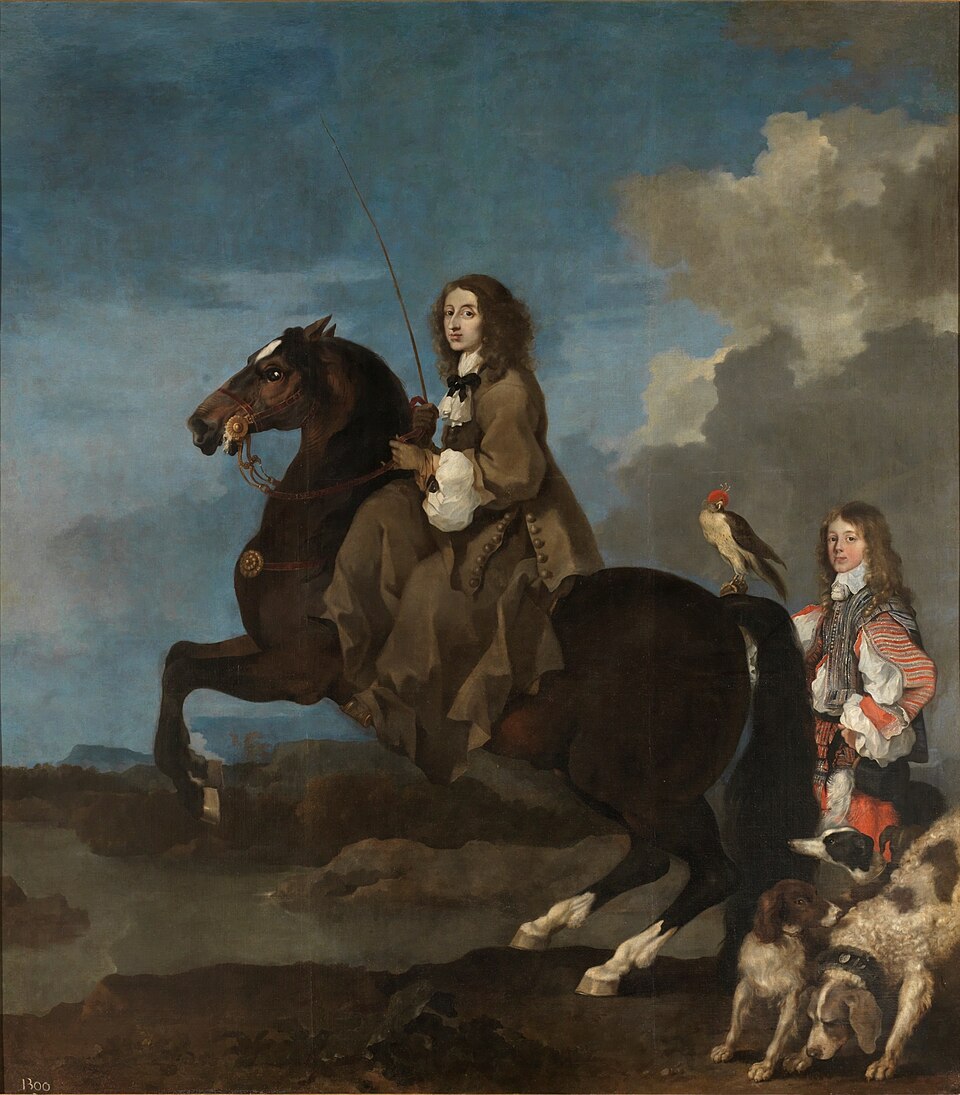
—What does that immense library you assembled over your lifetime represent for you?
It is my true autobiography, far more than the fragment where I try to recount my childhood. Each volume bears the trace of a hunger. Among my treasures, the Codex Argenteus, that Gothic Silver Bible of the 6th century, written in gold and silver on purple parchment, brought back from the collections of Prague. When I held it in my hands, I touched fifteen centuries of history. My philosophical books, my scientific treatises, my ancient manuscripts: that is what I wanted to possess when I ceased wanting to possess provinces. A crown is lost in a ceremony; a library is passed on. I already know that part of my volumes will end up in the care of the popes, at the Vatican. That is the only lineage I acknowledge.
—How did those collections from Prague come to your cabinets in Stockholm?
By the terrible right of war. While my armies held the Empire in check, during that endless Thirty Years' War, they swept from the imperial collections of Prague thousands of works, manuscripts, books. That spoils of war took the road north and enriched my cabinets. I am not ashamed of it: such is the century. What a Catholic emperor had amassed, a northern queen gathered. The Codex Argenteus, paintings, entire libraries: all that formed the core of my royal collections. My father's Sweden was a nation of soldiers; I wanted it also to become a nation of scholars. The cannon brought me the books; it was up to me to make them speak.
—What role did Sweden play in the great treaties that ended that war?
A leading role, and I, despite my youth, was an attentive witness. When the Treaties of Westphalia were signed, in 1648, I was not yet twenty-two, but I closely followed the kingdom's foreign policy alongside my chancellor, Axel Oxenstierna, that old fox who had governed during my minority. These treaties redrew Europe and established Sweden as a great power, mistress of provinces and river mouths. They also established that new principle: that each state is sovereign at home. My father had died at Lützen for that greatness; I saw it finally sealed on paper. That was, I believe, the pinnacle of Sweden's fortune — and I had the responsibility not to squander it.
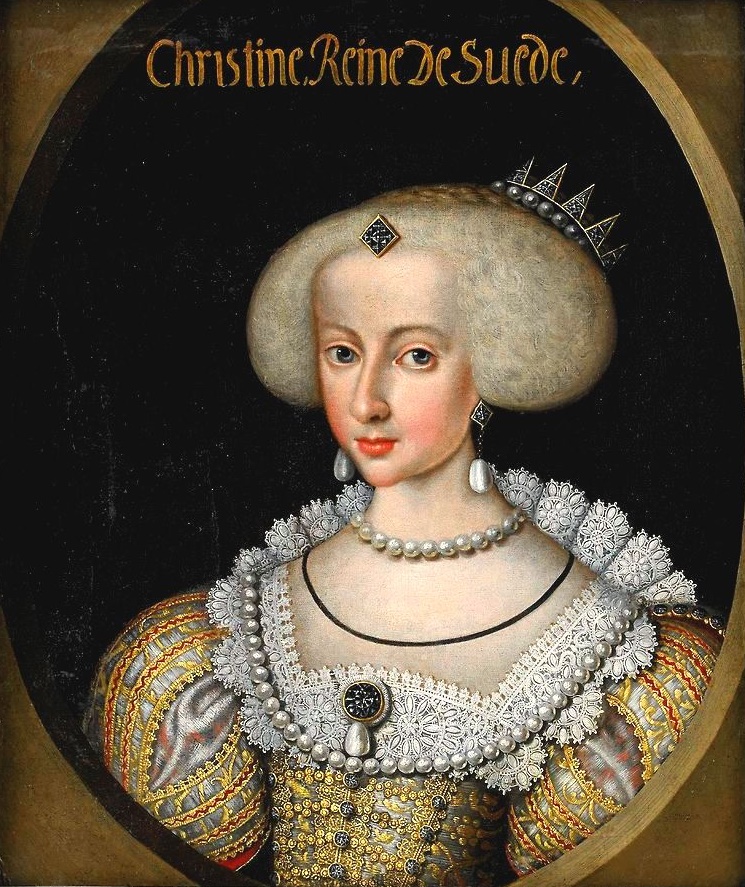
—Why did you always refuse marriage, despite the pressure from your Estates?
Because marrying a man would have been abdicating even before abdicating. They wanted from me a crowned womb; I offered only a mind. To Pierre Chanut, the French ambassador, I once wrote what I thought in private: “I am not a woman as people believe; you have known me too long to believe me capable of the weaknesses of my sex.” Marriage would have chained me to a master, and I wanted none. My Estates of the Realm insisted, begged, threatened; I held firm. My father had raised me as a prince, and one does not turn a prince back into the ranks of docile wives. I preferred to reign alone, then to reign no longer, rather than share my bed with my crown.
They wanted from me a crowned womb; I offered only a mind.
—What would you say to those who, even during your lifetime, multiply rumors about your nature and identity?
That they tire themselves in vain trying to put me in a box. I wore men's clothes when it pleased me, I wrote that my father wanted to form in me “the mind and courage of a man,” and I governed without a husband or guardian. That is enough for gossip from one end of Europe to the other. They want me to be an enigma; so be it, I will be an enigma. In my Maxims, I constantly circled around a single word: freedom, that good without which life has no flavor. I owe no account to Estates, nor ambassadors, nor confessors. Let them call me what they will; I know that I never consented to be anything other than what I am.
—At the twilight of your life, how do you view the path traveled from Stockholm Castle to Rome?
As a long march toward my true homeland. I grew up queen at six years old in a fortress of ice, I die a free woman in the warmth of Rome. To Cardinal Azzolino, the friend of my later years, I confided that it is here that my soul finally breathes, surrounded by the greatest minds of Christendom. I laid down a crown, crossed Europe disguised, shocked the courts, founded academies, saved books from oblivion. They say I will be buried among the greats, beneath the vaults of St. Peter's — an unheard-of honor for a former Lutheran from the North. If I had to sum up my life, I would say it was a long happy disobedience. I preferred freedom to greatness, and I don't think I was wrong.
I grew up queen in a fortress of ice; I die a free woman in the warmth of Rome.
Read further
This imaginary interview was generated by artificial intelligence from sources documented in Christina of Sweden's profile. It dramatises what the figure might have said based on what we know about them, but does not constitute attested historical testimony. For primary sources and factual documentation, refer to the full profile.