Kids interview Christina of Sweden
by Charactorium · Christina of Sweden (1626 — 1689) · Politics · 5 min read
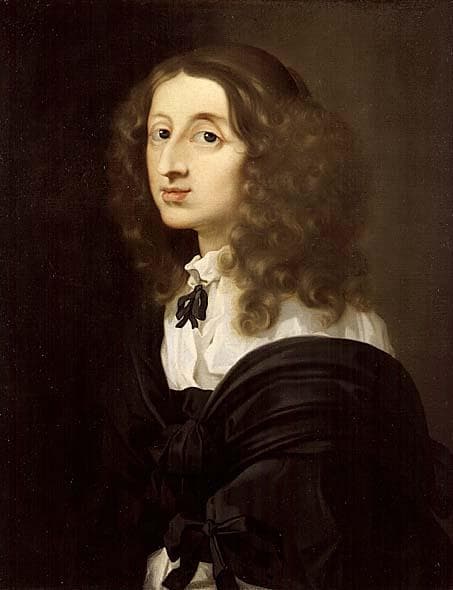
That morning, two students from a school trip pushed open the door of a great Roman palace. A lady with an astonishing appearance, half queen, half horseman, awaited them with a smile. It was Christina of Sweden, who became queen at six years old and one day gave up everything to remain free. She agreed to answer their questions.
—How old were you when you became queen?
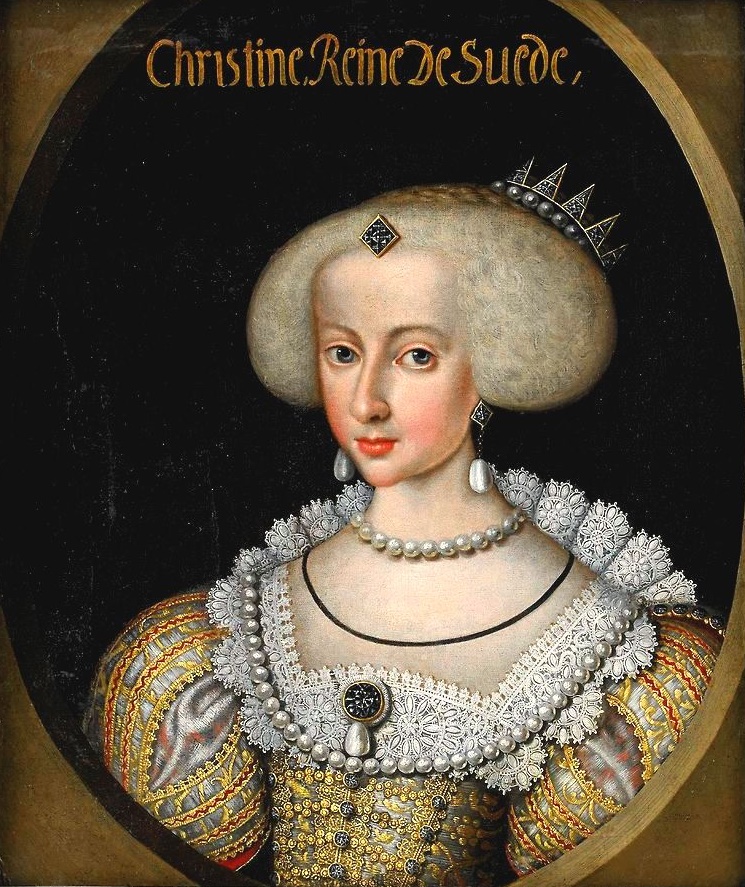
You know, my child, I was six years old when my father fell. His name was Gustavus II Adolphus, and he died at the Battle of Lützen, in 1632. Overnight, they made me queen. Imagine a little girl sitting on a throne far too big for her! But they didn't raise me like a fragile princess. They taught me Latin, Greek, philosophy, from dawn. My father had wanted it that way. As I wrote later: “My father destined me to rule over men; therefore he had to shape my mind and courage like a man’s.” So I learned to think, not to please.
—Is it true you held philosophy lessons at five in the morning?
It’s absolutely true! I loved ideas so much that I summoned the greatest thinker of my time: René Descartes. He arrived in Stockholm in 1649. I always got up at five, you see. That’s when the mind is clear. So I wanted my lessons at that hour. Imagine poor Descartes! He liked to think warmly under his covers until noon. And now a queen forced him to cross an icy palace before sunrise. We talked about the soul, the movement of the stars, everything. I was hungry to learn.
—Were you sad when Descartes died?
Oh, it still weighs on me. The cold of Sweden killed him. You must know that in my time, the northern winter was terrible: months of snow, bone-chilling wind, no real warmth in those great stone halls. Descartes wasn’t made for that. He caught pneumonia — a serious lung disease. He died in February 1650, barely a few months after his arrival. I had brought the finest mind in Europe, and my winter took him from me. One learns early, when one is queen, that even our most beautiful desires can wound.
Even our most beautiful desires can wound.
—Why did you decide to give up your throne?
In June 1654, I did something no one understood: I laid down my crown. Of my own free will, while I was young and healthy! For a king, that was unheard of. Imagine: everyone dreams of a throne, and I returned it. Before the Estates of the Realm — the assembly representing the nobility, clergy, burghers, and peasants — I spoke these words: “I freely and voluntarily renounce the crown of Sweden.” Why? Because I wanted to be free. And freedom, for me, was worth far more than a kingdom.
—What did it feel like to remove your crown in front of everyone?
The Royal Crown of Sweden, I had worn it at my coronation in Uppsala, in 1650. Heavy, golden, magnificent. And that day in 1654, I took it off my head and set it down, as one sets down a burden. You know, some of my counselors wept. Others thought me mad. But I had thought about it for years. A crown is not a jewel: it’s a golden chain. Very beautiful, but a chain nonetheless. I always said: “Freedom is the greatest good one can have in this world.” Without it, what is the point of living richly?
A crown is not a jewel: it’s a golden chain.
—Is it true you left disguised as a man?
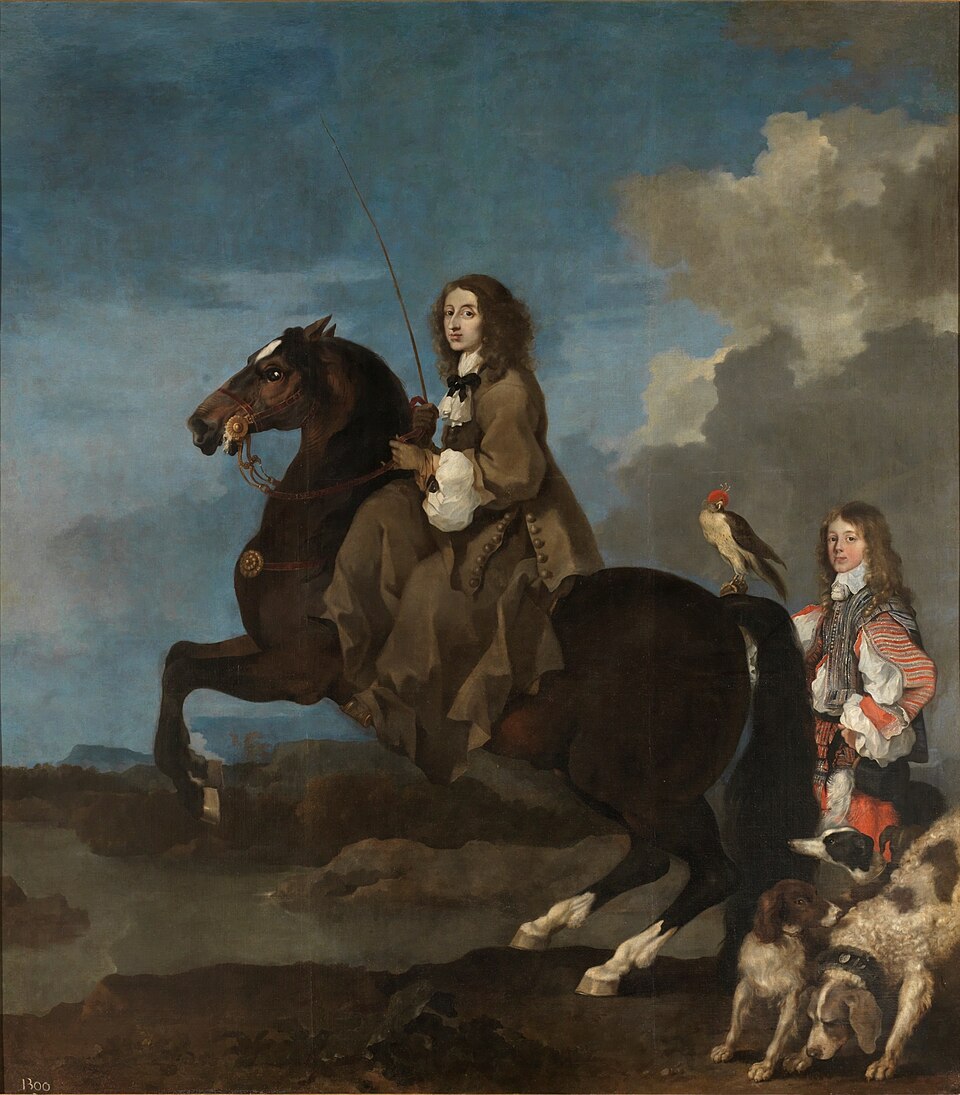
Yes! After my abdication, I did something even more surprising. I left Sweden dressed as a man: jacket, breeches, and boots. No one was to recognize me on the roads. I crossed all of Europe like that. My real secret was my religion. My country was Lutheran, a branch of the Protestants. But my heart leaned toward the Catholics of Rome. In Innsbruck, in 1655, I converted in secret. Can you imagine the scandal? A Protestant Northern queen embracing the faith of Rome! It was unthinkable. But you couldn’t rule Sweden and change religion. I had to choose.
—Why did you love Rome so much?
When I finally entered Rome, in 1655, it was like a rebirth. The city welcomed me in triumph. Imagine streets full of people, bells everywhere, marble palaces gilded by the sun — nothing like the gray stone and cold of Stockholm. There, I could read, discuss, listen to music all night. I once wrote to my friend Cardinal Azzolino: “Rome is my true homeland; it is here that my soul breathes.” And it was true. I had left a throne, but I had found a home for my spirit.
—Why didn’t you want to get married?
Ah, they pressed me so much to marry! The Estates of the Realm wanted a king at my side, and an heir. I always refused. A husband would want to command, and I wanted to rule alone. Marriage, for me, meant losing my freedom. And besides, you see, I was not a court lady like the others. I wore men’s clothes, rode horses, spoke loudly. I even wrote to the French ambassador, Monsieur Chanut: “I am not at all a woman as they believe.” People didn’t know what to think of me. Too bad. I was myself.
I preferred my freedom to a husband.
—What was the most beautiful thing in your palace?
My Roman palace, the Palazzo Farnese, became a real treasure. Do you know why? During the great war — the Thirty Years’ War — my armies had brought back marvels taken from Prague. Thousands of books, manuscripts, paintings. Spoils of war, as they said: everything seized from the enemy. My favorite piece was the Codex Argenteus, a very ancient Bible written in gold and silver letters on purple-dyed parchment. Imagine a book that shines like a jewel! I had thousands of volumes. For me, a library was worth far more than a chest full of gold.
—What did you leave behind?
In Rome, I protected artists. That’s what is called patronage: giving money and shelter to scholars and musicians so they could create. I loved music! I supported a great composer, Arcangelo Corelli. In the evening, my palace echoed with violins. I also laid the foundations for an academy of poets, the Arcadia, which gathered the finest minds long after me. You see, my child, I lost a crown, but I sowed something else. When I died, in 1689, I was buried in St. Peter’s Basilica — a tremendous honor. What we build with the spirit lasts longer than a reign.
What we build with the spirit lasts longer than a reign.
Read further
This imaginary interview was generated by artificial intelligence from sources documented in Christina of Sweden's profile. It dramatises what the figure might have said based on what we know about them, but does not constitute attested historical testimony. For primary sources and factual documentation, refer to the full profile.