Imaginary dialogue between Clotilde and Clovis
by Charactorium · Clovis (466 — 511) · Politics · 6 min read

It is in the palace of the Thermes de Paris, an ancient Roman building that Clovis made his residence from 508, that Queen Clotilde comes to sit beside her aging husband. Outside, rain falls on the Seine; inside, a large central hearth warms the hall hung with war trophies. Married for nearly twenty years, they have shared everything—battles, faith, the mourning of a child. That evening, Clotilde does not question the King of the Franks, but the man she saw convert.
—Clovis, before I became your wife, they say that at Soissons a warrior broke a vase you claimed. What really happened?
You touch there, Clotilde, on a matter that says everything about what a king is among us. After my victory over Syagrius in 486, the bishop of Reims asked me to return a liturgical vase taken from the booty. I wanted to return it, but the share is sacred to my warriors: one of them smashed the vase with his francisca, shouting that I would have only my share like the others. I kept silent, and I waited. A year passed. During the troop review, I found that man, threw his weapons to the ground as if poorly kept, and when he bent to pick them up, I split his skull. Remember the Soissons vase! That day, my leudes understood that the king is no longer a band leader among others.
That day, my leudes understood that the king is no longer a band leader among others.
—Do you remember, my king, the day in 493 when you had me brought from Burgundy to marry you? What did you expect from a Catholic princess?
How could I forget it, you who are well placed to know? I expected first what a king expects from an alliance: to bind myself to the Burgundian house, to establish my name among the kingdoms around me. My envoys had told me of your beauty and wisdom, but also of your faith—and that, I admit, made me hesitate. My fathers honored the old gods of the Franks, and a king does not change gods like a cloak without risking the loyalty of his warriors. Yet, as soon as you were at my hearth, I understood that I had not only won a queen. You spoke to me of your God tirelessly, with a patience my adversaries never had against me. I resisted for a long time, Clotilde. But a woman who does not despair is more formidable than an army.
A woman who does not despair is more formidable than an army.
—Our first son died just after his baptism, and I saw your gaze harden toward me. Did you then believe that my God had betrayed you?
I never told you so plainly, but yes, Clotilde, I doubted. When you wanted to have our child baptized, I yielded to appease you. And to see him die so quickly, barely the water dried on his forehead, seemed a dire omen: your idols, I thought, could not keep what mine would have protected. I reproached you, and you bore it all in silence. Yet you did not weaken. You had our second son baptized with the same confidence, and he lived. That stubborn fidelity shook me more than all your words. I understood that a faith that withstands misfortune is better than a faith that only buys victories. It is from that shared grief, believe me, that my true inclination toward your God was born.
—They say that at Tolbiac, against the Alemanni, you implored my God when your lines were wavering. Is it true, or just camp rumor?
It is true, and you are the first I confided it to. My troops were retreating, the Alemanni were cutting us to pieces, and I had called in vain upon the gods of my fathers. Then, at the height of despair, I remembered all you had told me, night after night, about the Christ who gives victory to those who believe. I promised aloud: if your God gave me victory that day, I would be baptized in his name. Immediately, or soon after, the enemy faltered, their king fell, and the Alemanni begged for mercy. A warrior does not deny an oath sworn on the battlefield. What I had promised in blood, I kept in water.
What I had promised in blood, I kept in water.
—And at Reims, before Bishop Rémi and your warriors, what did you feel as you descended into the baptismal water?
A strange thing, Clotilde, that I still struggle to say. Rémi had prepared me at length; he spoke to me with a gentleness that disarms better than a threat. When I entered the baptistery, I was not alone: nearly three thousand of my warriors waited to follow me into the water. I was afraid, I admit, not of God, but of my men—that they would take me for a softened king. Yet they followed. Rémi told me to bow my neck, to adore what I had burned and to burn what I had adored. When I rose, I was the same Frankish king, but now a brother in faith of all the bishops of Gaul. That day, I gained an army that no battle could give me: that of the Church.
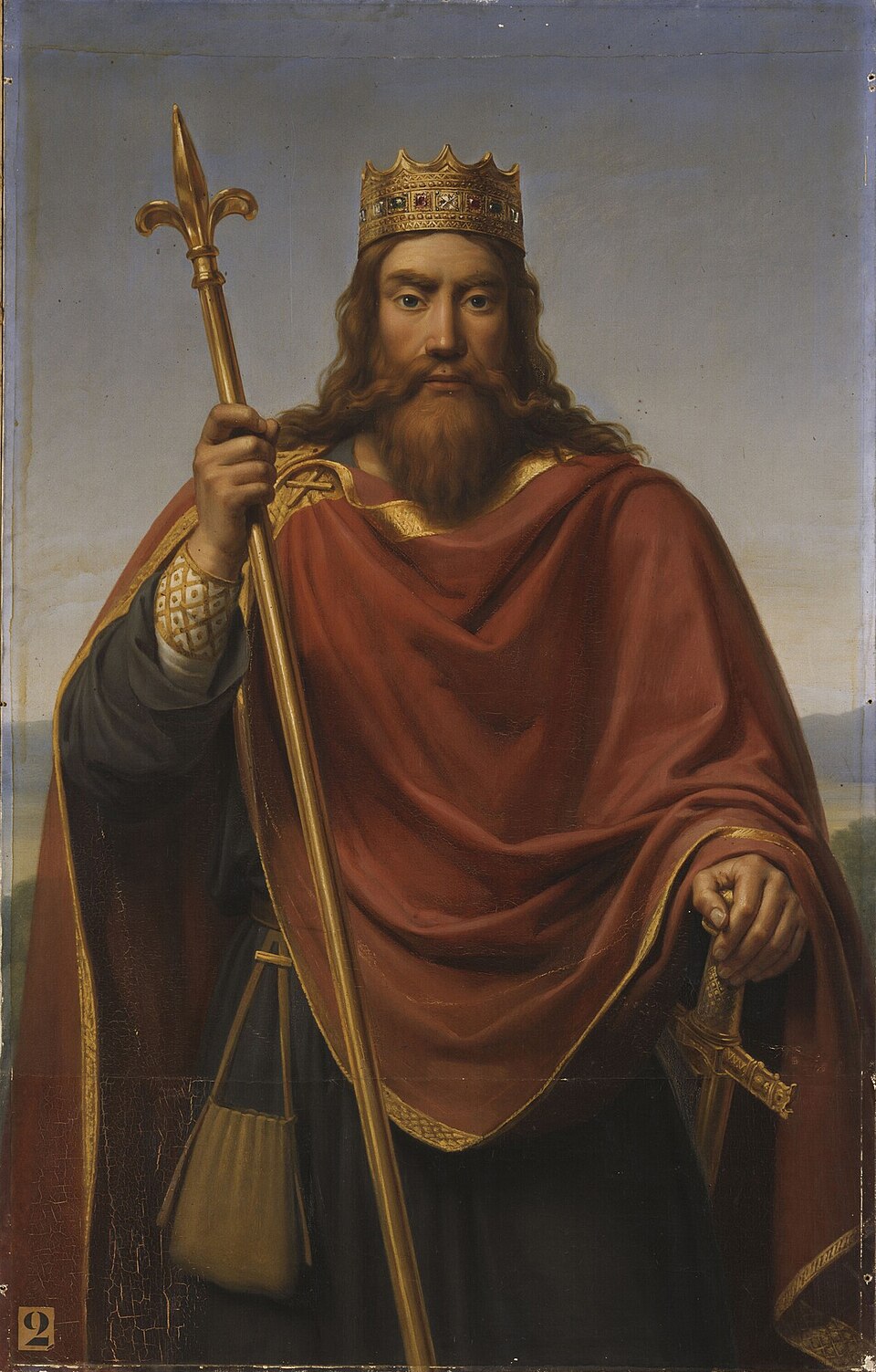
—Before Vouillé, you spoke constantly of the Arian Visigoths who hold the south. Why was this war so dear to your heart?
Because it joined ambition and faith, which makes the most powerful wars. I told my people that I could hardly bear that these Arians possessed a part of Gaul, and that we should march with God's help to subdue the land. Alaric's Visigoths held all of Aquitaine, rich lands I coveted. But they followed the heresy of Arius, while I, since my baptism, was Catholic like the bishops and Gallo-Roman populations of the south. These peoples saw me as a liberator, not a foreign conqueror. At Vouillé, in 507, I killed Alaric with my own hand, it is said, and shattered his kingdom. I doubled my lands and drove the Visigoths beyond the mountains. God and booty marched in step.
—After your victory, envoys from Emperor Anastasius came to Tours to give you the purple. What did this honor from Byzantium mean to you?
More than you imagine, Clotilde. I am a Frankish king, certainly, but I rule over Roman cities, Roman counts, bishops nourished by Rome. When the Eastern Emperor recognized me as honorary consul, I donned the purple tunic and diadem in the Basilica of Saint-Martin in Tours, and threw gold coins to the pressing crowd. It was not vanity. In the eyes of the Gallo-Romans, I became the legitimate defender of their order, the heir recognized by the Empire, no longer a barbarian from the North. I even mint my coinage in the image of imperial solidi. A king who wants to endure does not rely only on the francisca: he also needs the purple and the blessing. I took both.
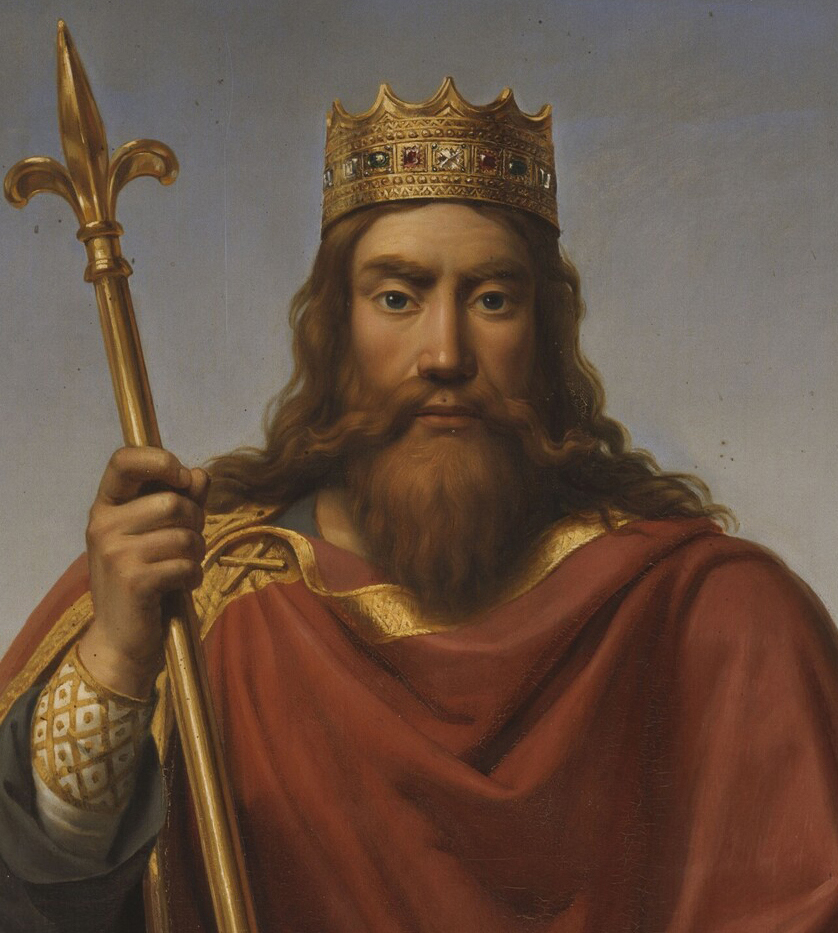
—You had the customs of our fathers written down in the Salic law. Why replace vengeance with this blood price?
Because a kingdom torn apart by private vengeance cannot stand, Clotilde. Among our fathers, a murder called for the blood of the murderer, then the blood of those who avenged him, without end. I had our Frankish customs written in Latin, the Pactus Legis Salicae, to establish another way: the wergeld, the price of a man. Let the killer pay a sum to the victim's family, and let peace return without a new corpse. Every life has its price—higher for an antrustion of my guard than for an ordinary freeman. Where proof is lacking, the ordeal decides: God judges. This is not tenderness on my part. It is that a king dispenses justice better than hatred, and a paid fine is better than a village in flames.
A king dispenses justice better than hatred.
—This year, you summoned the bishops to Orléans. You, the warrior, what do you really expect from this assembly of churchmen?
I expect them to help me govern what my sword has conquered. The bishops are the true masters of the cities: they feed the poor, judge disputes, speak to the people every day. If I have them against me, no francisca will hold my kingdom. So I gathered them at Orléans to settle together the relations of the Church and my crown: the property of sanctuaries, the right of asylum, priests, clerical discipline. They deliberate, but I summoned them, and their decisions I will confirm. I want a strong Church, but aligned with the king, not above him. It is a new model, Clotilde: the king and the bishops working in concert. If God grants me life, this bond will hold the kingdom better than all my battles.
—Here we are, aged, in this palace of Paris. Of all you have built, my king, what would you like to leave to our sons?
A united kingdom, Clotilde—that is my only true wish. I have spent my life gathering what was scattered: the Salian, Rhenish, and Ripuarian Franks under one crown; northern Gaul wrested from Syagrius; Aquitaine taken from the Visigoths. I made Paris my capital, and together we raised the Basilica of the Holy Apostles on the hill, where I wish to rest. To our sons, I would like to pass this down in one piece: one people, one faith, one king. But I know men, and I fear that Frankish custom will push them to divide my lands like booty. Watch over them, you who knew how to watch over me. Keep them in the faith you gave me. Perhaps it, more than my conquests, will hold them together.



This imaginary interview was generated by artificial intelligence from sources documented in Clovis's profile. It dramatises what the figure might have said based on what we know about them, but does not constitute attested historical testimony. For primary sources and factual documentation, refer to the full profile.