Imaginary interview with Clovis
by Charactorium · Clovis (466 — 511) · Politics · 6 min read
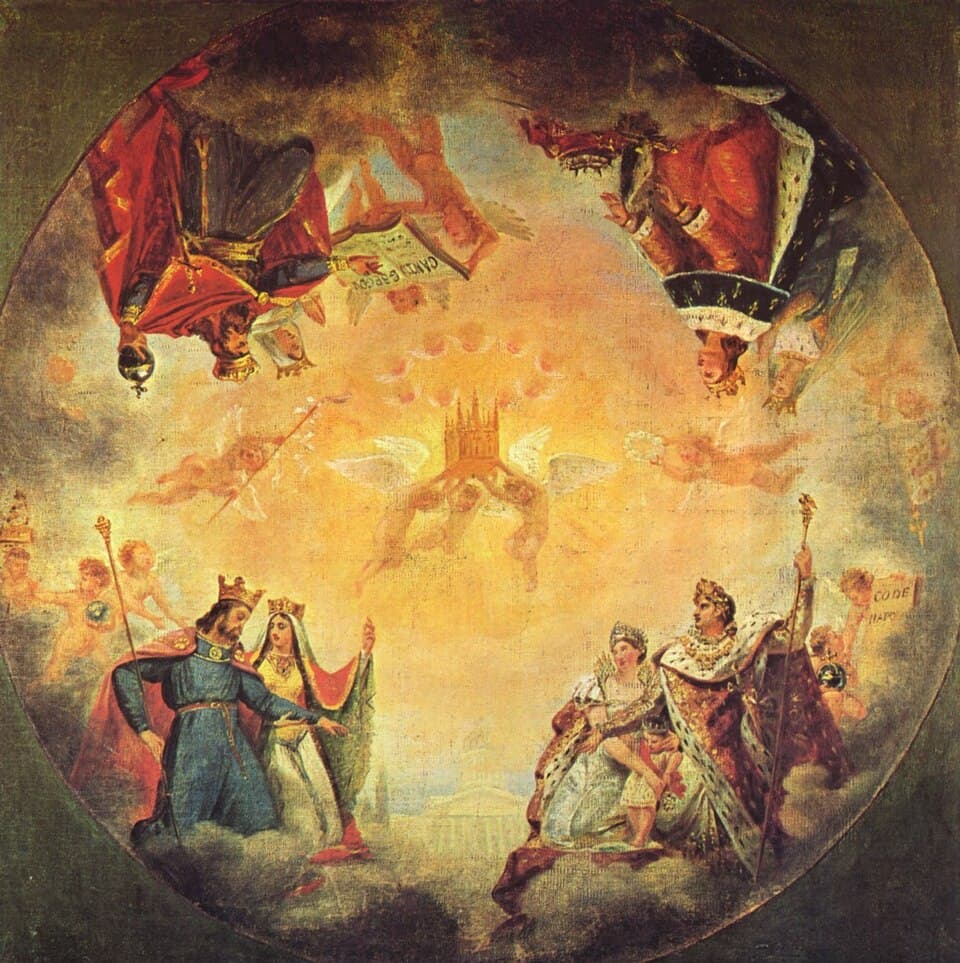
Paris, around the year 510. In a hall of the ancient Palace of the Thermae, where Roman walls now mingle with Frankish tapestries and trophies, the old King of the Franks receives us. His long hair, never cut, falls over the purple cloak. He speaks in a slow voice, that of a man who has united a kingdom at the edge of the francisca.
—How did you become master of Northern Gaul?
I was young, barely out of royal childhood, when I marched on Soissons in the year 486. There still ruled Syagrius, the last remnant of Rome's power, who thought himself safe behind his walls and his ghost legions. My warriors wielded the angon and the scramasax; he had nothing left but the memory of a dead empire. We defeated him in a single day, and he fled to the Visigoths, who returned him to me bound like a sack. From that moment, the road to the North was mine. Understand: I was not driving out Rome; I was picking up its fallen inheritance. The counts, the villas, the paved roads — all of that I kept for my use, for a wise king does not burn the house he has just conquered.
I was not driving out Rome; I was picking up its fallen inheritance.
—There is a story about a broken vase after that battle. What happened?
The bishop of Reims had asked me to return a sacred vase taken from the spoils. According to our custom, the division was decided by lot, each warrior having his right. I begged that the vase be granted to me in addition to my share, to honor the Church. All consented, except one proud man who raised his axe and split the Vase of Soissons, shouting that I would have only what the lot gave. I swallowed my anger and returned the pieces to the bishop. But a year later, at the weapons inspection, I found his lance poorly held, I threw it to the ground, and when he bent down, I split his skull. 'Remember the Vase of Soissons!' A king who forgives twice is no longer a king.
A king who forgives twice is no longer a king.
—Do you remember the day you first thought of the Christians' God?
It was not in a church, but on a muddy field. In the year 496, at Tolbiac, the Alemanni were breaking my lines and my best leudes were falling around me. My gods, those of my fathers, remained silent. So I cried out to the God that Clotilde never stopped preaching to me, that God she said was alive: if you give me victory, I will believe in you and have myself washed in your water. As soon as this vow was uttered, the king of the Alemanni fell and his people fled. I cannot reason about these things like a cleric; I only know that I was heard when the others were silent. A warrior recognizes the hand that lifts him up at the moment he falls.
My gods remained silent; I was heard when the others were silent.
—What did the baptism you received at Reims mean to you?
Bishop Remigius prepared me at length, for one does not enter holy water as one enters battle. On the appointed day, around 498, the basilica was draped in white, perfumed with incense, and the baptistery awaited me like a threshold. Remigius told me to bow my neck and burn what I had adored. I went down, and with me nearly three thousand of my warriors, who wanted no other God than that of their king. Tradition holds that a dove brought the Holy Ampulla from heaven for this anointing. That day, I did not only become a Christian: I became, among the barbarian kings, the only one whom the Church of Rome could call her son, for the others followed the heresy of Arius.
—What role did your wife play in this journey?
Clotilde is a Burgundian princess, Catholic while all her people follow Arius, and it is she who planted the first seed in me. From our marriage, in the year 493, she spoke to me of her one God with a patience that never wore out. I resisted, sometimes mocked, told her that my idols had served me well. She never tired. The clerics wrote in her Life that she never ceased urging me to recognize the true God and abandon idols. They speak truth. A queen does not lead armies, but she can lead a king's heart; and believe me, it is the slowest conquest I have ever endured.
A queen does not lead armies, but she can lead a king's heart.
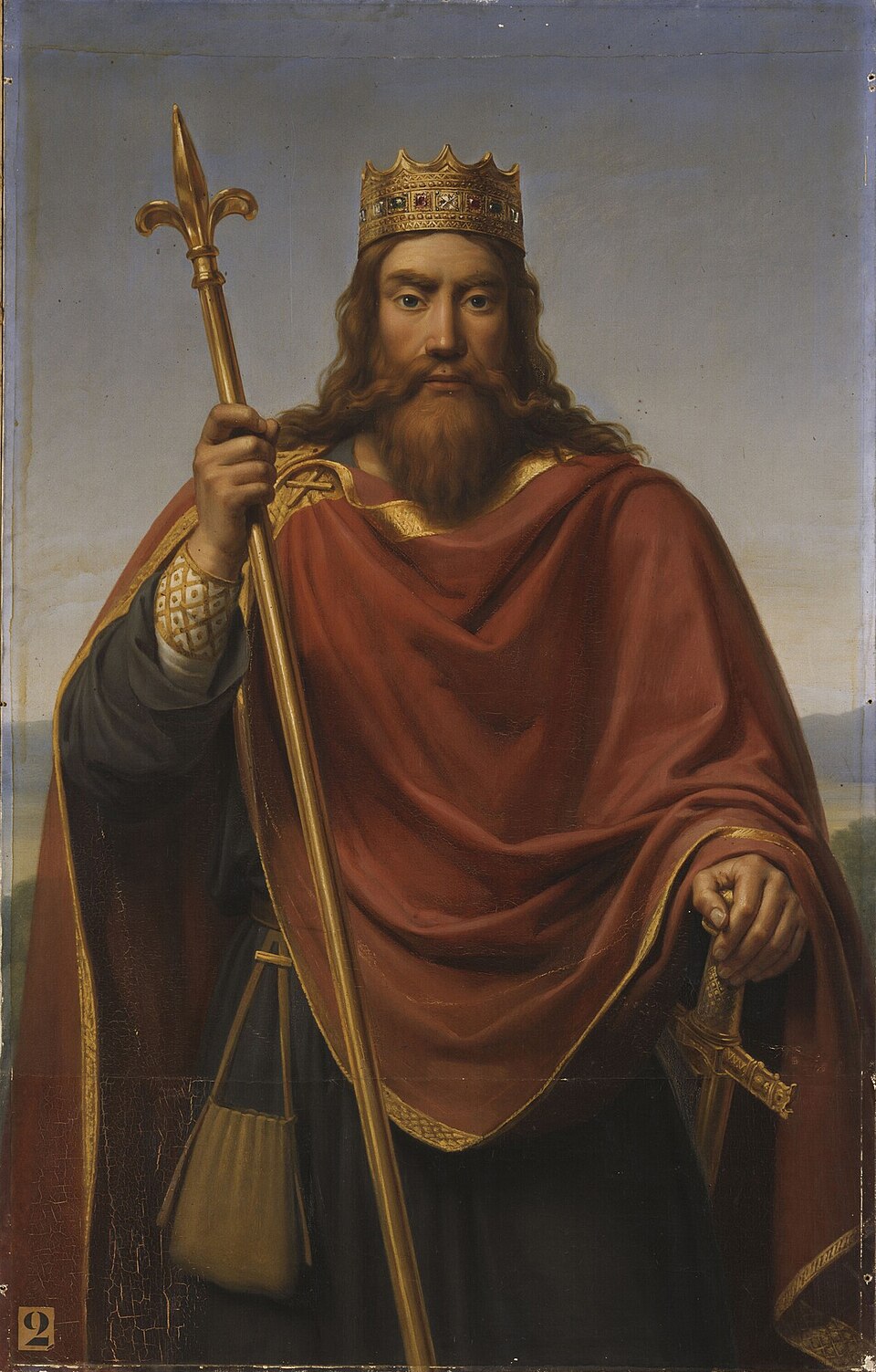
—Did this new faith bring you only joys?
No. When Clotilde wanted to have our firstborn baptized, I let her, reluctantly. The child died soon after, still white from the baptismal cloths. I saw it as a dire omen, and I told her harshly: your God could not even keep alive the one given to him. Another woman would have bent. Not her. She wept for her son and continued to pray, certain that the child's soul was saved. This firmness in grief troubled me more than all her sermons. I understand today that she was not serving a God who promises easy victory, but a God for whom one holds firm even with empty hands. That, perhaps, is what finally conquered me.
—They say the Eastern Emperor honored you greatly. Tell us about that day.
After my victory over the Visigoths at Vouillé, in the year 507, messengers from Emperor Anastasius came from Constantinople. He sent me the insignia of the consulate, a dignity that Rome once granted to its greatest. At Tours, in the basilica of Saint Martin, I put on the purple tunic and girded the diadem. Then, mounted on horseback, I crossed the city throwing handfuls of gold coins to the crowd, those solidi struck with the imperial image. The people shouted, and that day I was no longer merely the chief of a Frankish army: I became, in the eyes of the Gallo-Romans, a man whom the emperor himself recognized. A king who holds both the francisca and the purple of Rome rules over two worlds.
A king who holds both the francisca and the purple of Rome rules over two worlds.
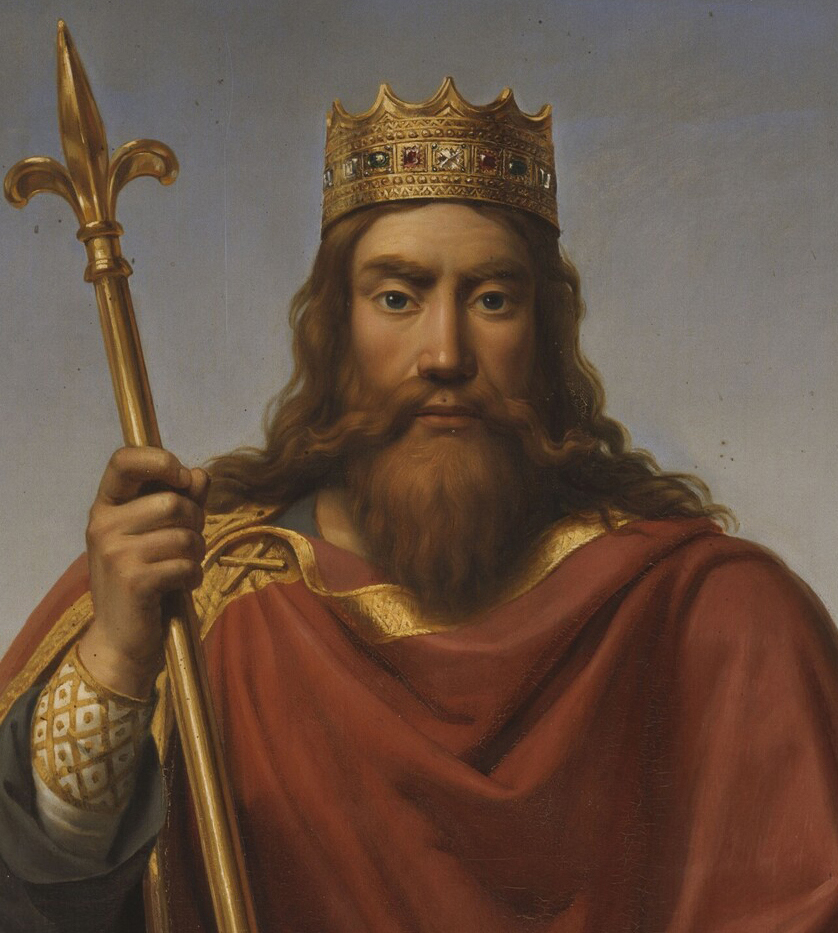
—Why did you choose Paris to establish your court?
Once Gaul was united, from the Rhine to the Pyrenees, I needed a heart to beat. I chose Paris, around the year 508, for its position in the middle of my lands, its easily defensible island, its bridges and river. I settled in the old Roman palace, near the thermae, whose stone walls were better than our wooden palisades. With Clotilde, I built on the hill, south of the city, the Basilica of the Holy Apostles, where I wish my body to be laid when God calls me. A Frankish king moves constantly, from villa to villa, but he needs a city where his bones will rest. Paris will be my tomb, and I hope my house will rule there long.
—You had the laws of your people written down. Why this concern?
A people without written law is a people who settle scores at the edge of the scramasax, and vengeance never ends: one death calls for another, and families bleed each other over three generations. I had our customs gathered by wise men and their sentences written down in Latin — that is the Pactus Legis Salicae, the Salic Law. Its heart is the wergeld, the price of a man: for every wound, every murder, a fixed sum that the guilty party pays to the offended family. Thus money flows instead of blood. Killing a free man, an antrustion of my guard, a slave — each has its price set in the law. The king cannot be everywhere; but his law is everywhere.
Thus money flows instead of blood.
—How do you decide a case when no one can prove the truth?
When witnesses are silent and oaths are equal, then the matter must be referred to a higher judge than me. We then resort to the ordeal, the trial by which God himself renders his sentence: the accused's hand is plunged into boiling water, and if the wound heals cleanly, he is innocent. I hold these assemblies at the placitum, surrounded by my leudes and my bishops, for the justice of the king and that of the Church walk in step. Some clerics dislike these trials of fire and water; I rely on what my fathers left me, while listening to what Remigius and the others advise. A king judges men, but God judges the king.
A king judges men, but God judges the king.


This imaginary interview was generated by artificial intelligence from sources documented in Clovis's profile. It dramatises what the figure might have said based on what we know about them, but does not constitute attested historical testimony. For primary sources and factual documentation, refer to the full profile.