Imaginary interview with Coco Chanel
by Charactorium · Coco Chanel (1883 — 1971) · Visual Arts · 6 min read
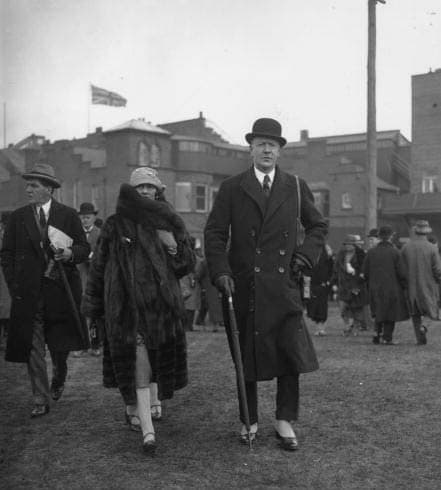
Winter 1969. On the first floor of the Ritz hotel, Place Vendôme, an old lady receives us in a cloud of smoke and Coromandel screens. She never quite sits down: she keeps an eye on the rue Cambon through the window. Her voice is dry, her eye black; at eighty-six, Gabrielle Chanel has forgotten nothing of the art of cutting things short.
—What remains, in your couturière's eye, of the child placed in the Aubazine orphanage?
Everything. People think I was born in salons, but I was born in the Corrèze, behind white walls where the nuns didn't tolerate a single crooked hem. My mother dead, my father gone, I was entrusted to those Cistercian stone corridors, and it was there, sewing hems under chapel light, that my eye was formed. I never liked the superfluous: it was the austerity of Aubazine that taught me that, long before the magazines talked about modernity. The black and white of the sisters, the bare flagstones, the geometry of the stairs — that was my first workshop. People look for luxury everywhere; I understood very early that true luxury begins when you remove, not when you add.
True luxury begins when you remove, not when you add.
—Where does the nickname "Coco" that followed you all your life come from?
From a café-concert stage, in Moulins, around 1905. I had little to offer: a thin voice, two songs, one of which was about a certain Coco lost at the Trocadéro. The garrison officers came to listen in the evening, they pounded their fists demanding the old tune, and it was they who christened me that. I was reproached for it later, as a poor girl's stigma. I kept it. Gabrielle was the little one of the sisters; Coco was already someone who stepped onto a platform and looked the room in the eye. A woman who wants to make her way must know how to turn a soldier's nickname into a brand. I put that name on bottles: it went around the world.
—How did you get the idea to dress women in jersey, that fabric reserved for men's underwear?
Out of necessity, and out of annoyance. In 1916, in Deauville, I saw those women trussed up in dresses that prevented them from walking on the boardwalk along the sea. Jersey was destined for men's undergarments, considered poor, unworthy of a serious house. I saw a fabric that followed the body instead of constraining it, supple, inexpensive, alive. I cut jackets and straight dresses from it, and people cried scandal because it was too simple and cost nothing to make. But a woman who can raise her arm, get into a car, breathe — that's what I called elegance. I dressed the era because I listened to it, not because I copied the one before.
—You say you freed women's bodies: what exactly did you want to abolish?
The harness. When I started, a society woman wore a scaffold: corset, whalebone, padding, layers of underwear. She was disguised as a piece of furniture. I said it to Paul Morand, and I maintain it: "I gave women's bodies back their freedom. That body sweated in parade clothes, under lace, corsets, underwear, padding." That sentence is no coquetry. Before the war of 1914, women were locked up; the style I proposed gave them back their silhouette and their stride. The Garçonne, as they said in the Roaring Twenties, was not a provocation: it was a woman who finally had the right to move. I removed everything that weighed. The rest, fashion took care of after me.
She was disguised as a piece of furniture; I gave her back her stride.
—Why did you bet on black, that color previously associated with mourning?
Because it belonged to no one, and therefore it suited everyone. In 1926, I presented a simple black crêpe de Chine dress, without embroidery, without fanfare — the little black dress. They looked at me as if I were selling widow's clothing. But black erases the chatter of color, it outlines a woman instead of wrapping her up. A duchess and a typist could wear it, and that's exactly what I was after: a garment that does not betray the wealth of the wearer. Mourning? Leave it to the undertakers. I made black the color of style. Fifty years later, it's still sold: a good idea doesn't go out of fashion, it confirms itself.
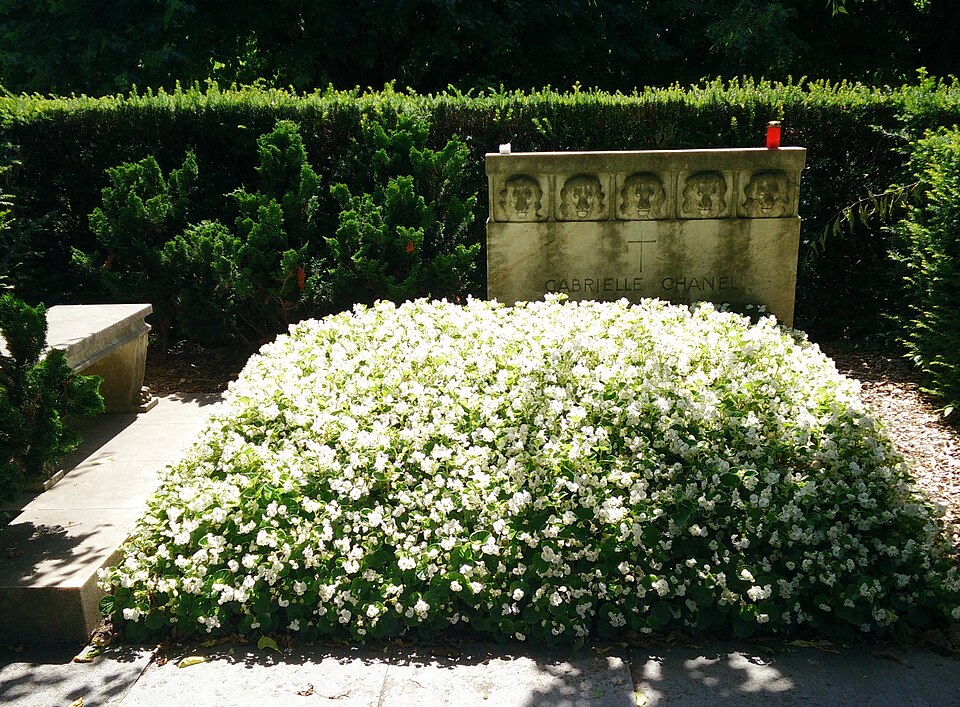
—Vogue magazine compared that dress to a popular car. What did that comparison inspire in you?
It flattered me more than all the compliments about "grace." The Americans wrote that my black dress was "a Ford signed Chanel" — a model the whole world would wear, simple, black, within everyone's reach. Understand: they put me on the side of industry, not salon fancy, and that was exactly where I wanted to be. A dress that reproduces itself, that circulates, that doesn't wait for the wealthy client — that's the real revolution, far more than any palace embroidery. They thought they were belittling me by comparing me to a mass-produced car; on the contrary, they raised me to the rank of what changes people's lives. Haute couture dreams of the unique; I dreamed of the universal.
Haute couture dreams of the unique; I dreamed of the universal.
—They say you never sketched your designs. How did you work, then?
With my hands and my scissors, never with a pencil. Paper lies: it flattens what must live in three dimensions. I work on a body that breathes. In the afternoons, in the salons of 31 rue Cambon, I would have a live model come in and I would circle around for hours, pinning, cutting directly into the fabric, tearing off a sleeve that hung wrong. My premières d'atelier came out exhausted, and too bad. A garment doesn't exist until it has learned to walk. I would pull on the shoulder, make the model raise her arm to see if the fabric followed. It's a sculptor's craft, not a draftsman's. You don't create elegance on a table: you track it down on a standing woman.
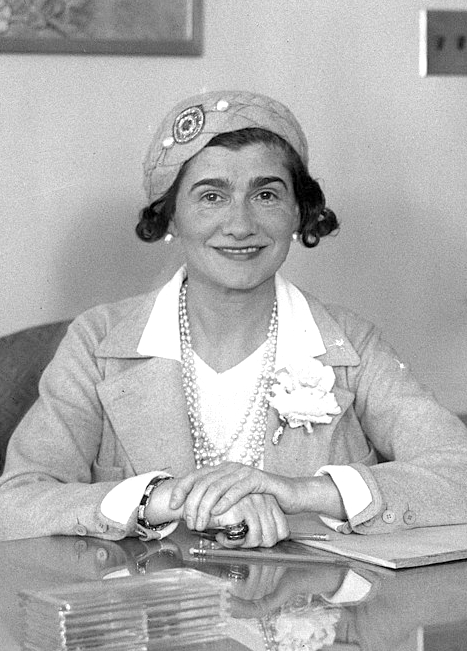
—What would you say about the path from a first idea to the finished garment?
A path of patience and scissor cuts. Before touching precious tweed, we mount a toile — a prototype in cheap, ecru, valueless fabric — to see if the cut holds up. A toile is ugly, gray, but it doesn't lie. I would have it taken apart and remade twenty times. The première d'atelier is my right arm in that war: she translates into stitches what my fingers decided on the model. People imagine a couturière in inspiration; the truth is dogged persistence. A jacket that looks simple cost a hundred fittings. Simplicity doesn't fall from heaven: it's the most difficult luxury to sew, because you have nothing behind which to hide.
Simplicity is the most difficult luxury to sew.
—You closed your house during the war, then reopened in 1954 at seventy-one. What drove you to return?
Boredom, and anger at seeing what they were making women wear in my absence. I closed in 1939, went through years I don't like to talk about, lived in exile. When I got back on the scene in 1954 with my tweed suit, the Parisian press sneered: old Chanel is repeating herself, they said, her time is past. They tore me apart. But America understood right away that a working woman needs a garment that doesn't betray her at the first movement. It was American women who relaunched me, not my compatriots. At my age, you don't return for glory — you return because you can't stand others dressing badly those you spent your life freeing.
—After such a long career, how do you distinguish what lasts from what passes?
I say it as I think it, and I said it on television to that Jacques Chazot: "Fashion fades, style is eternal. I made fashion for half a century. Why? Because I knew how to express my time." Fashion is what stirs, what changes every season to sell; style is what remains when the noise has died down. A woman who follows fashion chases after everyone; a woman of style stands tall and lets it pass. I've seen dozens of fashions come and go, I sometimes launched them, often buried them. But the suit, black, the sautoir of pearls worn in broad daylight — that doesn't age, because it wasn't caprice. It was a way of standing upright.
Fashion fades, style is eternal.
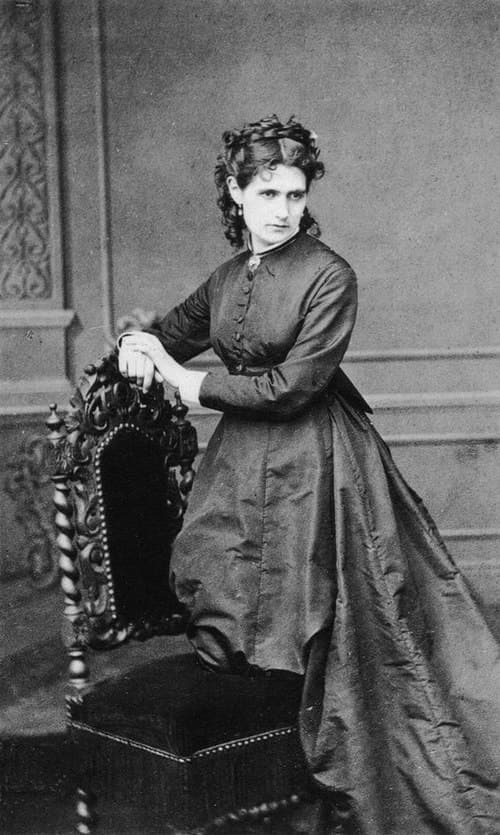
This imaginary interview was generated by artificial intelligence from sources documented in Coco Chanel's profile. It dramatises what the figure might have said based on what we know about them, but does not constitute attested historical testimony. For primary sources and factual documentation, refer to the full profile.