Imaginary dialogue between Paul Morand and Coco Chanel
by Charactorium · Coco Chanel (1883 — 1971) · Visual Arts · 5 min read
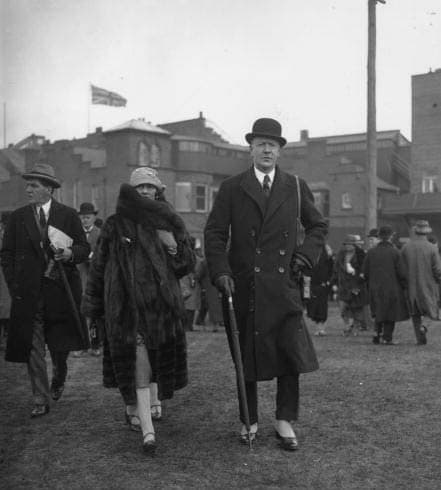
It is on the first floor of 31 rue Cambon, in the apartment with Coromandel screens and shattered mirrors, that Paul Morand meets Gabrielle Chanel one evening in the winter of 1946. The street is silent, the workshops closed since the war; only a low lamp lights the large beige divan where she smokes. They have known each other for a long time, from the nights of Venice and Parisian dinners, and Morand has come to gather, phrase by phrase, the material for a book in which she would finally tell her story. She speaks quickly, in bursts, as one cuts fabric.
—Gabrielle, the other evening you told me that you had given women's bodies back their freedom. What exactly did you have in mind when you said that?
You remember, Paul, I told you right here: before me, women's bodies sweated in parade clothes, under lace, corsets, padding. They were packaged like gifts that are never opened. I wanted a woman to be able to walk, raise her arm, get into a car without being undressed first. As early as 1916, I took jersey, that knit reserved for men's undergarments, and I made dresses out of it. They cried scandal: cheap knit from a couturière! But a woman who breathes is a woman who thinks. The corset, you see, wasn't a matter of fashion. It was a matter of prison.
A woman who breathes is a woman who thinks.
—When I saw you working last year, you didn't have a pencil in hand but pins. Why do you refuse to draw your models on paper?
Because paper lies, Paul. A dress doesn't exist flat; it exists on a body that moves, sits, turns around. I work with my scissors and my hands, directly on the living mannequin. I pin, I cut, I tear, I start over—sometimes for hours, until my first hands in the workshop can take no more. A sleeve that falls badly, I unpick it ten times. Fabric must be felt falling under the fingers, almost listened to. A designer makes pretty pictures; I sculpt. It's sewing, not painting. You don't wear a sketch, you wear a cut.
Paper lies. A dress exists only on a body that moves.
—In 1926, your little black dress caused a great stir. Vogue compared it to a Ford. Did that comparison annoy you or flatter you?
Flattered, and you know it. The Americans were right: a Ford is a car for everyone, sturdy, no frills, and it takes you where you want to go. My black dress was that. In crêpe de Chine, simple, unadorned, and every woman could wear it—the typist as well as the duchess. They reproached me for black: the color of mourning, they said, the color of maids! But black erases everything ugly and keeps everything that matters: the line, the poise. I took the color of widows and made it the color of elegance. One dress, for an entire century of women.
I took the color of widows and made it the color of elegance.
—In those years, everyone talked about the garçonne—short hair, straight silhouette. Did you recognize yourself in this new woman of the Roaring Twenties?
I didn't recognize myself: I had made her. The garçonne was me before the word existed. I cut my hair one evening, on a whim, because it bothered me, and the next day they found it divine. I gave women pockets, clean lines, clothes they could move in. They said I dressed them like boys; I dressed them like free beings, it's not the same. After the war of 14, women had driven ambulances, worked in factories. You couldn't put them back in crinoline cages. Fashion invents nothing: it says aloud what the era thinks in whispers.
Fashion only says aloud what the era thinks in whispers.
—You speak little of your childhood. Did that orphanage in Aubazine, in the Corrèze, leave anything in your dresses?
Everything, Paul, and that's why I don't talk about it—it's too deep to be fiddled with. The nuns, the long white corridors, the bare stone, those straight lines of the Cistercians who tolerated no ornament. I was raised in austerity, and I believed all my life that luxury is not the opposite of poverty: it is the opposite of vulgarity. That's where I learned to sew, too. Look, black and white, the two colors that define me—they are those of the dormitories and headdresses. They think they know me as a socialite; deep down, there is a little girl who tidies up and removes the superfluous.
Luxury is not the opposite of poverty, but of vulgarity.
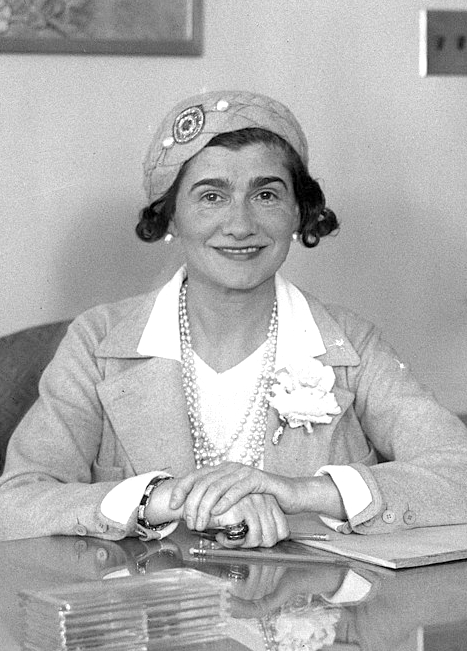
—You always wear your own creations, never anyone else's. In the morning, when you cross the street to go to the workshop, how do you dress?
Like a woman who has work to do, not like a woman to be looked at. A soft suit, a silk blouse, my pumps, and my pearls—fake ones, mostly, so what! I don't dress up, I use what I sell. If a jacket bothers me when I raise my arm to pin, it's bad, and I correct it on myself before giving it to be worn. My body is my first mannequin. A couturière who couldn't stand her own dresses should change professions. I dress to live a day on my feet, not to pose in an armchair.
I don't dress up, I use what I sell.
—You now live at the Ritz, on the other side of the square. What a journey, from the dormitory of Aubazine to this suite on the Place Vendôme...
A journey I never looked back on, because you fall when you turn around. The Ritz, you see, it's not the splendor that keeps me there: it's that they leave me alone, that a room is clean, that nothing is dragged around. Deep down, I've remained a boarder—I don't like to possess, I like everything to be in order and to take your suitcase. My most beautiful objects, my Coromandel screens, I keep on rue Cambon, where I don't sleep. I sleep across the square, in an almost empty room. The little girl from Aubazine and the lady of the Place Vendôme are the same: one learned to do without everything, the other chose it.
You fall when you turn around.
—These last years have been hard for you. Do you really intend to leave the scissors and the house closed, or do you still imagine coming back one day?
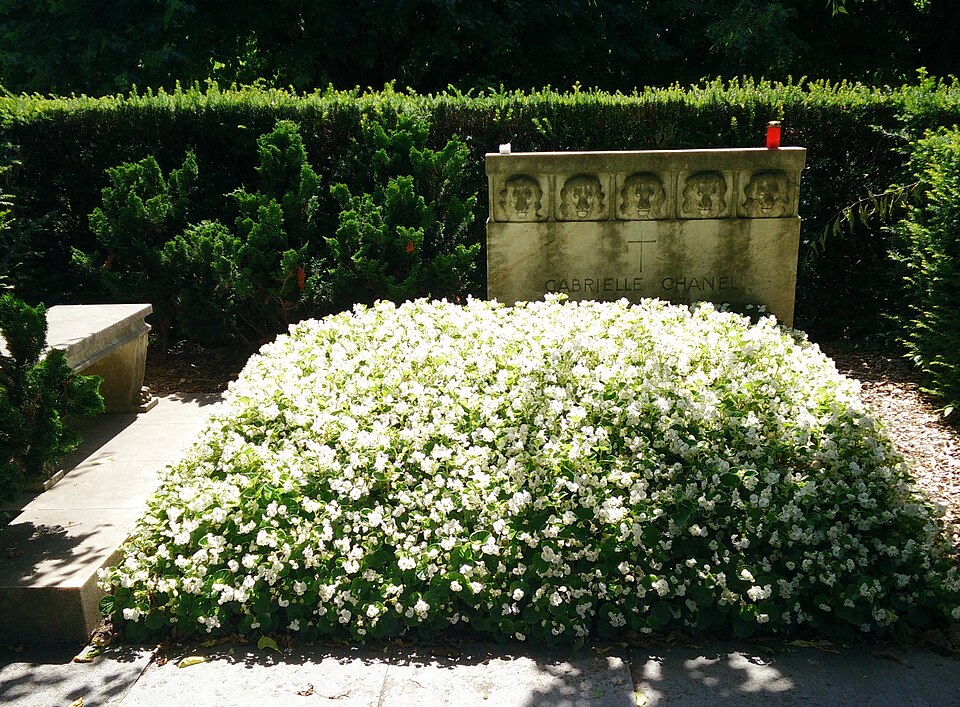
Closed, yes, I closed in 39—you don't make dresses when the world is tearing itself apart. And lately, in Paris, they look at me sideways, they whisper, you know that better than anyone. I preferred the silence of Switzerland to the noise of gossip. But believe me, Paul: idleness kills me more surely than enemies. A woman who doesn't work becomes an old woman, that's all. I still feel the fabric itching my fingers. One day, those who make fashion today will have strapped it again, corseted it, made it uncomfortable—and that day, old or not, I will take up my scissors again. You don't retire from a trade you love; you are torn from it.
Idleness kills me more surely than enemies.
—Imagine you reopen one day. The press here would be waiting to attack you. Do you think they would judge you on your dresses—or on something else?
On something else, of course, and it will be unfair, as always for a woman alone who has succeeded. Parisians never forgive that one dared. But I don't care about salons: I have always gotten along better with the public than with critics. If I came back, I wouldn't make a dress to please them; I would make a dress for a woman who is cold, who runs, who lives. And I would let the Americans decide—they, at least, buy what they like instead of liking what they are told to like. A collection is not a trial. It is an answer. We'll see who is right, the newspapers or the women.
I have always gotten along better with the public than with critics.
—One last question tonight. You've been in fashion for almost half a century. How do you explain having lasted so long?
Because I never chased fashion—I distrust it like a bad friend. Fashion passes, it goes out of style by definition, it's even its job to die every season. What remains is style, and style does not age because it does not cheat. I made simple things: a right line, a true material, nothing superfluous. The superfluous always goes out of style first. If I have lasted, Paul, it's because I dressed my time without flattering it—I gave women what they needed before they knew it. That's all my secret, and it fits in one sentence: remove, remove again, until only the essential remains.
Fashion goes out of style, style never.
This imaginary interview was generated by artificial intelligence from sources documented in Coco Chanel's profile. It dramatises what the figure might have said based on what we know about them, but does not constitute attested historical testimony. For primary sources and factual documentation, refer to the full profile.