Imaginary dialogue between Eusèbe de Césarée and Constantine I
by Charactorium · Constantine I (272 — 337) · Politics · 5 min read
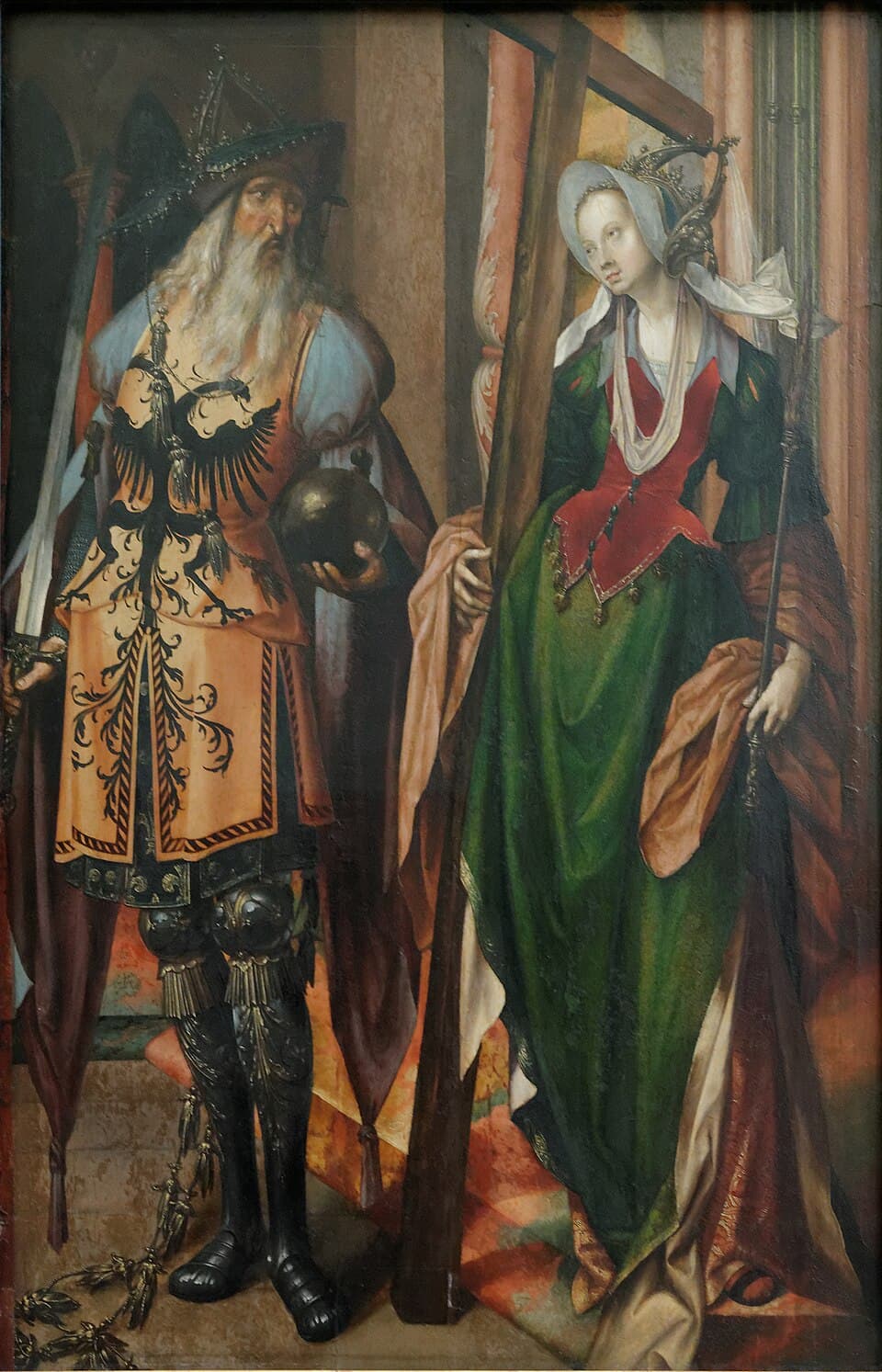
It is in a hall of the Great Palace of Constantinople, on an evening in the year 336, that Eusebius of Caesarea meets the emperor Constantine. A silver lamp illuminates the marble walls, and in the distance the murmur of the Hippodrome can be heard. The bishop has known the sovereign since the Council of Nicaea, and he comes tonight not to celebrate the prince, but to gather the account of the man. Constantine welcomes him like an old friend, the purple still upon his shoulders.
—Augustus, as I write your history, many press me with questions about the Milvian Bridge. What did you truly see in the sky, that eve of the battle of 312?
You who record my words, Eusebius, I will tell you plainly. At the hour when the sun was declining, I saw above it a luminous trophy in the shape of a cross, and letters that commanded me to conquer by this sign. My soldiers saw it too; I did not dream it alone. The following night, I was ordered in a dream to trace that monogram of Christ on their shields. I did so at dawn, against the advice of the augurs who read entrails. Maxentius, for his part, had all of Rome and the Tiber at his back. I had a sign and fear in my belly. By evening, he was floating drowned under the bridge, and I was entering the City.
I had a sign and fear in my belly — by evening, he was floating under the bridge.
—You made that monogram the standard of your legions. Why raise it so high, you, above the eagles that emperors before you carried?
Because a man follows what shines before him, Eusebius. I had the labarum erected, a long shaft surmounted by the Chi-Rho and a purple veil embroidered with gold. Where that standard marched, I wanted my soldiers to know which god I credited for the victory. The eagles had led Rome for centuries; I did not burn them, but they had promised nothing to a trembling man on the eve of battle. The Chi-Rho, however, had spoken to me. I entrusted its guard to my bravest men, and you could see it float at the head of my campaigns. A standard is not just wood and cloth: it is the memory of a debt one does not forget.
A standard is not just wood and cloth: it is the memory of a debt.
—You once had me tour the construction sites of this city. Why build a new Rome here, on the Bosphorus, far from the old Senate?
You remember that walk, when the foundations were barely out of the ground. Rome is heavy with its temples, its gods, its factions; one does not breathe a new reign there. Here, at the hinge of East and West, I held the passage between two worlds and the grain route. I wanted a city to my measure: a senate, a hippodrome, forums, and more churches than anywhere else. I endowed it with a wall that you saw traced yourself. This city will not bear the weight of the old cults. It is born Christian, or nearly, and that is all the difference with the old City of the Seven Hills.
Rome is heavy with its gods; here, at the hinge of the worlds, I held the passage between two empires.
—To adorn your city, they say you stripped the sanctuaries of Greece and Asia. The wronged cities complain to me, Augustus.
I know it, and I do not blush. I had columns, statues, and bronzes brought from the temples of Asia and Greece to ornament my forums and squares. Those cities cried that they were being stripped of their treasures; I saw idle idols sleeping in the shadow of sanctuaries. Better they serve the beauty of a living city than the pride of dying cults. A capital is not adorned with air and good intentions, Eusebius. It needs marble, bronze, memory gathered from all the Empire. I took where the wealth was to assemble it in one place. The cities will console themselves; my city will endure.
I saw idle idols; better they serve the beauty of a living city.
—At Nicaea, in 325, I saw you enter the assembly of bishops. Why did an emperor meddle in a quarrel of words between Arius and his opponents?
A quarrel of words, you say? It tore the Church as a war tears a province. Arius taught that the Son was not equal to the Father, and the bishops excommunicated each other from one end of the East to the other. How could I hold together an Empire whose souls were divided? I had barely healed the wounds of civil wars; I did not want a new fracture, a spiritual one. So I summoned you, more than three hundred, at my expense, on my roads. I did not dictate the faith — that is not my office — but I demanded that you find together a common formula. You heard me call for unity, again and again.
How could I hold together an Empire whose souls were divided?
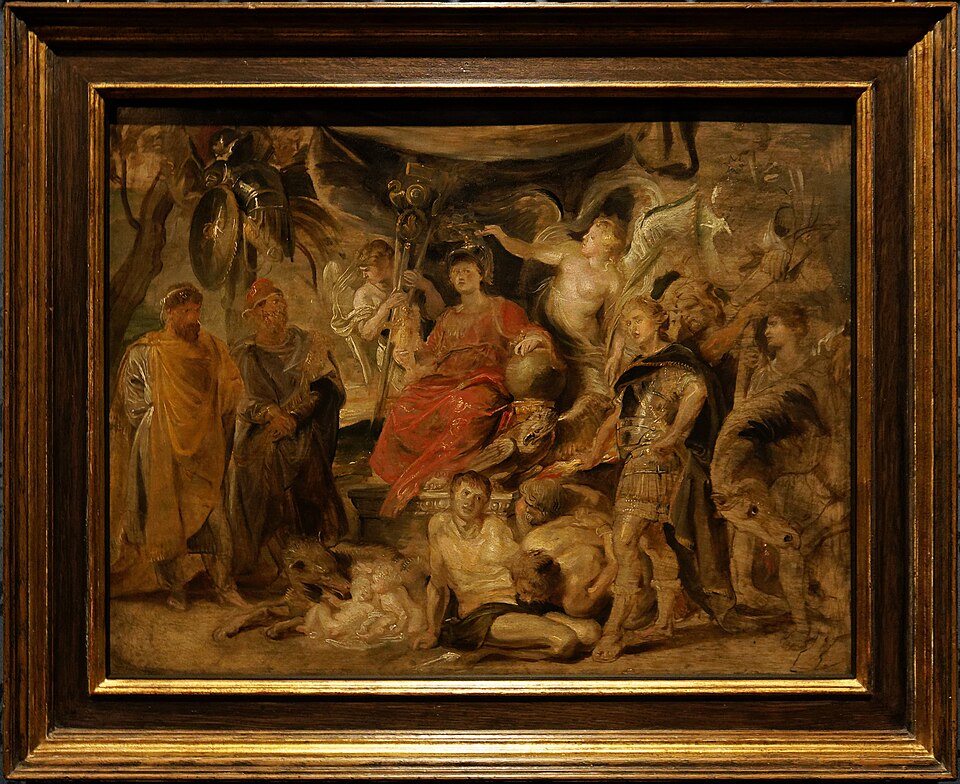
—Even before Nicaea, you had gathered the bishops at Arles for the African schism. The concord of the Church costs you much effort, Augustus.
More than the barbarians of the Rhine, sometimes. At Arles, in 314, it was the Donatists who refused the sacraments of priests who had faltered under persecution. In Africa, two Churches stood face to face in every city. I thought a council would decide; it decided, yet the wound remained open. I learned a hard lesson: one commands legions, but one does not command consciences with a single word. I used persuasion, favors, sometimes coercion, and nothing is ever quite enough. You who write these things, note well that the peace of the Church was the longest struggle of my reign, and the least glorious to tell.
One commands legions; one does not command consciences with a single word.
—Augustus, there is a subject no one dares broach before you. Crispus, your eldest son, then Fausta... Silence weighs on your house since 326.
You touch where the flesh is still raw, Eusebius, and I answer because it is you. Crispus was my pride, the victor of my fleets. Accusations reached me, borne in the shadow of my palace, and I struck before knowing. Then Fausta died in turn. I will not tell you the detail of what happened within these walls — there are faults an emperor carries alone. One governs the world and does not see the trap laid under one's own roof. Since then, no statue bears their names. If God forgives the repentant sinner, it is to Him I turn for this, not to men nor their judgment.
One governs the world and does not see the trap laid under one's own roof.
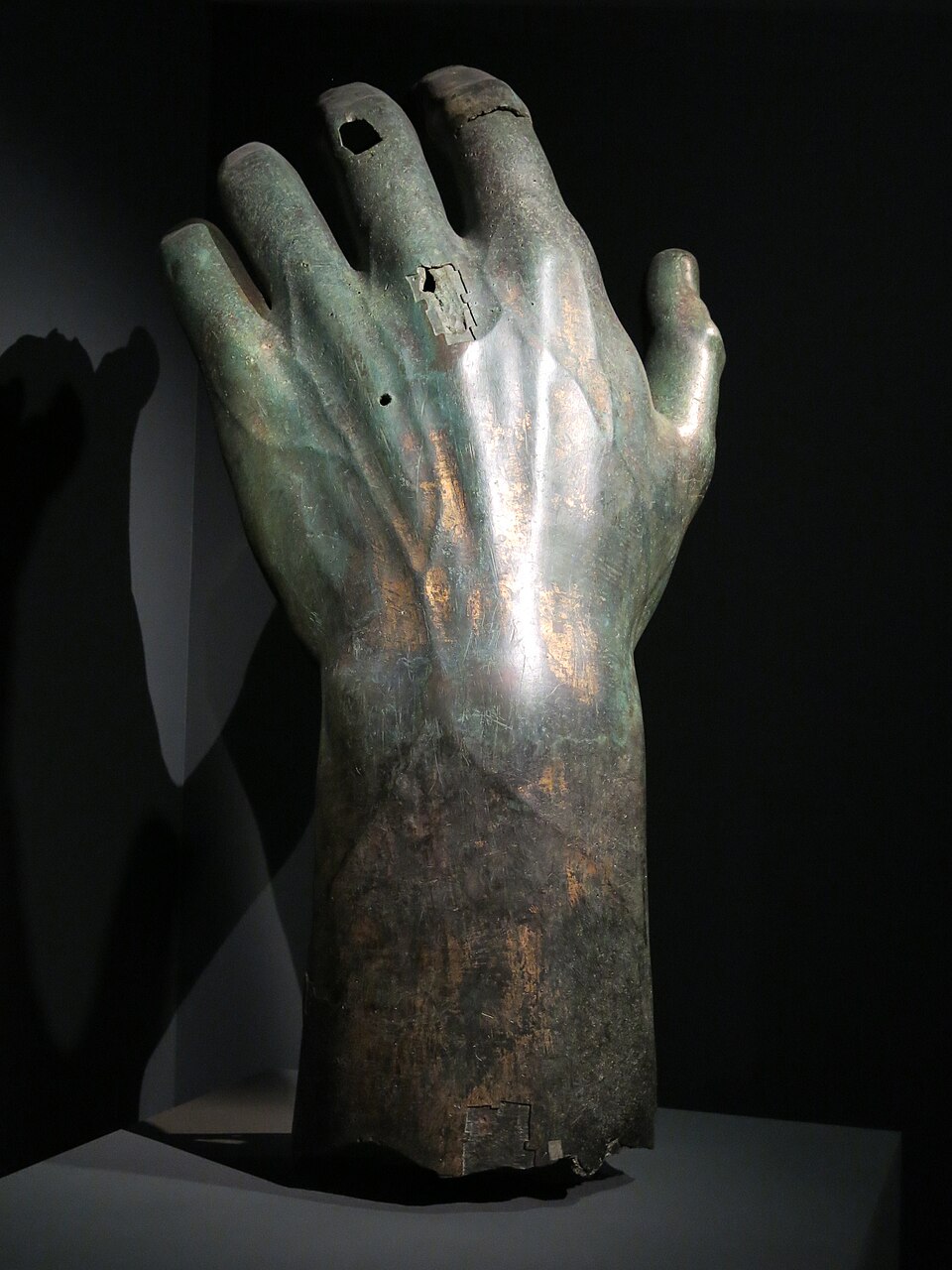
—One thing astonishes me, I who know you are favorable to Christ: you still bear the title of pontifex maximus, high priest of the ancient gods. How do you reconcile it, Augustus?
With patience, Eusebius, with patience. I rule over millions of men, most of whom still sacrifice to the gods of their fathers. If I tore out the old cult at once, I would have not an Empire but a blaze. I keep the title of pontifex maximus because it holds together the old cities, like a rope one does not cut until the bridge is built on the other side. I favor Christians, I give them basilicas, privileges, my ear — but I do not force pagan consciences. A reign is led like a chariot: he who pulls too much on one side overturns the whole cart. Time will do what the edict cannot accomplish in a day.
A reign is led like a chariot: he who pulls too much on one side overturns the whole cart.
—You have often spoken to me of your baptism as a grace to come. Why wait still, you who have done so much for the faith?
Because the waters of baptism wash once, Eusebius, and an emperor has stained hands. I render justice, I condemn, I cause blood to flow when the State requires it — how can I purify myself and then begin again the next day? I have resolved to wait until the hour when I no longer have to command or strike. Some dream of receiving the water in the Jordan, where Christ himself was immersed; I would be content with a lesser water, provided it comes when my work is closed. Do not think I delay out of lukewarmness. I delay out of fear of soiling what must remain pure. When my time to reign ends, only then will I shed the purple for the white of the neophytes.
The waters of baptism wash once, and an emperor has stained hands.
—One last thing, Augustus. You were the first to wear this diadem of gems and this scepter with the cross. What do you want men to read in them?
Let them read whence my power comes. My predecessors crowned themselves with laurel, like generals victorious for a day. I have put on the diadem adorned with stones, because I hold the Empire not from an army alone, but from a higher election. And on my scepter, I have placed the cross, that same sign that preceded me at the Milvian Bridge. Let the ambassador who bows before my throne understand at a glance that the prince is the servant of a God, not His equal. You who note these things, write it well: I did not wish to appear greater than men out of vanity, but smaller than Heaven out of duty. The pomp of the throne is nothing if it does not show to whom the emperor himself pays homage.
I did not wish to appear greater than men, but smaller than Heaven.
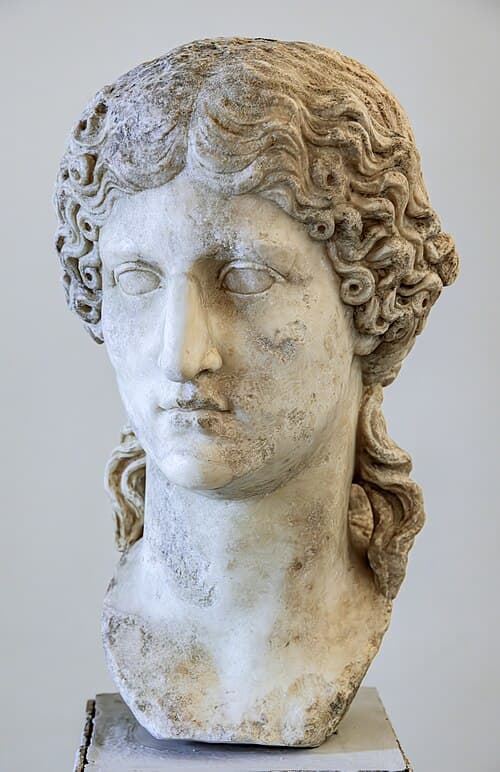
This imaginary interview was generated by artificial intelligence from sources documented in Constantine I's profile. It dramatises what the figure might have said based on what we know about them, but does not constitute attested historical testimony. For primary sources and factual documentation, refer to the full profile.