Imaginary interview with Corazón Aquino
by Charactorium · Corazón Aquino (1933 — 2009) · Politics · 5 min read
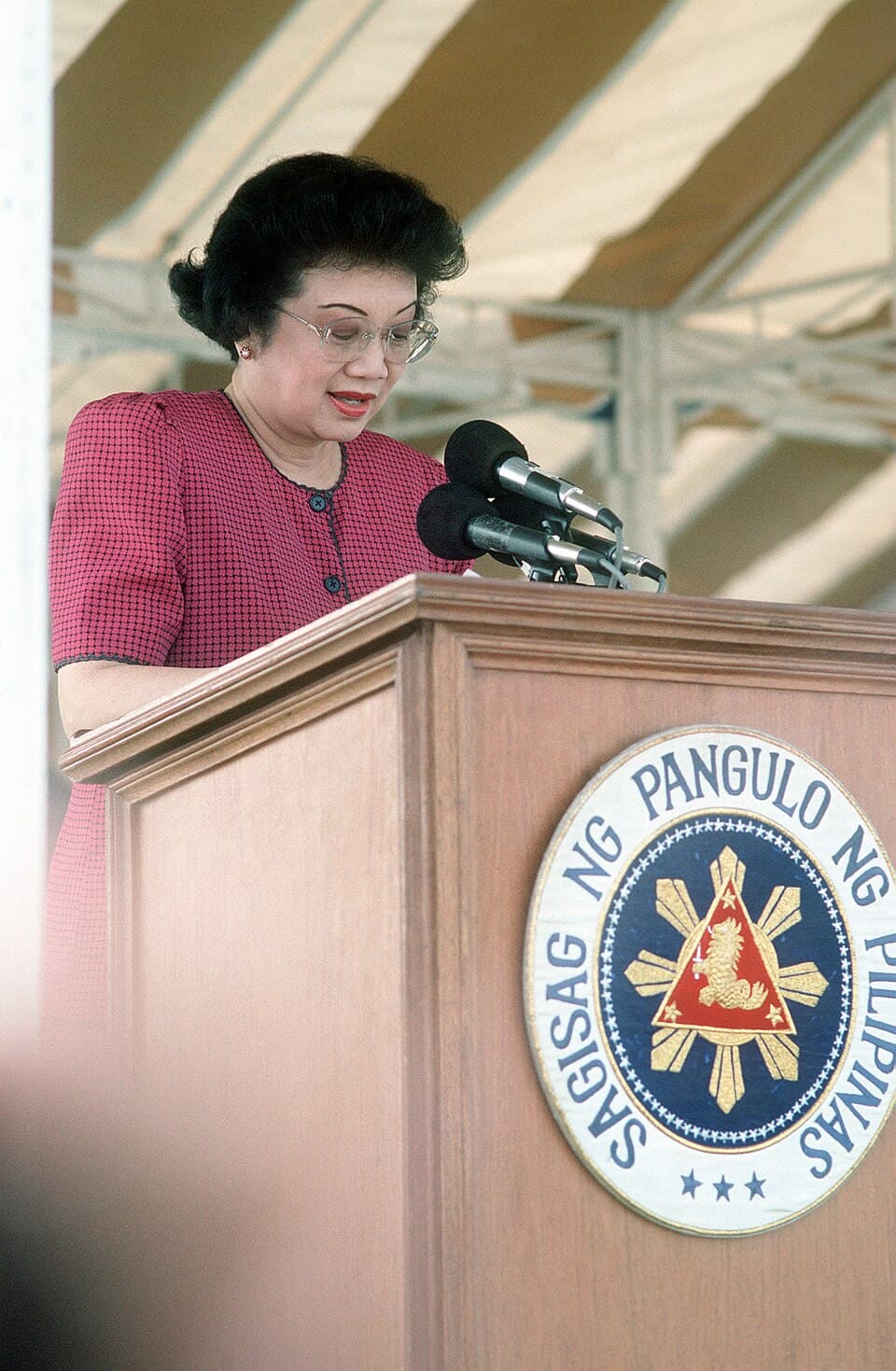
Manila, February 1992. In the private apartments of Malacañang Palace, which she never wanted to inhabit like a queen, Corazón Aquino receives visitors in a pale yellow dress, a rosary between her fingers. A few months from leaving power, she reflects candidly on the six years when a widow turned president learned to govern a people who had just overthrown a dictator with flowers.
—How did a woman who claimed to have no political experience agree to carry the hopes of an entire nation?
They reproached me so often that I ended up making it my banner. When Marcos's supporters mocked my inexperience, I replied that I had never been involved in corruption — and the crowd laughed, because they understood. I was a housewife, I claimed it. But you see, after August 21, 1983, when they returned Benigno's body to me on the tarmac of Manila Airport, I no longer had the luxury of inexperience. A nation does not ask for a diploma from a woman who lost her husband for daring to return. It asks that she not lie. That, I knew how to do.
A nation does not ask for a diploma from a woman who lost her husband. It asks that she not lie.
—Do you remember what you felt when you learned of Benigno's death upon his return from exile?
We were living in Boston then, in a peace I knew was temporary. Ninoy had chosen to return, convinced that the Filipino deserves better than to die far from home. When the news came, that August 21, I understood they thought they could silence him on the tarmac. They were wrong. They can kill my husband, I told myself, but they cannot kill his ideas or our people's dream of freedom. That phrase was not bravado: it was the only thing keeping me on my feet. A man shot in the back of the neck suddenly became more dangerous to Marcos than when alive.
They can kill my husband, but they cannot kill his ideas.
—What would you say to those who did not see EDSA Avenue in February 1986 to make them understand what happened there?
Imagine a Manila thoroughfare black with people, millions of them, and not a single weapon. Nuns in habits kneeling before tanks, a rosary held out toward the cannon. Entire families offering rice and yellow flowers to soldiers sent to crush us. On EDSA, People Power was not a strategy: it was a collective prayer that refused to yield to fear. And the miracle, you see, is that the tanks stopped. Men in uniform lowered their eyes before old women reciting the rosary. That day I understood that an unarmed people, standing together, is the hardest force in the world to defeat.
People Power was not a strategy: it was a collective prayer that refused to yield to fear.
—Why did you choose yellow and flowers rather than anger and barricades?
The yellow came from a song, Tie a Yellow Ribbon Round the Ole Oak Tree — that ribbon you tie to tell the absent: come back, your place is waiting. We adopted it while waiting for Ninoy's return from prison. After his death, the color never left us. When millions of Filipinos raised yellow flowers against the soldiers, it was not naivety: it was a moral calculation. Violence would have given Marcos the excuse he awaited to reimpose Batas Militar. The flower, by contrast, gave him no pretext. You do not shoot people who pray and sing — at least, not without condemning yourself in the eyes of the whole world.
You do not shoot people who pray and sing without condemning yourself.
—You were often seen with a rosary in hand. What place did faith occupy in your decisions as president?
Every morning began with mass, before the newspapers, before the advisers, before the first visitors to Malacañang. It was not a staging for photographers: it was the backbone of my day. My rosary never left me, and during my inauguration on February 25, 1986, I asked the Lord for the wisdom to govern with justice and the compassion to serve all Filipinos, rich and poor. A devout Catholic in power — I was sometimes reproached for it. But my faith did not dictate my laws; it simply reminded me that one day I would be judged on how I treated the least of these. That is a stricter discipline than any poll.
My faith did not dictate my laws; it reminded me that I would be judged on how I treated the least of these.
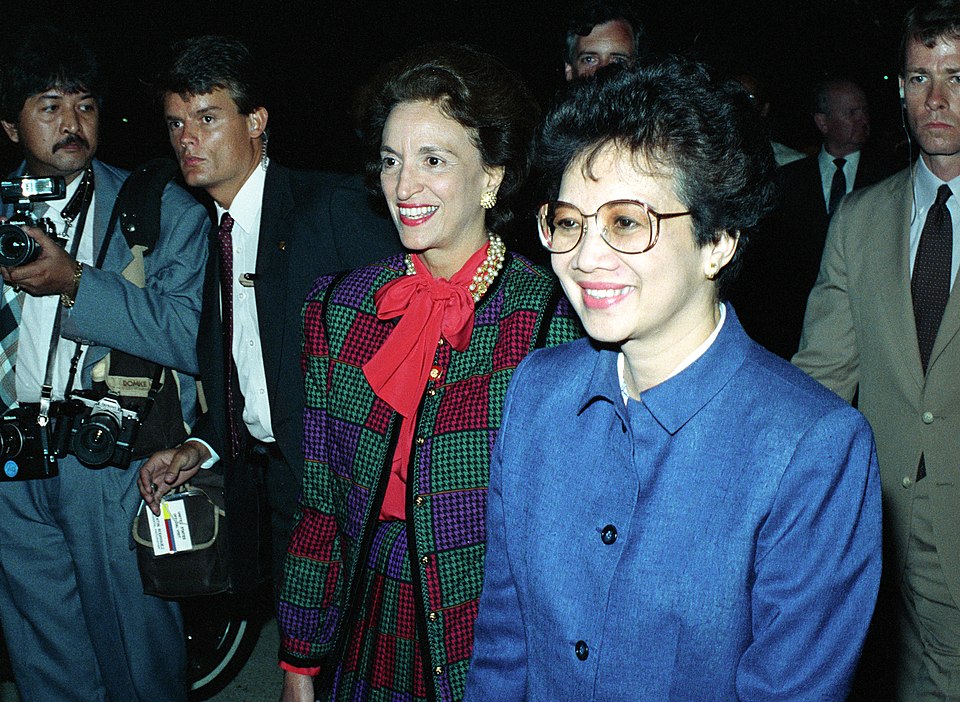
—You were born a Cojuangco, into a family of large landowners. How could you launch a land reform targeting your own lands?
That is the contradiction that cost me the most, and I do not hide it. I am a daughter of Tarlac, raised in the comfort of the ilustrados, heiress to an hacienda. When I signed the Comprehensive Agrarian Reform Program, the CARP, in 1988, I knew that my own family's Hacienda Luisita would fall under its scrutiny. My afternoons were haunted by those files, by landless peasants on one side and my own on the other. The reform was imperfect, incomplete, I admit it bluntly — an inheritance is a chain hard to break from within. But how can you demand justice for a people while exempting yourself? A democracy that stops at the gates of your property is merely privilege in disguise.
A democracy that stops at the gates of your property is merely privilege in disguise.
—How would you describe those years in Malacañang, coming from a world so far from power?
I refused to inhabit the state rooms where the Marcoses had accumulated their splendor — those places made me nauseous. I settled into the private apartments, and I kept our family home in Quezon City so as not to lose the ground beneath my feet. My days were a procession of audiences, cabinet meetings, foreign delegations, and always those land files that pitted me against my own. In the evening, I would slip away to pray with my family, for a simple meal — rice, grilled fish, a sinigang — far from state dinners. I never liked social events. I felt that a president who takes a liking to the palace has already begun to forget where she came from.
A president who takes a liking to the palace has already begun to forget where she came from.
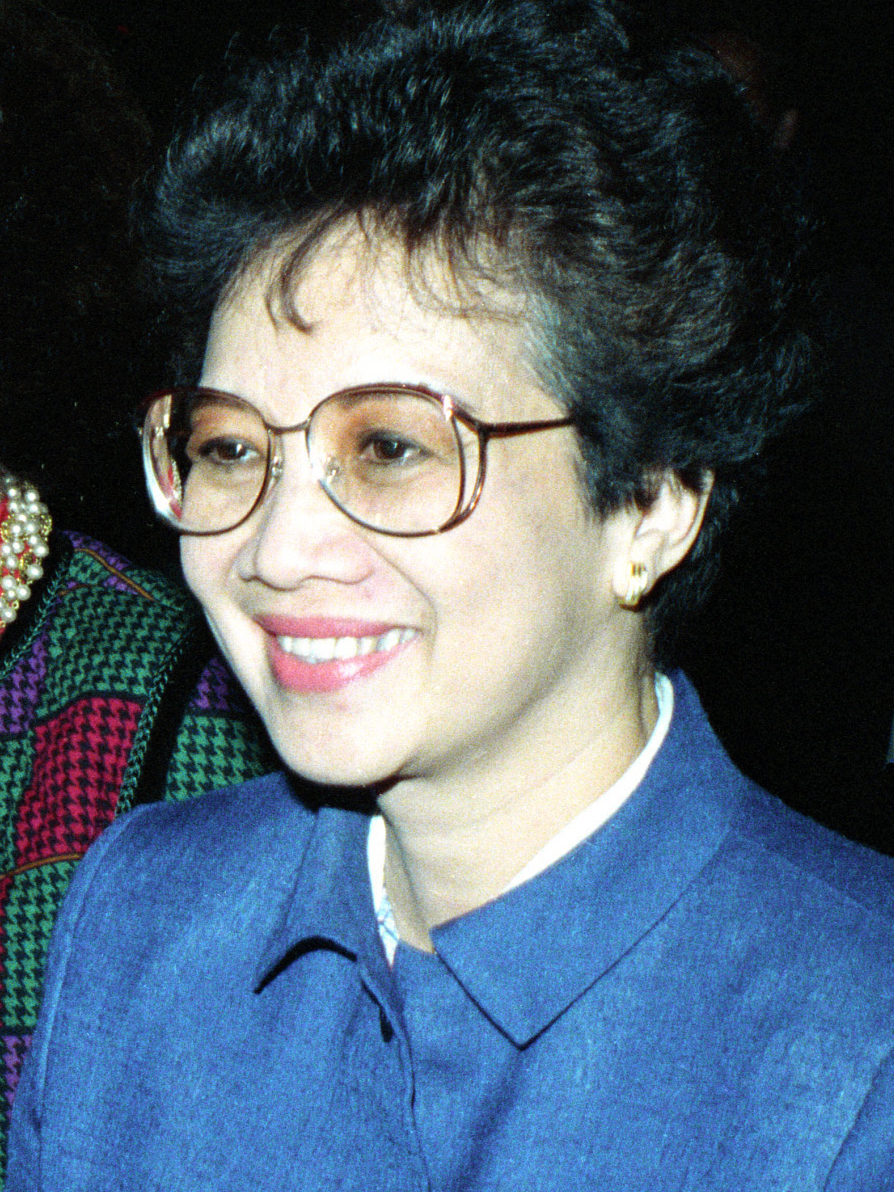
—Seven coup attempts in six years, and never martial law. How did you hold that line?
At every putsch — and there were seven between 1986 and 1992 — voices urged me to suspend the Constitution, to rule by force, as they said 'was necessary.' That was precisely the trap. Marcos had declared Batas Militar in 1972, and it took us fourteen years to recover. How could I, who came out of the People Power Revolution, revive the very weapon we had just buried on EDSA? The temptation of the strongman is always there, lurking, disguised as common sense. I preferred to hold on with a fragile Constitution rather than reign by decree. Democracy is only worth it if it survives the nights when you have every good reason to betray it.
Democracy is only worth it if it survives the nights when you have every good reason to betray it.
—Why did you forgo seeking a second term, a gesture so rare in the region?
The 1987 Constitution we had adopted limited the president to a single six-year term. I could have, like so many others, pleaded an exception, invoked the circumstances, the country's fragility. I refused. In 1992, I handed power to Fidel Ramos and went home. You see, I had not fought a man who had clung to his chair for twenty years only to end up resembling him. The greatest service a president born of a revolution could render was to prove that one could leave — alive, freely, at the appointed hour. Power that knows how to stop itself is the only guarantee that a democracy will endure after you.
I did not fight a man clinging to his chair only to end up resembling him.
—Your supporters affectionately called you 'Cory'. What did that closeness to the people mean to you?
'Cory' — that diminutive followed me everywhere, from the most remote villages where I harangued crowds with a megaphone to the immense throngs of Manila. I believe people heard in it a promise: that the president was not a distant idol draped in gold, but one of them, a woman who prayed the same rosary they did. I traveled thousands of kilometers during the 1986 campaign, my yellow dress on my back, to speak to those Marcos had never looked at. That popular affection was my true strength — far more than the army, far more than foreign powers. You do not overthrow a dictatorship with institutions; you overthrow it because a people has ceased to be afraid and has recognized itself in someone.
You do not overthrow a dictatorship with institutions; you overthrow it because a people has ceased to be afraid.
This imaginary interview was generated by artificial intelligence from sources documented in Corazón Aquino's profile. It dramatises what the figure might have said based on what we know about them, but does not constitute attested historical testimony. For primary sources and factual documentation, refer to the full profile.