Imaginary dialogue between Benigno "Ninoy" Aquino and Corazón Aquino
by Charactorium · Corazón Aquino (1933 — 2009) · Politics · 5 min read
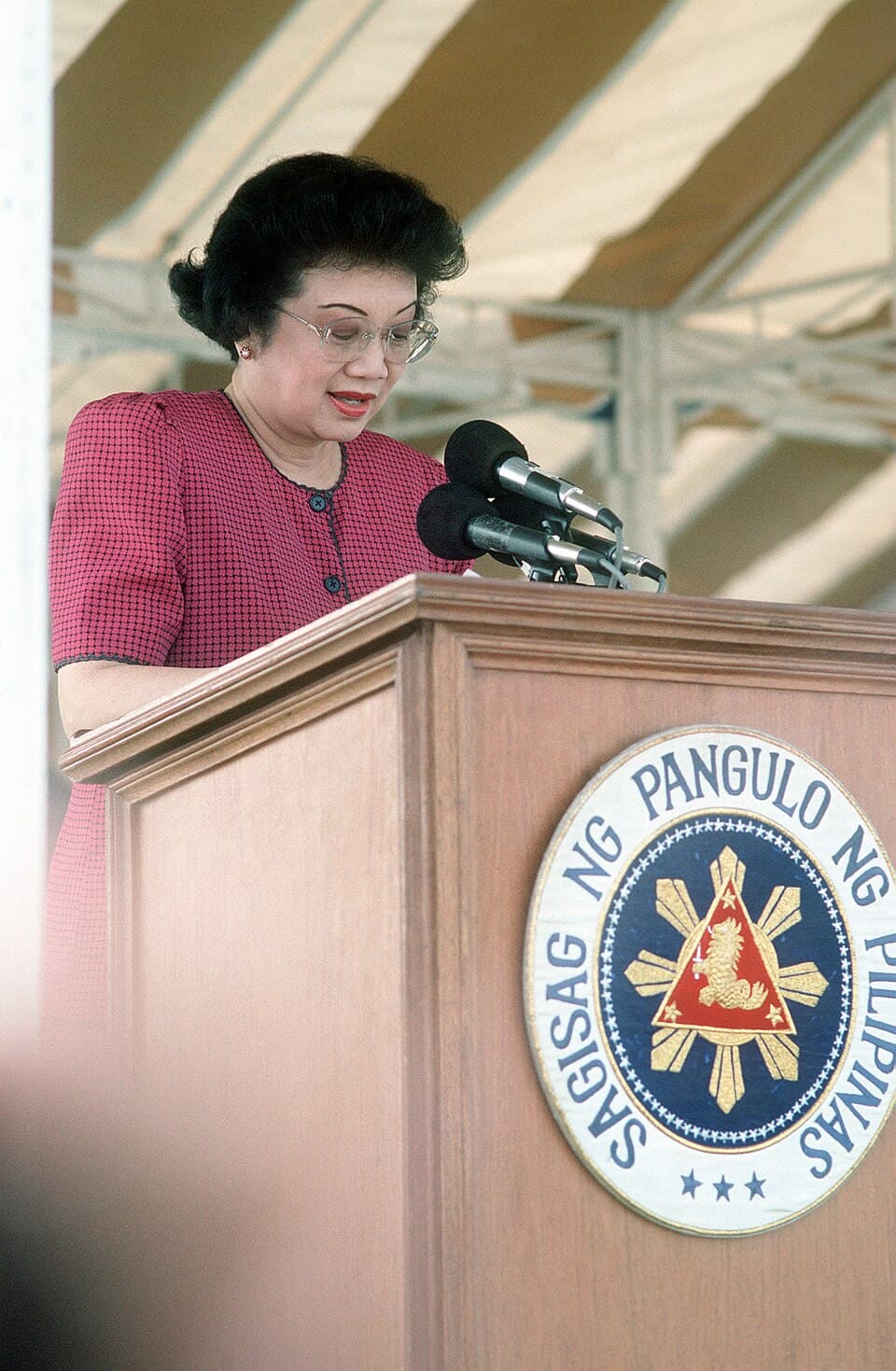
It is in the dimness of the house in Quezon City, where the scent of incense and wilted yellow flowers still lingers, that Ninoy comes to find Cory one tropical storm evening. The rosary rests on the table, near a framed portrait. They loved and tore each other apart through twenty years of exile, prison, and campaigns; he, the tribune; she, the woman who stayed in the background behind him. Tonight, it is he who listens, and wants to know what she has done with what he left behind.
—Cory, when I was gunned down on the tarmac in Manila, you hated politics. How did you, my housewife, agree to take my place?
I did not take your place, Ninoy — no one could. I only refused to let your blood dry in silence. You know better than anyone how I shunned the podium; I preferred to make your coffee and file your speeches. But when the opposition came to get me, I understood that my inexperience was my only virtue. They accused me of having no skills: it was true, I had never touched corruption. It was with that poverty of means that I marched against Marcos. You, who so often reproached me for my shyness, would have laughed to see me haranguing the crowds. I trembled at every rally. But I carried your name, and that name, they could not kill.
My inexperience was my only virtue: I had never touched corruption.
—Do you remember the yellow ribbons our friends tied to the trees for my return? What became of that color after my death?
It became everything, Ninoy. That yellow we had chosen thinking of that American song, Tie a Yellow Ribbon, that ribbon that was to celebrate your return from prison — it covered the entire archipelago. People called me Cory and brandished yellow flowers as one brandishes a prayer. I wore the straw-colored terno at every appearance, not out of coquetry, but so that from afar they would recognize that hope had a camp. Your color of conjugal waiting became the color of a people waiting for their freedom. I never had to explain what yellow meant: everyone knew it carried your memory.
Your color of waiting became that of a people waiting for their freedom.
—I've heard about millions of people in the streets, nuns in front of tanks. Cory, tell me about those days of February 1986 — were you afraid?
I was afraid, yes, but with a strangely calm fear. On EDSA Avenue, hundreds of thousands of Filipinos stood up without a weapon, rosary in hand, flowers offered to the soldiers. Nuns knelt in front of the armored vehicles and stopped them dead, by the sole force of prayer. I did not order that, Ninoy; the people invented it on their own. Later, before the U.S. Congress, I dared to tell them that we had chosen to fight the dictatorship with peace and with prayer. They who swore only by guns, I believe I left them speechless. What you had sown through your death, the people reaped through their gentleness.
We fought the dictatorship with peace and with prayer.
—You who prayed every morning even before joining me, did your faith really keep you standing in that turmoil?
It was my only internal government. You gently mocked my daily Mass and my worn rosary; yet that is where I drew the courage not to respond to violence with violence. Every morning, before the advisers and the reports, I knelt. Marcos had the generals, the fortunes, the guns; I had only a quiet certainty that justice ultimately prevails. Many thought my piety made me fragile, naive. It was quite the opposite: praying kept me from becoming like those I fought. I sincerely believe that you cannot durably overthrow a dictatorship with hatred — only with a conscience stronger than fear.
Praying kept me from becoming like those I fought.
—Cory, we are Cojuangcos, owners of the Hacienda Luisita in Tarlac. How could you sign a reform that targeted our own lands?
That was the most intimate wound of my presidency, Ninoy. We grew up together in that world of ilustrados, among the cane fields and the peasants who bowed their backs. In 1988, I promulgated the great agrarian reform, the CARP, knowing it would point a finger at my own family's hacienda. How could I demand justice for Filipinos and spare my own? My uncles, my cousins never forgave me. The implementation was incomplete, I confess, and I was criticized for going too far and not far enough. But I could not ask the poor to believe in me while protecting the Cojuangco granary. Democracy without bread is just a word.
I could not demand justice for all while sparing the lands of my own.
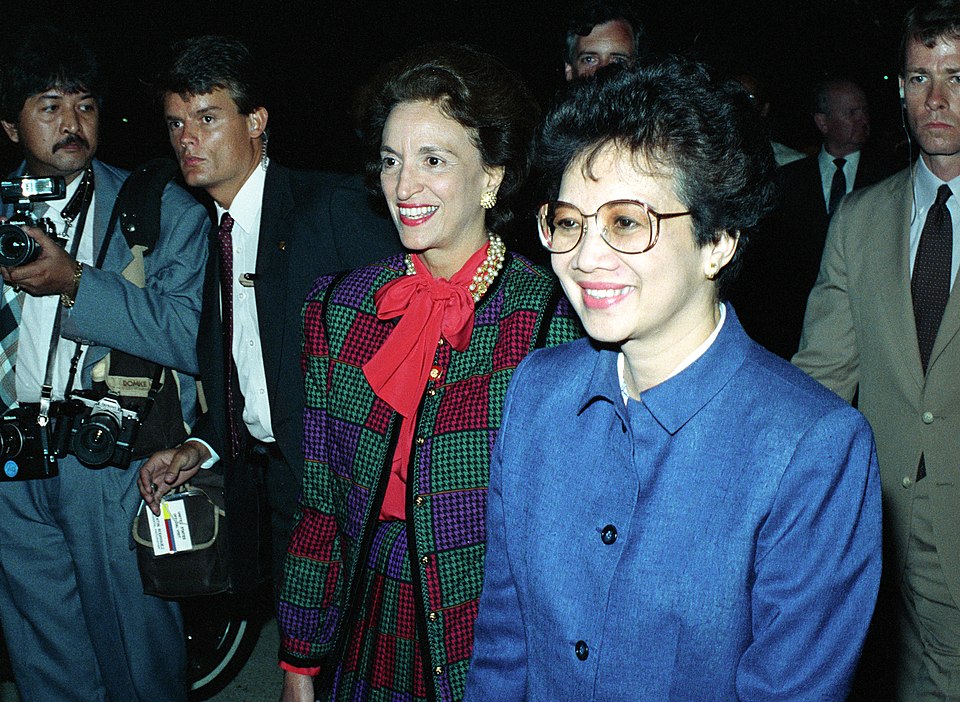
—You who listened to me talk about landless peasants during our long nights of exile in Boston, do you think you kept that promise?
Not as much as I would have liked, and that is a regret I confide to you alone. In Boston, during those years of exile from 1980 to 1983, you would rebuild the country until dawn, and land always came up in your words. I carried that dream to power, but the large landowners, the administrative delays, the courts blunted the law. Many peasants received papers more than fields. I sometimes felt I was bequeathing an unfinished project rather than a victory. But I at least inscribed the principle in the law of the land: that the land also belongs to those who work it. The heirs will have to finish what we only began.
Many peasants received papers more than fields.
—The military turned against you, I'm told, seven times. Why did you not declare martial law as Marcos did against me?
Because it was precisely that martial law that had thrown you in prison and led to your death, Ninoy. How could I take up the very weapon that had killed you? Between 1986 and 1992, seven coup attempts tried to overthrow me; I heard gunfire up to the outskirts of Malacañang. The temptation was great to suspend liberties in the name of security. But I would have betrayed everything for which the people had risen on EDSA. I preferred to govern with trembling hands rather than with hands bound by authoritarianism. To hold on without becoming a tyrant: that is the only victory I am truly proud of.
I preferred to govern with trembling hands rather than become a tyranny again.
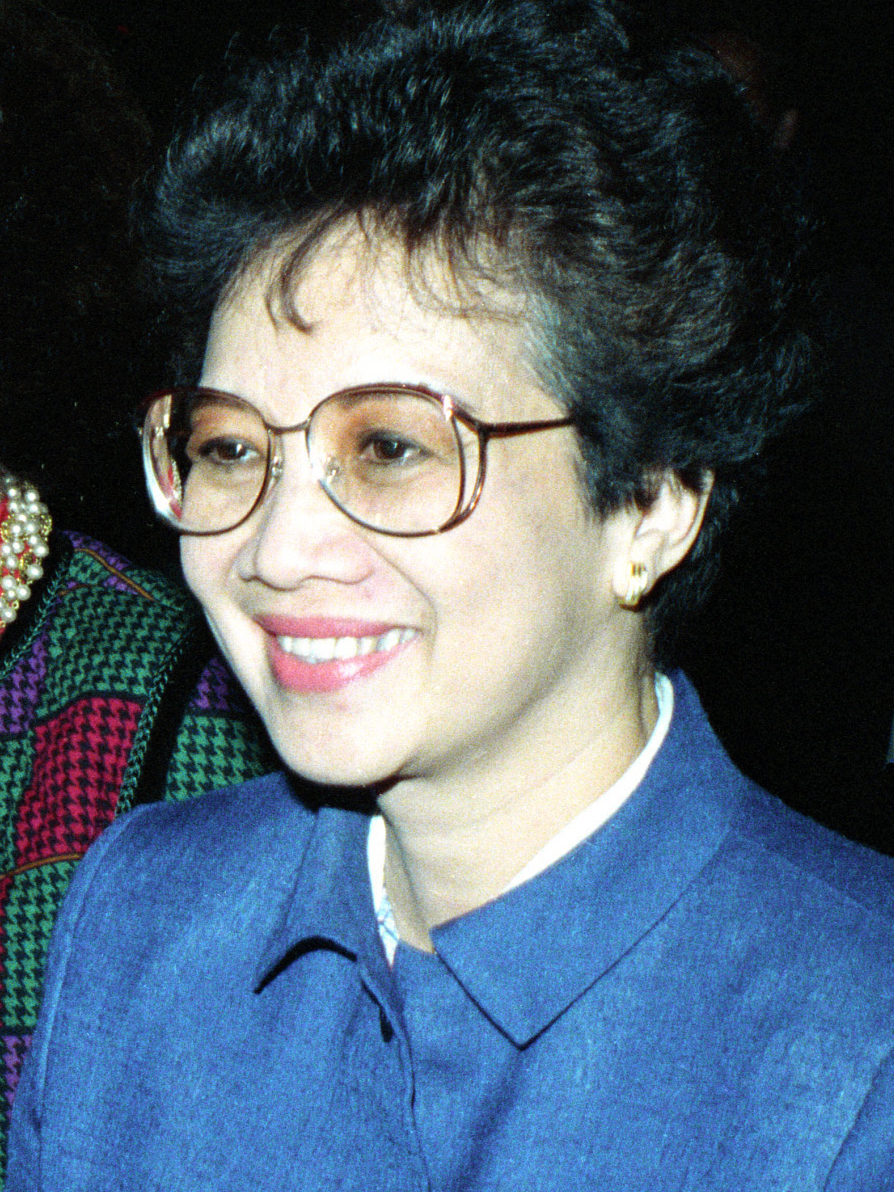
—And at the end of it all, Cory, you who never wanted power, how could you give it up so simply?
Precisely because I never desired it, Ninoy, it cost me nothing to give it back. The 1987 Constitution that we had adopted limited the term to six years, with no second term for the president; I wanted it that way so that no man would ever again be tempted to cling on like Marcos. In 1992, I therefore handed power to Fidel Ramos, peacefully, as one returns a deposit that does not belong to one. So many leaders in Southeast Asia clung to their thrones; I simply went home. The greatest service a president can render to democracy is to know when to leave. You would have recognized me that night: become an ordinary woman again.
The greatest service a president renders to democracy is to know when to leave.
—The Americans, the whole world celebrated you as a heroine. You, my Cory so discreet, how did you experience that sudden glory?
Like a suit that was too big, Ninoy. I repeated to anyone who would listen that I was just a housewife propelled by circumstances into the heart of a struggle I had not chosen. They attributed political genius to me; I had only stubbornness and the memory of you. That glory frightened me more than the coups, because it could make me forget where I came from. I refused to settle into the luxury of the Marcoses at Malacañang, preferring private apartments and our simple meals of rice and adobo. Fame passes; I especially wanted to be able to look at myself in the mirror in the morning, at the hour of prayer. The rest was just noise.
That glory frightened me more than the coups: it could make me forget where I came from.
—One last thing, Cory. If you had to tell me what you carried of me throughout those years of presidency, what would it be?
Your name, and the idea you defended, Ninoy. When they killed you at the airport in 1983, I understood that one could kill a man but not a people's dream of freedom. It is that conviction I carried like a banner. Every difficult decision, I asked myself what you would have thought of it, you the fighter. The yellow, the rosary, the portrait on my desk: all of it brought you back into the room. I was not president in your place; I was the guardian of your promise. And the day I left power freely, I felt I had finally done you justice — not through vengeance, but through the freedom restored to our people.
One can kill a man, but never a people's dream of freedom.
This imaginary interview was generated by artificial intelligence from sources documented in Corazón Aquino's profile. It dramatises what the figure might have said based on what we know about them, but does not constitute attested historical testimony. For primary sources and factual documentation, refer to the full profile.