Character Catalog

Historical Library

CollectionGalaxy
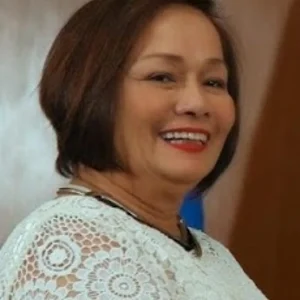
Portrait de CorazĂłn Aquino

CorazĂłn Aquino

CorazĂłn Aquino

1933 — 2009

Philippines

PoliticsPolitiqueRévolutionnaire20th Century

Émotions disponibles (6)

N

Neutre

par défaut

I

Inspirée

P

Pensive

S

Surprise

T

Triste

F

Fière

Key Facts

    Works & Achievements

    1987 Philippine Constitution (1987)

    Adopted under Aquino's presidency, this constitution restored parliamentary democracy, limited the presidential term to a single non-renewable six-year term, and guaranteed the fundamental rights suppressed under Marcos.

    Comprehensive Agrarian Reform Program (CARP) (1988)

    A program to redistribute agricultural land to landless peasants, one of the most ambitious social reforms in Philippine history, though its implementation remained incomplete.

    Abolition of Martial Law and Release of Political Prisoners (1986)

    Upon taking power, Aquino released the thousands of political prisoners jailed by Marcos and restored fundamental civil liberties.

    Restoration of the Bicameral Congress (1987)

    Aquino restored the Philippine Senate and House of Representatives, which had been dissolved under Marcos's dictatorship, thereby strengthening the separation of powers.

    Peace Negotiations with Communist Guerrillas (1986-1987)

    Attempts at dialogue with the communist New People's Army (NPA), marking a break from the exclusively military approach of the Marcos regime.

    Anecdotes

    After the assassination of her husband Benigno Aquino in 1983 at Manila airport, CorazĂłn decided to enter politics despite her lack of experience. She declared: "I am accused of having no experience. That is true. I have never been involved in corruption." This phrase became a powerful slogan against the Marcos regime.

    During the peaceful revolution of February 1986, millions of Filipinos took to the streets of Manila holding yellow flowers and images of the Virgin Mary. Faced with tanks sent by Marcos, nuns and civilians stood in front of the armored vehicles, bringing them to a halt. This "People Power Revolution" established itself as a global model of non-violent resistance.

    CorazĂłn Aquino always wore yellow, a color chosen in tribute to the song "Tie a Yellow Ribbon Round the Ole Oak Tree", a symbol of hope for the return of her imprisoned husband. This color became the emblem of all her political action, and her supporters affectionately nicknamed her "Cory".

    Despite seven coup attempts between 1986 and 1992, CorazĂłn Aquino remained in power without ever imposing martial law, unlike her predecessor. She restored democracy and respected the Constitution by refusing to seek a second presidential term, a rare gesture in Southeast Asia at the time.

    Primary Sources

    Corazón Aquino's Inauguration Speech (25 février 1986)
    I ask the Lord to grant me the wisdom to govern with justice, the courage to act according to my convictions, and the compassion to serve all Filipinos, rich and poor.
    Speech Before the United States Congress (20 septembre 1986)
    Our people chose to fight the dictatorship with peace and prayer. That choice cost us dearly, but it restored our freedom.
    Statement Following the Assassination of Benigno Aquino (21 août 1983)
    They can kill my husband, but they cannot kill his ideas or our people's dream of freedom.
    Interview Given to Time Magazine (1986)
    I am a simple housewife who was thrust by circumstances into the heart of the struggle for democracy. I did not choose this role, but I embrace it fully.

    Key Places

    Manila, Malacañang Palace

    Official residence and seat of the President of the Philippines, which Corazon Aquino occupied from 1986 to 1992 following Marcos's exile. She chose not to reside there permanently as a way to mark a break with the ostentation of the previous regime.

    Ninoy Aquino International Airport, Manila

    It was here that Benigno Aquino was assassinated on August 21, 1983, upon his return from exile, sparking the popular movement that would bring Corazon to power. The airport today bears Benigno's nickname (Ninoy) in his memory.

    EDSA Avenue, Manila

    Main thoroughfare of Manila where the People Power Revolution took place in February 1986. Millions of Filipinos formed a human chain there to block the pro-Marcos armed forces.

    Tarlac, Luzon

    Home province of the Cojuangco family, to which Corazon belonged. She grew up there in a family of large landowners, which explains the tensions surrounding agrarian reform during her presidency.

    Boston, United States

    City where Corazon Aquino pursued her university studies at Mount Saint Vincent College, and where the family later lived in exile from 1980 to 1983. It was from the United States that she followed the rise of the opposition to Marcos.

    Typical Objects

    Yellow dress

    CorazĂłn Aquino always wore yellow, a symbolic color of hope and the return of her imprisoned husband. This wardrobe choice became her recognizable visual identity worldwide.

    Rosary

    A devout Catholic, CorazĂłn Aquino never parted with her rosary. Religious faith was at the heart of her political commitment and non-violent resistance.

    Portrait of Benigno Aquino

    Portraits of her assassinated husband were omnipresent at her rallies and offices. He symbolized the democratic martyr whose legacy she carried.

    Yellow flowers

    Protesters of the People Power Revolution brandished yellow flowers before soldiers and tanks. This peaceful gesture, inspired by Aquino, marked the history of non-violent revolutions.

    Megaphone

    During the 1986 electoral campaign, CorazĂłn Aquino traveled thousands of kilometers holding popular rallies, using megaphones to address crowds in the most remote villages.

    Bible

    She took her oath on the Bible and drew from the Christian tradition constant references to social justice and the liberation of the oppressed.

    School Curriculum

    LycéeHistoire

    Vocabulary & Tags

    Key Vocabulary

    Tags

    Corazón AquinopolitiqueHomme/femme politiquerevolutionnaireRévolutionnairedroits-de-l-hommeDroits de l'Homme, droits civiquesdecolonisationDécolonisationfeminismeFéminisme, droits des femmes

    Daily Life

    Morning

    Corazón Aquino invariably began her day with Mass and prayer, a Catholic practice deeply rooted since childhood. She would then read newspapers and reports from her advisors before receiving her first official visitors at Malacañang Palace.

    Afternoon

    Her afternoons were occupied by official audiences, cabinet meetings, and meetings with foreign delegations. She also devoted time to agrarian reform files, a source of constant tension with large landowners, including her own family.

    Evening

    In the evenings, she often withdrew to pray with her family, read, and rest. A naturally private woman, she avoided social gatherings and preferred family meals to overly frequent state dinners.

    Food

    Corazón Aquino's diet was typically Filipino: white rice at every meal, grilled fish and seafood, sautéed vegetables, adobo (meat marinated in vinegar and garlic), sinigang (sour soup). She appreciated simple, home-style cooking, far removed from presidential pomp.

    Clothing

    Her sartorial signature was the yellow dress, a political symbol of her movement. She frequently wore the terno, the traditional Filipino dress with butterfly sleeves, in pale yellow or golden fabric for official occasions. Her attire always reflected sobriety and dignity.

    Housing

    As president, she resided at Malacañang Palace but preferred to use the private apartments rather than the ceremonial rooms associated with the Marcos era's ostentation. She also kept her family residence in Quezon City, a symbol of her closeness to ordinary life.

    Historical Timeline

    1972Ferdinand Marcos déclare la loi martiale aux Philippines, suspendant la démocratie et emprisonnant ses opposants dont Benigno Aquino.
    1980Benigno Aquino est libéré pour raisons médicales et s'exile aux États-Unis avec sa famille, dont Corazón.
    1983Assassinat de Benigno Aquino à l'aéroport de Manille dès sa descente d'avion le 21 août, déclenchant une vague d'indignation nationale.
    1985Marcos annonce des élections anticipées, persuadé de les remporter facilement. L'opposition se rallie à Corazón Aquino comme candidate unique.
    1986Élections présidentielles du 7 février : fraudes massives en faveur de Marcos, mais Aquino revendique la victoire.
    1986Révolution du Pouvoir du Peuple (22-25 février) : des millions de Philippins bloquent pacifiquement l'armée restée fidèle à Marcos à Manille.
    1986Fuite de Ferdinand Marcos en exil à Hawaï le 25 février. Corazón Aquino est investie présidente de la République des Philippines.
    1987Adoption d'une nouvelle Constitution démocratique aux Philippines, limitant le mandat présidentiel à un seul terme de six ans.
    1987-1989Plusieurs tentatives de coup d'État militaire contre le gouvernement Aquino, toutes repoussées sans instauration de la loi martiale.
    1991Éruption du volcan Pinatubo, catastrophe naturelle majeure gérée par le gouvernement Aquino en coordination avec l'aide internationale.
    1992Corazón Aquino quitte le pouvoir après un seul mandat, comme prévu par la Constitution, transmettant pacifiquement le pouvoir à Fidel Ramos.
    2009Décès de Corazón Aquino le 1er août, pleurant par des millions de Philippins. Elle est inhumée aux côtés de son mari Benigno.

    Period Vocabulary

    People Power (Poder ng Bayan) — Expression referring to the 1986 Philippine peaceful revolution in which the people, gathered en masse in the streets, overthrew the dictator Marcos without violence.
    Martial Law (Batas Militar) — State of exception decreed by Marcos in 1972, suspending civil liberties, elections and Congress, and allowing the arbitrary arrest of political opponents.
    Ilustrado — Historical Philippine term referring to the educated and wealthy elite, the social class to which Corazón Aquino's family, the Cojuangcos, belonged — large landowners from Tarlac.
    Terno — Traditional Philippine women's dress characterized by its butterfly-shaped puffed sleeves, worn at official ceremonies. Aquino turned it into a national identity symbol.
    Hacienda — Large agricultural estate typical of colonial Philippines, often owned by wealthy families. Aquino's agrarian reform aimed to redistribute these lands, including her own family's Hacienda Luisita.
    NPA (New People's Army) — Philippine communist guerrilla group active since 1969, with which Aquino attempted to engage in peace negotiations upon coming to power, without lasting success.
    Snap election — Expression referring to the snap presidential election called by Marcos in 1985, which he expected to win easily but which instead triggered the crisis leading to his downfall.
    Credibility gap — Central notion in Philippine political debate during the 1980s, referring to the gap between the official rhetoric of the Marcos regime and the reality experienced by the population, particularly poverty and repression.
    Yellow ribbon — Yellow ribbon, a universal symbol of hope and anticipation for the return of a loved one, adopted by Aquino's supporters in reference to the famous American song, to demand the release of Benigno.

    Gallery

    Corazon Aquino 1992

    Corazon Aquino 1992

    Corazon Aquino at Andrews AFB DF-SC-88-01605

    Corazon Aquino at Andrews AFB DF-SC-88-01605

    Corazon Aquino 1986

    Corazon Aquino 1986

    Phillipine President Corazon Aquino and Mayor Raymond L. Flynn at Faneuil Hall (9501947193)

    Phillipine President Corazon Aquino and Mayor Raymond L. Flynn at Faneuil Hall (9501947193)

    President Ronald Reagan meeting with President Corazon Aquino of the Philippines in the Oval Office (cropped)

    President Ronald Reagan meeting with President Corazon Aquino of the Philippines in the Oval Office (cropped)

    Corazon Aquino inauguration

    Corazon Aquino inauguration

    Isang Daang Taon sa Bukang-liwayway, Palma Hall, UP Diliman

    Isang Daang Taon sa Bukang-liwayway, Palma Hall, UP Diliman

    Visual Style

    L'esthétique associée à Corazón Aquino est dominée par le jaune lumineux de ses partisans, la lumière tropicale de Manille et l'imagerie catholique mêlée aux symboles de résistance démocratique des années 1980.

    #F5C518
    #FFFFFF
    #003087
    #8B1A1A
    #2E8B57
    AI Prompt
    Philippine democracy era visual style, 1980s Southeast Asia political photography, warm tropical light, crowds of people in yellow clothing holding flowers and candles, Catholic religious imagery blended with political protest, Manila streets with banners and portraits, documentary photography aesthetic, warm golden tones with deep shadows, images of peaceful masses facing military tanks, official government portraits in formal Filipino dress, hand-painted political murals

    Sound Ambience

    L'univers sonore de Corazón Aquino mêle la ferveur religieuse des prières et cantiques catholiques aux clameurs des foules populaires réunies dans les rues de Manille pour défendre la démocratie.

    AI Prompt
    Crowd chanting and singing in Filipino streets, rosary beads clicking rhythmically, church bells ringing in Manila, prayer songs echoing through cathedral halls, demonstrators singing hymns and folk songs, distant military helicopters, political rally speeches through crackling megaphones, tropical rain on Manila rooftops, vendors calling out in Tagalog markets, the rustling of yellow ribbons and banners in the wind

    Portrait Source

    Wikimedia Commons — domaine public — Presidential Communications Operations Office — 2014