Kids interview Corazón Aquino
by Charactorium · Corazón Aquino (1933 — 2009) · Politics · 5 min read
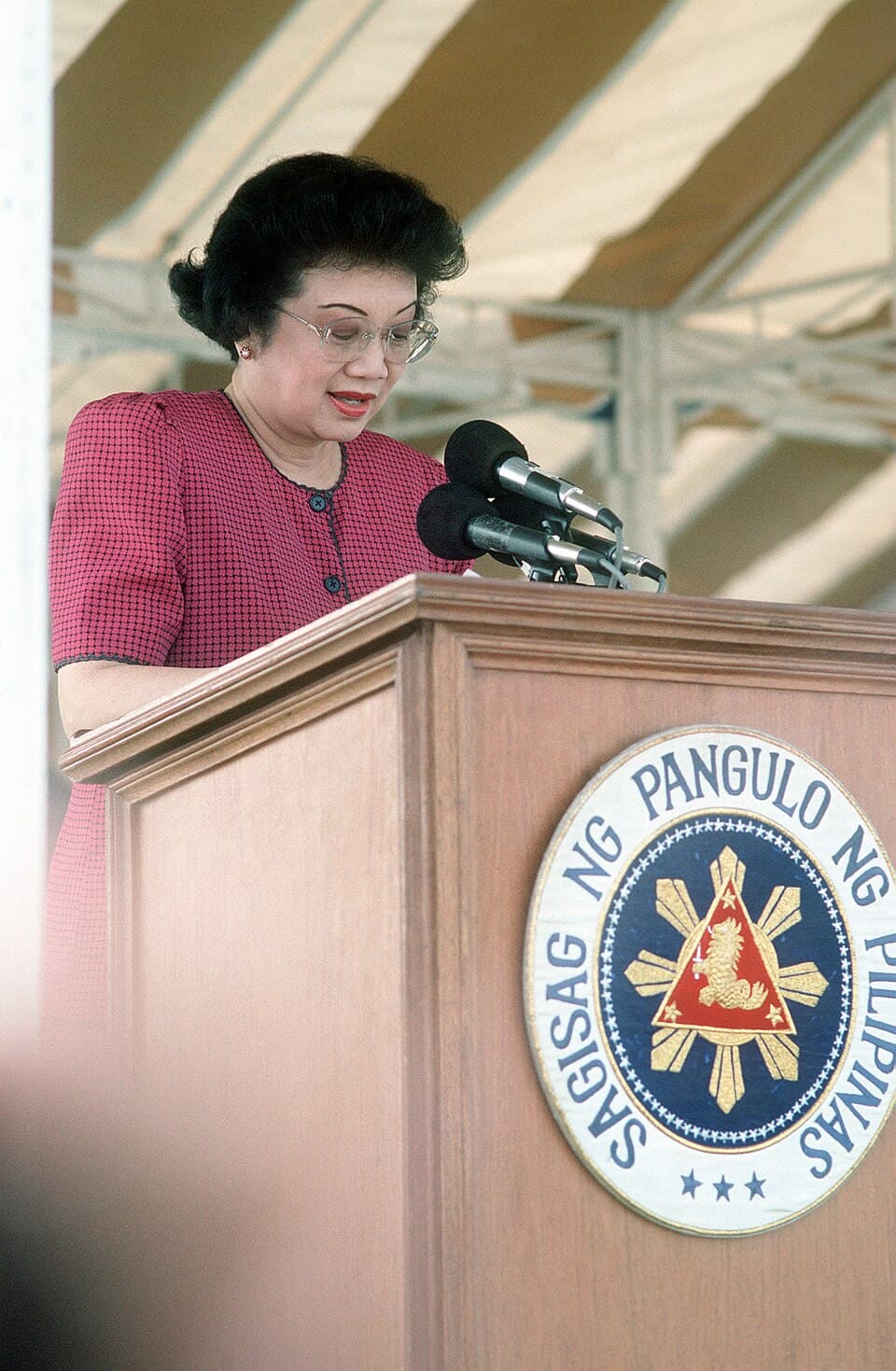
Two 12-year-old students, on a field trip, prepared a whole list of questions. That morning, a lady in a yellow dress was waiting for them, a rosary between her fingers. She smiled at them and invited them to sit close beside her.
—Before becoming president, what did you do in life?
You know, my child, I was a housewife. I took care of my children, the house, the morning prayers. Nothing like politics. My husband, Benigno, he was the activist. I stayed in the shadows, and that suited me. Imagine a quiet mom who prepares rice and listens to the news on the radio. That was me. Then everything changed. They killed Benigno at the Manila airport, in 1983, the moment he stepped off the plane. That day, my quiet life stopped dead. I didn't yet know that destiny had knocked on my door.
I was a housewife, and destiny knocked on my door.
—People said you had no experience. Did that hurt you?
At first, yes, a little. They kept telling me I knew nothing about politics. So one day, I gave a simple answer. I said, "They accuse me of having no experience. That's true. I have never been involved in corruption." You see the idea? My opponent, on the other hand, had experience in lying and stolen money. Not me. My weakness became my strength. People understood that an honest woman was better than a skillful liar. I later told a journalist that I was a simple housewife propelled by circumstances. I hadn't chosen this role. But I took it on to the end.
My only experience was never having lied.
—Why did you always wear yellow? Was it your favorite color?
Ah, yellow! It wasn't a whim, you know. When my husband was in prison, his supporters tied yellow ribbons to demand his return. It was our color of hope, our way of saying, "Come back alive." So after his death, I kept yellow on me, every day. Imagine a huge crowd, and in the middle, a single little woman in a yellow dress that everyone recognized. That was me. My friends affectionately called me Cory. Yellow wasn't fashion. It was a promise. A way of saying that hope would not die with my husband.
Yellow wasn't a color. It was a promise.
—Is it true that people stood in front of tanks with flowers?
It's true, and I'll never forget it. In February 1986, millions of people came down a great avenue in Manila called EDSA. The dictator sent his armored vehicles to crush us. And then, picture the scene: nuns, grandmothers, children planted themselves in front of the tanks. Not with weapons. With yellow flowers in their hands, and images of the Virgin Mary. The soldiers looked at those flowers held out to them... and their engines stopped. They didn't fire. They called it People Power. An unarmed people made an army retreat.
They had tanks. We had flowers. And the flowers won.
—Were you afraid during those days in the streets?
Of course I was afraid, my child. Anyone would have been afraid. At any moment, a gunshot could have plunged everything into blood. But look: we had decided one thing. To fight the dictatorship with peace and prayer. Not with hatred. Not with guns. For three days, from February 22 to 25, priests prayed at the microphone, people sang, shared their rice with the soldiers. Fear was there, yes. But prayer was stronger. And on the morning of the 25th, the dictator fled to the other side of the world. Our quiet courage had won.
We fought the dictatorship with peace and prayer.
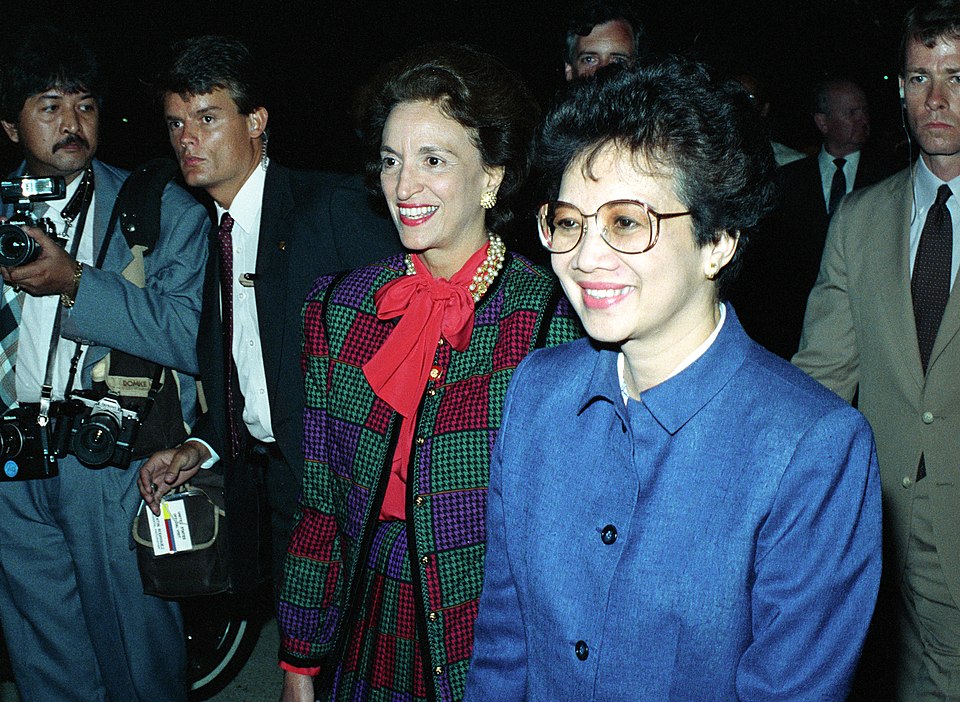
—What was 'martial law' that everyone talked about?
Good question. Martial law, in our language we said Batas Militar, was a terrible trap. The dictator decreed it in 1972. Overnight, no more elections, no more Parliament, no more free newspapers. Soldiers could arrest anyone they wanted, in the middle of the night, for no reason. Imagine your village where, suddenly, speaking too loudly could land you in prison. That's what it was. Thousands of people rotted in cells, including my own husband. So when I came to power in 1986, my first decision was simple: open the prison doors. Give back a voice to a people who had been gagged.
They had gagged an entire people. I opened the prisons.
—How do you rebuild a country after a dictator?
Patiently, brick by brick, like a house you raise after a storm. The dictator had broken everything. So we wrote together a new law of laws, the Constitution of 1987. You know what we put in it? That no president could rule for more than six years. Never again a man clinging to power forever. We also brought back the Congress, those great assemblies where the people's representatives discuss and vote on laws. The dictator had abolished them. I restored them. Rebuilding isn't spectacular. It's slow, it's tiring. But every institution set back on its feet was a dam against tyranny.
A country is rebuilt like a house: brick by brick, without rushing.
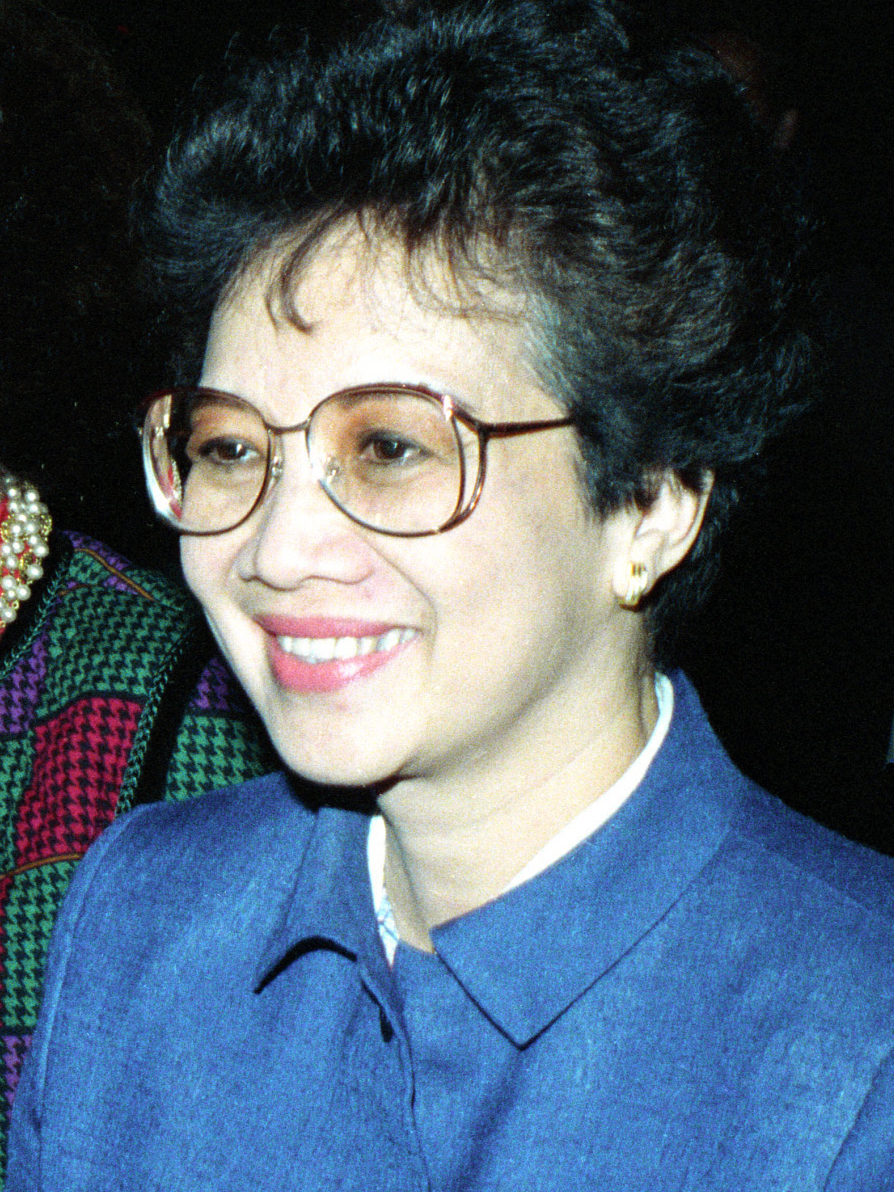
—Is it true that you wanted to share land that belonged to your family?
Yes, and it was one of the most heartbreaking decisions of my life. I was born into a wealthy family from Tarlac, the Cojuangcos. We owned vast agricultural lands, what was called an hacienda. Meanwhile, peasants farmed those fields without ever owning a square meter. So in 1988, I launched a great reform to share the land with those who worked it. Even my own family's land. Imagine having to tell your uncles, your cousins: 'We must share.' It caused terrible arguments at the table. But how can you demand justice for the country and refuse it at home?
How can you demand justice for the country and refuse it in your own family?
—What did the beginning of your day at the palace look like?
Always the same, and it kept me going. I started with Mass and prayer, as I had since childhood. My rosary never left me, I kept it in the palm of my hand even in the worst moments. Imagine a grand official house, the Malacañang Palace, where the dictator lived in luxury. I refused to live in his gilded halls. I preferred the simple small rooms, and I kept my real family home. In the evening, I prayed with my loved ones, I ate rice and adobo, a dish from home. No lavish parties. My faith was my armor and my compass.
My rosary never left me, even in the worst moments.
—In the end, what would you like people to remember about you?
That you can be ordinary and do great things. You know, I endured seven attempts to overthrow me by force. Seven! Each time, I could have declared martial law, like the dictator. Silenced everyone. I never did. And when my time was up, in 1992, I left. I gave my place to another, calmly, because the Constitution said so. No one drove me out. Remember this, my child: true courage, sometimes, is letting go of power instead of clinging to it. A united people, even empty-handed, is stronger than all the tanks in the world.
True courage, sometimes, is letting go of power instead of clinging to it.
This imaginary interview was generated by artificial intelligence from sources documented in Corazón Aquino's profile. It dramatises what the figure might have said based on what we know about them, but does not constitute attested historical testimony. For primary sources and factual documentation, refer to the full profile.