Imaginary dialogue between Jonathan and David
by Charactorium · David (1038 av. J.-C. — 968 av. J.-C.) · Mythology · 6 min read
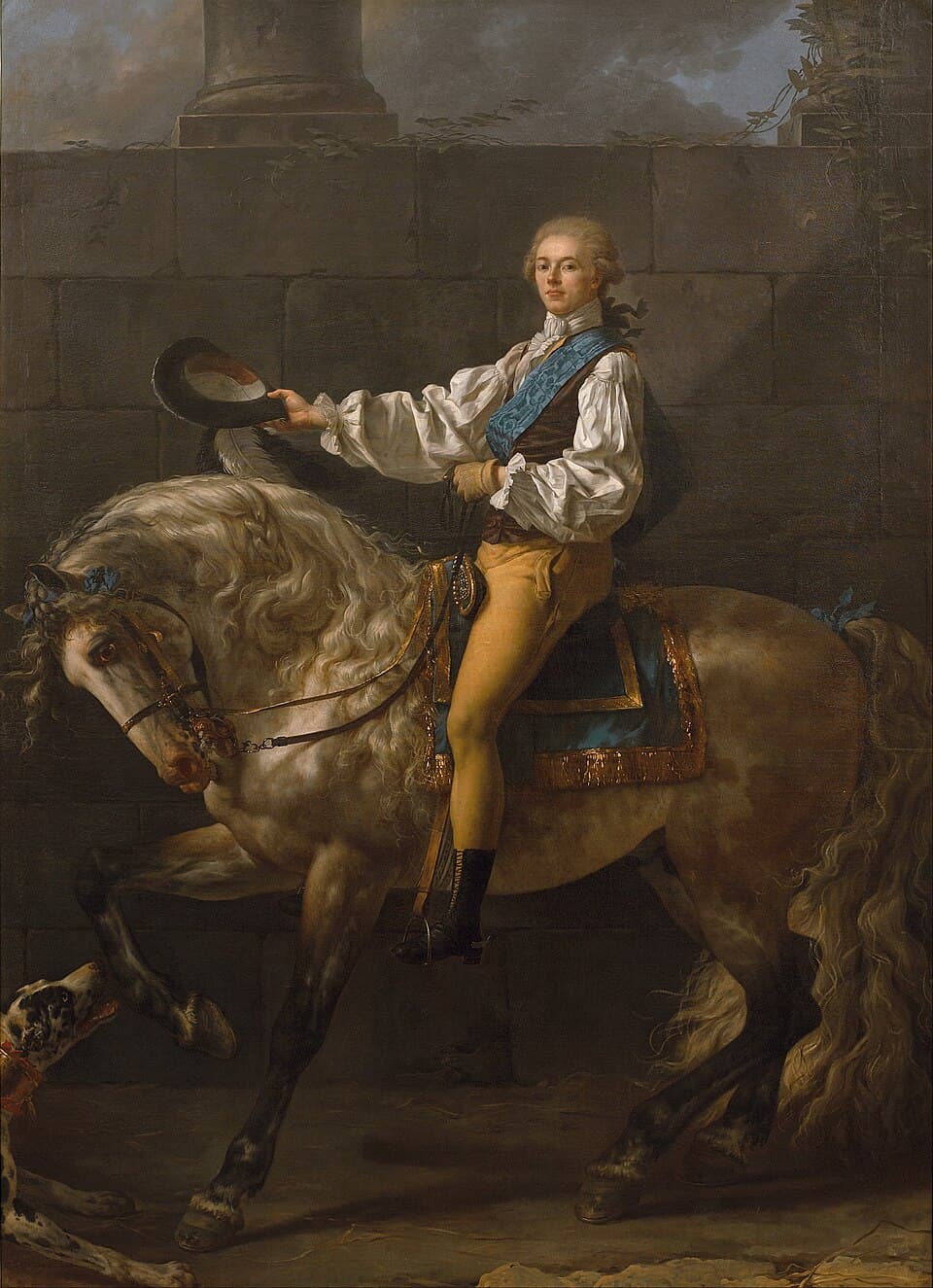
It is in the thickets of the wilderness of Ziph, near the forest of Horesh, that Jonathan secretly joins his friend David on a moonless night, around 1012 BC. The son of King Saul has left his father's camp to find the fugitive whom that same father hunts from cave to cave. An ember glows among the stones, a lyre rests against the rock, and the howls of jackals sound in the distance. They have not seen each other for months; Jonathan comes to strengthen his brother's heart — and perhaps to make him say what no man of the court will ever hear.
—David, I can still see my father's army frozen in the Valley of Elah when you went down against the giant. What was in your heart?
You who were there, Jonathan, know that I had neither breastplate nor sword — only my sling and five smooth stones from the brook. Your father's men had trembled for forty days before this giant who insulted the living God. I was tending my father's sheep at Bethlehem; I had already snatched the lamb from the lion's mouth. It was not my strength. When I walked toward Goliath, I told him that he came to me with sword, spear, and javelin, but I came to him in the name of the Lord of hosts, the God of the armies of Israel, whom he had defied. The stone flew, and the giant fell face down to the ground. That day, it was not a shepherd who conquered — it was the name I bore.
I had neither breastplate nor sword — only my sling and five stones from the brook.
—Before the valley, there was the harp. Do you remember the day you were brought into my father's chambers to soothe his darkness?
I remember it as if it were yesterday, Jonathan. I was taken from my pastures because an evil spirit tormented the king, and my lyre was said to soothe souls. I played, and the king breathed easier; the affliction receded for the duration of a song. But what I gained most precious in those chambers was not your father's favor — it was you. Our souls were knit together that day, and you loved me as yourself. You took off your robe, your bow, and your belt to give them to me, the youngest son of Jesse who was nothing at court. The people began to sing my name in the streets — and perhaps that is where everything that now separates us began, here in this wilderness.
What I gained most precious in those chambers was not the king's favor — it was you.
—Here, among the caves and rocks, they say you still sing. What songs rise from your mouth when fear grips you?
Yes, I sing, Jonathan — especially when the night is dark and your father's men surround my hiding place. I have only my voice and my lyre to answer fear. I tell the Lord that He is my light and my salvation, and I fear no one; that He is the stronghold of my life, and I tremble before no man. These songs are not truly mine: they rise like water from a spring I did not dig. When I am pursued, I lament; when He delivers me, I dance and praise Him. A king who knows how to weep before his God is better than a king who only knows how to reign. That is what I wish to leave behind: not battles, but prayers that other lips will take up.
I have only my voice and my lyre to answer fear.
—You know as well as I do that you will reign over Israel, and that I will be at your side. If that day comes, what city will you choose for your throne?
If the Lord grants me what you say, Jonathan — and hearing it from your lips moves me deeply — I do not want a city that belongs to any single tribe. Neither to Judah, where I come from, nor to Benjamin, where you come from. I dream of a new fortress, taken from no brother of Israel, where the twelve tribes could go up together. And there, I would bring the Ark of the Covenant, that sacred chest that has wandered from place to place for too long. For what good is a palace if the living God has no dwelling in the heart of the people? A king is nothing but a greater shepherd: he gathers the scattered flock around a single watering hole. That is my dream — but it depends on Him, not on my sword.
A king is nothing but a greater shepherd: he gathers the scattered flock.
—My father was humble too, before the crown. Do you not fear, David, that power will one day change your heart as it changed his?
Your question pierces me, Jonathan, because I have already seen it happen before my eyes. I saw the spirit leave your father, and the good man become the one who hunts me from cave to cave. Who am I to think I am safe? A king commands armies, judges disputes, takes the women and fields he covets — and no one says no. That is the trap. I pray that on the day of my sin — for it will come, no man is exempt — the Lord will send me a man free enough to look me in the eye and tell me that I am that man. A king who has no one to rebuke him has already fallen. Better a prophet who accuses me than a court that applauds me.
Better a prophet who accuses me than a court that applauds me.
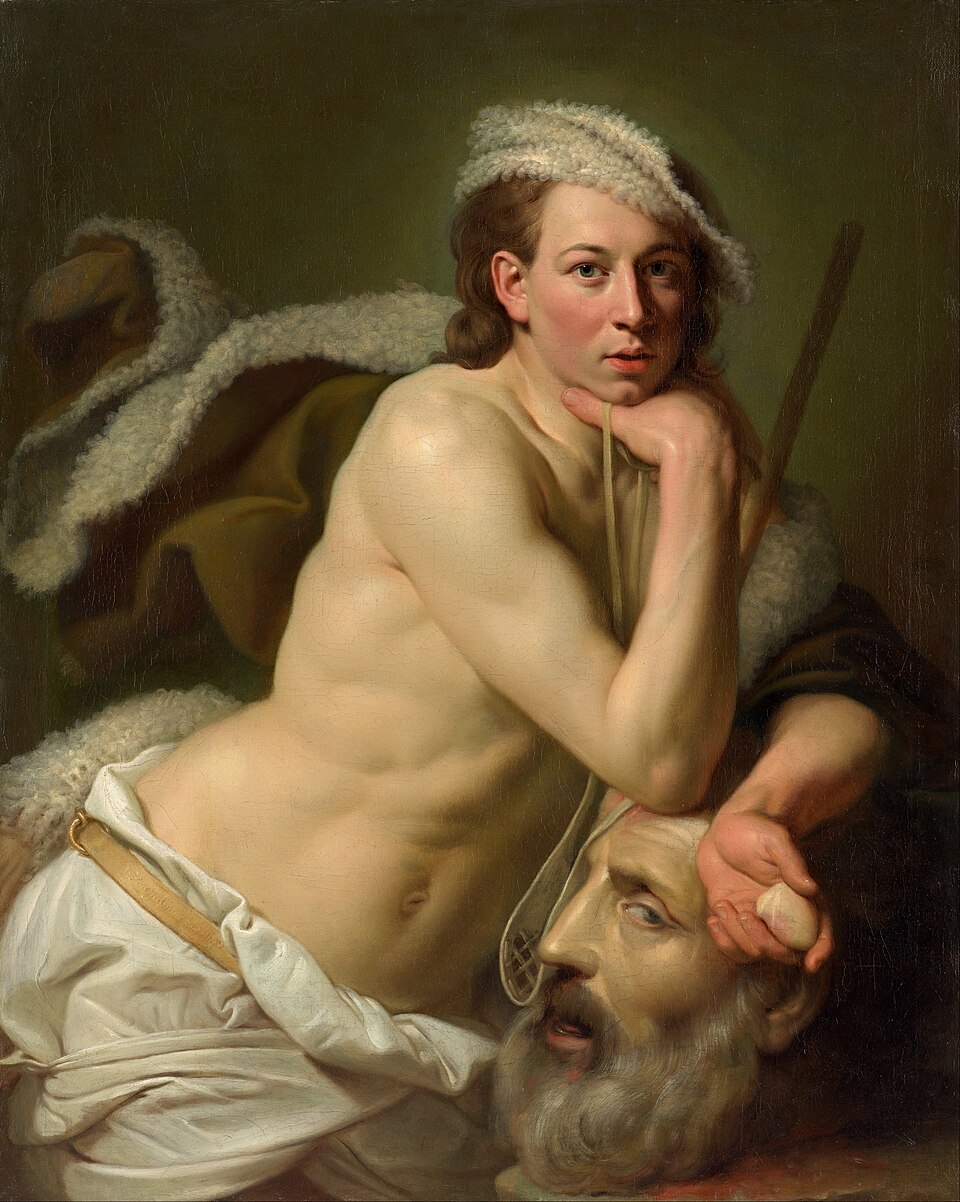
—They say you had never borne arms before Goliath, you the youngest of Jesse's sons. How does a shepherd learn to kill?
A shepherd, Jonathan, does not learn to kill — he learns to keep. When a lion or a bear came to carry off a sheep from my father's flock, I would pursue it, strike it, and rescue the beast from its mouth. If it rose against me, I would seize it by the jaw and strike it down. The sling is not a weapon of war: it is the guardian's tool, to drive wolves away from the path. When I saw Goliath, I saw only another beast threatening the flock — except that the flock, this time, was all Israel. The God who delivered me from the paw of the lion and the bear could surely deliver me from the hand of this Philistine. That is why I would not wear your father's armor: you do not march with weapons you do not know.
The sling is not a weapon of war: it is the guardian's tool.
—Do you remember the day my father hurled his spear at you while you were playing? I was ashamed for him. Do you hold it against him?
How could I hold it against you, Jonathan, who risked your father's wrath to save me? As for him... the spear grazed my head and stuck in the wall, yes, and twice I had to flee. But your father is the Lord's anointed. As long as that oil is on his forehead, my hand will not be raised against him — I have sworn it, and you know it, you who have known me faithful even when I held him at my mercy. It is not him I fight, but the evil spirit that gnaws at him, the very one my lyre once drove away. I have wept for your father more than I have ever complained about him. And I will weep, if that day comes, even more for the son than for the father.
As long as the oil is on his forehead, my hand will not be raised against the Lord's anointed.
—You speak of uniting the twelve tribes. But Judah and the north eye each other like fighting dogs. Do you really believe you can bind them?
I have no illusions, Jonathan: Judah may recognize me first, at Hebron no doubt, where our fathers rest. The north will come later, or not at all. You do not bind twelve tribes by the sword — you bind them by a common God and a common memory. That is why I dream less of a throne than of a place where Ephraim and Judah, your tribe of Benjamin and mine, would go up together toward the same God. A people that has one heart needs no chains. Your father reigned by fear; I, if I reign, would reign by covenant — the covenant of the Lord with His people, and the covenant of brothers among themselves. It is a shepherd's dream, I know. But I have already gathered scattered flocks.
You do not bind twelve tribes by the sword — you bind them by a common God.
—When you sing in these caves, do you think these words will outlive us both? Or do you let them fly away like evening smoke?
I do not sing to be remembered, Jonathan. When fear grips my throat in the night, singing is my breathing — without it, I think I would suffocate. If these words survive, it will not be because they are David's: it will be because they are true before the Lord. The glory of a man passes like the grass of the field; in the morning it flourishes, in the evening it is cut down. But what is spoken from an upright heart endures, because He endures. So yes, I like to think that some unknown shepherd, one day, might take up my lament and make it his own — not because he will know my name, but because his fear will be the same, and his God as well. That is the only legacy I desire.
The glory of a man passes like the grass of the field; what is spoken from an upright heart endures.
—Night is falling, and I must leave before dawn, lest my father learn that I have found you. Before I go — what do you swear, my brother?
What I swear to you, Jonathan, I swear before the Lord who is witness between you and me forever. If I reign one day — since your lips have said it — your house will never know my hand except for good. I will not do as kings do, who erase the descendants of their predecessor; your blood will be my blood, your table will be my table, and your sons will eat at the king's bread as my own sons. You took off your robe to give it to me when I was nothing; I will not forget it, even at the height, even if all others forget me. Go to your father, and may peace be upon you. May the Lord be between us and between our descendants forever. Now go — and may I find the strength to watch you walk away.
Your blood will be my blood, your table will be my table.
This imaginary interview was generated by artificial intelligence from sources documented in David's profile. It dramatises what the figure might have said based on what we know about them, but does not constitute attested historical testimony. For primary sources and factual documentation, refer to the full profile.