Imaginary dialogue between Catherine II de Russie and Denis Diderot
by Charactorium · Denis Diderot (1713 — 1784) · Literature · Philosophy · 6 min read
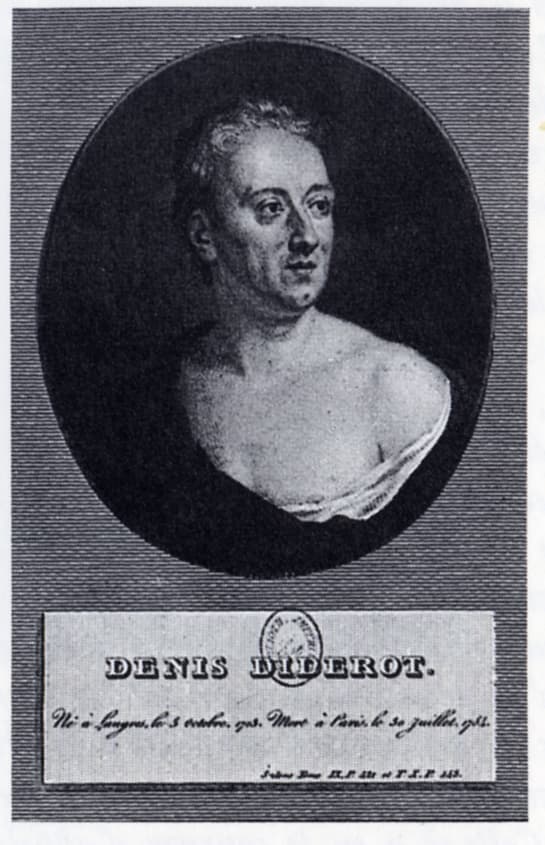
It is in the dry heat of the Winter Palace, in this autumn of 1773, that Empress Catherine II receives her philosopher from Paris for their daily conversations. The fire crackles against the cold of the Neva, and the armchair drawn close to hers still bears the marks of the hand slaps with which Diderot punctuates his arguments. They have known each other for eleven years already — since she bought his library to endow his daughter — but this is the first time they speak face to face. The empress seeks the man behind the Encyclopédie, in the intimacy of an evening.
—My dear philosopher, here you are at last before me after this long journey. Tell me: what did you really want to build with this Encyclopédie that cost you so much?
Madam, I wanted to gather the scattered knowledge on the surface of the earth, to present its general system to the men with whom we live, and to transmit it to those who will come after us. It was not just another dictionary: it was a weapon against ignorance, a repository where every art, every trade, every thought would find its reasoned place. Twenty years, Your Majesty, twenty years from 1751 to 1772, twenty-eight volumes, and d'Alembert who finally abandoned the ship when the storm grew too strong. I often thought I would drown. But consider: a bookseller sells silk stockings; I wanted a man, a hundred years from now, to know how they are made, and why.
It was not just another dictionary: it was a weapon against ignorance.
—I have been told that in 1759 the King's Council banned your work. How does a man continue a work that his own sovereign condemns?
By doing it in the shadows, Madam, that is all. When the Council's decree fell, many thought I was finished. The privilege revoked, the volumes seized, my friends trembling — and I who had to deliver the plates and the final text volumes despite everything. I worked like a conspirator, with complicit printers and manuscripts I hid. My own publisher, the scoundrel, censored my articles without my knowledge to appease the authorities: I only discovered it once the ink was dry, and I wept with rage. But you see, you cannot stop an idea like you seize a volume. What the king forbade in Paris was already being printed elsewhere. An encyclopedia does not die: it moves.
You cannot stop an idea like you seize a volume.
—You slap my thigh when you get heated, like a craftsman pounds his workbench. Where does this familiarity with handiwork come from?
Forgive my hands, Your Majesty — they speak before I do, it is a birth defect. I was born in Langres, in 1713, into a family of cutlers. My father forged blades, and the smell of heated steel was my first memory. They made me a philosopher, but I remain the son of a man who knew the value of a well-made gesture. That is why, for the Encyclopédie, I went down into the workshops: I watched silk being spun, iron being beaten, a knife being assembled, because you only write well what you have seen with your own eyes. The wits despise manual trades; I gave them engraved plates and whole pages. A cutler of Langres is worth as much as a theologian.
You only write well what you have seen with your own eyes.
—In this Russia where so much remains to be built, do you really believe a sovereign should concern herself with the work of artisans and manufacturers?
More than anything else, Madam — and you know it better than I, you who want to pull an empire out of its mists. The greatness of a people does not rest on its palaces but on its workshops. When I documented cutlery, stocking-making, the mechanical arts, it was not out of amateur curiosity: a country that knows how to make things is a country that depends on no one. Technical knowledge is as sure a wealth as the gold from your mines. I have seen in Paris ministers despise calloused hands while living off the fruit of their labor. If I may give you a cutler-turned-philosopher's advice: honor those who make, educate them, and your Russia will need to borrow neither its tools nor its ideas.
The greatness of a people does not rest on its palaces but on its workshops.
—Before I knew you, you were locked in the dungeon of Vincennes. Tell me about this man that France wanted to silence in 1749.
Ah, Vincennes... three months in a cell for a Letter on the Blind, Your Majesty. I had dared to write that if one wanted to make me believe in God, one had to make me touch it — and that was enough to send me behind walls, by a simple lettre de cachet, without trial, without judge. That was what France of consciences was like: a man disappeared on a word. The strangest thing is that this prison gave me a lifelong friend: Rousseau came to visit me on foot, and it was on the way, one very hot day, that he had the illumination that produced his first discourse. I came out broken and more cautious — too cautious, perhaps. Since then, I have kept my boldest thoughts in the drawer.
That was what France of consciences was like: a man disappeared on a word.
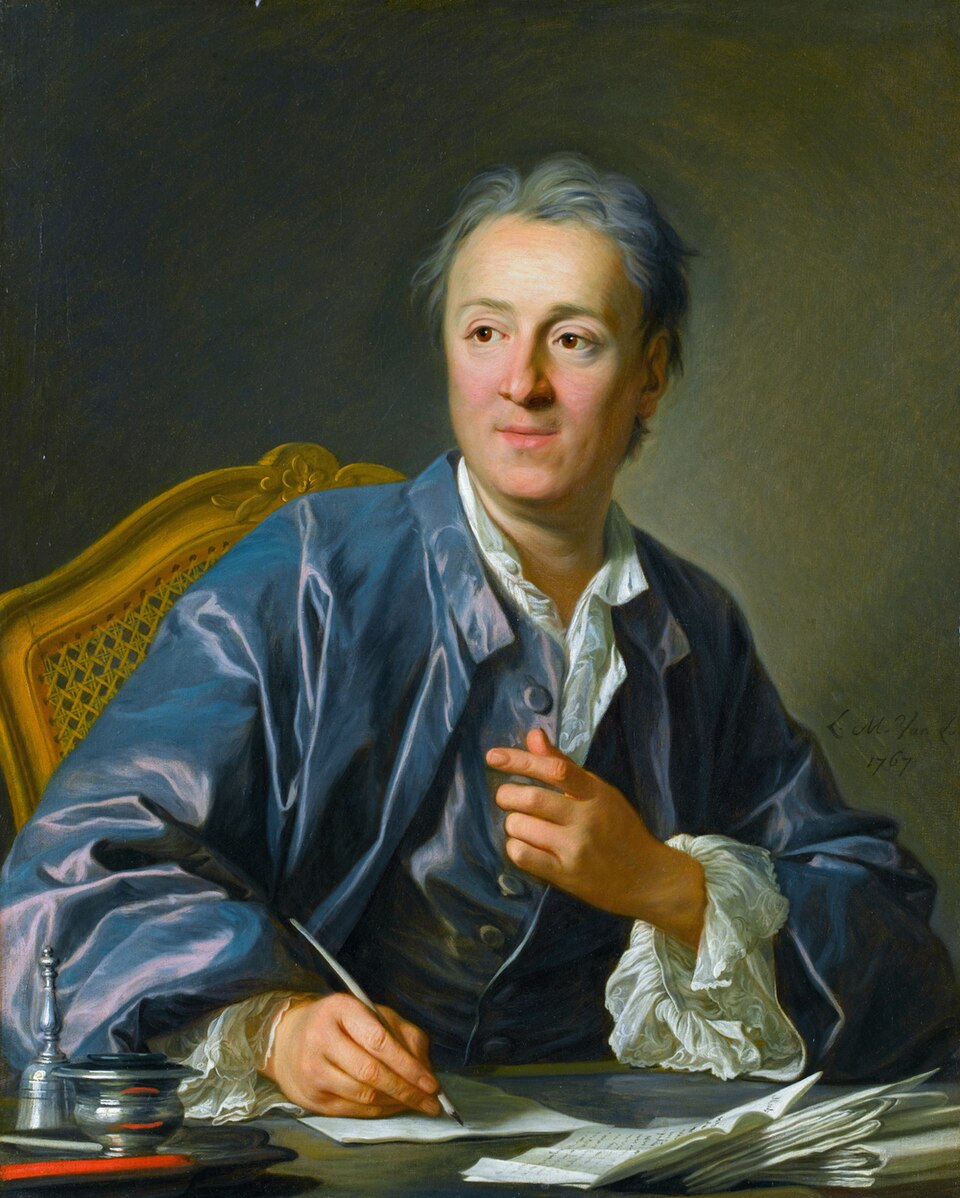
—Here no king will imprison you, my friend. But tell me frankly: can a mind like yours ever truly breathe under censorship?
Breathe, yes; sing, no. Madam, censorship is not just prison or the stake — it is that subtler poison that settles into the writer's own hand. By constantly fearing the king's privilege that can be taken away, you amputate yourself, you cross out the sentence before the censor sees it. I have known this cowardice, and I hate it in myself. That is why your hospitality troubles me as much as it touches me: here, you tell me to speak freely, and I discover I have unlearned how to do so. A man long watched carries his jailer inside him. True courage is not to defy the king once; it is to think every day as if he did not exist.
A man long watched carries his jailer inside him.
—Remember: in 1762 I bought your library to endow your daughter, leaving you your books. What did you feel then, faced with such a gesture?
What I felt, Your Majesty? First disbelief, then a gratitude that took my breath away. Consider the strangeness of it: an empress of Russia buys the books of a needy Parisian philosopher, leaves them in his care, and appoints him her librarian with a salary! None of my own kings had made such a gesture. You gave me the means to marry my daughter without stripping me of what made my life. That day I understood that a sovereign could protect the mind instead of crushing it — a lesson my country had never taught me. And here I am, ten years later, crossing Europe to thank you in person. A philosopher does not kneel, but believe that my heart has.
None of my own kings had made such a gesture.
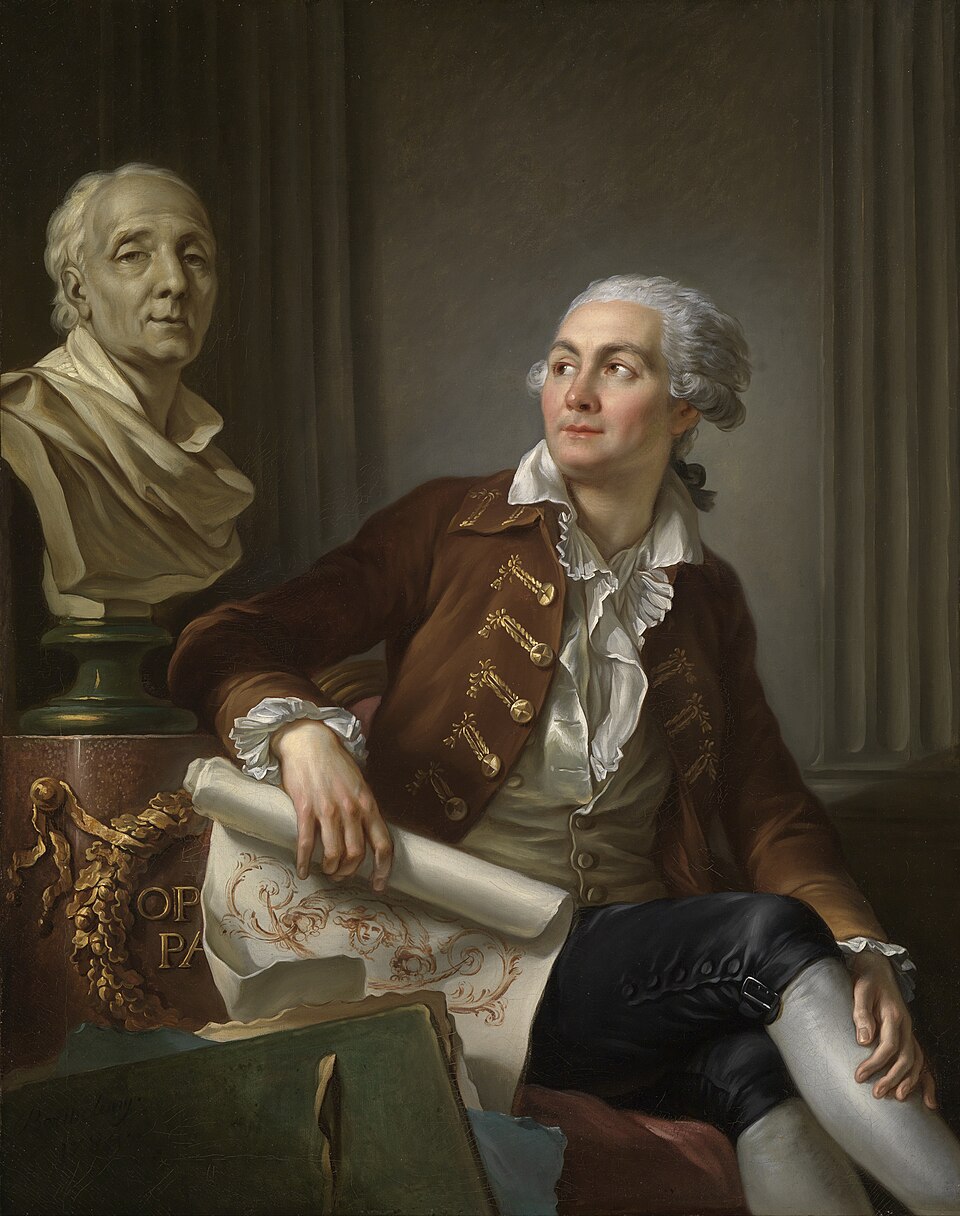
—Here we are, conversing daily in my Hermitage. Speak to me without flattery: what are you really seeking by staying here with me in Saint Petersburg?
Without flattery, then — since you demand it, and you are the only one in the world to whom I grant it. I seek to know if the dream of the philosophers can take shape, Madam. All my life I have written for imaginary princes; you are real, and you reign. So I press you, I contradict you, I slap your thigh because I want to see how far an enlightened sovereign will allow herself to be pushed. But I am not fooled: I speak of an empire as one dreams over a map, and you govern it stone by stone. What am I seeking? To verify that between the thinker and the throne, a conversation is possible. These five months with you will have taught me more than twenty years in my study.
All my life I have written for imaginary princes; you are real.
—It is whispered that you harbor bold ideas about matter and life. Confide in me alone what you dare not print.
To you alone, then, and may these walls be deaf. I believe, Madam, that everything is but matter in motion, and that nothing in the universe absolutely separates stone from plant, nor plant from man. Everything circulates, everything passes from one to another in a perpetual flux: every animal is more or less human, every mineral more or less plant, every plant more or less animal. I put these thoughts into a dialogue, D'Alembert's Dream, where I have my sleeping friend speak to say what I would not dare sign awake. You understand why I keep it in the drawer: such materialism not only sends one to Vincennes, it scandalizes even free minds. But what is the use of thinking, if one does not think to the end?
What is the use of thinking, if one does not think to the end?
—Why then lock your finest works in a drawer? Is that not betraying that future reader you invoked earlier?
You touch my secret wound, Your Majesty. Yes, I have a dialogue, Rameau's Nephew, into which I put the best of my spirit — a brilliant scoundrel who says aloud what society thinks in whispers — and no one will read it in my lifetime. Why? Because certain truths are too sharp for their century and only burn well in the next one. I write not only for you, nor for the king, but for that unknown person who will open my papers when I am no longer there to be locked up. The philosopher sometimes bets against his own time: he sows in a soil he will not see bloom. Entrusting a manuscript to the future is the only freedom no lettre de cachet can take from me.
Certain truths are too sharp for their century and only burn well in the next one.
Read further
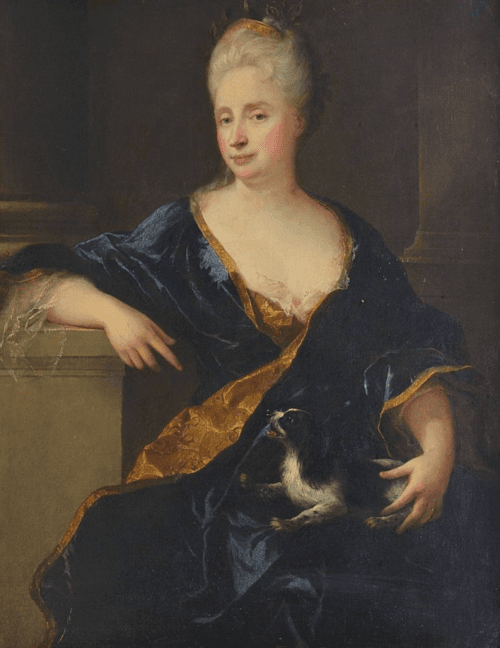
This imaginary interview was generated by artificial intelligence from sources documented in Denis Diderot's profile. It dramatises what the figure might have said based on what we know about them, but does not constitute attested historical testimony. For primary sources and factual documentation, refer to the full profile.