Imaginary interview with Denis Diderot
by Charactorium · Denis Diderot (1713 — 1784) · Literature · Philosophy · 6 min read
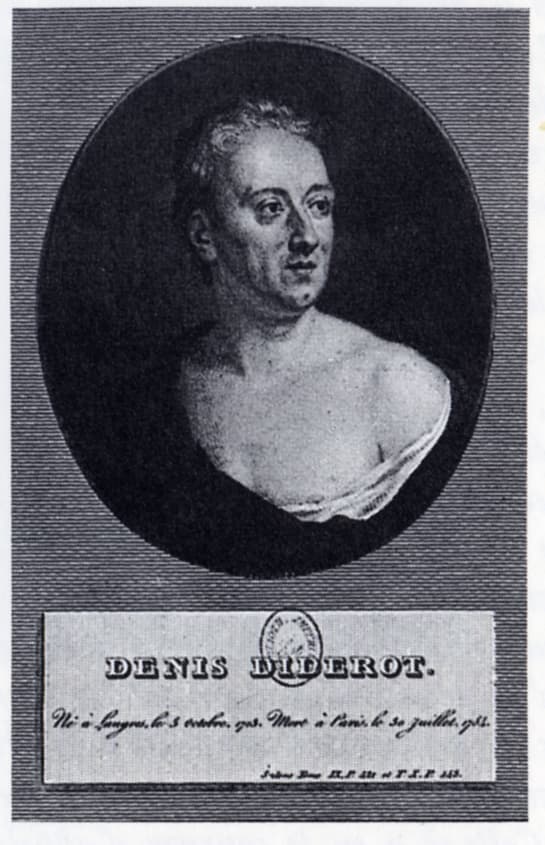
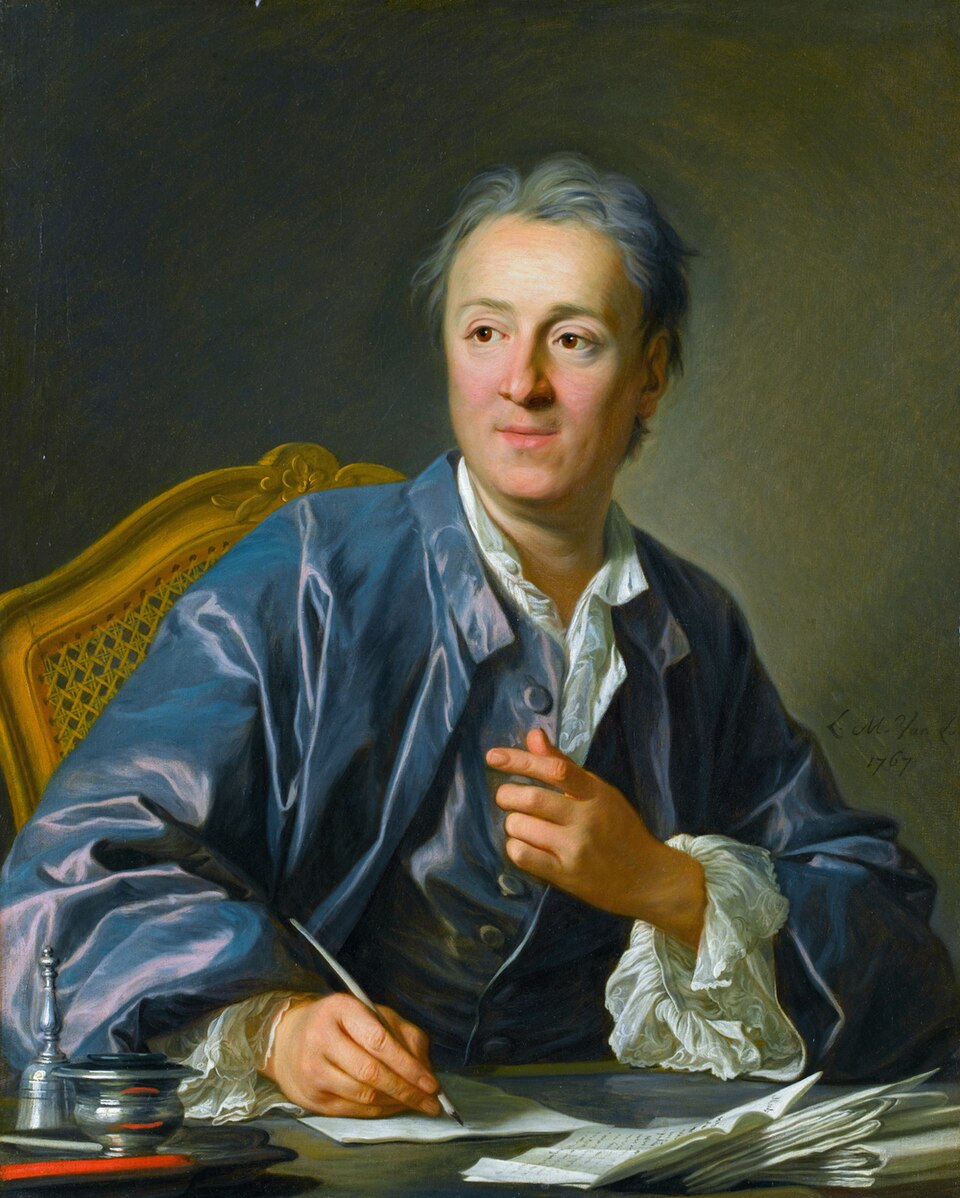
Paris, an evening in winter 1782. In a cluttered apartment filled with books and proofs in the Saint-Germain district, an old man in a threadbare dressing gown receives us, his face still lively beneath gray hair. Denis Diderot, who for twenty years carried the greatest intellectual enterprise of his century, agrees to look back on a life spent between the dungeon and the palace of the tsars.
—How would you describe the ambition that sustained you during those twenty years of the Encyclopédie?
When d'Alembert and I began in 1751, people thought we were merely translating an English dictionary. What naivety! From the Prospectus of 1750, I had written what I truly wanted: 'to gather the scattered knowledge on the surface of the earth, to set forth its general system to the men with whom we live, and to transmit it to the men who will come after us.' Do you understand? Not a book, but a legacy. Twenty-eight volumes, engraved plates showing even the last gesture of the turner and the cutler. I wanted an artisan from Langres to find his craft drawn with as much care as a theologian seeks his doctrine. It was insolent, I know: to bring the commonness of manual labor into the temple of knowledge.
Not a book, but a legacy transmitted to the men who will come after us.
—It is said that you yourself wrote the technical articles. Why go down into the workshops?
Because one does not write about what one has not seen with one's own eyes or touched with one's own hands. The son of a cutler, I grew up to the sound of the grindstone; I knew that an armchair scholar will say any nonsense when speaking of a trade he ignores. So, in the afternoons, I would leave my desk covered in manuscripts and go sit with the maker of silk stockings, with the cutler, and I would have them repeat their gestures twenty times until the machine became clear in my head. I wrote thousands of articles that way. People laughed to see me questioning workers as one questions philosophers. But the knowledge of a man who knows how to rivet a blade is worth that of a doctor at the Sorbonne.
The knowledge of a man who knows how to rivet a blade is worth that of a doctor at the Sorbonne.
—Do you remember the moment when they came to arrest you, in 1749?
One does not forget it. I had published my Letter on the Blind for the Use of Those Who See, where I had a dying blind man say this terrible thing: 'If you want me to believe in God, you must make me touch him.' That was enough. A lettre de cachet — a paper signed by the king, without trial, without judge — and I was locked up for three months in the dungeon of Vincennes. The stone sweated dampness. At first I thought I would stay there for years. It was there that I measured the cost of a too-free phrase in a kingdom where censorship watches over souls like a jailer over his keys.
I measured the cost of a too-free phrase in a kingdom where censorship watches over souls.
—What remains of the visits you received within those walls?
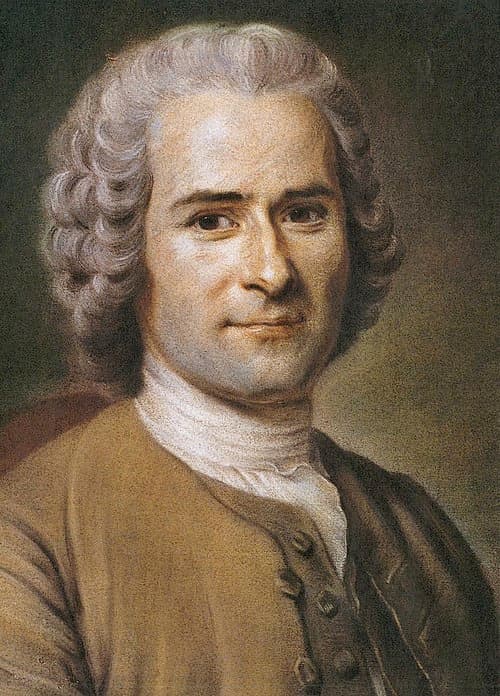
One, especially. Jean-Jacques Rousseau came on foot from Paris to Vincennes to see me; the road is long, and he walked with a book in hand to relieve boredom. It was on that very road, he said, that he received an illumination while reading the question from the Academy of Dijon — and from that shock was born his Discourse on the Sciences and Arts. Think of the strangeness: my imprisonment gave birth to my friend's glory. We were then two brothers in ideas. The cold of that cell warmed a friendship that later, alas, cooled for other reasons. But on that day, seeing a familiar silhouette cross the door was worth all the liberations.
—How did an empress of Russia become your patron?
Through the most singular generosity. I needed money for my daughter's dowry, and I was about to sell my library — a philosopher selling his books is a bit like selling his blood. Catherine II learned of it. She bought my entire library, but left it with me, in Paris, and appointed me her librarian with an annual salary to keep my own books! Have you ever heard of more ingenious patronage? A sovereign two thousand leagues away paying a man to keep what she bought and which he continues to read every evening. I was so touched that in 1773, despite my age and my horror of travel, I set off for Saint Petersburg to present my gratitude.
A sovereign two thousand leagues away paying me to keep my own books.
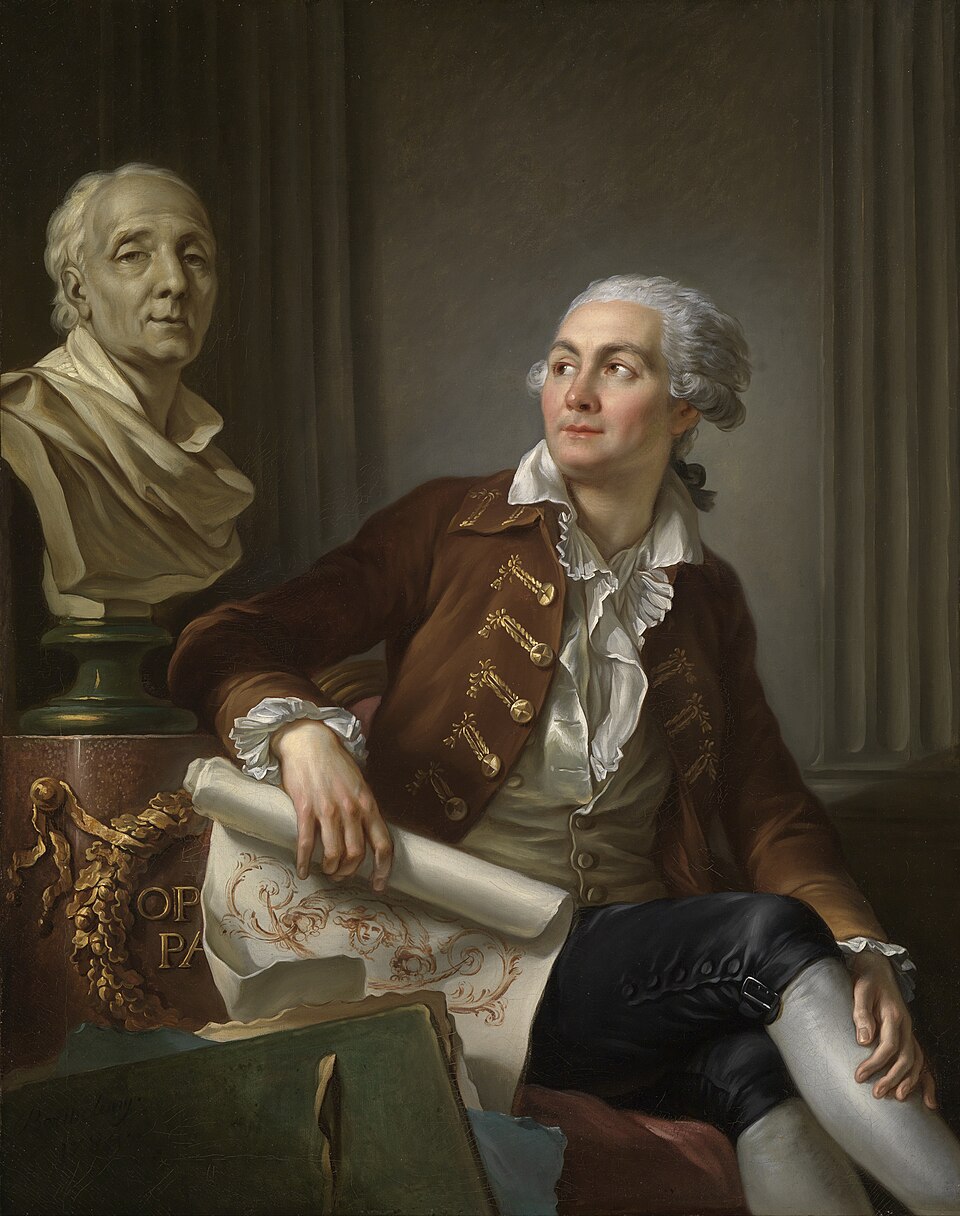
—What do you remember of your conversations with her at the Hermitage Palace?
Wonderful hours, and an affectionate reproach I do not forget. We talked every day at the Hermitage Palace, freely, as two minds and not as a subject and his princess. The trouble is that I get heated while speaking: to emphasize my arguments, I had taken the habit of slapping my interlocutor's thigh with the flat of my hand. Now my interlocutor was the empress of all the Russias! She was greatly amused and later confided that she ended our sessions with her thighs covered in bruises. See the man I am: unable to keep my hands still when my mind gallops. In Saint Petersburg, I spoke of everything — laws, theater, the people — with a frankness that, I believe, few dared approach.
Unable to keep my hands still when my mind gallops — even before an empress.
—Why did you keep in your drawers works you considered your best?
Because a man who has known the dungeon of Vincennes learns prudence. My Rameau's Nephew, that dialogue where a cynical bohemian holds up a mirror to the philosopher's own cowardice, I wrote and rewrote for years without ever delivering it to the printer. Too much wit bites society for it to forgive me during my lifetime. Likewise Jacques the Fatalist, where I amuse myself by breaking all the rules of the novel and asking whether we are truly free or whether everything was 'written up above'. These pages I destined for readers I would never see. Writing for the dead to come is still the purest freedom: no censor can reach you there.
Writing for the dead to come is still the purest freedom.
—In D'Alembert's Dream, you attribute a surprising life to matter. What vision of the world do you defend there?
The one that earned me the most frightened looks. In D'Alembert's Dream, written in 1769, I let my friend rave aloud a truth I believe profound: 'All beings circulate into one another... everything is in perpetual flux... Every animal is more or less a man; every mineral is more or less a plant; every plant is more or less an animal.' You see where I am going: no tight boundary between stone, plant, and us. A single matter, sensitive, endlessly transforming. No need for a soul imposed from outside to explain thought. It is materialism, yes, and I know what that word makes tremble. But I prefer a living nature to a universe of puppets pulled by invisible strings.
A single matter, sensitive, endlessly transforming.
—They say a simple dressing gown inspired an entire essay. What happened?
A foolishness, and that is why it taught me so much! I was given a new dressing gown, sumptuous, scarlet. I threw away my old worn gown, my companion of so many nights of writing, the one that suited all my postures and reproached me nothing. Well, the new one made me unhappy! Next to it, my old armchair looked miserable; I replaced it. Then the table, then the engraving on the wall. In wanting to be worthy of my gown, I had let luxury invade my philosopher's study. I drew from it my Regrets on My Old Dressing Gown, where I laugh at myself: see how a free man lets himself be enslaved by a silk rag.
See how a free man lets himself be enslaved by a silk rag.
—Behind the tireless encyclopedist, what man do your letters to Sophie Volland reveal?
A man who loves, quite simply, and who never knew how to hide it. To Sophie Volland, I wrote for years, by candlelight, after my days of workshops and salons — that of the Baron d'Holbach, where we remade the world between glasses of burgundy. I told her things quite nakedly: 'I cannot live happily or peacefully when I am far from you.' The man who arranges all human knowledge in twenty-eight volumes remained, before this woman, disarmed like a schoolboy. That is perhaps my truth: I devoted my life to the Encyclopédie, to reason, to system — and my heart, it, never obeyed any article or any method.
The man who arranges all human knowledge remained, before her, disarmed like a schoolboy.
Read further
This imaginary interview was generated by artificial intelligence from sources documented in Denis Diderot's profile. It dramatises what the figure might have said based on what we know about them, but does not constitute attested historical testimony. For primary sources and factual documentation, refer to the full profile.