Kids interview Denis Diderot
by Charactorium · Denis Diderot (1713 — 1784) · Literature · Philosophy · 5 min read
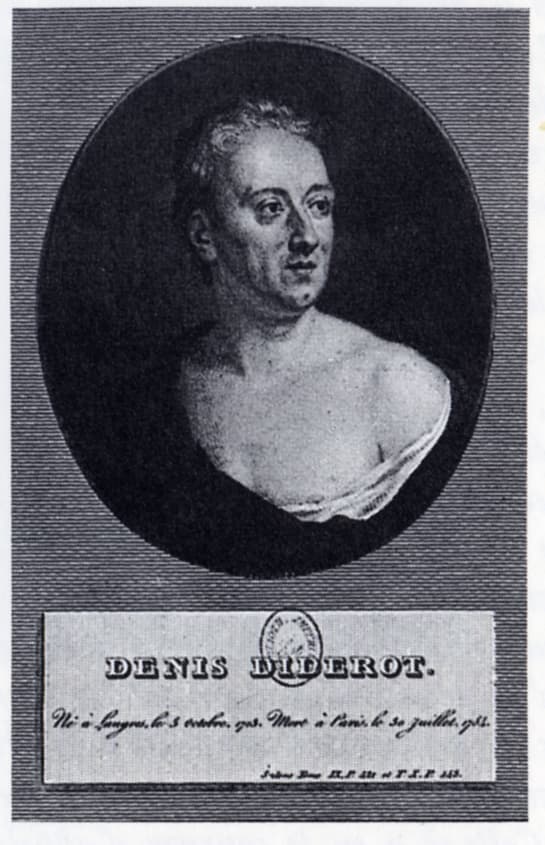
That morning, two young visitors of twelve years old push open the door of a study cluttered with books and manuscripts. An old gentleman in a dressing gown welcomes them with a big smile. He directed the biggest book in the world, and he is very happy to be questioned.
—Is it true that you wrote the biggest book in the world?
Almost, my child! The Encyclopédie had twenty-eight volumes. Imagine a stack of big books taller than you, where we tried to gather all human knowledge. I worked on it for more than twenty years, from 1751 to 1772. An encyclopedia, you see, is a great dictionary that explains everything: sciences, arts, trades. I myself wrote thousands of articles. Some on very simple things, like making a knife or weaving a silk stocking. It was an ant's work, but what an adventure!
We tried to gather all human knowledge in a single work.
—How did you explain trades you didn't know?
Good question! I didn't stay sitting at my desk inventing. In the afternoon, I went to see the artisans in their workshops. Picture me leaning over the shoulder of a cutler or a stocking maker, watching their hands move. I noted everything, every gesture, every tool. Then engravers made beautiful plates, very precise images, so you could understand the work just by looking. You know, my father was a cutler in Langres. So the knife trade, I knew that since I was little!
To explain a trade well, you must first go and see it with your own eyes.
—Did you really go to prison? But why, you didn't steal anything!
No, I didn't steal anything. I had only written a book, the Letter on the Blind, in 1749. In it, I asked too many questions about God and the world. This displeased the powerful. So they locked me up in the donjon of Vincennes, a big stone tower, for three months. At that time, the king could imprison you without trial, with a simple paper called a lettre de cachet. Imagine: you write what you think, and hop, they lock you up. I was scared, yes. But I never stopped thinking.
They can lock me in a tower, but not lock up my ideas.
—When you were locked up, did anyone come to see you?
Yes, and it was my friend Jean-Jacques Rousseau. He walked the long road to Vincennes to keep me company. Imagine him walking for hours on dusty paths, under the sun, just to chat with me through the walls. And guess what? One day on the way, a great idea came to him, like a flash. That idea became a famous book. You see, even a prison can give birth to beautiful things. Friendship, my child, crosses the thickest walls.
Friendship crosses the thickest walls.
—Is it true that a queen bought all your books?
An empress, even! Catherine II of Russia. Here's the story: my daughter was getting married, and I needed money for her dowry. So Catherine bought my entire library. But the funniest part is that she let me keep my books at home, in Paris! And on top of that, she paid me to watch over them, like a guardian. Imagine: someone buys your treasure, and then says 'keep it, and I'll pay you for it.' What an amazing woman! Thanks to her, I never lacked money again.
Someone bought my books, then paid me to keep them at home.
—And afterwards, did you go see her in person, the queen of Russia?
Yes! In 1773, I made a very long journey to Saint Petersburg, way up in the cold. Imagine weeks in a carriage on frozen roads, to meet the empress. We talked every day at the Winter Palace, for hours. And you'll laugh: when I got excited in discussion, I had the habit of slapping her thigh to emphasize my ideas! The poor woman later said her legs were covered in bruises. Luckily, it made her laugh a lot. I never knew how to talk without moving my hands.
I slapped the empress's thigh because my ideas carried me away.
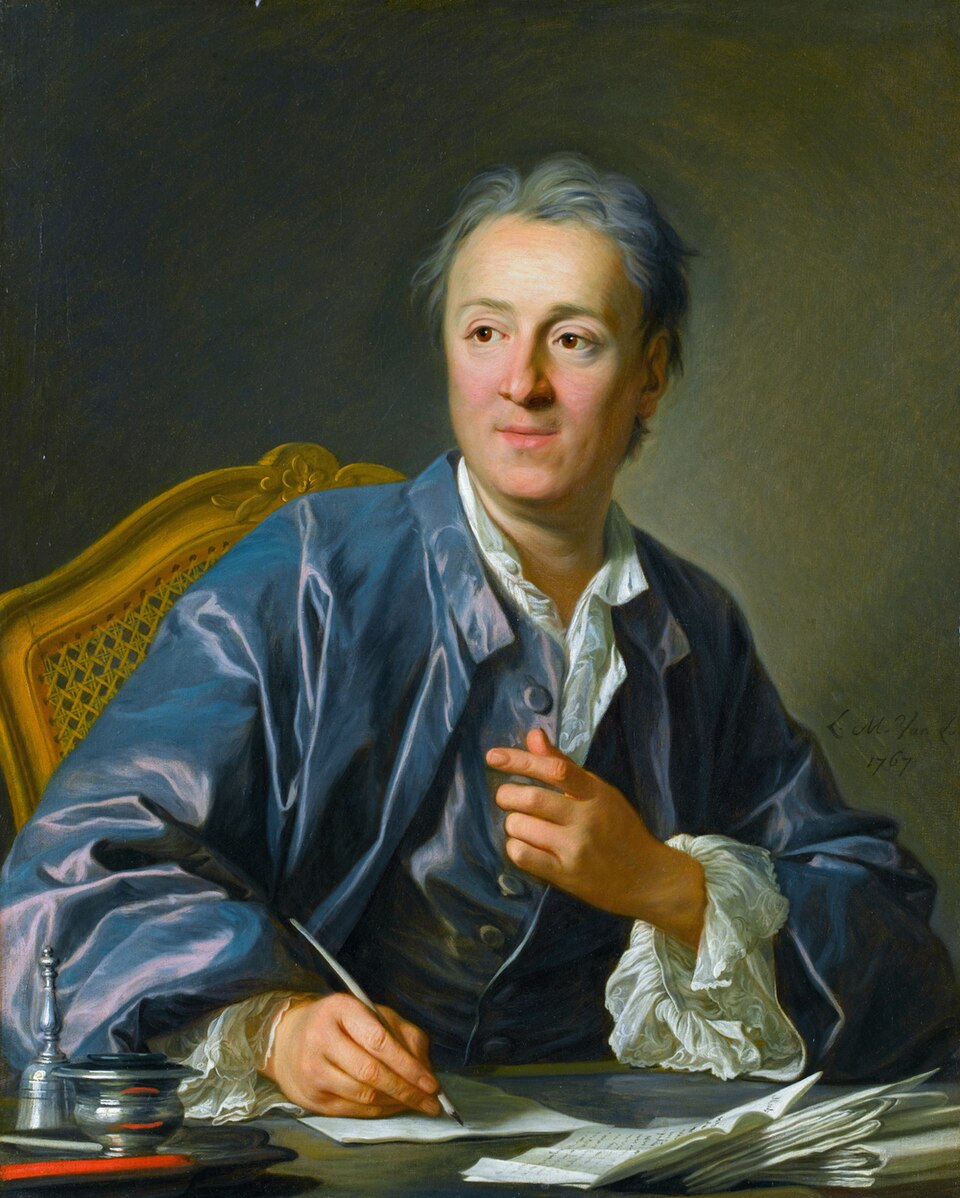
—What did you eat in the morning, and did you get up early?
Early? Oh no, my child! I often stayed up part of the night writing, by candlelight. So in the morning, I got up late. My breakfast was very simple: a good hot coffee, the favorite drink of us thinkers. Then I read my mail and the proofs of the Encyclopédie. And you know what I wore? My old dressing gown, worn but soft, over my shirt. I felt like in a nest. I loved it so much that I wrote a text just for it!
My old dressing gown was like a nest where I felt free.
—You wrote a text about a dressing gown? Why?
That seems funny, huh? Here's why: someone gave me a new dressing gown, very beautiful, and I threw away my old one. Well, I was unhappy! The new one was so elegant that next to it, my armchair, my table, everything seemed ugly and poor. So I wanted to change all my furniture to match it. You see the trap? One single new object, and you're never satisfied again. I wrote about that in a little essay, Regrets on My Old Dressing Gown. It was my way of gently making fun of myself.
One single new object, and you're never satisfied with anything.
—What did you do in the evening? Did you have friends?
Many friends, yes! In the evening, I went to supper at Baron d'Holbach's, in his salon. A salon was a large room where people gathered to discuss, laugh, and remake the world. Imagine a long table, Burgundy wine, and philosophers all talking at once about science and freedom. We feasted on ideas as much as on good food! And there was also a lady, Sophie Volland, to whom I wrote tender letters. Far from her, I was never quite happy.
At my friends', we feasted on ideas as much as on good food.
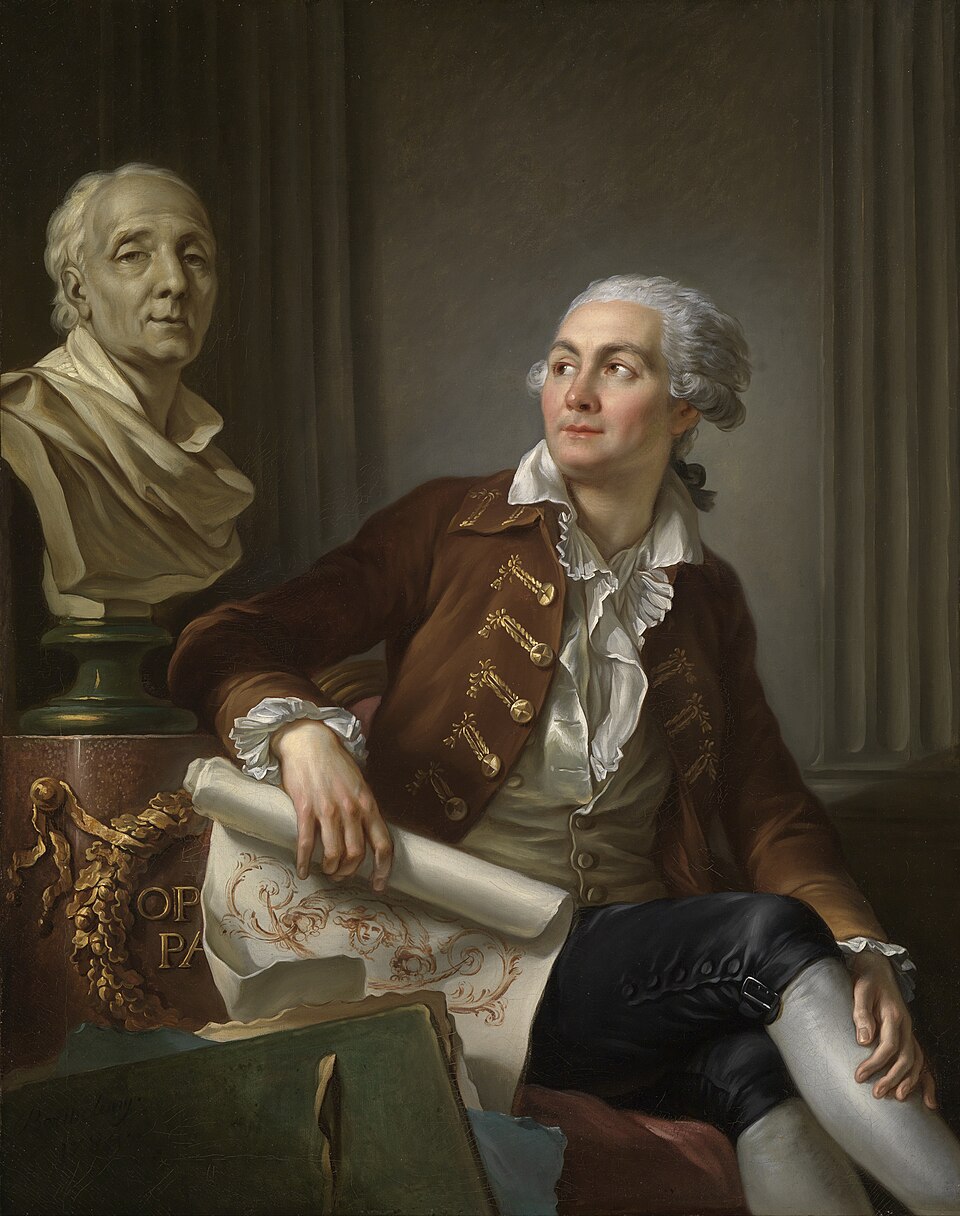
—What's your craziest idea about the world?
Ah, hold on! I thought that everything, absolutely everything, is made of the same matter in motion. Stone, plant, animal, you, me: the same big family! I liked to say that every animal is a bit human, every plant a bit animal, every stone a bit plant. Imagine a huge river where things constantly transform into each other. I put this idea in a book, D'Alembert's Dream, in 1769. We call it materialism: believing that only matter exists. That was very bold for my time!
Stone, plant, animal, and you: the same big family in motion.
—Did you believe in God? Because you were punished for that.
Let's say I asked many questions, and that scared the powerful. In my Letter on the Blind, I explained that we know the world mainly through our senses: touch, sight, hearing. So I said that to convince me, you had to make me touch things, not just tell me about them. You understand, I wanted proof, like a curious little scientist. This way of thinking by reason rather than habit is the heart of what was called the Enlightenment. We wanted to enlighten minds, banish ignorance as we banish the night.
I wanted to touch the world to understand it, not just have it told to me.
—And your great book, does it still exist today?
Yes, and it's my greatest pride! When I started the Encyclopédie, I wrote in the very first text that we wanted to gather the scattered knowledge on earth and pass it on to those who would come after us. Well, my child, those who come after are you! The authorities tried to ban the book in 1759, but I continued in secret. Imagine a treasure someone tries to snatch from you, and you hide it to save it. Today you can still open it. That is what lasts longer than a king: a book.
That is what lasts longer than a king: a book.
Read further
This imaginary interview was generated by artificial intelligence from sources documented in Denis Diderot's profile. It dramatises what the figure might have said based on what we know about them, but does not constitute attested historical testimony. For primary sources and factual documentation, refer to the full profile.