Imaginary interview with Dionysus
by Charactorium · Dionysus · Mythology · 7 min read
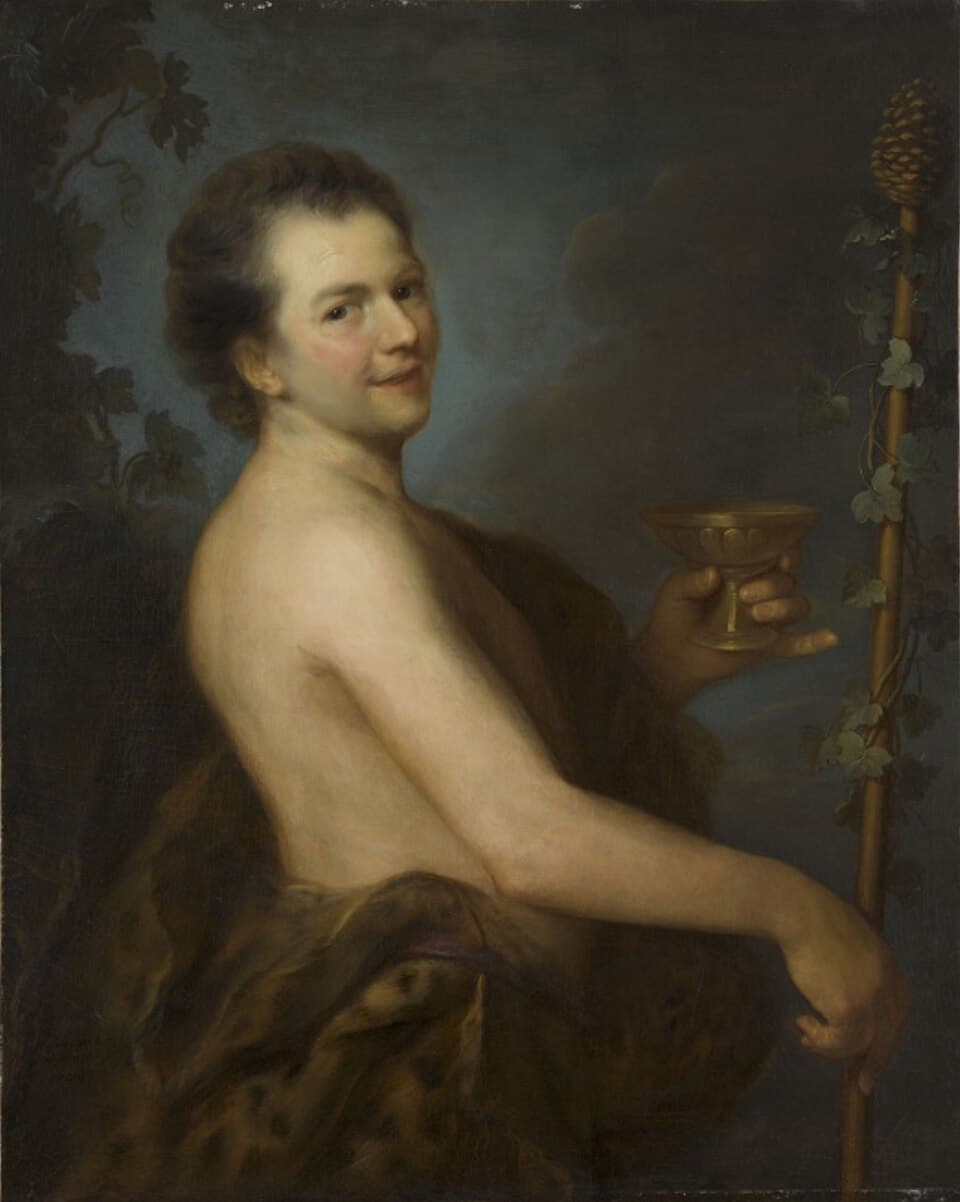
On the slopes of Mount Nysa, as dusk thickens the shadow of the vines, a man with an ivy crown receives us, a kylix in hand, panthers lying at his feet. His voice is both soft and unsettling, like wine cut with water. He agrees to speak of his birth, his festivals, and those who had the misfortune to close their doors to him.
—They say you came into the world twice. How did that happen?
My mother Semele was mortal, a daughter of Thebes, and she wanted to see Zeus in his full glory. You do not look lightning in the face: she was consumed, and I was still but a breath in her womb. My father sewed me into his own thigh, and there, against the flank of the king of the gods, I finished ripening like a grape in the sun. That is why I am called the twice-born. I know the fire that kills and the flesh that incubates—I knew death before milk. No other Olympian bears this double incision. It made me god of what dies and is reborn: the vine pruned to the ground that grows back, the intoxication that undoes a man and returns him in the morning.
I knew death before milk: you do not look lightning in the face.
—Who raised you, since your mother was gone?
The nymphs of Mount Nysa, far from the eyes and the wrath of Hera, who never forgave my father his mortal love. I was hidden in the folds of the wild mountain, fed on honey and fresh waters, cradled by those who would later become my retinue. It was there, I think, that everything was decided: a god raised not in a marble palace but in the brush, among beasts and springs. I grew up between two worlds—that of walled cities and that of forests where one obeys only the sap. From this fugitive childhood comes my taste for what overflows, for thresholds crossed at night. I was not taught to rule; I was taught to wander, and it is by wandering that I carried the vine from one end of the world to the other.
A god raised not in a marble palace but in the brush.
—What does this gift of wine, which men attribute to you, mean to you?
Before me, the grape hung on the vines without anyone knowing that a sun slept inside it. I showed men how to tread the grape, to let the must bubble in the amphora until it changed its nature—just as I myself changed my nature in my father's thigh. It is not only a drink that I gave them, it is a passage: from the wild fruit to the shared cup, from the solitary beast to the man who drinks with his neighbor. See this thyrsus in my hand, this staff topped with ivy and pine cone—it says that the sap rises wherever I pass. Wine loosens tongues and removes the masks that cities stick on faces. Drunk in measure, mixed with water in the kylix, it brings mortals closer to the gods. Drunk without measure, it returns them to their madness. Both are my work.
Wine is a passage: from the wild fruit to the shared cup.
—Why are you always surrounded by ivy and animal skins?
Ivy twists and climbs where the vine loses its leaves in winter: it stays green when everything dies, and it is my emblem of what does not end. My followers crown themselves with it in processions, for wearing ivy is wearing a bit of my immortality. As for the leopard skin I throw over my shoulders—or panther, depending on the day—it says who I am: a god who commands wild beasts, who walked to the ends of the East and brought back tigers hitched to my chariot. Civilized man fears the beast; I wear it on my skin. This spotted pelt is the sign that I hold together the two halves of the world: the city and the forest, the banquet table and the mountain where one howls. They do not adorn me with royal purple. They adorn me with leaves and fur.
Civilized man fears the beast; I wear it on my skin.
—How did your cult become this art called theater?
It all begins with song. My followers gathered to intone the dithyramb, that frenzied chant in my honor, where the khoros danced in a circle and celebrated my sufferings and joys. Then one day, in Athens, someone stepped away from the chorus and spoke alone, as if he were someone else: the first actor was born, and with him tragedy. At the Great Dionysia, this festival dedicated to me for generations, thousands of citizens sit at the foot of the Acropolis to watch masked men become kings, gods, suppliants. The mask is my object par excellence: it allows one to no longer be oneself, to lose oneself in order to better speak the truth. Drinking and acting belong to the same mystery—both tear you away from your ordinary face. That is why theater is mine: it is intoxication made visible, framed by the tiers.
The mask allows one to no longer be oneself, to lose oneself in order to better speak the truth.
—Do you ever appear yourself in these plays performed for you?
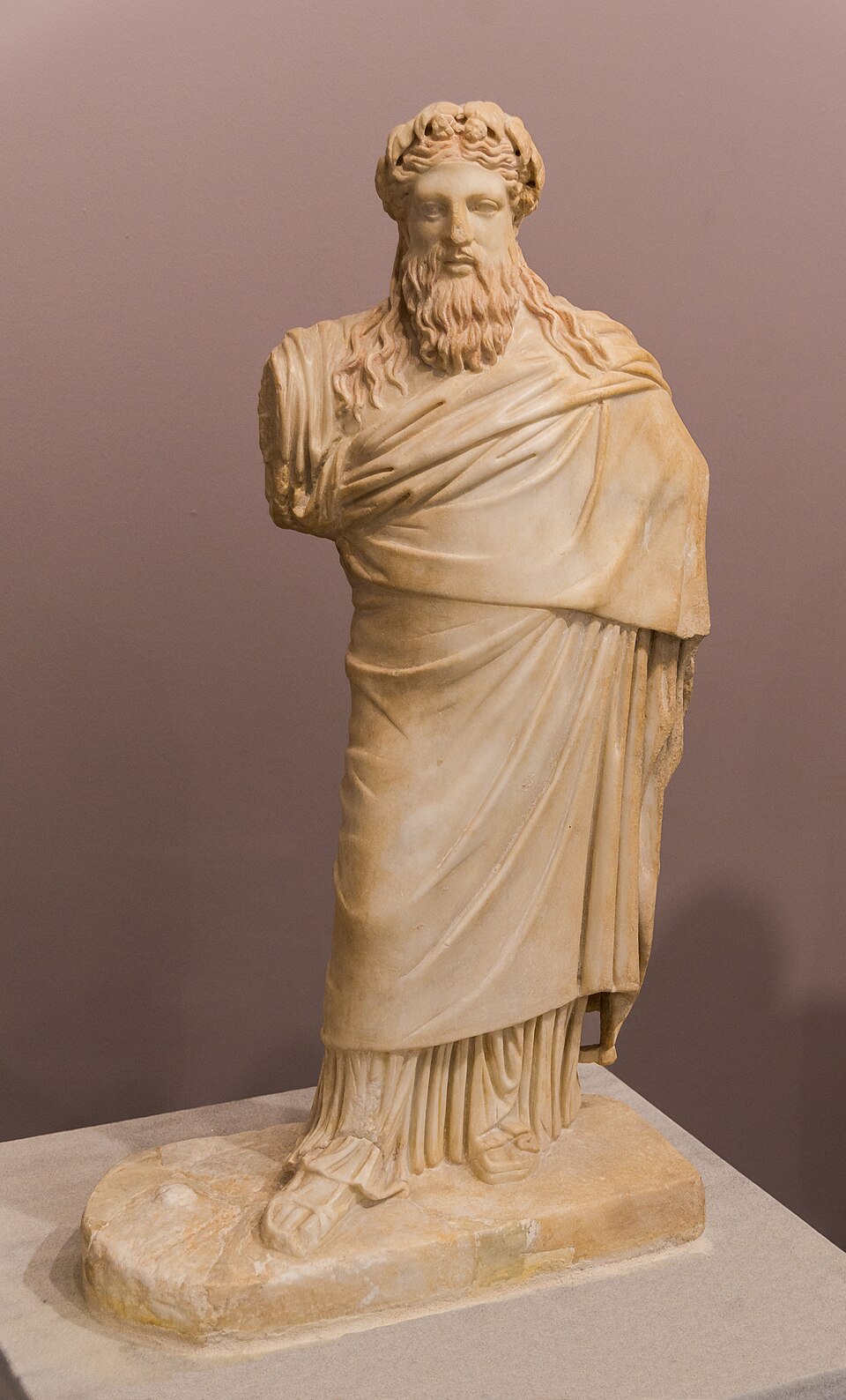
More often than one might think. Poets love to put me on stage, for I am the god who presides and the character who descends into the action. Aristophanes, in his comedy Frogs, had me cross the river of the dead to bring a great tragedian back among the living—me, the god of theater, going to fetch theater all the way from the Underworld! That is like me: I never stay on my throne. At the Dionysia, authors compete, their choruses clash, and that too is part of my cult. I am honored not by silence but by contest, laughter, feigned tears that draw real tears. I love that my festival is a battle of words as much as a sacred drinking bout. The poet who honors me best is not the one who flatters me, but the one who dares to bring me down into the mud of the stage.
I never stay on my throne.
—You are also described as a fearsome god. What does one risk by refusing your cult?
Ask Pentheus, king of Thebes, my own city. He wanted to suppress my cult, to call the women who went up the mountain mad, to deny me the title of god. I did not strike him with lightning—that is not my way, I leave that to my father. I took him where he was weak: his curiosity. I led him to spy on my maenads in the folds of Mount Cithaeron, and there, seized by the trance I send them, they saw him not as a man but as an animal to be flayed. His own mother led the pack. One does not refuse the god who undoes reason: one yields to him, or reason leaves you through the worst door. I do not like to punish. But the one who closes his door to me does not understand that I do not enter through the door—I enter through blood, through sap, through frenzy.
I do not enter through the door—I enter through blood, through sap, through frenzy.
—Who are these women who follow you into the mountain, and what do they seek?
They are called maenads, or bacchants, and they form my thiasoi, those processions of faithful who leave the spindle and the hearth to follow me into the wild. The city confines women; I, one night each season, release them. They climb to the peaks, the tympanon beating in the hollow of their hand, the thyrsus in their fist, and divine possession seizes them: they dance to exhaustion, suckle fawns, uproot trees with bare hands. Those who see them from afar tremble and speak of madness. It is not madness—it is my presence in them, the moment when the boundary between human and divine tears open. In the morning, they come back down and become wives and mothers again, but they have touched something that the walls of Thebes will never give them. That is what they seek: to step out of themselves so as, for a moment, to belong to me.
The city confines women; I, one night each season, release them.
—Let's talk about Ariadne. How did you meet her on the shore of Naxos?
She was sleeping on the sand of Naxos, abandoned. The man she had saved from the labyrinth had put back to sea without her, leaving her to the seagulls and the salt. I came, I who always wander, and I found her there, her face still wet with tears. The other gods would have passed by—a betrayed mortal, what does that weigh? But I, who was born of a mortal struck by lightning, I know the price of a woman left alone to face her destiny. I married her. I did not only console her: I raised her to the rank of the immortals, I threw her crown into the sky where it still shines among the stars. Everything I touch changes nature, you will have understood—the grape into wine, the mortal into god. Ariadne asleep on a deserted shore woke up a goddess at my side.
Everything I touch changes nature: the grape into wine, the mortal into god.
—That gesture toward Ariadne seems very tender for a god said to be terrible. How do you reconcile the two?
Because I am both, and no one has ever managed to place me on one side only. The same god who delivers Pentheus to his mother lifts Ariadne from the sand of Naxos: there are not two Dionysuses, there is only one. The wine that gladdens weddings is the wine that drives mad; the trance that elevates can also tear apart. I embody what the sages of Athens fear most: that one cannot neatly separate sweetness from violence, civilization from intoxication. Those who honor me accept this; they drink mixed with water, they dance and go home. Those who refuse me want a world without excess—and it is that world that breaks, never mine. Tender with those who surrender, terrible with those who close themselves: it is not a contradiction, it is my law. The grape is sweet and the press crushes it; both are needed for there to be wine.
The grape is sweet and the press crushes it; both are needed for there to be wine.
This imaginary interview was generated by artificial intelligence from sources documented in Dionysus's profile. It dramatises what the figure might have said based on what we know about them, but does not constitute attested historical testimony. For primary sources and factual documentation, refer to the full profile.