Imaginary dialogue between Ariane and Dionysus
by Charactorium · Dionysus · Mythology · 6 min read
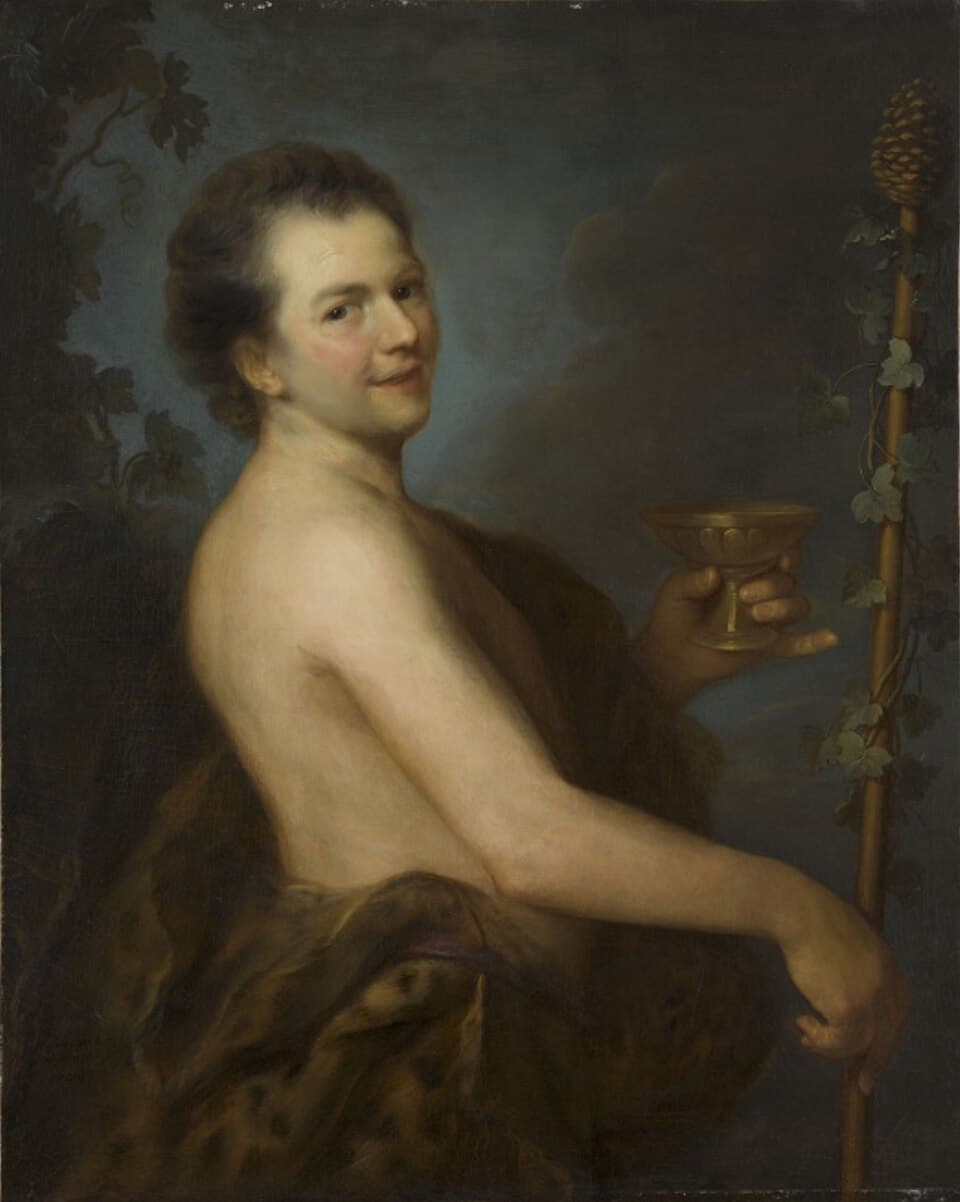
It is on the heights of Naxos, where the vine slopes down to the sea, that Ariadne meets Dionysus one evening at harvest time. The new wine ferments in the jars, and the scent of must mingles with the salt of the Aegean. She was the mortal abandoned on this same shore, whom he raised up and made a goddess; she comes tonight to question him not as a suppliant but as a wife, to hear the being behind the god. In the distance, the tympanon of the maenads still echoes in the warm night.
—You who are said to be born twice, Dionysus, tell me: how does a god come into the world by lightning and then by his father's thigh?
My mother, Semele, wanted to see Zeus in his full glory, and the lightning consumed her while she carried me. My father snatched me from the flames, still unfinished, and sewed me into his own thigh to carry me to term. So I was born of a mortal woman, then of a god — from fire, then from divine flesh. Understand, Ariadne, what this means for the one who speaks to you: I know death through my mother and immortality through my father. That is why I rule over what dies and is reborn: the pruned vine that greens again, the initiate who passes through darkness to emerge. Those who celebrate my mysteries seek to experience what I lived: to cross the threshold and return.
I know death through my mother and immortality through my father.
—And the child taken from Zeus's thigh, where did he grow up? They whisper the name of Mount Nysa, far from the sight of the gods.
The king of the gods entrusted me, an infant, to the nymphs of Mount Nysa, in a green valley that no mortal can name. Far from the wrath of Hera, who never forgave my father his love for a mortal, I was raised among springs and wild woods. These nymphs cradled me, and it was there, they say, that the vine first grew under my child's steps. I grew up between two worlds: neither fully on Olympus nor fully on the earth of men. From this hidden childhood I retain a taste for mountains and solitude, where my faithful still seek me, far from cities and their laws.
—You are credited with giving wine to men. What did you truly offer, that day, to those who knew only spring water?
I took the grape, a wild and bitter fruit, and taught men to crush it, to let the must ferment until it became something else. I gave not just a drink: I gave the passage from the raw state to civilization, from juice to sacred intoxication. Well measured, mixed with water at the banquet, my wine loosens tongues and brings men closer to the gods. Taken wrongly, it overwhelms them. Such is my law, Ariadne: every gift I give carries within it its measure and its excess. When a mortal raises the cup in my honor, he tastes a bit of that double nature which is mine. I do not bring oblivion; I bring transformation.
I do not bring oblivion; I bring transformation.
—In Athens, they erect theaters in your name and compete for crowns there. How did the god of wine become the god of spectacles?
Where my wine flows, song is born. First there were the dithyrambs, those hymns that my faithful chanted for me, drunk and possessed, dancing in a circle. Then a man stepped out of the chorus to respond, and drama was born. At the Great Dionysia, each year, the Athenians compete in tragedies and comedies in my honor, beneath my sanctuary, at the foot of the Acropolis. The actor puts on the mask — and who better than I, the twice-born, knows what it is to wear another face? On stage, the spectator trembles, weeps, purges his fears: he experiences what my maenads live in the mountains. Theater is my cult in a form the city can watch without perishing. I am the god who draws man out of himself.
Theater is my cult in a form the city can watch without perishing.
—Yet your gentleness has another face. In Thebes, King Pentheus refused you — and he ended up torn apart. Why this cruelty?
Pentheus did not merely refuse my wine: he denied my divinity, had me chained, sought to end my rites. He thought a king could imprison the god who sets free. So I let my power act: his own mother, Agave, caught in the frenzy I send, tore him apart with her hands, taking him for a mountain lion. Do you think I took pleasure in it? I am not cruel by choice, Ariadne: I am what I am, and to deny my nature is to call upon oneself the chaos I carry. Whoever welcomes me receives joy; whoever closes his door meets madness. Men would have me be only the festival. I am also the terror.
Whoever welcomes me receives joy; whoever closes his door meets madness.
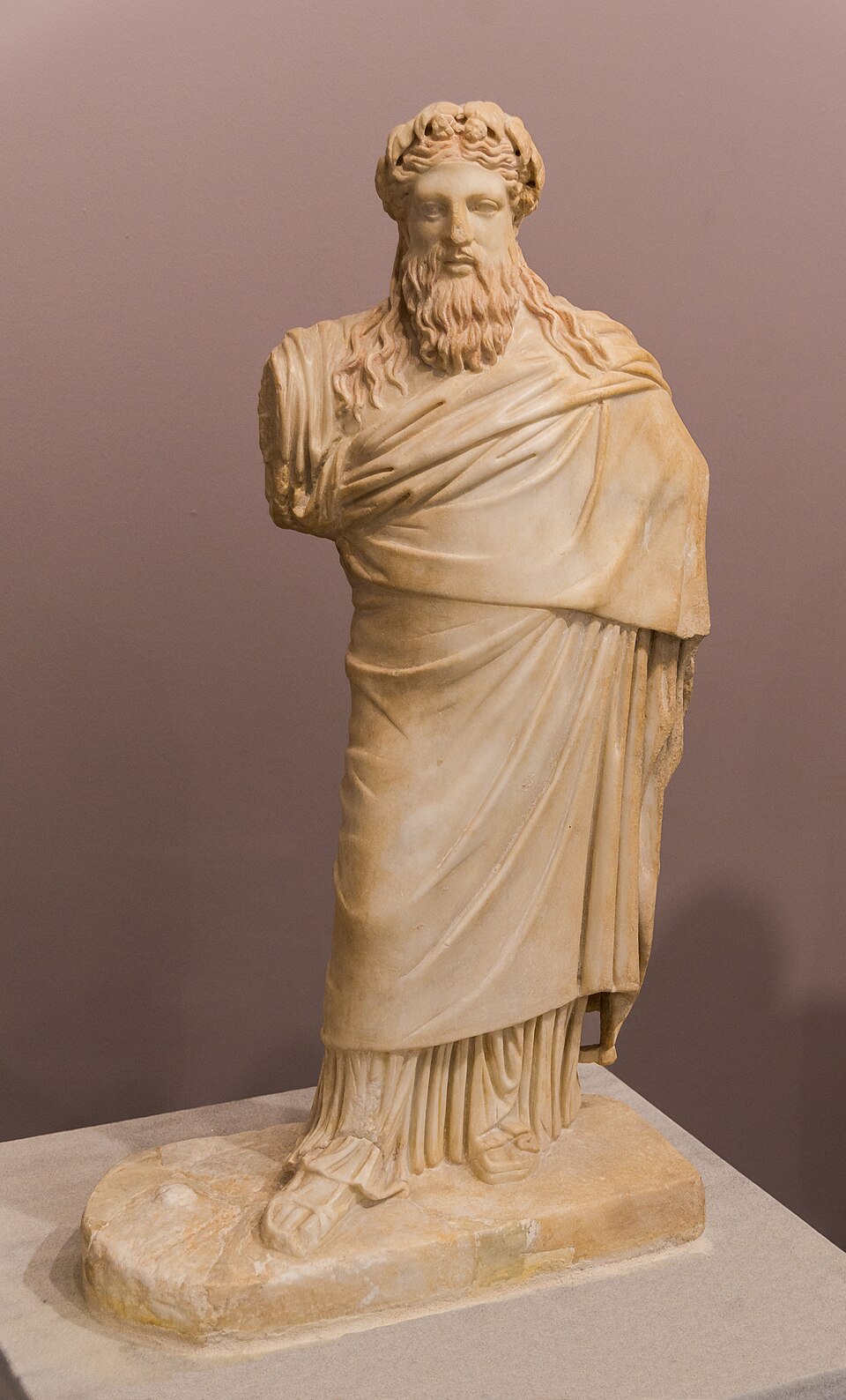
—They also tell of sailors who kidnapped you, thinking they held a mere youth. What happened to them on that ship?
Pirates seized me on a shore, taking me for a king's son they would sell as a slave. They did not know whom they held. On the deck, I made the vine spring up along the mast; wine flowed over the ship, wild beasts appeared, ivy entwined the oars. Seized with terror, the sailors threw themselves into the sea — and I changed them into dolphins, condemned to leap forever around hulls. Only the helmsman, who had guessed my nature and pleaded for me, was spared. You see, Ariadne: I do not take vengeance on ignorance, but on stubborn blindness. Recognize the god beneath the appearance, and you will be saved. Despise him, and the sea will take you.
—When I look at you, my husband, you resemble no other Olympian: the crowned staff, the fawnskin. What do these signs say?
Each of my attributes tells who I am. The thyrsus I carry — this staff topped with ivy and a pine cone — is not a weapon of war like the spear of Ares: it is the scepter of sap and fertility, and with one stroke it can make wine gush from rock. The ivy that crowns me does not die in winter: it speaks of my victory over the dead season. The panther skin on my shoulders says I rule over the wild beast as over man, over the savagery that sleeps in everyone. Where other gods sit enthroned, stiff and distant, I walk, surrounded by satyrs and maenads, the tympanon beating. My very body is a threshold between the order of the city and the fury of the woods.
My very body is a threshold between the order of the city and the fury of the woods.
—And this retinue that follows you everywhere, these women in trance, these leaping satyrs — why does a god choose such a following rather than a court?
My thiasos is not a court: it is a free family. The satyrs, half-men half-goats, carry within them desire and laughter without a mask; the maenads, these women I snatch for a moment from their homes and spindles, dance on the mountains, hair unbound, possessed by my breath. In the eyes of the cities, it is a scandal; for me, it is the truth of what I am. I did not want courtiers who bow: I wanted faithful who lose themselves and find themselves again in trance. The tambourine, the flute, the cry — that is my music. When you first saw me on this shore, Ariadne, it was this retinue that descended toward you, and you were not afraid. That is how I knew who you were.
—Let us speak of that shore, precisely. Theseus left me alone on Naxos, asleep, betrayed. What did you see when you approached me that morning?
I saw a mortal whom the hero had abandoned as one discards a thread that has become useless — you who had given him the thread to escape the labyrinth. You were sleeping, your face still wet with tears, and the sea was rising toward you. Other gods would have passed by: one more mortal, betrayed by a man. I, the twice-born, recognize those whom life has left for dead on the threshold — for I was one of them. I did not find you by chance, Ariadne: descending toward Naxos with my retinue, I felt that this shore bore someone who deserved to be reborn. What Theseus had abandoned, I chose to raise up. That is my true nature, more than wine and more than terror.
I recognize those whom life has left for dead on the threshold, for I was one of them.
—You did not content yourself with consoling me: you married me and made me a goddess. Why bind your immortal fate to a woman born mortal?
Because I myself was born of a mortal, Ariadne, and I have never despised the flesh that dies. Marrying you was not a favor granted from on high: it was recognizing in you an equal, you who had faced the labyrinth and betrayal without breaking. I placed your crown in the sky, among the stars, so that none would forget that the divine can raise the mortal to itself. Our union says what my entire cult promises to my initiates: that the threshold between men and gods is not a wall, but a passage. You knew abandonment; you now know immortality. Between the two, there was only a god who did not look away. That is our story — and it is, I believe, the greatest thing I have done.
The threshold between men and gods is not a wall, but a passage.
This imaginary interview was generated by artificial intelligence from sources documented in Dionysus's profile. It dramatises what the figure might have said based on what we know about them, but does not constitute attested historical testimony. For primary sources and factual documentation, refer to the full profile.