Kids interview Djibril Tamsir Niane
by Charactorium · Djibril Tamsir Niane (1932 — 2021) · Literature · Culture · Society · 5 min read
Two young visitors, on a school field trip, push open the door of an office full of books and manuscripts. An old historian in a grand boubou greets them with a smile. He sets down his cup and says: 'Come closer, I'll tell you how a griot gave me a king.'
—How old were you when you set out to find the story of Soundiata?
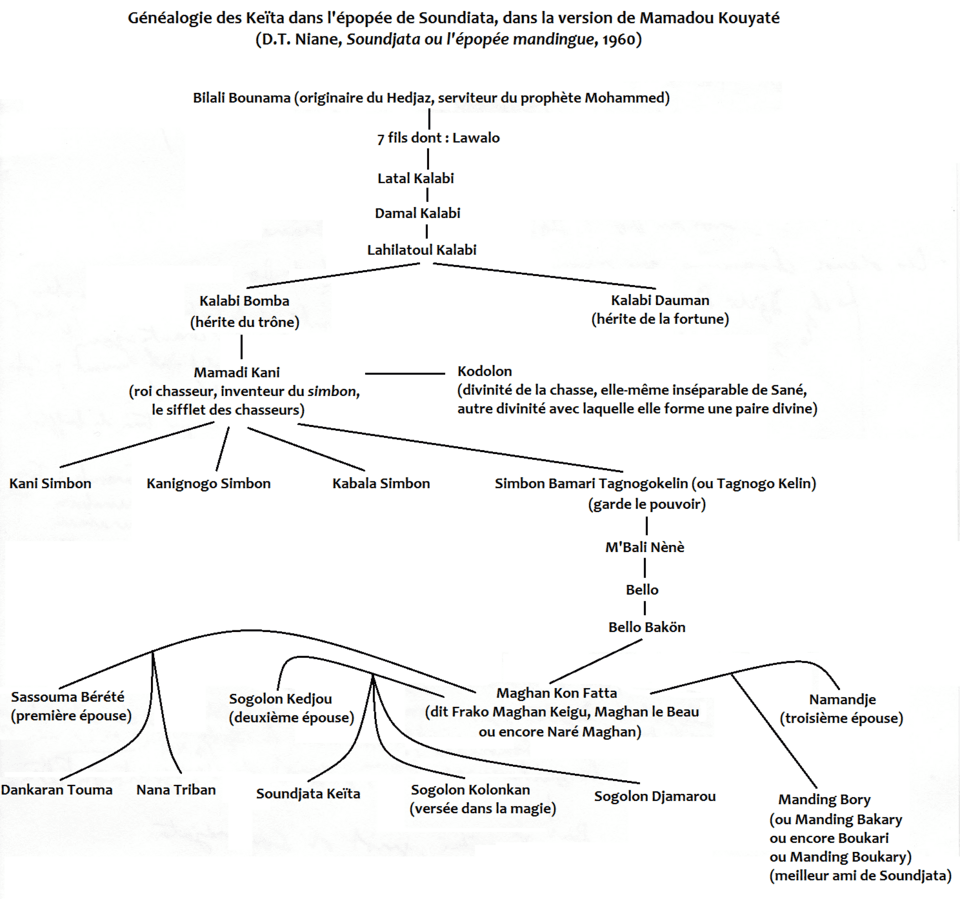
I was a young man, in the 1950s. I went to a region of Guinea called Hamana. There lived an old griot, Mamadou Kouyaté. A griot, my child, is a keeper of memory: he knows by heart the history of kings, passed down from father to son for a very long time. Imagine a man who carries an entire library in his head, without a single written page! He recited the epic of Soundiata Keïta, the king who founded the Mali Empire. And I listened, my heart pounding, writing down every word. I knew I was saving a treasure.
He carried an entire library in his head, without a single written page.
—How did you manage to remember everything while he spoke?
Good question! I didn't have a magic memory. I had two faithful friends: a field notebook and a tape recorder, a machine that recorded his voice. That way, I could listen again in the evening, over and over. The griot sometimes sang, accompanied by a kora, a very soft stringed instrument. Imagine a night gathering: night falls, crickets sing, and that voice telling of kings from eight centuries ago. I noted everything: names, silences, repetitions. Because every detail mattered. You don't collect a griot's words just any way: you listen with respect, as you listen to your grandfather.
You listen to a griot as you listen to your grandfather: with respect.
—Did people believe you when you said that a spoken story was true?
Not everyone, no! Many thought that a story told aloud was just a pretty legend. So I acted like a detective. When a griot told me a fact, I would go see another griot, in another village. I compared the two versions. If they were similar, that was a good sign! Then I checked with old Arabic manuscripts, written by travelers like Ibn Battuta in the 14th century. They too spoke of the Mali Empire. You see? Speech and writing echoed each other. I wrote all this in 1959, in my Recherches sur l'Empire du Mali au Moyen Âge. And I proved something important.
Oral tradition is not a legend: it is a real source of history.
—Why was it so important to prove that, deep down?
Because in my time, my child, some said that Africa had no history. Can you imagine? As if millions of people had lived without a past, without kings, without great cities! It was false, and it hurt me. By proving that the words of the griots were reliable, I gave back its history to an entire continent. I consulted the chronicles of Al-Umari, I cross-checked the accounts. And little by little, the truth emerged: powerful empires had existed here, Ghana, Mali, Songhai. Proving that wasn't just a scholar's work. It was giving people back their pride.
Giving a people back its history is giving them back their pride.
—Your book came out in 1960, was that a special year?
Oh yes, a huge year! It's called the Year of Africa. In 1960, seventeen African countries became free, independent, in the same year. Imagine the joy: peoples who, overnight, govern their own country! And it was precisely that year that I published Soundjata ou l'épopée mandingue, with a Parisian publisher called Présence Africaine. It wasn't a coincidence, you know. I wanted to give these brand-new peoples a gift: proof that their ancestors had built great civilizations. A free people needs to know its roots. Otherwise, freedom floats in a vacuum.
A free people needs to know its roots.
—Were there other people defending Africa like you at that time?
Of course, I wasn't alone! It was a vibrant era. There was a great movement called Négritude. Poets like Aimé Césaire and Léopold Sédar Senghor celebrated the beauty of African cultures, with pride, against those who despised them. We knew each other, we read each other, we encouraged each other. Imagine a team: some wrote poems, I wrote history. Each with his own tools, but a common goal. We wanted to tell the whole world: look, Africa has a soul, a memory, a greatness. Together, our voices carried further than one alone.
Each with his own tools, but a common goal: to give Africa back its soul.
—What is that big work that UNESCO entrusted to you?
Ah, a very great honor! In 1978, a world organization, UNESCO, asked me to direct a giant book: Volume IV of the General History of Africa. It covered the continent from the 12th to the 16th century. Directing means being the team leader. I brought together historians from Africa, Europe, and America. Imagine scholars from three continents sitting around the same table, writing Africa's past together! We showed that Africa was not isolated: it exchanged, traded, dialogued with the whole world. The book was published in 1984. That day, I was very moved.
Scholars from three continents, writing Africa's past together.
—What was it like to be the leader of all those scholars?
It was fascinating, but not easy! You know, when many intelligent people work together, they don't always agree. My role was to listen to each one and find agreement. A bit like a master who cross-checks two griots to find the truth, remember? I had learned that in the field. Above all, I wanted one thing: for Africa to be told from within, by African voices, and not just seen from afar. We wrote that these civilizations were part of a great exchange network linking the Sahara and the Sudan. It was the work of a lifetime, crowned before the whole world.
I wanted Africa to be told from within, by its own voices.
—Did children like us read your book at school?
Yes, and that made me happiest! After 1961, I wrote with a friend, Jean Suret-Canale, an Histoire de l'Afrique occidentale. A real textbook for high schools, told from an African point of view. Before, schoolbooks mostly talked about Europeans. Now, at last, young people learned the history of their own ancestors. And Soundiata also entered schools in many countries. Imagine thousands of students discovering that a king from their own land had built an empire! For me, having young people read this epic was giving them back a pride that colonization had sought to erase.
Having a child read his history is giving him back his pride.
—Did you also teach? What were your days like?
Yes, I taught at the University of Dakar, in Senegal, starting in the 1960s. My days were full! In the morning, very early, in the cool hour, I read and annotated my old chronicles. In the afternoon, I gave classes to my students, or wrote my books, transforming the griots' accounts into rigorous texts. And in the evening, sometimes, I went to gatherings where storytellers and musicians kept traditions alive. It was both my work and my happiness. My office overflowed with books and manuscripts. A whole life, my child, spent gathering Africa's memory, piece by piece, to pass it on.
I spent my life gathering Africa's memory, piece by piece.
—If you had one piece of advice to leave us, what would it be?
Listen to the elders, my children. Listen to your grandparents before they leave. Every elderly person who dies is like a library burning down. I spent my life chasing this precious word, among the griots of Guinea, to save it from oblivion. You don't need to go far: memory lives in your own family, in the stories told in the evening. Write them down, remember them. For a people who knows its past walks more steadily toward the future. I will soon depart, but Soundiata will continue to live. A well-told story never dies.
An elderly person who dies is a library burning down.
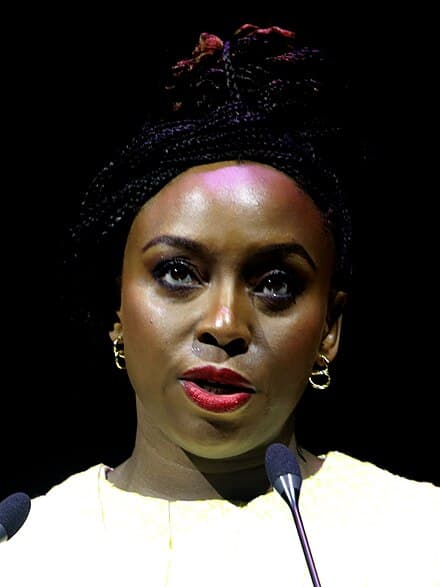
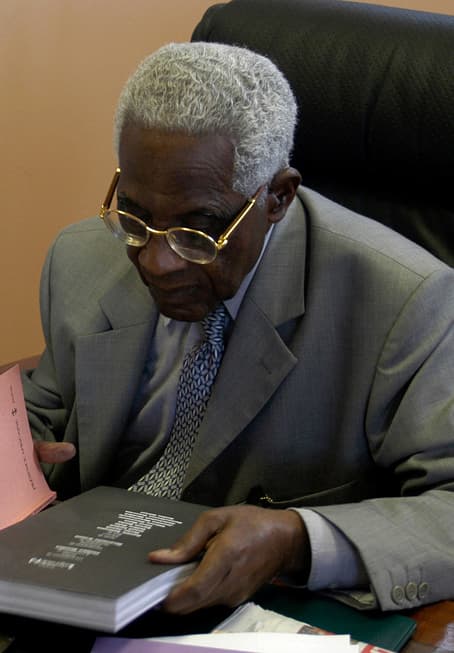
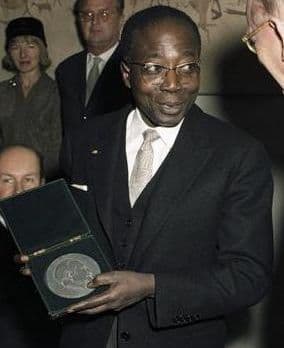
This imaginary interview was generated by artificial intelligence from sources documented in Djibril Tamsir Niane's profile. It dramatises what the figure might have said based on what we know about them, but does not constitute attested historical testimony. For primary sources and factual documentation, refer to the full profile.