Kids interview Edgar Allan Poe
by Charactorium · Edgar Allan Poe (1809 — 1849) · Literature · 4 min read
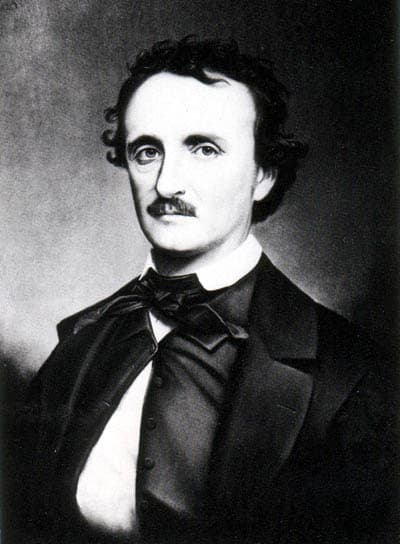
That morning, two young visitors of about twelve years old pushed open the door of a small wooden cottage lit by a single candle. A cat purred on a pile of crossed-out manuscripts. Edgar Allan Poe welcomed them, a tired smile on his lips, and agreed to answer all their questions.
—Who is the cat sleeping on your papers?
You know, my child, I write mostly at night, by the light of a single candle. And I have a companion: my cat Catterina, a little tortoiseshell. She climbs onto my shoulder and stays there, nice and warm, for hours. Imagine a silent room, where you can only hear the scratching of my quill on paper. Well, this sweet little animal gave me a terrible idea. In 1843, I wrote The Black Cat, the story of a man who harms his cat. It speaks of the dark side that sleeps inside each of us. Strange, isn't it, that such a gentle beast inspired such a dark tale?
—Is it true you married your cousin when she was thirteen?
Yes, it's true, and I know that may surprise you. In 1835, I married Virginia Clemm, my cousin. She was thirteen, I was twenty-seven. In my time, such things were less rare than one might think, even if many already found them astonishing. But know this: we loved each other tenderly. In the evening, in our modest home, she played the piano and sang for me while I wrote. I always kept a small portrait of her near me. Imagine a soft light in a house often poor and dark: she was that light.
—What happened when Virginia fell ill?
Ah... that is my deepest wound. We lived at the Fordham cottage, a small wooden house of four rooms, near New York. The winter there was freezing and our stove was not enough. Virginia, suffering from tuberculosis, shivered under the blankets, and our cat would curl up against her to warm her. She died in 1847, at twenty-four. Imagine losing the person you love most, unable to save her, for lack of money and firewood. I never truly recovered.
—Is it true you invented the very first detective story?
So they say, yes, and I am proud of it! In 1841, I wrote The Murders in the Rue Morgue. Imagine a horrible crime, in a room locked from the inside: how could the culprit have entered? Everyone is baffled. But my hero, the Chevalier Auguste Dupin, observes, reflects, connects the clues one by one. And he finds the answer. Before me, no one had told an investigation in this way, where the mystery is solved by the sheer power of the mind. I had opened a door. Much later, thousands of detective stories rushed through it. Funny idea to bring forth from a pen, isn't it?
—How did your detective manage to guess before everyone else?
I called it ratiocination. It's a big word, but the idea is simple: reason step by step, like unraveling a ball of yarn. In 1844, in The Purloined Letter, my Dupin searches for a hidden letter. The police have searched everywhere: lifted every floorboard, probed every cushion. Nothing. And Dupin realizes that the letter has remained in plain sight, under everyone's eyes. You see, my child, what we desperately seek is sometimes right there, too visible for us to notice. No need to fight or run: just think better than the adversary.
What we seek is sometimes right there, too visible for us to notice.
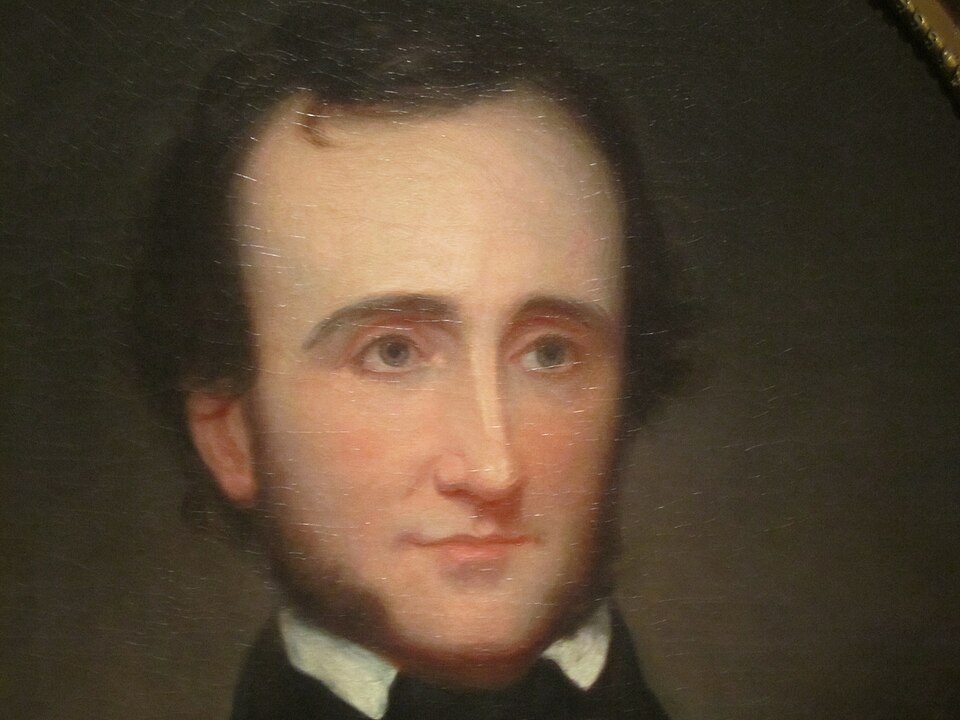
—And the poem about the raven, how did you write it?
My Raven! In 1845, this poem made me famous across the country overnight. Imagine a man alone, at night, consumed by grief. A raven enters his home and can only say one word: "Nevermore." At each of the man's questions, the bird replies with that hopeless word. I left nothing to chance: I chose every sound, every beat, so that the poem would sound like a lament. I crossed out, I started over, again and again, until I achieved the desired effect. I wanted it to be heard, not just read.
—So you became rich with such a famous poem?
Ah, that is the great sadness of my life! For The Raven, that poem the whole country recited, I received only nine dollars. Nine! Barely enough to eat for a few days. Yet I was invited to halls called Lyceums — places where the public came to hear lectures and readings. I would step onto the platform, recite my poem aloud, and people hung on my every word. Famous in every mouth, and poor in my pocket. Writing beautiful things does not always fill the plate, alas.
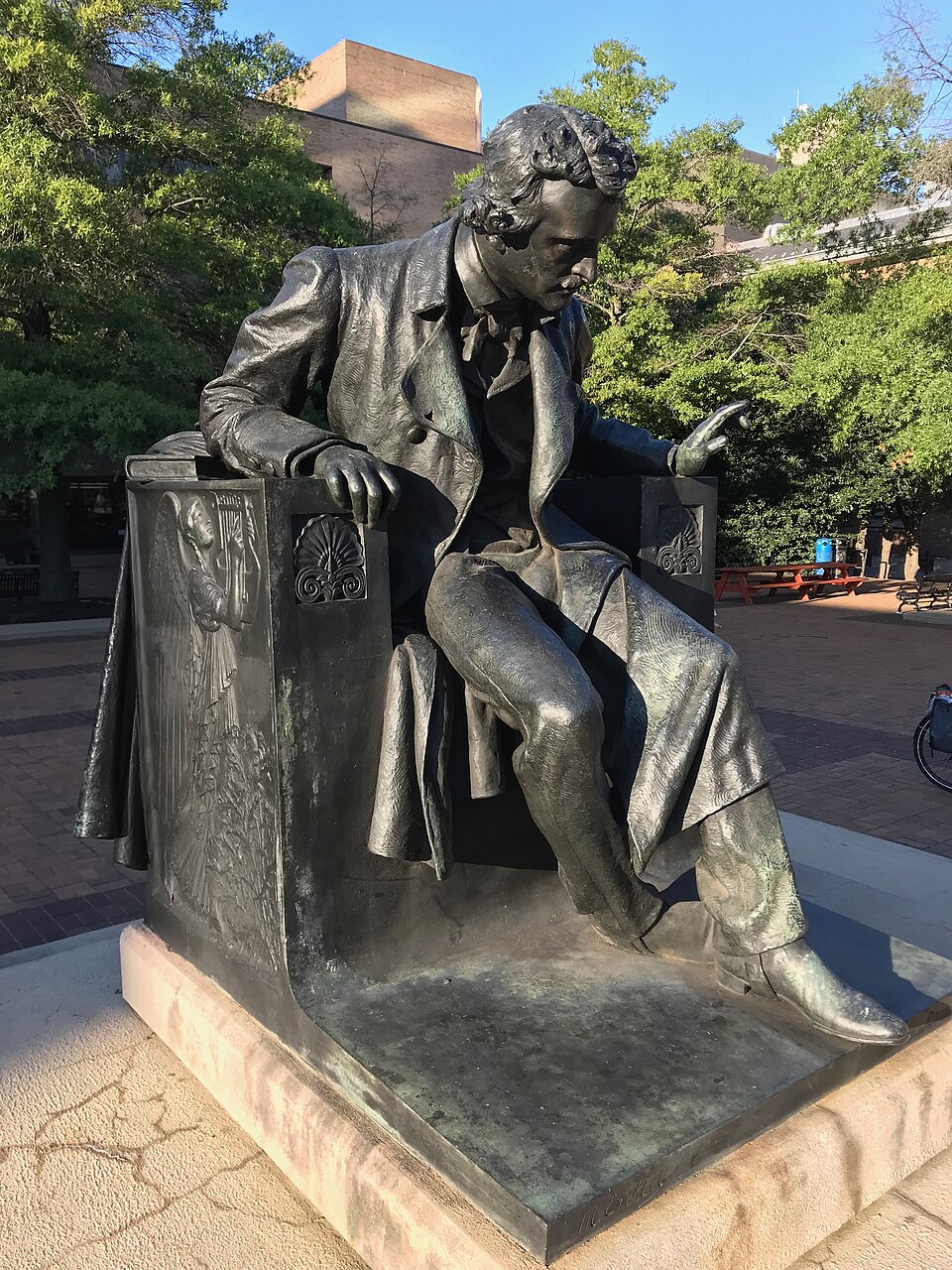
—You wrote scary stories. Were you afraid at night?
What a good question! You see, what is called the gothic tale — full of shadows and haunted houses — was my specialty. In 1839, in The Fall of the House of Usher, an old mansion cracks and collapses along with its inhabitants. The house is sick, too. No, I was not afraid of the dark itself. But I was afraid of what hides inside us: guilt, madness creeping up slowly. That is the real terror.
The most terrible ghosts live inside our own heads.
—They say you had problems with alcohol. Was it hard?
Yes, and I will not hide it from you, because it is important. All my life, I struggled against alcohol, which made me sick and fragile. In my time, people also took laudanum, a medicine made of opium mixed with alcohol, to soothe pains and sorrows. In my worst moments, after Virginia's death, I frequented taverns, and that did not help, quite the opposite. I even joined a temperance society for a time, a group of people who pledged to stop drinking. If you must remember one thing about me: never try to drown your sorrow.
Never try to drown your sorrow: it swims too well.
—And the end, how did you die? They say it's a mystery.
It is one, and even I could not explain it to you. In October 1849, I was found delirious in the streets of Baltimore, wearing clothes that were not my own. How did I get there? Why those clothes? I died four days later, without being able to tell what had happened to me. My own end remained an enigma, like one of my stories. But do you know what consoles me? My stories have survived. Today, children like you still read The Raven.
As long as I am read, I am not entirely gone.
This imaginary interview was generated by artificial intelligence from sources documented in Edgar Allan Poe's profile. It dramatises what the figure might have said based on what we know about them, but does not constitute attested historical testimony. For primary sources and factual documentation, refer to the full profile.