Imaginary dialogue between Edmund Husserl and Edith Stein
by Charactorium · Edith Stein (1891 — 1942) · Philosophy · Spirituality · 6 min read
It is in the parlor of the Carmel of Echt, behind the waxed wooden grille, that the old master Edmund Husserl meets the one who was his most faithful assistant. The light of an afternoon in 1938 falls on the brown habit of Sister Teresa Benedicta; on the small table lies an annotated copy of the Ideen that she once put in order in Freiburg. They had not spoken for years, since the time when phenomenology united them above all. Husserl comes not to find a student, but to understand how his finest analyst of consciousness became a woman of silence and prayer.
—Edith, when you were my assistant in Freiburg, you organized my manuscripts with a rigor that no one equaled. Why empathy, Einfühlung, rather than another problem?
Because it was, Herr Professor, the question that your phenomenology posed to me without resolving it. You had taught me to describe phenomena as they give themselves to consciousness, without prejudice. Yet nothing is given more mysteriously than the experience of another: how can I reach what another subject feels, who is not me? My entire thesis of 1917, Zum Problem der Einfühlung, sought to describe this access, this fragile bridge between two consciousnesses. I did not know it then, but I was already preparing the ground for my whole life: to understand the other from within, without reducing them to myself. Empathy was my first school of charity before it was an object of science.
Empathy was my first school of charity before it was an object of science.
—You received summa cum laude, and yet habilitation was denied to you. Did you keep any bitterness toward the University that closed its door to you?
Bitterness, for a long time, I do not hide it. I was told my thesis was excellent, then that habilitation was not open to women — the only reason, you know well, was that I wore a skirt. I had worked at your side, I had ordered your Ideen, and I was sent back to my condition as if it were an infirmity. This injustice drove me to write and speak on the vocation of women: not to demand to be a man, but to have it recognized that the spirit has no sex before the truth. Today, from the depths of my cell, I see that this closed door opened another for me, one I would never have sought alone.
The spirit has no sex before the truth.
—Here is what I cannot explain, my child. You, the most demanding analyst of consciousness, yielded to a book read in one night. What happened that night?
I was in 1921, at friends' house, and I picked up at random on the shelf the autobiography of Teresa of Ávila. I began to read, and I could not stop. I read until morning, straight through, like crossing a river without catching my breath. Closing the book, I said simply: C'est la vérité. You had taught me to seek evidence, that moment when a thing gives itself, indubitable. Well, that night, truth gave itself to me no longer as a concept but as a Person. On January 1, 1922, I received baptism. My phenomenological quest was not denied: it had finally found its ultimate object.
Truth gave itself to me no longer as a concept but as a Person.
—You speak of evidence, the very word of our work. But your Jewish family from Breslau, your mother especially, how did she receive this break?
It was the deepest wound, more than any university refusal. My mother, Augusta, was a woman of complete faith; seeing me leave the synagogue for the Church seemed a betrayal of our people. Yet I renounced nothing of my Judaism — I carried it within me as a living root. I did not stop going to pray with her, accompanying her to the synagogue when I was with her. Understand me, Herr Professor: I was not passing from one camp to another, I was discovering that the Christ I was joining was himself a son of Israel. But that, a wounded mother cannot hear, and I had to move forward hurting her. That is the price truth sometimes demands.
I was discovering that the Christ I was joining was himself a son of Israel.
—I am told that in 1933, after Hitler's arrival, you dared to write to the pope himself. What did you expect from this gesture?
I expected a cry to go out from Rome, strong and clear, against what was raging in Germany. I wrote to Pius XI as a child of the Jewish people and as a Christian, to tell him that acts were flouting all justice and humanity. I already saw the laws tightening, I had lost my teaching post in Münster because I was Jewish. I never received an official response. So I understood that my place was no longer in lecture halls or petitions, but elsewhere. In October 1933, I entered the Carmel of Cologne. Many saw it as an escape. It was the opposite: I was going to the heart of the battle, where one carries the world through prayer when the doors of the world close.
I was going to the heart of the battle, where one carries the world through prayer.
—The Nuremberg Laws struck you as a Jew, despite your baptism. Did you not feel that your conversion would protect you from nothing?
I never thought it would protect me. For the Nazis' Rassengesetze, baptism counted for nothing: only blood counted, and my blood was Jewish. I knew it from the start, and deep down I accepted it as a truth more just than theirs. For they were right on one point they thought was a condemnation: I am Jewish, and I remain so to the end. My entry into Carmel did not make me change people; it united me even more closely to its destiny. I then wrote the memoirs of our family from Breslau, to testify against the lies, to show the dignity of a German Jewish life they wanted to defile. The cross I now bore was also the star my mother had bequeathed to me.
They were right on one point they thought a condemnation: I am Jewish, and I remain so.
—Look at this bare cell, this wooden bed, this silence. You who wielded the most subtle concepts, what did you find in such austerity?
I found space there, Herr Professor, and you who love rigor will understand. Here everything is removed: no career, no abundance of books, no noise. A brown tunic, a leather belt, a crucifix on the wall, the breviary that marks my hours from Matins to Compline. And in this emptiness, thought finally breathes. In the morning, before dawn, the office; in the afternoon, sewing and tidying, then a few hours at my small table where I write. You might perhaps try to reduce this to a renunciation. It is the very opposite of a flight from reality: it is total attention, stripped of the inessential. Carmel taught me to see things as they are, which a whole life of philosophy had only prepared.
In this emptiness, thought finally breathes.
—On your table, I see sheets: Kreuzeswissenschaft, the science of the Cross. Why devote your last strength to John of the Cross?
Because the Cross has become the object of my science, as empathy once was. My superiors asked me to study John of the Cross for his anniversary, and I plunged into it as I once did into your manuscripts. But here the object seizes me more than I seize it. I write that the cross is not an end in itself: it rises and points beyond itself, it indicates the way that leads from death to life. I took the name Teresa Benedicta of the Cross knowingly. I do not know if I will finish this book — the times are growing dark around us. But if I must leave it unfinished, let it remain as a testimony of what I understood at the end of the path: that suffering and loving are one.
The cross rises and points beyond itself: it leads from death to life.
—Edith, you speak of the times growing dark. Are you afraid of what may come, for you, for your sister Rosa who joined you here?
Afraid, no, not as one ordinarily understands it. I know what threatens: no Jew is spared, even behind a convent grille, even under a veil. If the Gestapo comes one day to take me, I have only one word for my sister Rosa: Viens, nous allons pour notre peuple. Everything I have sought, from empathy to the Cross, is contained in these few words. To suffer not despite my people, but with them and for them, as a Christian who never ceased to be Jewish. I offered my life for peace, for my lost country, for the salvation of the world. This is not courage, Herr Professor: it is the only coherence possible when one has spent one's life seeking the truth, and has finally met it.
To suffer not despite my people, but with them and for them.
—A last question from an old master. If one day there is dispute over whether you died a Jew or a Christian, what should be answered?
That I should not be cut in two. That is what I fear most, more than death itself: that my name be made a flag for one camp against the other. I was born Jewish in Breslau, I still am; I was baptized a Christian, I am fully so. The Nazis will kill me as a Jew; my faith will make me die as a Christian. These two truths do not contradict each other, they are tied together in me as in Christ himself. If one day there is dispute over my memory, let them at least remember this: I never wanted to be a symbol for the living, only a faithful daughter, to Israel and to the Church. The rest, I leave to Him who searches hearts, and to your rigor, my master, to untangle what men will confuse.
The Nazis will kill me as a Jew; my faith will make me die as a Christian.
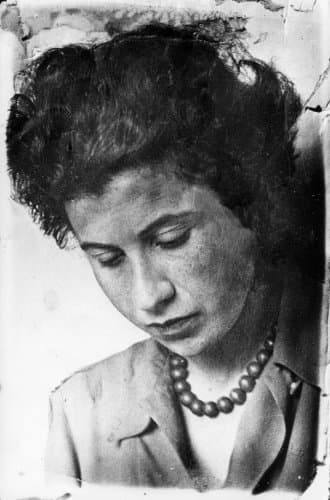
This imaginary interview was generated by artificial intelligence from sources documented in Edith Stein's profile. It dramatises what the figure might have said based on what we know about them, but does not constitute attested historical testimony. For primary sources and factual documentation, refer to the full profile.