Kids interview Edith Stein
by Charactorium · Edith Stein (1891 — 1942) · Philosophy · Spirituality · 5 min read
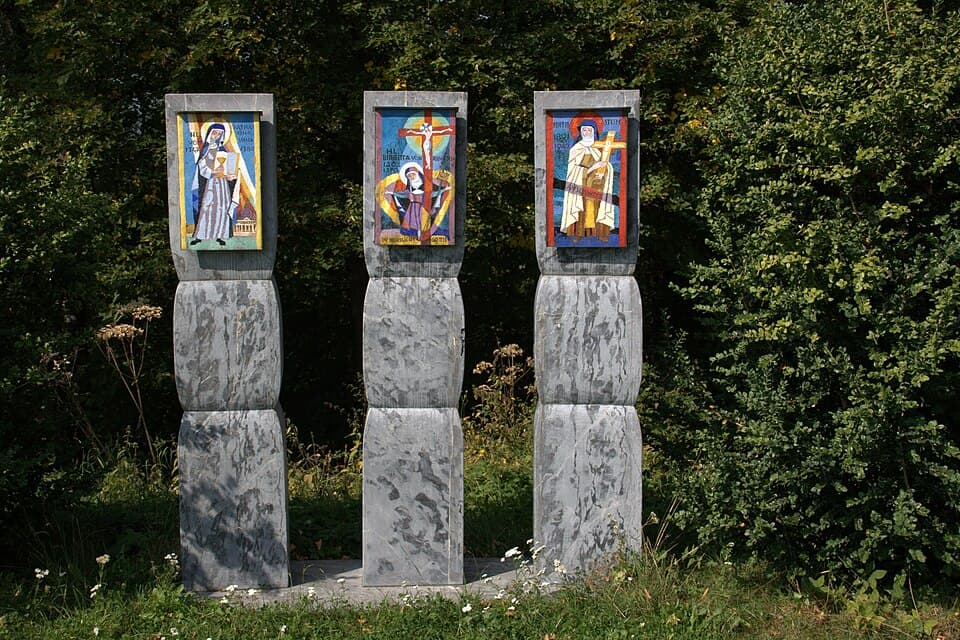
Two young visitors, twelve years old, push open the gate of an old convent, a notebook in hand. A nun in a brown cloak awaits them, a gentle smile on her face. Her name was Edith Stein, and she agreed to tell them her life story.
—What was your house like when you were little?
You know, my child, I was born in Breslau in 1891, into a large Jewish family. I was the seventh and last child! Imagine a house full of noise, of Friday evening prayers, of cooking smells. My father died very early, so my mother, Augusta, ran everything. She ran a lumber business all by herself, with incredible strength. She prayed a lot. As for me, you see, at fifteen, I stopped praying. I considered myself an atheist. But my mother's face, her quiet faith, remained engraved in me like a light that never goes out.
My mother's faith remained in me like a light that never goes out.
—How old were you when you finished your studies? Did it go well?
I was twenty-five. In 1916, I defended my major thesis at Freiburg, on empathy. Empathy is that learned word that means: feeling what another lives, guessing their joy or sorrow. I got the highest possible grade! My teacher, the philosopher Husserl, was proud. And yet… listen carefully. I was denied a university position. Not because I was bad. Because I was a woman. Imagine: they tell you your work is excellent, then they close the door in your face because of that. It hurt me. But it also made me stronger.
They told me my work was excellent, then closed the door because I was a woman.
—What exactly were you working on with that Mr. Husserl?
Husserl had invented a way of thinking called phenomenology. A big word, I know! It simply means: looking at things as they truly appear, without preconceived ideas. I was his assistant in Freiburg. My work? I spent entire days bent over his Ideen, his manuscripts filled with difficult handwriting. I sorted them, annotated them, put them in order. Imagine piles and piles of papers, and me trying to turn them into a clear book. It was patient, almost like an ant's work. But I learned to think straight. It served me all my life.
Thinking is looking at things as they really are, without preconceived ideas.
—Why did you become a Christian when your family was Jewish?
Ah, that, it happened one night, in 1921. I was at friends' house. I took a book from the shelf: the life story of Teresa of Avila, a great Spanish nun. I started reading… and I couldn't stop. I read all night, without sleeping. In the morning, I closed the book and said out loud: “This is the truth.” A few months later, I was baptized. It was very hard for my mother, I won't hide that from you. But I never stopped loving my Jewish people. In my heart, the two never parted.
I closed the book in the morning and said: “This is the truth.”
—What is the most important book you wrote?
My great book is called Finite and Eternal Being. A somewhat mysterious title, isn't it? I wanted to bring two worlds into dialogue there. On one side, the phenomenology of my teacher Husserl, which looks at our thoughts. On the other, the thought of a medieval sage, Thomas Aquinas, who sought God with reason. Imagine two rivers that each flowed on their own, and me trying to unite them into a single stream. Many said it was impossible. I thought that truth does not divide. Seeking to understand the soul, being, God — that was my whole joy as a philosopher.
Truth does not divide: reason and faith seek the same light.
—What was it like to live in a convent? Wasn't it too sad?
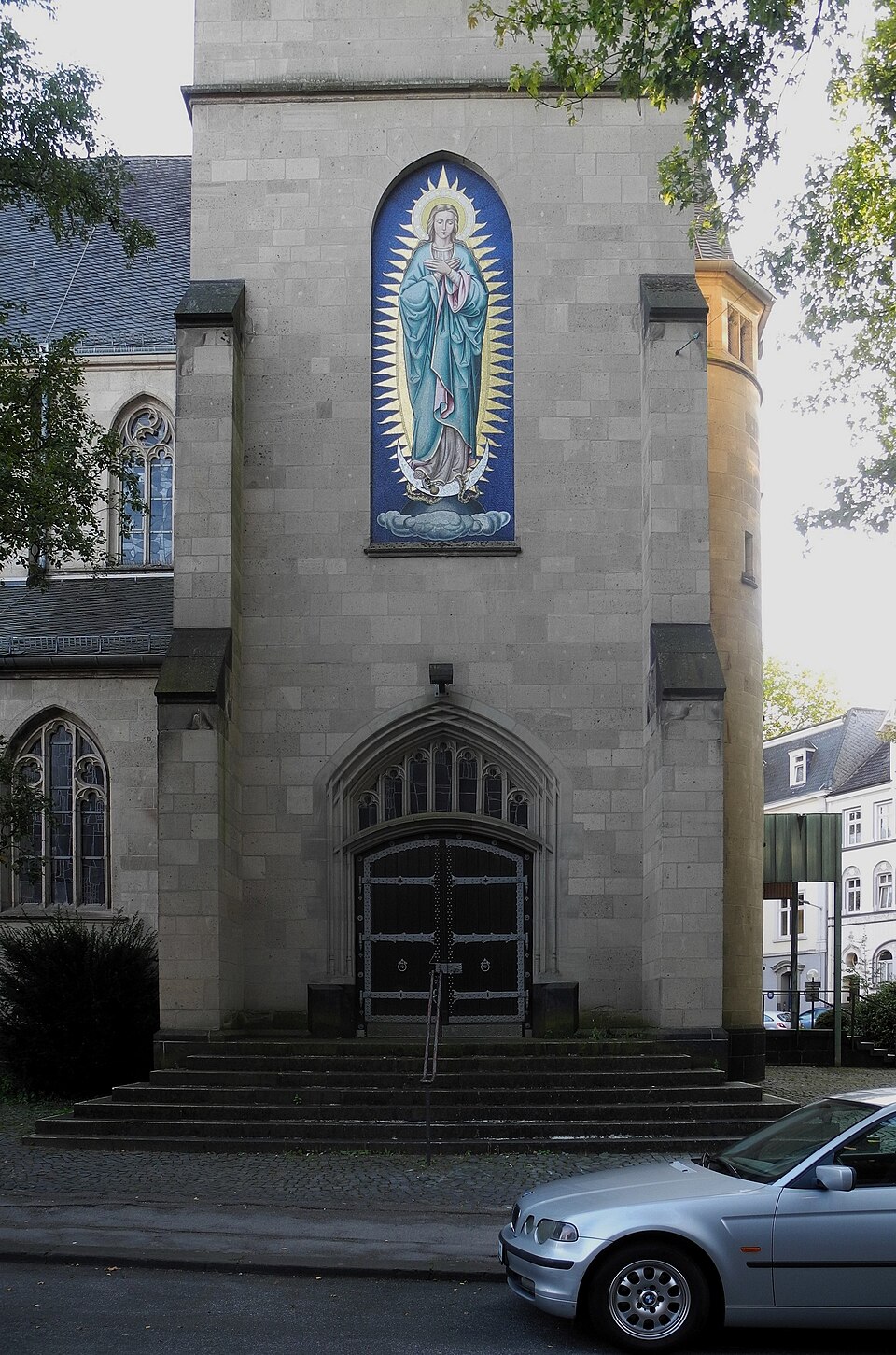
Not sad at all, my child! Different, that's all. In 1933, I entered the Carmel of Cologne. I took a new name: Sister Teresa Benedicta of the Cross. My room, called a cell, was very small: a wooden bed, a table, a chair, a cross on the wall. Nothing else. Imagine leaving a pretty comfortable house for that. I got up before sunrise to sing prayers in the dark. I wore the brown habit, the same as all my sisters. And you know what? In that bareness, I felt light, free, almost happy.
In a bare cell, I felt light and free.
—What did you eat, and what did you do during your days?
Our life was simple and well-ordered. In the morning, prayers and silence. In the afternoon, we worked with our hands: sewing, cleaning, household tasks. And then, on my little table, I kept writing my books! For meals, it was simple: vegetables from the garden, bread, soup, sometimes a little milk. No meat most of the time, and we fasted during Lent. Imagine a day without any engine noise, just the bell marking the hours and the sisters' singing. In the evening, after the last prayer, I wrote my letters until I was tired.
A day without noise, just the bell marking the hours and the sisters' singing.
—Were you afraid, with the Nazis coming to power?
Yes. But my fear did not silence me. As early as 1933, when Hitler came, I wrote a letter to the pope, in Rome. I asked him to defend my Jewish people openly. I dared to speak to him “as a child of the Jewish people and as a Christian.” I already saw terrible acts around me. I never received a real answer. So I understood that my life as a Jewish AND Christian woman had become a sign. I was transferred to the Netherlands, to the Carmel of Echt, to protect me. But deep down, I knew the storm would catch up with me.
My fear never silenced me.
—And what happened when they came to get you?
It was August 2, 1942. The secret police, called the Gestapo, entered our convent in Echt. They came to arrest me and my sister Rosa, who had joined me. Rosa was trembling. So I took her hand and said to her: “Come, we are going for our people.” Do you understand? I was not fleeing my Jewish origin. I was going to suffer with my people, as one of them. They took us east, to Auschwitz. I never came back. But I left with a peaceful heart, my hand in my sister's.
I took her hand: “Come, we are going for our people.”
—What was your last book, just before all that?
My last book is called The Science of the Cross. I was writing it in my cell, in 1942, just before my arrest. I never finished it. It is about a saint I loved, John of the Cross, and what it means to suffer with love. For me, the cross was not a sad end. I saw it as a sign that shows the path from death to life. Imagine a signpost planted at the edge of a road, saying: “it is not over, keep going.” I believe this unfinished book remained as my testament, my last words set down on paper.
The cross shows the path that leads from death to life.
—If someone saw you today, what would they notice first?
You would probably notice my brown habit and my black Carmelite veil. But I hope you would especially see my eyes. The eyes of someone who searched much for truth, first with her philosopher's head, then with her heart. You know, I was declared co-patroness of Europe, long after my death. That sparked debate, and it's normal: I was both Jewish and Christian, and some do not want us to forget that I died because I was Jewish. As for me, I would simply tell you this: never choose between seeking with your reason and loving with your heart. Do both.
Never choose between seeking with your reason and loving with your heart.
This imaginary interview was generated by artificial intelligence from sources documented in Edith Stein's profile. It dramatises what the figure might have said based on what we know about them, but does not constitute attested historical testimony. For primary sources and factual documentation, refer to the full profile.