Imaginary interview with Edith Stein
by Charactorium · Edith Stein (1891 — 1942) · Philosophy · Spirituality · 6 min read
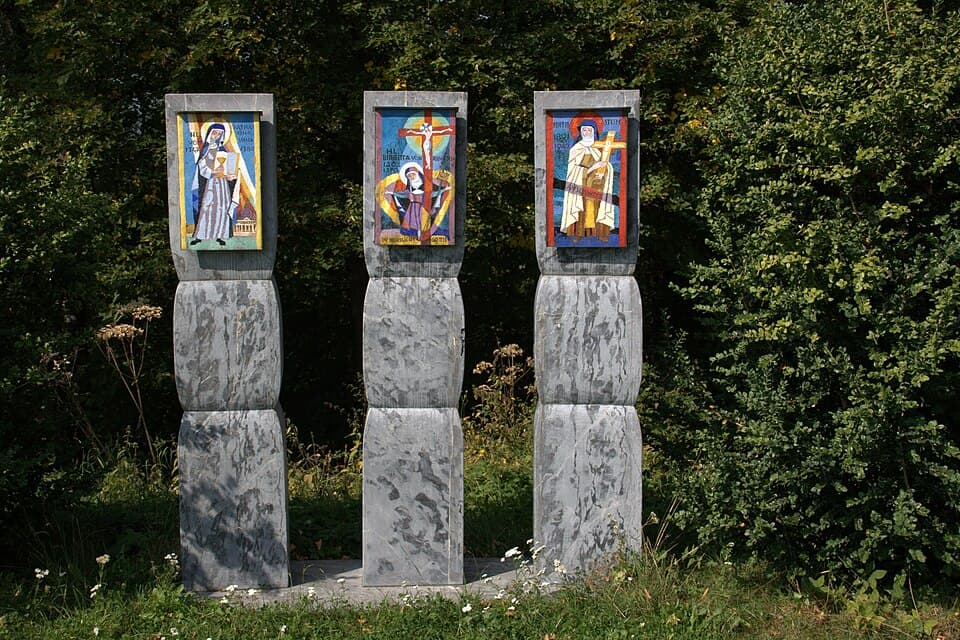
Carmel of Echt, an afternoon in the summer of 1942. Behind the grille of the parlor, a nun with a peaceful face places a stack of still-damp pages on the table. Sister Teresa Benedicta of the Cross — whom the world knew as the philosopher Edith Stein — agrees to answer, between offices, a few questions about the long path that led her from Husserl's lecture hall to this bare cell.
—Do you remember the night everything changed, in 1921?
It was summer, at friends' house in Bergzabern. I had sought God as a philosopher, along the paths of reason, and then one night I picked up at random from a shelf the autobiography of Teresa of Avila. I began to read. I could not stop. The house was asleep, and I followed this woman of the 16th century who spoke of the soul as an interior castle, without a trace of sentimentality, with a precision my teachers would have envied. When I closed the book, dawn was breaking. I said simply: “It is the truth.” It was not an emotion, it was an evidence, one you do not argue with. The next day I went to buy a catechism and a missal.
When I closed the book, dawn was breaking. I said simply: “It is the truth.”
—How did you come to make empathy the subject of your dissertation?
People think that understanding others is a feeling; I wanted to show that it is an act, a grasp. Under the direction of Edmund Husserl, I learned to describe things as they give themselves to consciousness, without covering them with theories. Yet there is an experience that Phenomenology neglected: how I know that this other person, facing me, feels pain or joy. It is neither reasoning nor deduction — it is a perception of a special kind, what the Germans call Einfühlung. I devoted On the Problem of Empathy to this, defended at Freiburg in 1916, summa cum laude. Annotating the master's manuscripts, classifying his Ideas, was my school; but that book was mine.
—They say the university closed a door to you despite this success. What happened?
The highest grade, and yet habilitation was refused to me. The reason was not scholarly: I was a woman. That was all. They recognized my work, they trusted me with the master's papers, but the chair, the right to teach at the university, that remained a man's domain. I felt this injustice as a wound that does not heal. Later, in my lectures collected under the title Woman, I wanted to think about this question differently: not by denying differences, but by refusing to let them serve as a pretext for confinement. Woman has her own vocation, yes; she also has the full and complete right to seek truth wherever the spirit leads her. That they blocked this path only made me cling to it more.
They recognized my work, but the chair remained a man's domain.
—Your baptism on January 1, 1922 broke something with your mother. How did you experience it?
My mother, Augusta, was a woman of deep faith, Jewish to her fingertips, who had single-handedly run the family business in Breslau with an authority I admired. Telling her that I was becoming Catholic was the hardest thing. I never stopped feeling like a daughter of my people — I was renouncing nothing, I believed I was entering more deeply into the promise made to Israel. But for her, it was a desertion. We prayed together, each in our own way, in the same silence. I think she never understood me, and she never withdrew her love. You do not leave a mother like yours; you carry her faith within you, differently.
—In 1933, you wrote directly to the pope. What did you expect from that letter?
Hitler had just taken power, and already actions spoke louder than words. I wrote to Pius XI in the spring of 1933. I told him, as a child of the Jewish people and as a Christian, that I saw in Germany acts that flouted all justice and humanity. I asked for a word, just one, that would condemn this from high in Rome. I did not expect that they would answer me — I expected that they would speak for the voiceless. Silence came instead. I had already lost my teaching post at Münster; the new laws gradually cut me off from common life. I understood then that a Jewish and Christian woman could no longer only write: she had to become, by her very life, a sign.
I did not expect that they would answer me — I expected that they would speak for the voiceless.
—How did you understand what the Nazis called their racial laws?
It was the most monstrous reversal I had ever known. The Nuremberg Laws of 1935 did not ask what you believed, nor how you lived: they decreed what you were by blood. My baptism counted for nothing before them. In the eyes of the regime, I was Jewish, and would be whatever I did. It is a strange thing to be defined by a so-called scientific fiction, when you have spent your life patiently seeking what is. The philosopher in me saw a lie about the very being of man; the believer saw yet another persecution in the long history of my people. The two converged: they attacked truth and they attacked Israel, in the same gesture.
—You left bourgeois comfort for a Carmelite cell. What did you find behind that grille?
I took the habit at the Carmel of Cologne in October 1933, and the name Teresa Benedicta of the Cross. My cell: a wooden bed, a small table, a chair, a crucifix on the wall, a few permitted books. Nothing else. For someone who grew up in the spacious house in Breslau, this poverty might seem like a loss. It is the opposite. The brown habit, the same for all my sisters, erases what distinguishes, even the memory of the intellectual I was. People think I am deprived of everything; I have never possessed so much. Voluntary poverty frees the spirit from the weight of things. On that tiny table, I wrote more freely than from any university chair.
People think I am deprived of everything; I have never possessed so much.
—What is a day like in this contemplative life?
It is marked by the Office, from first to last. I rise well before dawn for Matins, recited together in choir, in the cold and night. Then Mass, a long silence of meditation, and the first hours given to spiritual reading. In the afternoon, the rule requires manual work — sewing, tidying — and I kept, between these tasks, moments for writing. Vespers and Compline close the day. After Compline, the great silence reigns, and it is often then, when the whole house is silent, that I took up my pen for letters or my works, until fatigue overcame me. This regularity is not a constraint: it is a breathing. The soul, like the body, needs a breath that carries it.
—On the day of your arrest, you said a few words to your sister Rosa. What did you want her to understand?
It was August 2, 1942, at the Carmel of Echt. The bishops of the Netherlands had dared, from the pulpit, to denounce the deportations; in reprisal, they came for the baptized Jews. The Gestapo knocked. Rosa, my sister, who had followed me until then, was seized with terror. I took her arm and said to her: “Come, we are going for our people.” These were not words of resignation. My whole life is contained in that sentence: I did not leave despite my Jewish origin, I left because of it and with it. A Christian born of Israel, I could finally walk in step with those from whom I had never wanted to be separated. The cross and the star, that day, became one.
I did not leave despite my Jewish origin, I left because of it and with it.
—At the end, you were working on a book about the Cross. What were you trying to say?
The Science of the Cross, yes — left unfinished, set on my table the day I was taken away. I was following John of the Cross, that mystic who made night and destitution a path to God. The cross is not an end in itself; it rises and points beyond itself, it indicates the way that leads from death to life. That is what I wanted to understand, not as an idea but as an experience: that suffering, freely united to love, is not a defeat. I had already offered my life for peace, for my people, for Germany. This book was the putting into words of that offering. If one day others read me, let them see not a heroine, but someone who tried to look at the truth to the very end.
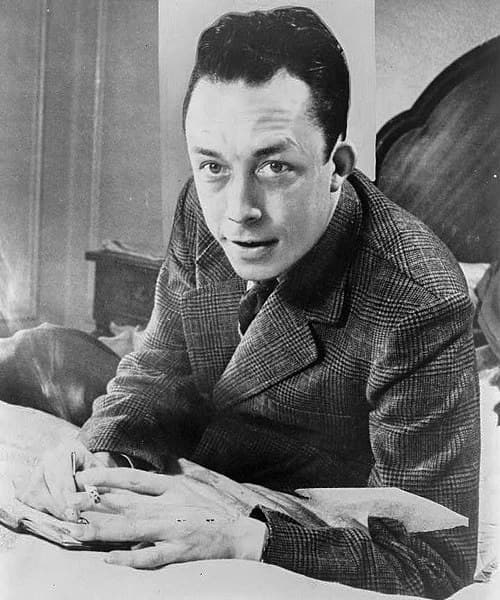
This imaginary interview was generated by artificial intelligence from sources documented in Edith Stein's profile. It dramatises what the figure might have said based on what we know about them, but does not constitute attested historical testimony. For primary sources and factual documentation, refer to the full profile.