Imaginary interview with Elizabeth I of England
by Charactorium · Elizabeth I of England (1533 — 1603) · Politics · 6 min read
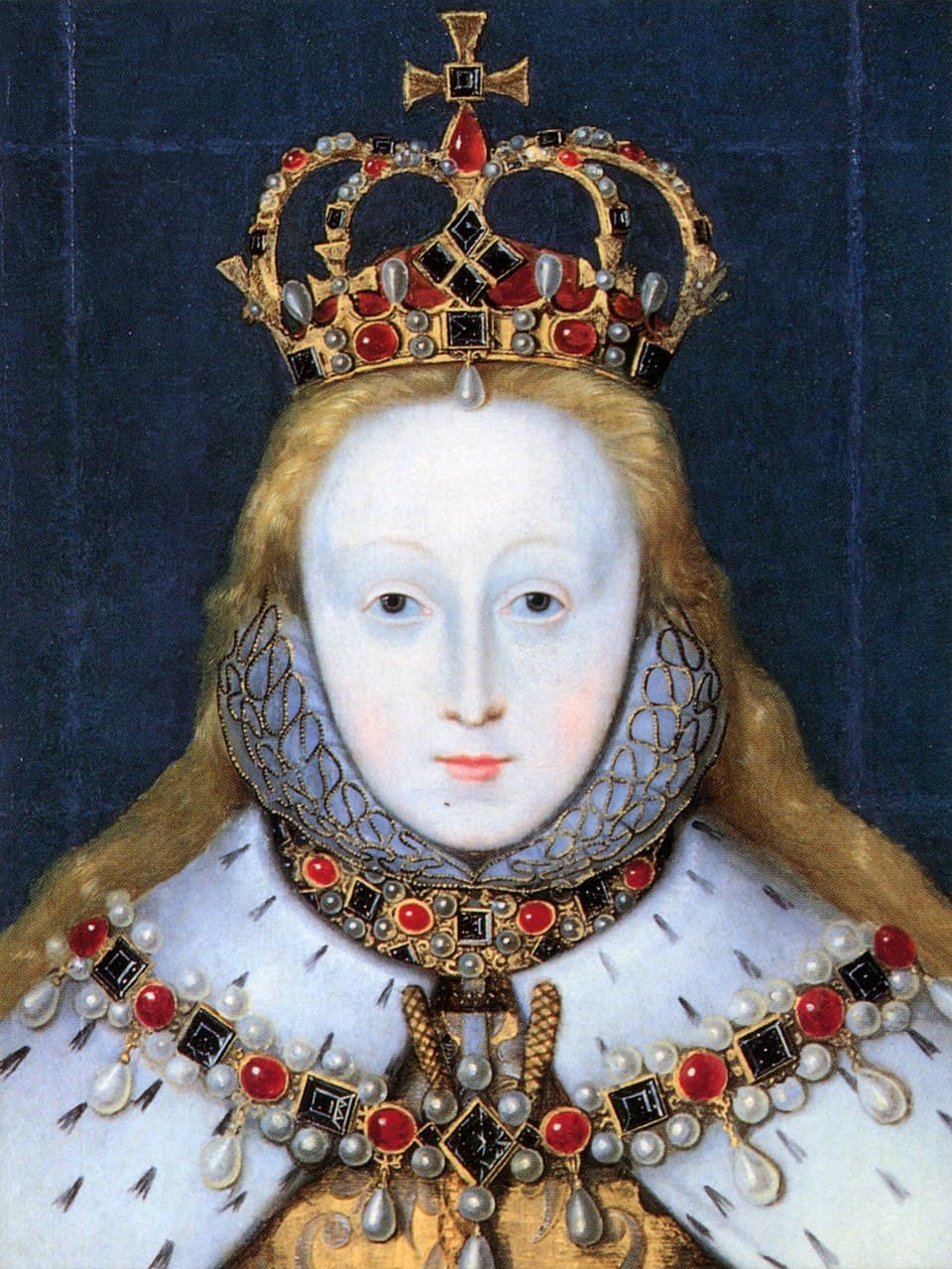
Richmond Palace, winter 1602. The queen receives in a gallery hung with tapestries, the virginal still open near the window overlooking the Thames. Her face powdered white, a red wig impeccably arranged, she consents to speak of forty-four years of reign — and the mask they required.
—You were born in disgrace — your mother executed, you yourself declared a bastard. How did that shape the sovereign you became?
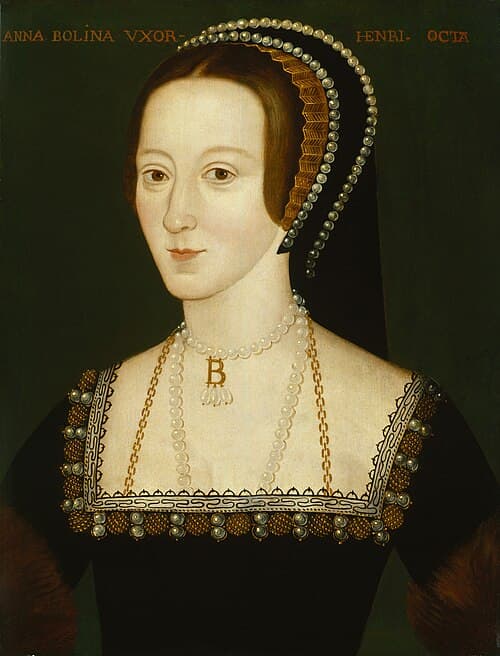
I came into the world at Greenwich one September morning in 1533, and a son was expected. Three years later, my mother Anne Boleyn was beheaded, and an act of Parliament made me an illegitimate child. A girl learns quickly, when she is stripped so, that a throne is not received like a quiet inheritance: it is seized, it is kept. I saw my sister Mary throw me into the Tower of London in 1554, and I counted each day wondering if my mother’s scaffold awaited me too. From that fear, I kept neither rancor nor weakness — only the certainty that I must reign better than anyone so that they would forget from which disgraced womb I had come.
A throne is not received like a quiet inheritance: it is seized, it is kept.
—Your coronation in 1559 marked a religious turning point. What did you want to say to your people that day?
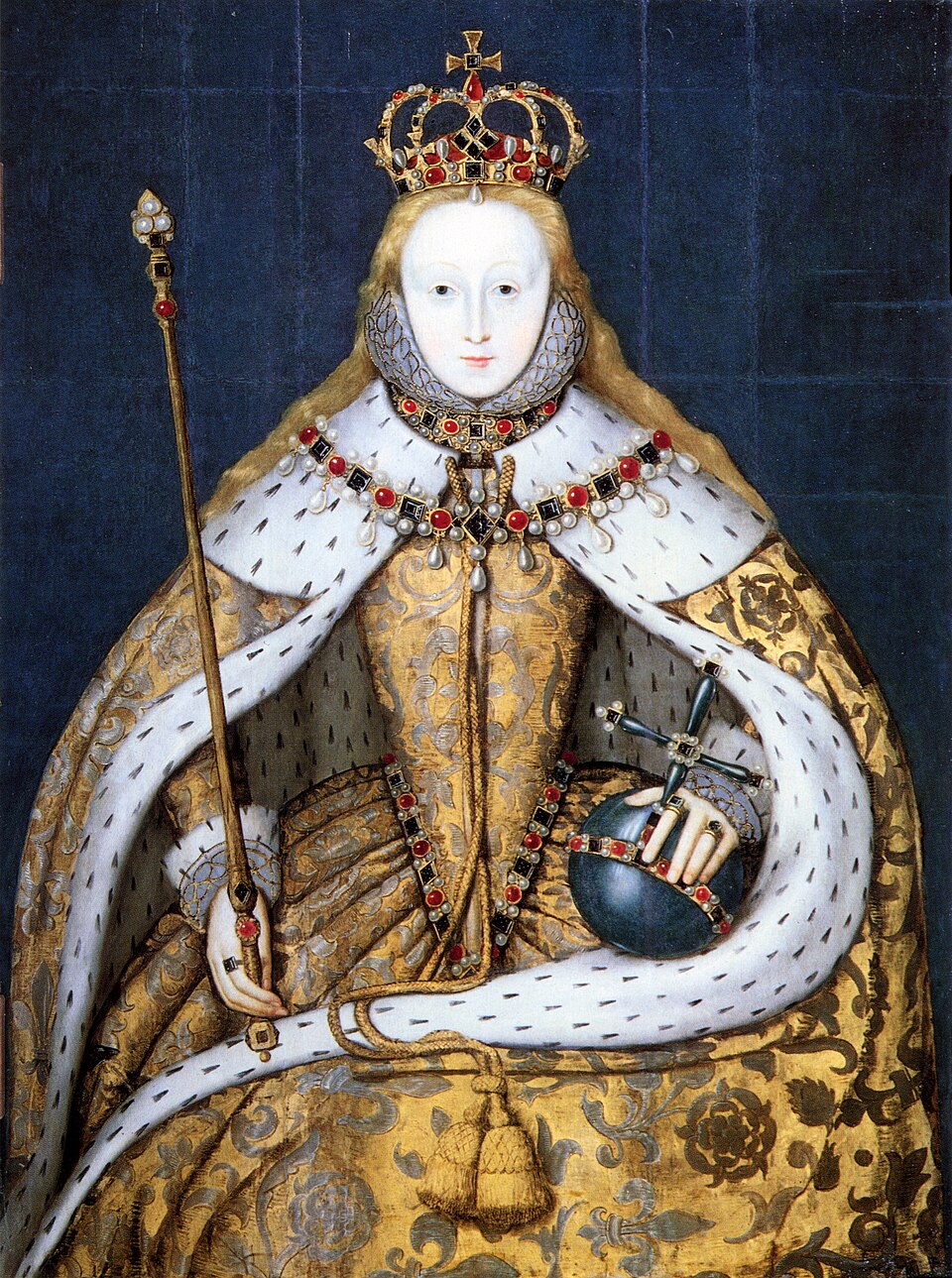
In the midst of the ceremony, I was handed a Bible no longer in Latin but in English — the language of my subjects, the one a Kentish ploughman could understand. I pressed it against my breast, and the crowd knew, without my needing a sermon, where I was leading the kingdom. That same year, my Parliament passed the Act of Supremacy, making me the Supreme Governor of the Church of England. But I did not want a kingdom of pyres like my sister. My settlement was to make room for moderate Catholics as well as reformers: I never wished, as my advisor Cecil said, to open windows into men’s souls to pry into their secret faith.
—The Pope excommunicated you in 1570 and some of your subjects refused your services. How did you hold the kingdom despite these fractures?
In 1570, Pius V declared me a heretic and absolved my subjects of their loyalty — a parchment from Rome that, in theory, allowed any recusant to stab me without sin. Many of these recusants were nonetheless good people who preferred to pay the fine rather than attend the Anglican church. I did not fear them; I feared the plots hatched in their shadow, right up to the heart of my own family. When Mary Stuart came seeking refuge with me in 1568, I kept her nineteen years, neither free nor dead, because a throne that bends at the first wind of conspiracy does not deserve to be sat upon.
—Parliament long urged you to marry. Why did you resist all your life?
My Commons begged me to take a husband as one begs a doctor to treat a wound: a king, an heir, and the kingdom would sleep easy. I answered them that I was already bound — “I am already bound unto a husband, which is the Kingdom of England.” A foreign husband would have made me half a queen; an English husband would have raised factions. As long as I remained free of hand, every prince in Europe could hope to obtain it, and that hope was worth ten regiments. My favorite, Robert Dudley, Earl of Leicester, I loved perhaps more than was wise — but I never consented to trade a scepter for a ring.
A foreign husband would have made me half a queen.
—You were nicknamed the Virgin Queen, and Spenser sang your glory under the name Gloriana. What do you think of this legend built around you?
Gloriana — that is what Edmund Spenser called me in The Faerie Queene, half woman half goddess, virgin and triumphant. Do you think I am fooled by my own legend? A queen without a husband and without a son is a fragile thing in the eyes of the world; so I had to turn that fragility into a crown, to make my celibacy not a lack but a consecration. I willed myself married to England, mother of a people rather than a prince. The poets embroidered fairies and goddesses upon it, and I let them — for a kingdom governed by a myth obeys better than a kingdom governed by a woman alone.
I had to turn that fragility into a crown.
—Do you remember that August of 1588, when Philip II’s Armada threatened your coasts?
The summer of 1588 smelled of gunpowder and fear. Philip II had launched against me one hundred and thirty ships, his famous Armada they called invincible, and at court they whispered that a queen should hide behind her walls. On the contrary, I went to Tilbury, on the Thames, among my soldiers, mounted on horseback, a silver corslet on my back. I told them what I thought: “I know I have the body of a weak, feeble woman; but I have the heart and stomach of a king, and of a king of England too.” The storm finished what our cannons had begun, and Spanish pride shattered on our rocks.
—That victory became the very image of your reign. How did you inscribe it in the memory of your time?
A battle won is worth nothing if no one preserves its image. So I had Marcus Gheeraerts paint that Armada Portrait where I am seen, my hand resting on a globe, enemy ships sinking behind my shoulder. It was not vanity — or not only. A people needs to see their queen triumph to believe they triumph with her. The painting said, better than a herald: here is a sovereign who holds the world in her palm. War is won on the waves, but glory is won on canvas and in minds.
A battle won is worth nothing if no one preserves its image.
—You paid extreme attention to your appearance. What lay behind this discipline of makeup and wig?
At six o’clock each morning, the ritual began: ceruse spread on the face to make it white as ivory, the red wig raised, the whalebone gowns fastened one by one by my ladies-in-waiting. That lead powder burned my skin, I knew, and it hid the scars smallpox had left me in 1562 — but I could not appear before an ambassador with a blemished complexion. My portraitists were ordered never to paint me as the years made me: always young, always intact, always Gloriana. The white mask was not coquetry; it was an act of state. A queen who ages in everyone’s eyes is a queen they begin to bury.
The white mask was not coquetry; it was an act of state.
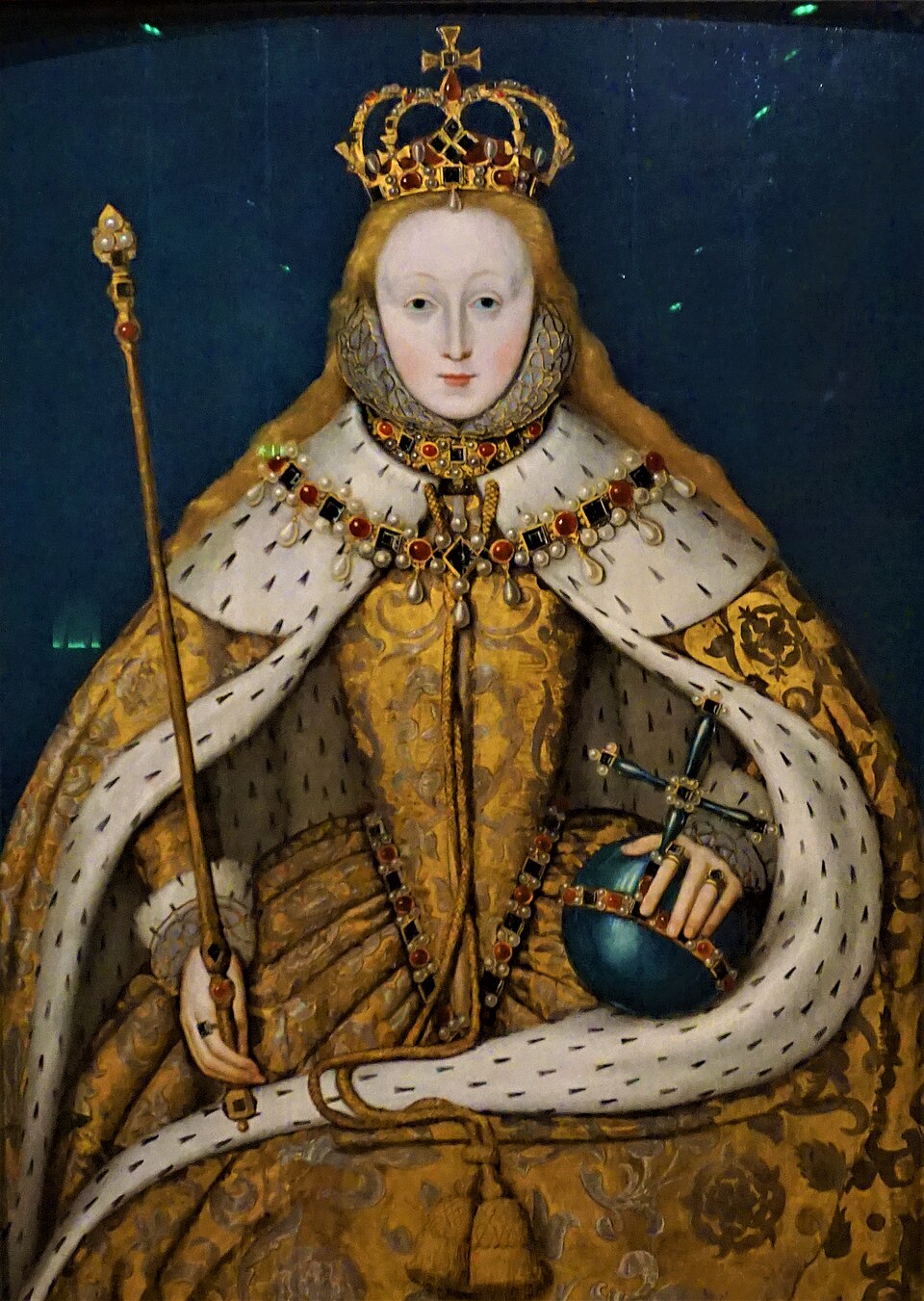
—Why so much effort to control every image of yourself, even in your mirrors?
In my apartments at Whitehall stood a great state mirror with a gilded frame, but believe me, I looked at myself less than Europe looked at me. Each dress — I had more than two thousand — was a message: such a color for a French envoy, such pearl embroidery to recall my virginity, such a jewel to signify my power. My summers were spent in progresses, those tours where I traveled my counties to show myself to the humblest peasant, lodging with my nobles and making them bear the cost of my court. To reign over an island is to reign over what men believe they see. I never left to chance what they believed they saw of me.
—It is sometimes forgotten that you yourself were a woman of letters. What place did study and writing hold in your life?
Before being queen, I was the pupil of the finest humanists in the kingdom, and I remained proud of that all my life. I spoke Latin, Greek, French, Italian, Spanish — six languages I wielded before ambassadors without an interpreter. I translated the ancients, wrote verse; my On Monsieur’s Departure tells the heartbreak of a heart that reason of state forces to silence its love. In the evening, at Richmond, I still sit at the virginal and play pavanes and galliards for my guests. A sovereign who knows only war and taxes is but half a prince; I wanted my mind to be worth my scepter.
A sovereign who knows only war and taxes is but half a prince.
—Your reign saw the flowering of English theatre. What interest did a queen find in protecting actors?
I was sometimes reproached for keeping under my protection a troupe of players, the Lord Chamberlain’s Men, in which a certain Shakespeare shone. But theatre is not a frivolous entertainment: it is a mirror in which a people learns who its kings, its traitors, and its heroes are. A well-crafted drama teaches loyalty more surely than an edict. So I let those boards prosper, right up to that Globe where thousands thronged. Let it be said one day, if I am remembered in a century, that under my reign England spoke in verse as loudly as it thundered cannon — that is a glory well worth the Armada.
Theatre is a mirror in which a people learns who its kings are.
This imaginary interview was generated by artificial intelligence from sources documented in Elizabeth I of England's profile. It dramatises what the figure might have said based on what we know about them, but does not constitute attested historical testimony. For primary sources and factual documentation, refer to the full profile.