Kids interview Elizabeth I of England
by Charactorium · Elizabeth I of England (1533 — 1603) · Politics · 5 min read
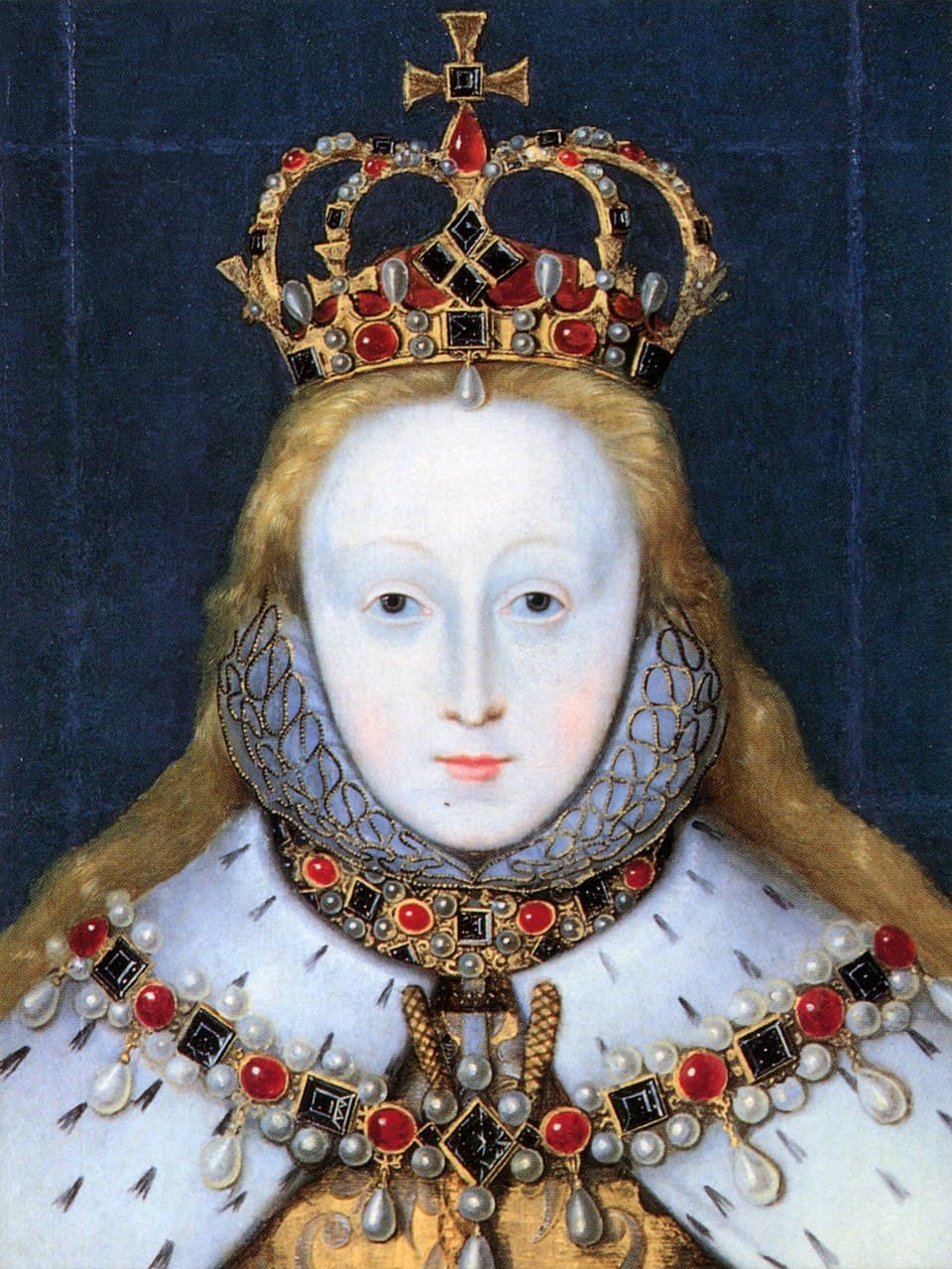
Two young visitors, on a school trip, push open the heavy door of a stone palace on the banks of the Thames. A queen in a pearl-embroidered dress awaits them, her gaze sharp. She beckons them closer: 'Don't be afraid, my little ones, ask me your questions.'
—Is it true that your mother was killed when you were very little?
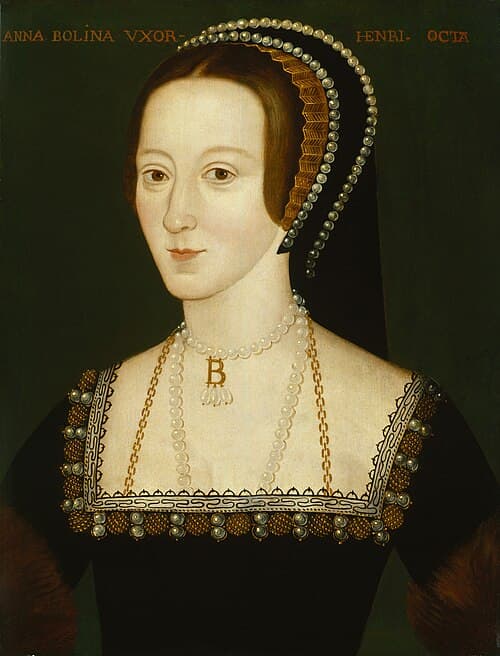
Yes, my child, and it is a terrible thing to bear. I was born in 1533 at Greenwich, by the river. My mother, Anne Boleyn, was beheaded when I was only two and a half. Imagine: your mother is taken from you, then you are declared no longer a true princess, just a bastard. I had no memory of her, only the silence of the people around me. But you know, I learned one thing very early: when you are told you are nothing, you can decide to make that your strength. I gritted my teeth, I studied, and I bided my time.
When you are told you are nothing, you can make that your strength.
—Were you really locked up in prison before becoming queen?
Yes, and I thought I would die there. In 1554, my half-sister Mary was queen. She suspected me of helping rebels, so she had me imprisoned in the Tower of London. Imagine a fortress of cold stone, guards at every door, and you listening to footsteps in the corridor, wondering if they are coming to take you to be beheaded. I was twenty. Every morning could be my last. I never forgot that fear. It made me cautious all my life, suspicious, alert to every plot. You don't come out of such a place unscathed.
Every morning in that tower could be my last.
—When you became queen, what was your first big problem?
Religion, my child, and it was burning. In my kingdom, Catholics and Protestants hated each other to death. Imagine two families fighting in the same house and refusing to share the table. In 1559, I had the Act of Supremacy passed: it made me the governor of the Church of England, instead of the pope in Rome. But I did not want to crush one to please the other. I sought a compromise, a middle ground where everyone could live without being killed for their prayer. Leading is not about choosing a side and burning the other. It is about finding the path where the fewest people suffer.
Leading is not about burning one side to please the other.
—On the day of your coronation, what special thing did you do?
Ah, a small gesture that said everything! During the ceremony, they handed me the Bible. But not in Latin, the language of priests: in English, the language of my people. Imagine that suddenly the holy book speaks your language, the one you understand, you, the village child. I took it, I pressed it to my chest, before the whole crowd. People understood at once: their queen would be on the side of the Reformation, of this new way of believing. Sometimes, a single gesture says more than a long speech. That day, without a word, I had already announced my entire reign.
Sometimes a single gesture says more than a long speech.
—Why did you never marry, even though everyone wanted you to?
Ah, they pestered me so much about it! Parliament, my advisors, all said: 'Madam, marry, give us an heir!' But think, my child: in my time, a married woman had to obey her husband. If I married a prince, he would command my kingdom. Out of the question. So I answered them: I am already married to England. My people were my husband, my crown my wedding ring. And do you know the cleverest part? As long as I remained unmarried, all the kings of Europe hoped for my hand. My celibacy was not a weakness: it was my most cunning weapon.
I had no husband: I was married to England.
—Why were you called the 'Virgin Queen'?
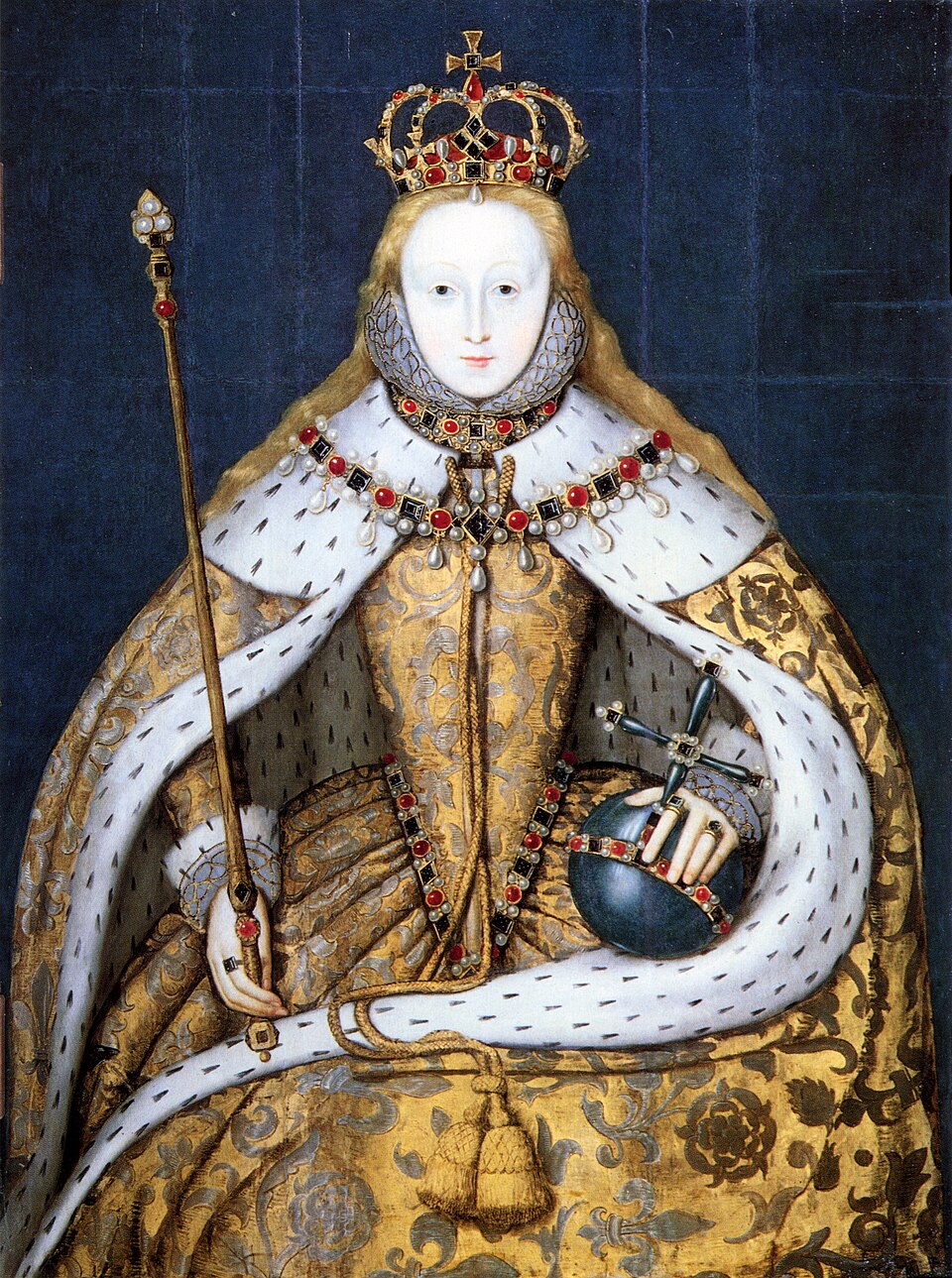
Because I never took a husband or child, and I turned that into a legend. Poets called me Gloriana — a kind of perfect queen, half-woman half-goddess, in a great poem of the time. Imagine your life turned into a tale, you painted as a larger-than-life figure. I let them, and even encouraged it. A lone, pure queen, devoted only to her country: that was the image I wanted them to keep of me. It was a story, of course, partly. But a good story, my child, protects a throne better than an army.
A good story protects a throne better than an army.
—What was it like when the Spanish tried to attack you with their ships?
Terrifying and magnificent at once. In 1588, King Philip II of Spain launched a huge fleet against me, the Armada — dozens of warships to invade my island. Imagine the horizon covered with sails, and an entire people holding their breath. I went to see my soldiers gathered at Tilbury, by the river. I told them I had the body of a weak woman, but the heart and stomach of a king. And you know what? The storm and my sailors scattered their great ships. The most powerful fleet in the world, defeated by wind and courage.
I have the body of a woman, but the heart of a king.
—Were you afraid when you spoke before all your soldiers that day?
Of course I was afraid, my child — who wouldn't be? But a queen cannot show her fear. Imagine having to reassure a whole crowd while your own hands tremble. At Tilbury, that day in 1588, I came on horseback before thousands of men ready to die. If I trembled, they would tremble too. So I lifted my head and spoke loudly, from the heart. The secret of a leader is this: carry your fear inside, and offer your courage outside. My words gave them strength. And strength, that day, changed everything.
Keep your fear inside, and offer your courage outside.
—Is it true that you wore a lot of white makeup on your face?
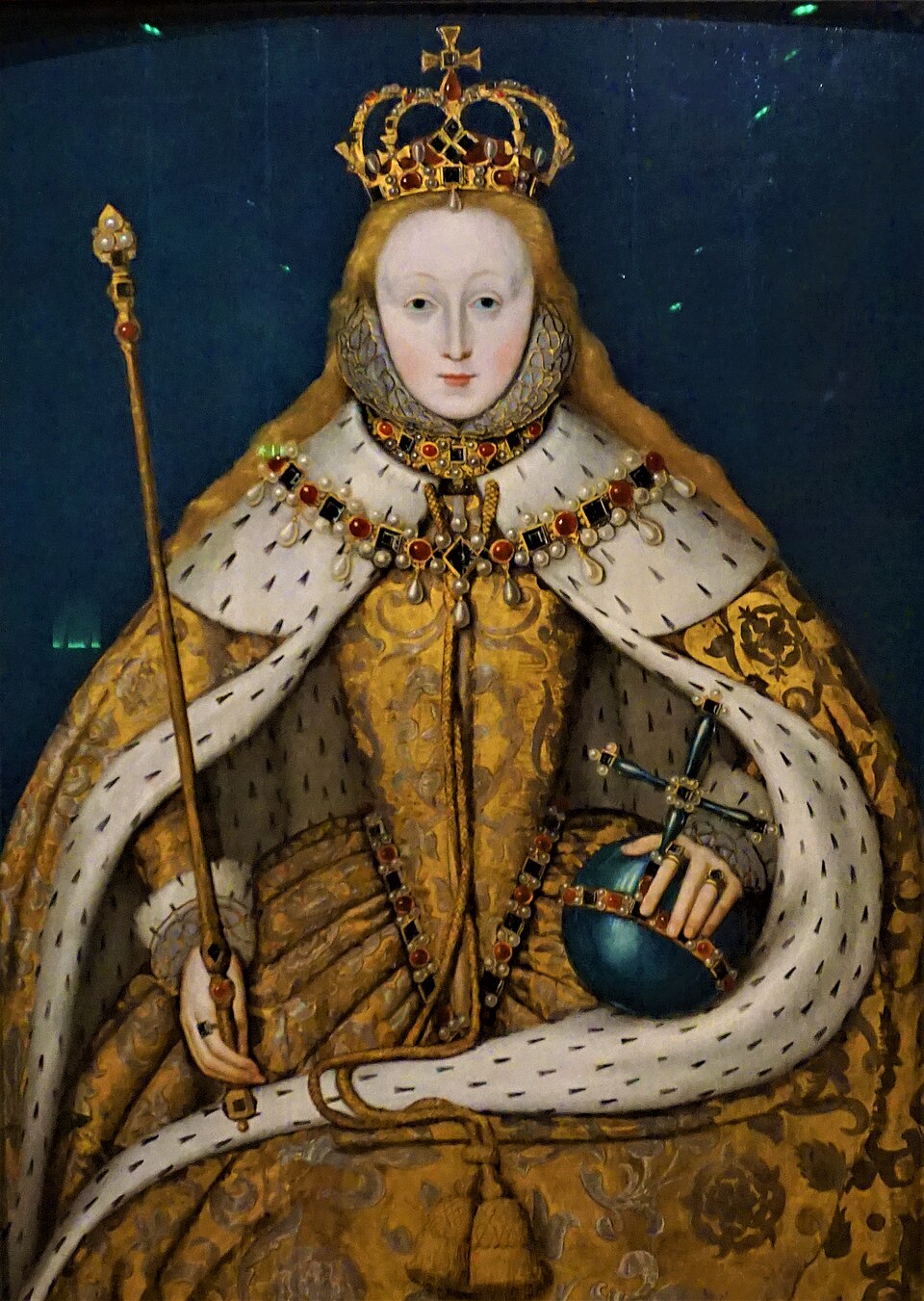
Yes, and it wasn't just for beauty! Every morning, my ladies applied a white powder, ceruse, made from lead. Imagine a pale, smooth mask, without a wrinkle. Why? Because in 1562, I had caught smallpox, a disease that leaves marks on the skin. I wanted to hide them. A queen must appear eternal, never sick, never old. The problem is, that lead makeup was a slow poison. But you know, in my time, they didn't know that yet. They sought beauty without guessing the hidden danger at the bottom of the pot.
A queen must appear eternal, never sick, never old.
—Were your portraits really you, or were you more beautiful in them?
Ha! You are clever to ask. The truth: my portraits were the image I wanted to give, not my aging real face. I wore magnificent red wigs, dresses covered in pearls, and had myself painted always young, always triumphant. Look at the great portrait painted after the victory over the Armada: my hand rests on a globe, as if I held the whole world. It was not vanity, my child. A queen seen as strong is a queen feared and respected. My image was a weapon, as much as my ships.
My image was a weapon, as much as my ships.
—What did you do in the evening at the palace for fun?
Oh, court evenings were quite a celebration! Imagine a great hall lit by hundreds of candles, music everywhere. I danced, my child — lively dances called pavanes and galliards — and I danced well! I also played the virginal, a small keyboard instrument, cousin of the harpsichord. Sometimes we put on plays: I protected a troupe of actors, the one where a certain Shakespeare performed. We ate roasted meats, sugar confections of which I was too fond — so much so that my teeth turned black as I aged! The court was my pleasure, but also my stage.
I danced, I played, I reigned: the court was my stage.
This imaginary interview was generated by artificial intelligence from sources documented in Elizabeth I of England's profile. It dramatises what the figure might have said based on what we know about them, but does not constitute attested historical testimony. For primary sources and factual documentation, refer to the full profile.