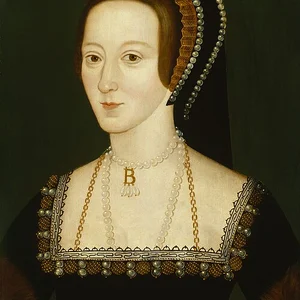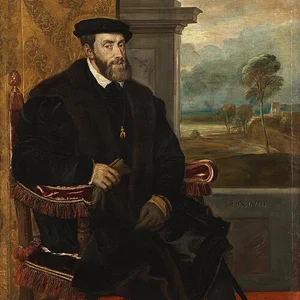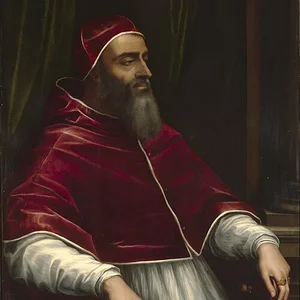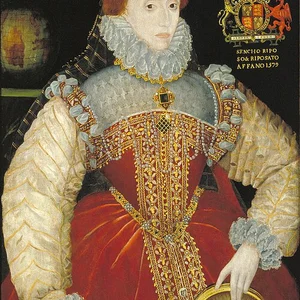

Queen consort of France (1547–1559) and regent of the kingdom during the Wars of Religion. Born in Florence in 1519, she played a major political role by attempting to maintain the balance between Catholics and Protestants in France.
Catherine de Medici(1519 — 1589)
Catherine de Medici
France
7 min read
Frequently asked questions
Key Facts
- 1547: becomes Queen of France through her marriage to Henry II
- 1559–1589: exercises power as regent for her minor sons (Francis II, Charles IX, and Henry III)
- 1562–1598: period of the Wars of Religion between Catholics and Protestants in France
- 1572: St. Bartholomew's Day Massacre (responsibility debated by historians)
- 1589: dies at Blois after shaping 30 years of French politics
Works & Achievements
Catherine commissioned this grand Parisian palace from Philibert Delorme and later Jean Bullant. It was one of the most ambitious architectural projects of the French Renaissance.
A two-story gallery spanning the Cher river, added to the existing château. This architectural masterpiece became the iconic image of Chenonceau.
Catherine organized sumptuous festivities blending music, dance, and theater to impress ambassadors and ease tensions. These spectacles are considered the forerunners of the court ballet.
Catherine left over 6,000 preserved letters, constituting a major historical source. They bear witness to her ceaseless diplomatic activity and political vision.
An astronomical column erected near the Hôtel de Soissons in Paris. It is said to have served as an observatory for Catherine's astrological consultations.
Catherine was the driving force behind several pacification edicts attempting to achieve coexistence between Catholics and Protestants. This policy of compromise, innovative for the era, foreshadowed the Edict of Nantes of 1598.
Anecdotes
Catherine de' Medici was passionate about astrology and regularly consulted Nostradamus. She invited him to court in 1555 and asked him to draw up horoscopes for her children. Nostradamus reportedly predicted that her four sons would become kings, which proved partially true as three of them did indeed reign over France.
Catherine is credited with introducing numerous culinary innovations from Italy to France. She is said to have brought Florentine cooks in her retinue who introduced the court to dishes such as artichokes, sorbets, and certain pastries. She thus helped transform the eating habits of the French aristocracy.
Catherine de' Medici organised a grand tour of France with her son Charles IX in 1564–1566, travelling through the kingdom for nearly two years. This journey of over 3,000 kilometres was intended to show the young king to his subjects and to attempt to ease religious tensions by meeting local dignitaries from both camps.
During the Amboise Conspiracy of 1560, Catherine demonstrated remarkable composure. While Protestants attempted to seize the young king Francis II in order to remove him from the influence of the Guise family, she negotiated directly with some of the conspirators and pushed for the Edict of Amboise to calm tensions.
Catherine was a passionate builder. She commissioned the Tuileries Palace in Paris and made considerable alterations to the Château de Chenonceau, adding the famous two-storey gallery spanning the Cher river. This project, entrusted to the architect Philibert de l'Orme, remains one of the jewels of French Renaissance architecture.
Primary Sources
My principal aim has always been to preserve the authority of the king my son and to maintain peace in this kingdom, for without peace there is no kingdom.
We have by our edict permitted those of the so-called Reformed Religion to live and dwell throughout all the towns and places of this kingdom without being sought out, harassed, or molested.
The queen my mother, who feared unrest and had a marvelous dexterity in managing minds, worked ceaselessly toward the reconciliation of the great lords of the kingdom.
This woman has always known how to dissemble and conceal her designs beneath the veil of piety and public peace, while fanning divisions the better to rule.
Key Places
Catherine had the great gallery built over the Cher river and organized sumptuous festivities there. She obtained the château in exchange for Chaumont after the death of Henry II, taking it back from Diane de Poitiers.
Catherine commissioned the construction of this palace in 1564 from the architect Philibert Delorme. It was intended to be her main Parisian residence, connected to the Louvre by a long gallery.
Catherine resided there frequently and died there on January 5, 1589. It was also there that Henry III had the Duke of Guise assassinated a few days before his mother's death.
Catherine's birthplace in 1519, in the cradle of the Italian Renaissance. She spent her early years there before being placed in various Florentine convents during the political upheavals.
Royal residence where several edicts of pacification were signed during the Wars of Religion. Catherine conducted important negotiations there between the Catholic and Protestant factions.
Typical Objects

Catherine owned precious Venetian mirrors, rare luxury objects at the time. They adorned her apartments and symbolized the Italian refinement she had brought to the French court.

Catherine collected rare and precious objects in a personal cabinet. It housed antique medals, precious stones, and manuscripts, reflecting her taste for the arts and sciences.

An astronomical instrument that Catherine consulted with her astrologers. Her passion for astrology was well known and sometimes influenced her political decisions.

Catherine owned several richly decorated Books of Hours, used for daily prayer. These works reflected her Catholic piety and her appreciation for the art of the book.

Catherine is said to have helped popularize the folding fan in France, imported from Italy. This accessory became an essential element of elegance at court.

As regent, Catherine used seals to authenticate royal acts. They bore her arms combining the fleurs-de-lis of France and the Medici coat of arms.
School Curriculum
Vocabulary & Tags
Key Vocabulary
Tags
Époque
Daily Life
Morning
Catherine rose early and began her day with prayers in her private chapel. She then devoted her morning to reading diplomatic dispatches and writing her voluminous correspondence. She received her closest advisors to discuss the kingdom's urgent affairs.
Afternoon
The afternoon was dedicated to official audiences and negotiations with foreign ambassadors or the leaders of rival factions. Catherine also attended meetings of the Royal Council where she exerted a decisive influence. She would sometimes inspect the construction sites of her architectural projects.
Evening
In the evening, Catherine regularly organized court receptions and entertainments, convinced that festivities helped maintain peace between factions. She enjoyed ballets, music, and refined conversation. Before retiring, she would sometimes consult her astrologers about forthcoming events.
Food
Catherine appreciated Italian cuisine, which she had introduced to the French court. Her meals included refined dishes such as artichokes, cockscombs, sorbets, and confectionery. She was also known for her fondness for food, particularly enjoying macarons and candied fruits.
Clothing
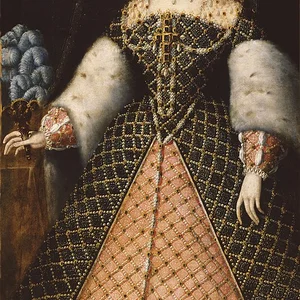
Catherine wore sumptuous gowns of velvet and silk, adorned with embroidery and gemstones. After the death of Henry II in 1559, she adopted mourning black, which she wore for the rest of her life, earning her the nickname 'the Black Queen.' Her outfits featured the characteristic ruff collars and farthingales typical of the era.
Housing
Catherine resided primarily at the Louvre and in her various royal châteaux: the Tuileries, which she had built, Chenonceau, Blois, and Saint-Germain-en-Laye. Her apartments were richly decorated with tapestries, Italian furniture, Venetian mirrors, and works of art. She also possessed a cabinet of curiosities filled with rare objects.
Historical Timeline
Period Vocabulary
Visual Style
Un style visuel inspiré de l'École de Fontainebleau et des portraits de cour du XVIe siècle, mêlant l'opulence des palais royaux français aux influences artistiques de la Renaissance italienne.
Sound Ambience
L'ambiance sonore d'une cour royale de la Renaissance française, entre musique de luth, murmures de courtisans et fontaines des jardins du palais. Un mélange d'élégance italienne et de majesté française.
Liens externes & ressources
Références
Œuvres
Construction du palais des Tuileries
1564-1572
Galerie de Chenonceau
1576-1581
Fêtes et spectacles de cour (les Magnificences)
1564-1581
Correspondance diplomatique
1560-1589
Colonne de l'Hôtel de la Reine (colonne Médicis)
vers 1574
Politique des édits de tolérance
1562-1570