Imaginary dialogue between Peter Geach and Elizabeth Anscombe
by Charactorium · Elizabeth Anscombe (1919 — 2001) · Philosophy · 5 min read
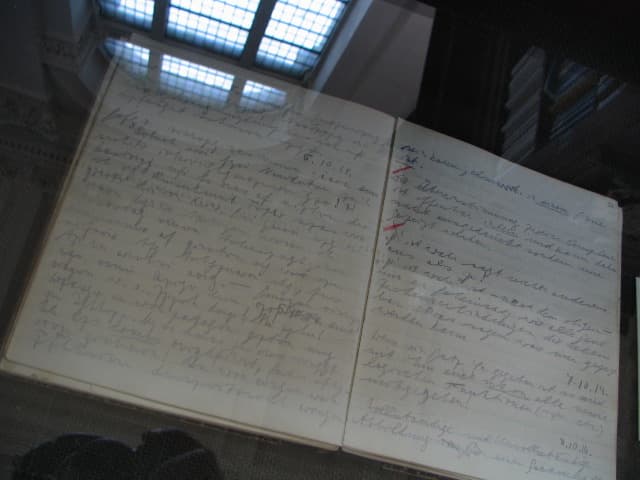
It is in the cluttered study of their home in Cambridge, on a winter afternoon when cigar smoke drifts between piles of manuscripts, that Peter Geach sits down opposite his wife, Elizabeth Anscombe. For nearly thirty years they have shared this profession of philosopher, seven children, and the smell of ink from proofs to correct. Geach knows better than anyone the thought behind the public image, and he comes today not to debate, but to get her to speak about herself. Outside, the bells of a distant Mass remind the hour.
—Elizabeth, do you remember the uproar at Oxford when you voted against Truman's degree — why did you stand alone that day?
You were there, Peter, you know the state I came home in. They wanted to honor a man who had deliberately chosen to kill innocent people at Hiroshima and Nagasaki as a means to a political end. But choosing to kill the innocent as a means is murder, and murder remains one of the most serious human acts. To place a ceremonial robe on the shoulders of such a man seemed to me a quiet, polite obscenity, and it was that politeness that revolted me most. I wrote Mr Truman's Degree because I could not keep silent and still look at myself. The hall voted in favor; we were a handful against. But a conscience is not counted by majority.
A conscience is not counted by majority.
—You were criticized for your harshness toward a head of state at war. Is the doctrine of just war really enough to condemn a man?
It does not condemn the man, Peter, it judges the act — the distinction is everything. The doctrine inherited from Saint Augustine and Saint Thomas does not say that fighting is forbidden; it says that certain things are never done, whatever the expected consequences. Intentionally targeting civilian areas to break morale is precisely that. I am always countered with the lives of soldiers spared, as if one could weigh murders against rescues. But once you admit that calculation, you have already given everything away: there is no longer any forbidden act, only additions. I reject that arithmetic. There are things an honest man knows he will not do, even to save his city.
There are things an honest man knows he will not do, even to save his city.
—When Wittgenstein appointed you his executor in 1951, did you measure the magnitude of those notebooks he entrusted to you?
Not at the moment — you don't evaluate a legacy like you weigh a burden. He trusted me, and that trust was a silent command. Then the boxes of manuscripts arrived, his cramped handwriting, those remarks he would move, revise, cross out endlessly. Deciphering a hand is already interpreting a thought: each variant posed the question of what he had really meant. For the Philosophical Investigations, I had to become both translator and witness, to find in English the grain of his voice without betraying it. You, who saw me spend nights on a single sentence, know that this was not an editorial task but an act of fidelity. I believe I kept my word to him.
Deciphering a hand is already interpreting a thought.
—Your Introduction to Wittgenstein's Tractatus cost years. What did you seek to transmit of the master to those who had not known him?
To read him, simply — that is rarer than one thinks. The Tractatus frightens by its dryness, its numbered propositions that look like sentences. People quote it, revere it, do not understand it. I wanted to dismantle its logic step by step, to show that it is a struggle about what language can and cannot say, not a series of oracles. Ludwig hated disciples who repeated his formulas without having tested them. My introduction is a way of disobeying the lazy and obeying his demand: to think for oneself. If a student closes the book telling himself that he must finally confront the original text, then I will have succeeded. The rest is mere gloss.
People quote it, revere it, do not understand it.
—In Modern Moral Philosophy, you write that the notions of obligation and moral duty should be abandoned. Isn't that to undermine all morality?
On the contrary, it is to save it from an imposture. We have inherited a vocabulary — the moral "ought", obligation, law — that makes sense only in a framework where there exists a divine lawgiver. But moderns have kept the words after dismissing the idea. There remains a notion of obligation suspended in a void, obeyed out of habit without knowing before whom. I say: let us abandon this language until we have refounded a moral psychology worthy of the name, an inquiry into what human flourishing is, virtues, voluntary action. It is to Aristotle that we must return, not to a distorted Kant. Until we have understood what acting is, speaking of duty is only respectable noise.
Moderns have kept the words after dismissing the idea.
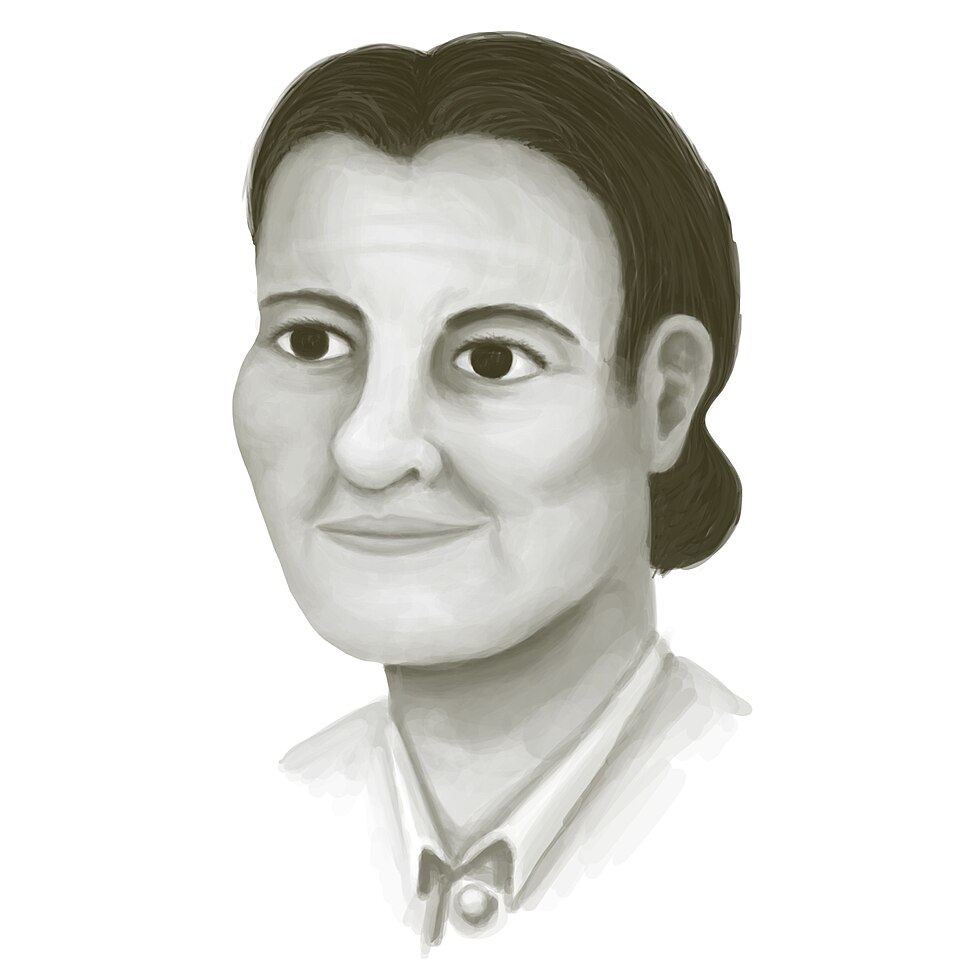
—You coined the word "consequentialism" almost in passing. Did you realize you were giving a name to an entire opposing camp?
No, I was only looking for a clear term to designate a precise error. I call a consequentialist anyone who judges an act solely by its consequences, and therefore holds that no act is forbidden in itself provided the balance is favorable. That is utilitarianism, but it is also, alas, the common sense of respectable people who think themselves above rules. Yet there are intrinsically wrong acts — killing the innocent is the model — that no calculation redeems. The word was a defensive weapon: to name a confusion is already to begin to defend against it. That others have taken it up to proudly claim it still surprises me. One can hold to a name that its inventor intended for blame.
To name a confusion is already to begin to defend against it.
—Your students fear you a little, I see. The monocle, the cigar, those trousers — do you play up this appearance, or do you never think about it?
I don't think about it for a second, Peter, and that is precisely what disconcerts them. I wear the monocle because my eyesight requires it; the cigar, because it helps me think and the smoke keeps away bores. That it is unseemly for a woman has never struck me as a serious objection — social impropriety is not a moral category. What intimidates my students is not my attire, but that I refuse weak arguments. When one of them puts forward an insufficiently thought-out thesis, I tell him so, and he thinks it is severity. It is respect: you honor a mind only by demanding that it truly think.
You honor a mind only by demanding that it truly think.
—Deep down, where does this total indifference to what people say come from, which captivated me from our first meeting?
From the conviction that there is only one judge whose opinion matters, and he does not read the newspapers. The rest — fashion, the conventions of Oxford or Cambridge, the furrowed brows of colleagues — is a theater to which I have never subscribed. I think many people spend their lives begging for approval from an audience they secretly despise. That seems to me an exhausting servitude. You understood from the start that I would say what I think, even at the wrong time, and you never asked me to soften. That is no doubt why we get along: we share the same quiet contempt for received opinions. Freedom is also being able to smoke one's cigar in peace.
There is only one judge whose opinion matters, and he does not read the newspapers.
—You defended Humanae Vitae even when Catholics rejected it. How do you connect that battle to your philosophy of the act?
It is not separate from it; it is the same question under another light. All my life I have sought to understand what it is to do something — intention, the object of the act, what one really chooses when acting. Now those who reject the encyclical reason as consequentialists without knowing it: they weigh goods and evils and conclude that the act is exonerated by its fruits. But an act has a nature before it has consequences. Defending Humanae Vitae was not for me a matter of ecclesiastical discipline; it was holding firm on this point: there are acts that their very structure makes illegitimate. I know it cost me, even among our friends. One does not choose one's convictions for their comfort.
An act has a nature before it has consequences.
—Between morning Mass, seven children, and your manuscripts, how do you hold together the philosopher and the believer, without one stifling the other?
But they are not at war, Peter — it is the same person who prays in the morning and corrects a demonstration in the afternoon. People imagine faith as a flight from thought; for me it is the opposite, it compels me to think harder, never less. The rosary and the Tractatus sit on the same table without contradicting each other, because rigor is not the enemy of prayer, it is a form of it. Our children grew up in this house where we discussed Aristotle between plates: they know that a life is not divided into compartments. I never sought coherence as a system; I simply live it, because a thought that is not practiced is only an ornament.
Rigor is not the enemy of prayer, it is a form of it.
This imaginary interview was generated by artificial intelligence from sources documented in Elizabeth Anscombe's profile. It dramatises what the figure might have said based on what we know about them, but does not constitute attested historical testimony. For primary sources and factual documentation, refer to the full profile.