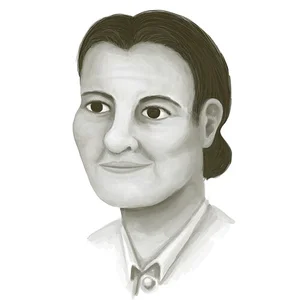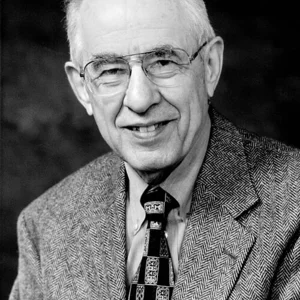

Hilary Putnam (1926-2016) was a major American philosopher in analytic philosophy. He profoundly influenced the philosophy of mind, language, science, and mathematics, distinguished by his ability to revise his own positions throughout his career.
Hilary Putnam(1926 — 2016)
Hilary Putnam
États-Unis
6 min read
Frequently asked questions
Famous Quotes
« “Meanings just ain't in the head.”»
Key Facts
- Born in 1926 in Chicago, died in 2016 in Arlington, Massachusetts.
- Professor of philosophy at Harvard University from 1965.
- Developed functionalism in the 1960s, an influential theory in philosophy of mind.
- Formulated the Twin Earth thought experiment in 1975, supporting semantic externalism.
- Advocated for “internal realism” from the 1970s–1980s, illustrating his repeated revisions of thought.
Works & Achievements
Foundational work in which Putnam explores the philosophical foundations of logic and the relationship between logic and reality. This work establishes the basis of his rigorous analytical thought.
Collection of major essays covering philosophy of mind, language theory, and semantics. This work transforms the philosophical understanding of how words relate to the world.
Major work containing the "brain in a vat" thought experiment, challenging our certainties about reality and knowledge. This work has become an essential reference in contemporary philosophy.
Putnam develops his position of "internal realism" in response to debates between realists and anti-realists. This work shows his intellectual evolution and constant questioning of certainties.
Major critique of computational materialism and the computational approach to the mind. Putnam argues that meaning cannot be reduced to internal symbols or calculations.
Anecdotes
Putnam was famous for changing his mind several times during his career, particularly on philosophical materialism. This intellectual honesty, rare among philosophers, earned him the respect of his peers even when they disagreed with him.
His thought experiment of the "brain in a vat" became one of the most influential in modern philosophy. It imagines an isolated brain in a fluid, receiving stimulations that give it the illusion of a normal world, raising the fundamental question: how do we know our reality is real?
Putnam began his career as a logician and mathematician before becoming a philosopher. This rigorous training in mathematical logic marked his entire approach to philosophy, characterized by great analytical precision.
During the Cold War, Putnam was deeply interested in the philosophical problems posed by quantum mechanics. He saw quantum physics not only as a scientific challenge, but as a puzzle for philosophy and our understanding of reality.
Primary Sources
The words in my head cannot refer to external things... what is true of me is true of most brains in a vat in this possible world similar to ours.
Meaning cannot be in the head, precisely because meaning depends on the relation of the organism to the environment and to the causal history.
Logic is not an empirical science, but neither is it purely formal and empty of content.
Key Places
Birthplace of Hilary Putnam, Chicago was an intellectually vibrant city that shaped his youth. The area hosted major research institutions in analytic philosophy and logic.
Putnam earned his undergraduate degree in mathematics here, receiving training in mathematical logic and symbolic computation, foundations of his analytic thought.
Putnam taught at Princeton from 1953 to 1965, a formative period during which he developed his major theories on semantics and reference, collaborating with other great analytic thinkers.
For over 40 years, Putnam was a professor at Harvard, transforming the philosophy department into one of the most prestigious institutions in the world. His office became a pilgrimage site for philosophers.
Putnam regularly collaborated with MIT researchers on questions of artificial intelligence, cognition, and philosophy of mind, fields where MIT was a center of innovation.
Typical Objects

Putnam spent hours writing logical formulas on the blackboard during classes and solitary reflections. These blackboards embodied his method of analytical thinking, transforming complex philosophical problems into clear and precise notations.

Putnam regularly filled notebooks with his reflections and critical comments on the works of other philosophers. These notes reveal his process of constant revision and rigorous engagement with ideas.

Even at the heart of the digital age, Putnam used both classic typewriters and computers to write his articles and books, symbolizing his transition between generations of philosophers.

Putnam's personal library was filled with foundational texts on mathematical logic, set theory, and quantum physics, reflecting his multidisciplinary approach.

Classic accessories of 20th-century American academic life, the pipe and coffee were constant in Putnam's office, marking long sessions of philosophical reflection.

Putnam kept a significant collection of articles on quantum mechanics and its philosophical interpretations, a field that fascinated him throughout his career.
School Curriculum
Vocabulary & Tags
Key Vocabulary
Tags
Daily Life
Morning
Putnam started his days very early, often before dawn. He would have strong coffee while reading newspapers and the latest philosophical articles, then prepare to go to his office at Harvard. These early hours allowed him to reflect on the philosophical problems he was working on.
Afternoon
Afternoons were devoted to teaching and discussions with his students and colleagues. Putnam gave lively lectures, wrote equations on the blackboard, and engaged in passionate debates on issues of logic, semantics, and philosophy of mind. He regularly hosted visitors and researchers.
Evening
In the evening, Putnam returned home to reflect and write. He regularly worked on his articles and books, sometimes late into the night. These solitary hours were crucial for his intellectual creative process, allowing him to refine his ideas.
Food
Putnam led a relatively simple life when it came to food. Coffee and sandwiches at the office were common, with more formal meals at home with his family. He did not place much importance on gastronomy, preferring time spent on reflection.
Clothing
As a 20th-century American intellectual, Putnam typically wore a dark suit with a white shirt and tie for his lectures and public activities. In his office, he was often in shirtsleeves, with a cardigan or tweed jacket to keep warm.
Housing
Putnam lived in the Cambridge area, near the Harvard campus, in an intellectually stimulating setting. His house was filled with books and papers, reflecting his intellectual intensity. The environment was studious but also warm, occasionally hosting colleagues and friends.
Historical Timeline
Period Vocabulary
Visual Style
Le style visuel associé à Putnam est celui de la rigueur analytique académique : des espaces de travail épurés mais richement documentés, dominés par des symboles logiques, des diagrammes mathématiques clairs, et l'atmosphère intellectuelle austère mais vibrante des plus grands centres universitaires américains du 20e siècle.
Sound Ambience
L'ambiance sonore autour de Putnam était celle de l'intense vie intellectuelle universitaire : le silence contemplatif du bureau académique, les débats passionnés avec des collègues, le bruissement des pages de livres, et les sons caractéristiques des salles de cours animées par des discussions philosophiques rigoureuses.
Liens externes & ressources
Références
Œuvres
Philosophy of Logic
1971
Mind, Language and Reality
1975
Reason, Truth and History
1981
The Many Faces of Realism
1987
Representation and Reality
1988